


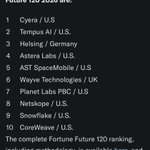


Nail on the head by my friend @AboveAvgOdds
Irrational market reaction doesn’t remove facts:
1. Ligado has value
2. 28 sats close to completion = FCF enabler
3. F9 and BO contracts in place albeit launch delayed
4. Solid cash balance sheet
5. On the verge of 6/m production $ASTS

I’m sympathetic to the sentiment. The only problem with it is that it’s simply not true. The net present value of the non-core Ligado rights are worth more than the stock price upon FCC approval, and that value is entirely separate from what the core business will earn piggybacking carrier spectrum, not to mention sustained by external factors that have nothing to do with who happens to own it at any given time, in the same way it would be for say premium US farmland.
Maybe you don’t think approval is a slam dunk (I do), but (a) it’s imminent and (b) one can adjust what should be discounted based on their assessment of the odds and recent comps, but that value has to be counted if we’re gonna pretend to be competent securities analysts, as we’ve just seen no less than three recent marks from two highly sophisticated and deep pocketed players (Musk/Bezos) who could utilize the spectrum in the same way AST will, ie from LEO rather than terrestrially by building new towers that would likely interfere with GPS and the military’s wishes (the reasons Ligado ended up in bankruptcy court in the first place).
But wait, there’s more! We know from the images of the factory given at the Blacklift event that the number of finished birds sitting on the factory floor is ~28, enough to punch cleanly through break even (before growth capex), run beta tests, and otherwise validate the larger networks potential. We also have the SpaceX launch contracts to get them into orbit, so we can quibble if true exit velocity for the first phase of the constellation is 25 or 45, but the fact is they’ve already built enough sats and locked in enough F9 launches to get us to the FCF snowball. The more conservative reading just means it will take a bit longer.
The game is already over. The market just doesn’t know it yet. And even if that somehow proves to not be true in the end, there is another layer of downside protection that’s distinct and durable value will crystallize at some point within the first half of next year. The current quote is an unsustainable gift 🎁.


D🅰️niel Fischer retweeted

“Capitalism,” you see, is when the president personally intervenes in the operations of private companies and enriches himself and his undisclosed web of foreign and domestic business partners

D🅰️niel Fischer retweeted

Starlink rival AST SpaceMobile is planning on building its own rockets to reduce the cost of putting its satellites in orbit.
forbes.com/sites/the-prototy…

D🅰️niel Fischer retweeted

$ASTS $SPCX: At around 1:03 of this clip, Elon makes the claim that Starlink Mobile V2 will be able to connect directly to an unmodified phone.
This is not the whole truth and this statement is designed to be misleading.
In reality, Starlink Mobile V2's claims of a high data or "true 5G quality" as SpaceX CFO Bret Johnsen likes to call it, are wholly dependent on customers owning new phones manufactured and shipped in 2027 and beyond, because only these newer phones are compatible with the 50 MHz of 2 GHz MSS S band spectrum that SpaceX acquired from EchoStar.
Therefore, if you want to access this high speed D2D experience with Starlink Mobile V2, you would have to buy a new phone AKA new hardware. Your existing phone in your pocket does not work with this spectrum.
In fact, Elon has admitted this himself in past interviews and here it is in SpaceX's own admission in their S-1 filing:
The spectrum frequencies in the FCC licenses to be acquired from EchoStar are standardized for terrestrial 5G mobile broadband (3GPP bands n66 and n70). But the 5G NR-NTN bands for these same frequencies, such as n252 and n256, are not currently supported by RF front-end hardware for the provision of 5G-like service in any commercially available mobile devices. We do not have direct contractual arrangements with handset manufacturers; instead, we expect MNO partners, as major purchasers of mobile devices, to encourage or drive such adoption. There can be no assurance that these modifications will be adopted on our preferred timeline, or at all.
Lastly, keep in mind that SpaceX is rapidly losing access or only gaining partial access to MSS S band all over the world outside of the US.
S-1: content-archive.fast-edgar.c…

D🅰️niel Fischer retweeted

🚨Why is Management confident on launch? 🚨
After exhaustive reconciliation of filings, transcripts, and proprietary research, this is my current forecast of launch capacity. This has been heavily peer-reviewed.
It can change, but as demonstrated, while the launch market is constrained, it is not zero. The market fails to consider that $ASTS is the big cargo owner and has real heft. Its ability to get capacity (now augmented by the US Government helping it), is its own barrier to entry.
Fast forward a year and we'll be talking about Eclipse, Terran R, Stoke, Neutron, MHI, Arianne, and others. Wait until the USG reminds SpaceX that NASA allowed Falcon 9 to live and it expects SpaceX to provide capacity to support Space Superiority in the US.
Nowhere are we talking about Blacklift - that is the out-year upside for massively expanding TAM to things like multiple government constellations, on-orbit compute etc. At that point, we're not talking about 100 satellites in orbit. We're talking about 1,000 (or more). That is the scale $ASTS is building for.
I will continue to edit as more info comes to pass.


D🅰️niel Fischer retweeted

$ASTS 🚨 NEW BLACKLIFT VIDEO
@AST_SpaceMobile is building the first and only global cellular broadband network in space to operate directly with standard, unmodified mobile devices. our engineers and space scientists are on a mission to eliminate the connectivity gaps faced by today's 5 billion mobile subscribers and finally bring broadband to the billions who remain unconnected. youtu.be/nGvr22mLaU4?is=3A4l…

D🅰️niel Fischer retweeted

$ASTS: 🇪🇺 The Future of European Connectivity - Owned and Controlled by Europeans
Europe has an extraordinary opportunity to lead the next generation of mobile connectivity, bringing high-speed broadband directly to everyday smartphones, eliminating coverage gaps, strengthening emergency communications, and connecting communities that terrestrial networks cannot economically reach. AST SpaceMobile's next-generation Block 2 BlueBird satellites are designed to deliver peak broadband speeds of up to 200 Mbps directly to conventional mobile devices, opening the door to a new generation of connectivity from space. But achieving this vision requires more than advanced technology. It requires an architecture that respects European data sovereignty, national security, economic interests, and the regulatory authority of individual member states. AST SpaceMobile's approach, in partnership with Europe's leading mobile network operators, is uniquely aligned with these priorities.
Data sovereignty is fundamental to Europe's digital future, and AST SpaceMobile's bent-pipe satellite architecture provides a compelling solution. Rather than processing mobile communications through a foreign-controlled satellite core network, AST's satellites function as cell towers in space, relaying signals to terrestrial gateways where the radio access network and mobile core functions operate. This architecture enables communications originating in a European country or region to be routed to ground infrastructure within that same country or region, subject to network configuration. Through Satellite Connect Europe, AST and Vodafone are developing European-based gateways and network management infrastructure so that European traffic can remain within European jurisdiction. The satellite provides the connection, while European operators retain control over the network and its data. This creates a strong foundation for satisfying Europe's stringent data protection, cybersecurity, and digital sovereignty requirements.
Equally important is AST SpaceMobile's commitment to working with Europe's existing mobile network operators, not competing against them. Rather than displacing national telecommunications providers or taking ownership of their customer relationships, AST enables operators to extend their existing 4G and 5G networks into space. Importantly, AST is working with and conducting testing and integration activities involving Europe's big four: Vodafone, Deutsche Telekom, Orange, and Telefónica. Together, these operators serve hundreds of millions of mobile subscribers across Europe and represent a substantial portion of the continent's telecommunications infrastructure. This engagement demonstrates how satellite connectivity can be integrated into Europe's existing mobile ecosystem rather than developed as a competing, standalone network. European carriers retain their customers, billing relationships, core networks, and service responsibilities. This is satellite connectivity built to empower European mobile operators, not replace them.
This partnership model also protects and expands European economic activity. Europe's mobile operators have invested hundreds of billions of euros in spectrum, infrastructure, employees, and local communities. By integrating satellite connectivity into existing networks, AST's approach reinforces the value of those investments rather than undermining them. It helps preserve local telecommunications employment, supports continued terrestrial infrastructure investment, and creates opportunities for European jobs in satellite operations, engineering, cybersecurity, ground infrastructure, and customer services. Satellite Connect Europe's investment in European ground stations, together with plans for a satellite operations center in Germany, demonstrates how next-generation satellite connectivity can generate meaningful economic activity within Europe rather than shifting it elsewhere.
Perhaps most importantly, AST's architecture recognizes that European governments must retain meaningful operational authority over communications within their borders. AST and Vodafone have announced plans for a European sovereign satellite constellation incorporating a comprehensive "command switch," with operational oversight centered in Germany. This capability is designed to enable European control over satellite beam activation and deactivation, beam direction, encryption keys, and critical network operations. It provides the technical foundation for governments and authorized European operators to exercise control over satellite services, including the ability to shut down coverage when required under applicable national security or regulatory frameworks. True sovereignty means more than where a company is headquartered. It means having the practical ability to control the infrastructure serving your citizens.
This model has already received a powerful endorsement from one of the world's most technologically advanced nations: Japan. In November 2026, Japan selected the Rakuten and AST SpaceMobile partnership for its J-LEO initiative, awarding up to approximately $1 billion in government funding over three years to support a Japanese sovereign satellite constellation. The Rakuten–AST joint venture, 51% owned by Rakuten and 49% by AST, is designed to support Japanese operational control over satellite infrastructure while leveraging AST's advanced technology. Japan's decision demonstrates that governments increasingly recognize the strategic importance of combining world-class satellite capabilities with domestic ownership, network control, and economic security. Europe has an opportunity to pursue a similar sovereign model through AST SpaceMobile and its European partners.
AST's approach also supports Europe's broader ambitions for strategic autonomy and communications resilience. Satellite connectivity should become an extension of national infrastructure, not a replacement for it. Through European-operated ground stations, locally integrated mobile networks, sovereign satellite operations, and national regulatory oversight, Europe can benefit from advanced space technology while maintaining authority over how that technology is deployed and governed. These capabilities extend beyond commercial broadband to emergency response, public protection, disaster recovery, rural connectivity, and critical infrastructure resilience. By integrating directly with existing mobile operators, AST can help European governments strengthen their communications capabilities without sacrificing regulatory oversight, national security, or operational independence.
The future of European satellite connectivity should be built on partnership, sovereignty, technological leadership, and shared economic prosperity. AST SpaceMobile offers a compelling model: next-generation broadband speeds targeting up to 200 Mbps, a bent-pipe architecture designed to support local data sovereignty, active engagement with Europe's four leading telecommunications groups, investment in European infrastructure and employment, and meaningful European operational control. Japan's recent J-LEO decision provides a powerful example of how this model can serve national strategic interests. Europe now has an opportunity to build on that vision, creating a resilient, sovereign satellite communications network that strengthens its economies, empowers its operators, and protects its citizens.
Europe should not have to choose between world-class connectivity and digital sovereignty. With AST SpaceMobile's architecture and partnerships, it can achieve both.

D🅰️niel Fischer retweeted

A couple possibilities.
1. The Miranda engine has 230k lb thrust while Archimedes has 165k. With weight of $ASTS BBs more thrust is needed
2. Miranda uses RP-1 (kerolox) fuel vs liquid methane (methanol). RP-1 is considered a safer & easier fuel & denser. Downside is produces more soot. But still a very well understood fuel is helpful for timeline goals
3. Maybe ast was talking to them and either $RKLB didn’t want to do it or wanted to much.
4. I suspect ast preferred Firefly due to proximity, not competing in satcom, engine deep into qualification, already has composite fuel tanks in qualification & already qualified interstage
D🅰️niel Fischer retweeted
What a day. Congrats @AbelAvellan @scottwisniews @AST_SpaceMobile on unveiling the BlackLift Rocket
Clearly lots of work to be done to get there. But this team already has accomplished what was once considered impossible
The confidence & excitement of the team really stood out
$ASTS


D🅰️niel Fischer retweeted

$ASTS | @AST_SpaceMobile | Blacklift Unveiling Event | @AbelAvellan | Transcript | 2
We do everything. 95% of every part that is used on the satellite, we build it ourselves. And this is the location where we take the satellite for final stages, ship it, and take it back to the launch site.
So we can test, vibrate, vacuum test. We can do every step that is required to take these things to space. We can do it out of these buildings.
We have 12 of them. A lot of people ask me, why are you in Midland? Because in Midland, we can build buildings very, very fast. We can do it in two months, when in certain states, you need a couple of years to do anything.
We build these buildings, and then we ask permission later. So that's how we do it. That's why we're in Midland.
I mean, some people ask why we are in the Wild West, and that's the reason. So, again, 12 buildings. Everything to build, integrate, and test.
Our scientists and engineers are not in Midland. They are in D.C., they are in Seattle, they're in Dallas. They're all around the country.
Midland is our integration and test location. That's where we put everything, test it, and then ship it for launch. So, Carolina, can you walk down? Okay, we're going to work.
So this area, we have, well, first of all, we have 14, 15, and 16. It is in the cave, ready to launch. This is satellite 18, ready to launch.
That's what you see there. Stop there, Carolina, if you can. That is this tuna can here.
That's where the phase arrays go. That's 19. You can see that's what it holds, what it deploys in space, which is the phase array.
But that's also what we have, all the systems to control, manage, and operate the satellites. This is satellite 20, also ready to go. You can see it from there.
Those antennas, this little thing here, it will connect down to the ground and allow us to connect to the operators, to AT&T, to Verizon, to a new one hopefully coming very soon. To all the operators in Europe, with a new one also that I think you're going to like. And to our friends from Japan, they just gave us a billion dollars to build more of these.
Arigato, Osana. So that's to our U.S. government. I mean, I think you're going to like what we're doing with them and how we're keeping this nation safer with what we're doing with these satellites.
And so we are on satellite 20. Karina, can you keep moving? Here we have satellite 20 to 28. We're getting completed.
What is in the left is where we prepare the electronics that goes into them. And this is 21 to 28. And this is 28.
So as a reminder, we don't need thousands of satellites. We need hundreds of satellites. With satellite 28, we're in beta service in the United States, Europe, Japan, Saudi Arabia, and Canada.
So that's what it put us into beta. That's from with 25 satellites. So that satellite right there is a milestone.
It's getting to beta in the initial markets. You will ask why those markets without the people that invested with us at the beginning. United States, Europe, Japan, Saudi Arabia, and Canada.
So this thing here is what it takes us to beta service. But we're obviously not stopping there. We're on satellite 51.
Let's move to this thing. It is, by the way, very similar to the tank of a rocket. But this is where we test satellite 51 to 29 are passing through this tool.
We have two of these tools. And this is where we compress the satellite. When you're going up, you have five satellites on top of you.
Then you have four satellites on top of you. Roughly, let's call it five tons per satellite. You have 20 tons.
But now you're going with the acceleration of the rocket at 10 times the G. So that 20 tons become 200 tons. So we need to test. I'm sure you remember how difficult it was for us to be producing this structure at a rate, at a pace.
Well, because this thing is very hard. You need to... 20 tons times 10 is 200 tons. That's the weight of the Statue of Liberty.


D🅰️niel Fischer retweeted
$ASTS: Thank you @AST_SpaceMobile for picking my question on the retail Q&A portion!
@AbelAvellan confirmed they have up to BB28 in very final stages. 👀
Operator:
Kevin from Vancouver asks, "When facing a launch supply constraint, do you plan on stockpiling satellites to be, quote-unquote, ’ready to ship,’ or will you slow down production to align with available launch capacity?
Abel Avellan, Chairman and CEO, AST SpaceMobile:
Thank you, Kevin. No, we do not stop production. As a matter of fact, that’s why we are on satellite 51. 14, 15, and 16 were shipped to the Cape, and they’re awaiting SpaceX launch date confirmation. 17, 18, 19 will be shipped during November. 20, 21, 22, 23, 24, and 25 shipments will happen in December and January. Our plan is to continue with six a month. We are already on satellite 51 in production, and all the way to satellite 28 in very final stage.
D🅰️niel Fischer retweeted
$ASTS: 🚨🇯🇵🇺🇸RAKUTEN AND AST SPACEMOBILE JV WINS $1B OF NON-DILUTIVE FUNDING FROM JAPAN. RAKUTEN WILL UTILIZE ITS 20+20MHz of L-BAND SPECTRUM FOR DEPLOYMENT.
RAKUTEN AND AST ARE ALSO PURSUING 30+30MHz of S-BAND ALLOCATION FROM JAPAN.
AST's Global L- and S-Band Spectrum Portfolio:
L-Band
🇺🇸USA 45MHz
🇨🇦Canada 40MHz
🇯🇵Japan 40MHz
S-Band
🇸🇦Saudi Arabia 60MHz
🇨🇱Chile 50MHz
🇧🇷Brazil 30MHz
🇯🇵Japan 60MHz (soon)
🇪🇺Europe 20-40MHz (soon)
🇬🇧United Kingdom 20-40MHz (soon)
It's time 🚀

Rakuten and AST SpaceMobile are launching Rakuten AST, a joint venture to build a D2D satellite network in Japan🚀
With $1B in support from Japan’s MIC, Rakuten AST will build disaster-resilient, uninterrupted communications infrastructure for Japan.
global.rakuten.com/corp/news…

D🅰️niel Fischer retweeted

Rakuten and AST SpaceMobile are launching Rakuten AST, a joint venture to build a D2D satellite network in Japan🚀
With $1B in support from Japan’s MIC, Rakuten AST will build disaster-resilient, uninterrupted communications infrastructure for Japan.
global.rakuten.com/corp/news…
D🅰️niel Fischer retweeted

$ASTS - I just want to come back to this with the news earlier today of AST notifying FCC of their testing with TIM. This was a speculation post - but went 5/5 with my predictions of TIM, IEZ!, Unifique, Brisanet and Chile S-Band. 😎

$ASTS - As promised, here is my latest report on AST SpaceMobile, specifically in two countries: Chile and Brazil. I will start off with Chile as it's a single update.
On October 15th, Chile's SUBTEL established into a decree ASTs authorization to use specific bands in Chile...

D🅰️niel Fischer retweeted
$ASTS: ICYMI, the 10Q filed on August 10, 2026, noted: "We have entered into launch agreements with multiple launch service providers which will enable us to continue our planned launch campaign to launch over 60 Block 2 BB satellites."
Today's PR indicates: "The Blacklift announcement supplements AST SpaceMobile’s contracted multi-partner orbital launch strategy. AST SpaceMobile will continue to use external providers, with agreements now covering in total over 100 BlueBird satellites to be deployed cumulatively between 2027 and 2028. The company also has access to further launches for U.S. Government missions alongside its Defense Priorities and Allocations System (DPAS) rated program."
So @AST_SpaceMobile booked launches for another 40+ BlueBirds, but it is not clear with who. Excited for Monday! At a minimum I suspect more @SpaceX and @blueorigin, but also in the cards are of course the obvious ones: @MHI_GroupJP, @ulalaunch, and @Arianespace. I am also extremely interested in @relativityspace which is working on Terran R that can launch 5 BBs at a time on a reuseable basis.
