

Publisher of medieval texts and Christian classics
Joined November 2023
- Tweets5K
- Following70
- Followers4K
- Likes7.6K






Scriptorium Press retweeted
I actually think this thread is extremely useful. It shows what the Byzantine theologians actually meant by the essence-energy distinction. It was not a real distinction in the sense that the essence and energies differed ontologically from one another, but neither was it a mere conceptual distinction (apparently this is close to what the Scotists believed, but I am not an expert on scholasticism, so I'll leave it to others to judge that):
nitter.cf/aploseinai/status/1810…

🧵On If There Is A Real Distinction Between The Divine Essence And The Divine Energy
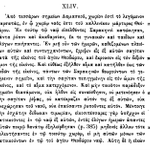
I was asked to make thus thread, it will be long, beginning with the Fathers who used the terminology of real (πραγματι) and notional (κατ’ ἐπίνοιαν) distinctions. Firstly, St. Mark of Ephesus, in his second Tome against Manuel Kalekas:
“According to the theologians, the distinction is only notional, not real (´Η διάκρισις έπινοία μόνη κατά τούς θεολόγους, ού πραγματι)… God is not what is predicated of Him in a composite (σύνθεσιν) way, but He is said to be so and so according to diverse notions (´κατά διαφόρους έπινοίας)… However, the notion (έπινοία) is distinguished in such a way that it does not assert the same thing to be both energy and essence, as if it found 'essence' along with 'nature'… Further, we willingly accept the example of grain (Basil, Adversus Eunomium I.6,44-54), if by ‘thing’ the subjectum or the being existing per se is meant. For, in this sense, the divine predicates are not different realities (διάφορα πράγματα), namely, beings existing per se, or realities entailing composition.”
First Tome Against Manuel Kalekas’,
p. 228,19-27:
“’Being realities (πράγματα είναι)’ and ‘really differing from each other (πραγματικώς διαφέρειν)’ … is not the same. We, in accordance with the Doctors, declare and believe the former, by stating that they are naturally (φυσικώς) and substantially (ούσιωδώς) and uncreatedly inherent to the essence of God; yet we forbid to speak of ‘really differing from each other’, (πραγματικώς διαφέρειν) because this has to do with things that exist per se [i.e., the primary substances], not with things distinguished only conceptually (έπινοία μόνον διακτινομένοις).”

Scriptorium Press retweeted

A friend of mine is currently teaching in Ireland and he just sent me this picture of the ruins of St. Declan’s monastery in County Waterford. Carved into the walls are depictions of Adam and Eve, the Judgement of Solomon, and the Adoration of the Magi.


Scriptorium Press retweeted

We can fairly accurately plot the spread of Christianity in Roman Egypt by looking at the prevalence of Christian names in a database of over 300,000!! personal names preserved in papyri and ostraca.
"The evidence suggests that an extra 10% was added to the prevalence of Christians in the population every 20 years. They were already a sizeable minority of 20 to 30% when Constantine converted in 313. When Theodosius proclaimed Christianity as the official state religion in 380, probably already more than two-thirds of the newborns came from Christian families. Around 450, to take the Council of Chalcedon as a symbolic date, probably not many pagans were left in Egypt."

Scriptorium Press retweeted

With the Norman conquest of Sicily in the 11th century, the Normans started building magnificent cathedrals, abbeys and castles, as they did in Normandy and everywhere else.
And so, the Norman King William II, called the Good, commissioned the massive Monreale Cathedral on a hill above Palermo in 1174.
His reasons were also strategic. He wanted to display royal authority over the ambitious Archbishop of Palermo, Walter Ophamil, formerly the young king’s tutor, following political rivalry and a dispute over a royal burial.
William II wanted Monreale to be a grand royal pantheon and a powerful religious centre directly tied to the crown, reducing Palermo’s influence.
And indeed, Pope Lucius III elevated Monreale to a metropolitan archdiocese in 1183, giving it authority over territory previously controlled by Palermo.
And so there are two magnificent cathedrals in and above Palermo to admire today.


Scriptorium Press retweeted

Certain sections of even the hostile Libri Carolini, in Book III, Ch. 17, the author suggests that the 'learned' can venerate icons properly, but not the 'unlearned', which admits the theoretical point, at least, of the Seventh Ecumenical Council.
archive.org/details/libricar…

Scriptorium Press retweeted

One of the coolest images in any Old English manuscript is that of King David in the Vespasian Psalter, who is depicted holding a lyre.
It’s interesting per se, but becomes doubly important when we compare it to actual Germanic lyres we’ve found, which look identical to his!


Scriptorium Press retweeted

For St Wilfrid's saint's day today, here's his crypt at Hexham, #Northumberland, one of two remarkable surviving crypts from his churches at Hexham and Ripon. Stones were reused from nearby Roman Corbridge. It feels astonishing to be in the space he would've used 1300 years ago.

Scriptorium Press retweeted
In the Old English translation of Orosius’s History, during the discussion of the Bellum Civile, the translator invents a conversation between Caesar and Pompey at Pharsalus.
Pompey appeals to some sort of custom, and Caesar responds: “you hurt my feelings and now I hate you!”


Scriptorium Press retweeted

A scribe hoists up a psalm verse he forgot to copy onto its right place.
From a 14th-century English psalter-hours, Walters Art Museum.

Scriptorium Press retweeted

On this day in 1009, Fatimid caliph al-Hakim ordered the destruction of the Church of the Holy Sepulchre in Jerusalem.
Constantine the Great had raised the great complex in the fourth century over the sites venerated as Christ’s Crucifixion and tomb: a basilica, courtyard and the great rotunda of the Anastasis (the Resurrection). For nearly seven centuries, pilgrims journeyed to the heart of Christian Jerusalem.
Then, in 1009, much of it was deliberately demolished.
The barbarous act sent shockwaves throughout the Christian world. When Pope Urban II preached the First Crusade in 1095, the Holy Sepulchre stood at the centre of the appeal.
The Crusaders enlarged and transformed the shrines partially rebuilt by the Byzantine emperor Constantine IX Monomachos decades earlier. The church was consecrated on 15 July 1149, the 50th anniversary of the Christian recapture of Jerusalem.

Scriptorium Press retweeted

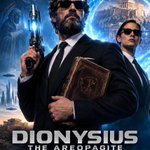
Relics of St Denis the Martyr (3rd century).
@ScriptoriumP argues this is St Dionysius the Areopogite!


Scriptorium Press retweeted

"Since you cannot be of assistance to everyone, those are especially to be cared for who are most closely bound to you by place, time, or opportunity, as if by chance...who, in reality, are chosen by God."
+ St. Augustine of Hippo, “On Christian Doctrine”
Scriptorium Press retweeted
The classical path of entry into studying Platonic philosophy is to follow the Iamblichean curriculum beginning with Alcibiades I.
The later Platonist schools believed that Alcibiades I contained Plato’s entire philosophy in seed form. It establishes the essential triad of Platonic philosophy: the nature of the self, the virtues, and the Good.
There are two primary sections of this dialogue:
1. Alcibiades being humbled by Socrates
2. Socrates lifting up Alcibiades
This pattern of the dialogue is a fractal version of the soul's descent → ascent required for philosophy. First, we must admit that we know nothing (as Socrates gets Alcibiades to do) in order to gain true self knowledge and ascend to higher things in contemplation.
In doing this, Plato answers two fundamental questions in this dialogue:
1. What does it mean to know thyself?
2. Why do we need philosophy?
This is why Alcobiades I is the first dialogue in the Neoplatonic curriculum, because it perfectly exemplifies the awakening of the soul and the entrance into the life of contemplation to guide the student towards true self-knowledge.
It is important to actually understand the pedagogical schema of the Platonist tradition rather than just recommend people read The Republic (which is absolutely NOT a work suitable for a beginner to Plato) as so many do.
The Iamblichean order for reading Plato's dialogues is meant to trace the movement of the soul through the tripartite progression of philosophy from ethics → physics → theology.
Iamblichus' first cycle of ten dialogues ascends from the virtues through the sciences by moving the student from the introduction to philosophy (Alcibiades I), to civic virtue (Gorgias), to purification (Phaedo), to logic (Cratylus, Theaetetus), to physics (Sophist, Statesman), and finally theology (Phaedrus, Symposium, Philebus) with the Timaeus and the Parmenides serving as contemplative crowns of highest theology covering Physics/cosmology, the One, hypotheses on being, divine procession, and mystical theology.
Understanding this educational schema is especially important for Christians who want to understand the three stages of the spiritual life (Purification [Katharsis], Illumination [Theoria], and Deification [Theosis]) that the Holy Fathers teach us and how they correct and perfect this in Christ.

Scriptorium Press retweeted

Me paenitet hunc locum Augustini non antea legisse. Multo indulgentior in me fuissem…
“Nam et mihi prope semper sermo meus displicet. Melioris enim avidus sum, quo saepe fruor interius, antequam eum explicare verbis sonantibus coepero: quod ubi minus quam mihi motus est evaluero, contristor linguam meam cordi meo non potuisse sufficere. Totum enim quod intelligo, volo ut qui me audit intelligat; et sentio me non ita loqui, ut hoc efficiam”.
De catechizandis rudibus.