

PostDoc @stanford Ph.D. @nyuniversity @NYUDataScience. | 🤖 #DeepLearning x 💊#Healthcare
New York, USA
Joined November 2019
- Tweets169
- Following191
- Followers566
- Likes238





Pinned Tweet
🚀Introducing Cerebra: A Multidisciplinary AI Board for dementia
🧠 The need for dementia care is rapidly evolving. But the way we use AI hasn’t.
🩺 From NIH: Patients need to wait 34 days on average to see a neurologist.
🤯 Doctors are overwhelming:
Who needs a referral? Who needs monitoring? Decisions are based on fragmented data, limited time, and rising demand.
❓What if every clinician had a team of AI experts alongside to support decision-making?
Here we present Cerebra, a team of AI agents for clinicians, boosting their dementia risk assessment accuracy by 17.5%.
Paper: arxiv.org/abs/2603.21597
Code: github.com/shengliu66/Cerebr…
Website & demo: cerebra-health.com/
Huge thanks to @JacKy_Clong, amazing PIs: @james_y_zou @narges_razavian, stellar advisors: @EricTopol @kchonyc @RuoguFang and Yu Huang, as well as the excellent team.


Sheng Liu retweeted

StreamVibe
Proactive Video Agents for Evolving User Intent
paper: huggingface.co/papers/2610.3…
Sheng Liu retweeted

🚀 𝐏𝐞𝐫𝐬𝐨𝐧𝐚𝐥 𝐀𝐠𝐞𝐧𝐭𝐬 𝐀𝐫𝐞 𝐓𝐚𝐤𝐢𝐧𝐠 𝐎𝐟𝐟: 𝐆𝐨𝐨𝐠𝐥𝐞 × 𝐔𝐂𝐒𝐁 𝐈𝐧𝐭𝐫𝐨𝐝𝐮𝐜𝐞 𝐒𝐭𝐫𝐞𝐚𝐦𝐕𝐢𝐛𝐞 𝐭𝐨 𝐔𝐧𝐝𝐞𝐫𝐬𝐭𝐚𝐧𝐝 𝐄𝐯𝐨𝐥𝐯𝐢𝐧𝐠 𝐔𝐬𝐞𝐫 𝐈𝐧𝐭𝐞𝐧𝐭 𝐓𝐡𝐫𝐨𝐮𝐠𝐡 𝐈𝐧𝐭𝐞𝐫𝐚𝐜𝐭𝐢𝐨𝐧
🤔The promise of personal agents is compelling: an assistant that understands what we need as we go about our day. But understanding a user is a moving target.
🍳 When we say "help me cook this dish," the next useful action depends on what we do next. A step gets completed. A mistake happens. We change our mind. The agent has to keep up with both the world and our intent, deciding when to help and when to stay quiet.
🔥 Introducing StreamVibe: Proactive Video Agents for Evolving User Intent.
🧩 Three key pieces power StreamVibe: ① StreamVibe-VL learns when and how to help; ② StreamVibe-Harness tracks evolving user intents and task progress; ③ StreamVibe-Bench tests proactive assistance in real-world, long-horizon interactions.
🎬 Watch the demo. More on the ideas and results below. 🧵
🌐 stream-vibe.github.io/
Sheng Liu retweeted

Google introduces StreamVibe
A proactive video agent framework that infers implicit user intents, tracks evolving requests, and decides when to help without being asked.

Sheng Liu retweeted
🧵 9/9 Acknowledgments
More analysis and details are in our paper! Check it out here:
🌐 Website: stream-vibe.github.io/
📄 Paper: arxiv.org/abs/2610.34662
🤝 I sincerely thank my collaborators @YuxiangLai34959
, @Toby_Yang_7 , @YanqingLiu83931 , Jiheng Hou, Yue Cao, Haonan Wang, Ruixi Fan, Lan Wang, @ShengLiu_ , @songyoupeng , @yalesong , @KevinQHLin , Jui-Hsin Lai, Youbao Tang and @xwang_lk (my advisor) for their contributions to this project.
💬 Thanks for reading! We would love to hear your thoughts on personal agents that understand evolving user intent.

Sheng Liu retweeted

Your agent finished the task. Did it also read files it shouldn't have, call tools outside policy, or leak data across components?
If you only score final outputs, you can't tell. 𝐇𝐚𝐫𝐧𝐞𝐬𝐬𝐀𝐮𝐝𝐢𝐭 evaluates the three safety layers the harness silently controls: boundary compliance, execution fidelity, and system stability. We run it on 210 tasks across 8 real-world domains and 10 frontier harness configurations including Claude Code, Codex, and OpenClaw.
Best overall score: 0.32. Task completion and safe execution are clearly misaligned, and most violations don't come from obvious tool misuse; they concentrate in resource access (right tool, wrong object) and inter-agent information flow (sensitive context leaking across components).


⚠️ Your Agent Harness Can Pass Every Task and Still Be Unsafe.
LLM agents now run inside execution harnesses that dispatch tools, allocate resources, and route messages across components. The harness can return a correct final answer while accessing unauthorized resources, leaking context to the wrong agent, or triggering irreversible side effects along the way.
Evaluating the model's output cannot see any of this.
The unit of safety has shifted. It's the harness.
We present HarnessAudit, a trajectory-level framework for auditing LLM agent harness safety, and uncover the following key insights 🔥:
🚨 Completion ≠ Safety. Task success and safe execution are fundamentally misaligned.
🔍 The harness, not the model, is the unit of safety. Most violations happen mid-trajectory, not at termination.
🕸️ Multi-agent collaboration expands the risk surface. Inter-agent communication creates entirely new failure modes.
💉 Resource access dominates violations. Agents rarely call wrong tools — they call right tools on unauthorized resources.
⚡ Harness design sets the safety ceiling. Framework choice matters more than model choice for safe deployment.

Sheng Liu retweeted
⚠️ Your Agent Harness Can Pass Every Task and Still Be Unsafe.
LLM agents now run inside execution harnesses that dispatch tools, allocate resources, and route messages across components. The harness can return a correct final answer while accessing unauthorized resources, leaking context to the wrong agent, or triggering irreversible side effects along the way.
Evaluating the model's output cannot see any of this.
The unit of safety has shifted. It's the harness.
We present HarnessAudit, a trajectory-level framework for auditing LLM agent harness safety, and uncover the following key insights 🔥:
🚨 Completion ≠ Safety. Task success and safe execution are fundamentally misaligned.
🔍 The harness, not the model, is the unit of safety. Most violations happen mid-trajectory, not at termination.
🕸️ Multi-agent collaboration expands the risk surface. Inter-agent communication creates entirely new failure modes.
💉 Resource access dominates violations. Agents rarely call wrong tools — they call right tools on unauthorized resources.
⚡ Harness design sets the safety ceiling. Framework choice matters more than model choice for safe deployment.
Sheng Liu retweeted

🚀 Today, we’re excited to introduce SimpleTES for scaling the scientific discovery loop.
🧵 I always ask myself: what are we actually scaling in scientific discovery?
Most LLM discovery methods focus on test-time scaling generation — more tokens, more agents, more turns.
But science advances through the evaluation-driven loops: propose → evaluate → refine → repeat.
SimleTES captures this idea, discovering SOTA solutions across 21 scientific problems!
Key discoveries:
🏎️ 2.17x faster lasso solver than glmnet — the gold-standard LASSO solver, engineered for decades.
⚛️ 24.5% fewer quantum routing overhead on IBM Q20 — superior than previous standard library LightSABRE.
📐 0.380868 on Erdős Minimum Overlap — outperforming previous solutions from mixed-frontier ensembles or humans.
🧬 0.74 on Tabula Muris (scRNA-seq denoising) — new SOTA, generalizing to unseen tissue types without retraining.
#LLM #AI4Science #ScalingLaws #SimpleTES #MachineLearning

Sheng Liu retweeted

Excited to share that OctoTools has been accepted to ACL 2026. 🐙
OctoTools is our training-free, extensible framework for tool-using agents on complex reasoning tasks.
Grateful to the broader community for the support. Our GitHub repo has now reached 1.4K stars. 📣
Huge thanks to our amazing team: @chenbowen118, @ShengLiu_, @connect_thapa, and Joseph Boen. Special thanks to @james_y_zou.
Code: github.com/octotools/octotoo…
Project: octotools.github.io/
See you in San Diego!🏖️🌴 @aclmeeting
#OctoTools #ACL2026

🐙 Introducing OctoTools: an agentic framework with extensible tools for complex reasoning! 🚀 🧵
🔗 Explore now: octotools.github.io/
OctoTools tackles challenges in complex reasoning—including visual understanding, domain knowledge retrieval, numerical reasoning, and multistep problem-solving. It introduces:
🔹 Standardized tool cards to encapsulate tool functionality
🔹 A planner for structured high-level & low-level planning
🔹 An executor to carry out tool usage
Featured Highlights 💡
✅ Standardized tool cards for seamless integration of new tools-no framework changes needed (🔎 examples: octotools.github.io/#tool-ca…)
✅ Planner + Executor for structured high-level & low-level decision-making
✅ Diverse tools: visual perception, math, web search, specialized tools & more
✅ Long CoT reasoning with test-time optimization: planning, tool use, verification, re-evaluation & beyond (🔎 examples: octotools.github.io/#visuali…)
✅ Training-free & LLM-friendly—easily extend with the latest models
✅ Task-specific toolset optimization: select an optimized subset of tools for better performance
📊 Performance: OctoTools achieves generalizable gains across 16 tasks, outperforming:
📈 GPT-4o (+9.3%)
📈 AutoGen (+10.6%)
📈 GPT-4o Functions (+7.5%)
📈 LangChain (+7.3%)
🤗 Try the live demo (supported by @huggingface @_akhaliq):
huggingface.co/spaces/octoto…
🐙 OctoTools in action on diverse real-world examples:
✅ How many r letters are in the word strawberry?
✅ What's up with the upcoming Apple Launch? Any rumors? (credit: @karpathy)
✅ Which is bigger, 9.11 or 9.9?
✅ Solve gane of 24 with [1,1,6,9]
✅ Research trends in tool agents with LLMs for scientific discovery from ArXiv, PubMed, and Nature
✅ How many baseballs are there? (visual perception, GPT-4o ❌)
✅ What is the organ on the left side of this image? (radiology, GPT-4o ❌)
✅ What are the cell types in this image? (pathology, GPT-4o ❌)
... and more!
Dive deep into OctoTools:
📄 Read our 89-page paper: arxiv.org/abs/2502.11271
💻 Explore the codebase: github.com/octotools/octotoo…
Huge thanks to our amazing team: @chenbowen118, @ShengLiu_, @connect_thapa, Joseph Boen!
Special thanks to @james_y_zou, @StanfordHAI, @ChanZuckerberg for the support! 🙌
#Agent #LLMs #ToolUse #Reasoning #OctoTools

Sheng Liu retweeted

Training multi-agent teams is hard.
#AgentFlow comes to the rescue. We introduce Flow-GRPO, an efficient method to train multi-agent teams. Improves planning and tool use.
Selected as an #ICLR2026 Oral (top 1%)🚀
🔥Introducing #AgentFlow, a new trainable agentic system where a team of agents learns to plan and use tools in the flow of a task.
🌐agentflow.stanford.edu
📄huggingface.co/papers/2510.0…
AgentFlow unlocks full potential of LLMs w/ tool-use.
(And yes, our 3/7B model beats GPT-4o)👇
🧩A team of four specialized agents coordinates via shared memory:
Planner: plan reasoning & tool calls 🧭
Executor: invoke tools & actions 🛠
Verifier: check memory status ✅
Generator: produce final results ✍️
💡The Magic:
🌀💫 AgentFlow directly optimizes its Planner agent live, inside the system, using our new method, Flow-GRPO (Flow-based Group Refined Policy Optimization). This is "in-the-flow" reinforcement learning.
📊The Results:
AgentFlow (7B backbone) outperforms top baselines on 10 benchmarks, with average gains of:
+14.9% on search 🔍
+14.0% on agentic 🤖
+14.5% on math ➗
+4.1% on science 🔬
🏆It even surpasses larger-scale models like Llama-3.1-405B and GPT-4o (~200B).
Try it yourself!
🛠️Code: github.com/lupantech/AgentFl…
🚀Demo: huggingface.co/spaces/AgentF…
🤖Model: huggingface.co/AgentFlow/mod…
📊Visual: agentflow.stanford.edu/#visu…
💬Join our Slack: join.slack.com/t/agentflow-c…
#agentic #llms #RL #tooluse


Sheng Liu retweeted
Finally getting to share one of my favorite projects. ICLR Oral! 🏆
It’s so strange how rigid video tokenization is. Think about it: why should a still landscape cost the same amount of tokens as a busy street?
We built InfoTok. We went back to basics with Shannon’s information theory to make tokens "adaptive" in a principled way. Its 2.3x better compression and 11x faster inference demonstrates the magic of the old-school theory ✨
Check it out: research.nvidia.com/labs/dir…
Sheng Liu retweeted

🚨 𝗠𝗲𝗱𝗶𝗰𝗮𝗹 𝗔𝗜 𝗥𝗲𝘀𝗲𝗮𝗿𝗰𝗵 𝗔𝗹𝗲𝗿𝘁! 🚨
𝗛𝗼𝘄 𝗰𝗮𝗻 𝘄𝗲 𝗮𝗰𝗰𝘂𝗿𝗮𝘁𝗲𝗹𝘆 𝗽𝗿𝗲𝗱𝗶𝗰𝘁 𝗮𝗻𝗱 𝗱𝗶𝗮𝗴𝗻𝗼𝘀𝗲 𝗱𝗲𝗺𝗲𝗻𝘁𝗶𝗮 𝘂𝘀𝗶𝗻𝗴 𝗺𝗲𝘀𝘀𝘆, 𝗶𝗻𝗰𝗼𝗺𝗽𝗹𝗲𝘁𝗲, 𝗮𝗻𝗱 𝗺𝘂𝗹𝘁𝗶𝗺𝗼𝗱𝗮𝗹 𝗿𝗲𝗮𝗹-𝘄𝗼𝗿𝗹𝗱 𝗰𝗹𝗶𝗻𝗶𝗰𝗮𝗹 𝗱𝗮𝘁𝗮?
@Stanford presents 𝗖𝗲𝗿𝗲𝗯𝗿𝗮: 𝗮𝗻 𝗶𝗻𝘁𝗲𝗿𝗮𝗰𝘁𝗶𝘃𝗲 𝗺𝘂𝗹𝘁𝗶-𝗮𝗴𝗲𝗻𝘁 𝗔𝗜 𝘁𝗲𝗮𝗺 𝗳𝗼𝗿 𝗺𝘂𝗹𝘁𝗶𝗺𝗼𝗱𝗮𝗹 𝗱𝗲𝗺𝗲𝗻𝘁𝗶𝗮 𝗰𝗵𝗮𝗿𝗮𝗰𝘁𝗲𝗿𝗶𝘇𝗮𝘁𝗶𝗼𝗻.
By @ShengLiu_ , @JacKy_Clong , Zeyun Zhao, Qinglin Gou, Qingyue Wei, Arjun Masurkar, Kevin M Spiegler, Philip Kuball, Stefania C Bray, @mm_bernath , Deanna R Willis, Jiang Bian, @lx2015 , @EricTopol , @kchonyc , Yu Huang, @RuoguFang , @narges_razavian , @james_y_zou
Now you can watch and listen to the latest Medical AI papers daily on our YouTube and Spotify channels!
• YouTube: youtube.com/@OpenlifesciAI
• YouTube Deep Dive: youtu.be/4Lxf2StywjA
• YouTube Shorts: youtube.com/shorts/De2NfB0gx…
Spotify: open.spotify.com/show/4edRuS…
Here's why it's exciting: 👇🧵 1/9
#MedicalAI #Healthcare #Neurology #AgenticAI
##MedicalAI ##Healthcare ##Neurology ##AgenticAI
[1/9]


Sheng Liu retweeted

Cerebra, a platform of a multimodal AI agents that analyze imaging, EHR, and clinical notes for holistic dementia risk assessment 🧠
Proud to be part of this amazing collaboration with @ShengLiu_ @james_y_zou @narges_razavian and incredible collaborators!

🚀Introducing Cerebra: A Multidisciplinary AI Board for dementia
🧠 The need for dementia care is rapidly evolving. But the way we use AI hasn’t.
🩺 From NIH: Patients need to wait 34 days on average to see a neurologist.
🤯 Doctors are overwhelming:
Who needs a referral? Who needs monitoring? Decisions are based on fragmented data, limited time, and rising demand.
❓What if every clinician had a team of AI experts alongside to support decision-making?
Here we present Cerebra, a team of AI agents for clinicians, boosting their dementia risk assessment accuracy by 17.5%.
Paper: arxiv.org/abs/2603.21597
Code: github.com/shengliu66/Cerebr…
Website & demo: cerebra-health.com/
Huge thanks to @JacKy_Clong, amazing PIs: @james_y_zou @narges_razavian, stellar advisors: @EricTopol @kchonyc @RuoguFang and Yu Huang, as well as the excellent team.
Sheng Liu retweeted

Excited to share Cerebra, our agentic way of tackling multimodal problem in healthcare.
Thanks to the amazing team who made this large-scale study happen, with the lead and supervision of @ShengLiu_ , @narges_razavian, and @james_y_zou !
🚀Introducing Cerebra: A Multidisciplinary AI Board for dementia
🧠 The need for dementia care is rapidly evolving. But the way we use AI hasn’t.
🩺 From NIH: Patients need to wait 34 days on average to see a neurologist.
🤯 Doctors are overwhelming:
Who needs a referral? Who needs monitoring? Decisions are based on fragmented data, limited time, and rising demand.
❓What if every clinician had a team of AI experts alongside to support decision-making?
Here we present Cerebra, a team of AI agents for clinicians, boosting their dementia risk assessment accuracy by 17.5%.
Paper: arxiv.org/abs/2603.21597
Code: github.com/shengliu66/Cerebr…
Website & demo: cerebra-health.com/
Huge thanks to @JacKy_Clong, amazing PIs: @james_y_zou @narges_razavian, stellar advisors: @EricTopol @kchonyc @RuoguFang and Yu Huang, as well as the excellent team.
Sheng Liu retweeted
Cerebra: a team of AI agents that analyzes imaging, EHR and notes to holistically assess dementia risk🧠
Great job led by @ShengLiu_ @narges_razavian @RuoguFang and fantastic collaborators!
🚀Introducing Cerebra: A Multidisciplinary AI Board for dementia
🧠 The need for dementia care is rapidly evolving. But the way we use AI hasn’t.
🩺 From NIH: Patients need to wait 34 days on average to see a neurologist.
🤯 Doctors are overwhelming:
Who needs a referral? Who needs monitoring? Decisions are based on fragmented data, limited time, and rising demand.
❓What if every clinician had a team of AI experts alongside to support decision-making?
Here we present Cerebra, a team of AI agents for clinicians, boosting their dementia risk assessment accuracy by 17.5%.
Paper: arxiv.org/abs/2603.21597
Code: github.com/shengliu66/Cerebr…
Website & demo: cerebra-health.com/
Huge thanks to @JacKy_Clong, amazing PIs: @james_y_zou @narges_razavian, stellar advisors: @EricTopol @kchonyc @RuoguFang and Yu Huang, as well as the excellent team.
(5/n)
Reasoning with doctors feedback
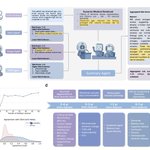
🤔Not just predictions, Cerebra reasons. Cerebra aggregates evidence from EHR, notes, and imaging, then debates across agents to reach a decision.
🩺 Clinicians stay in the loop with their feedback captured and reused as a dynamic medical notebook.
🔁 Not static outputs. Cerebra is an evolving system that improves over time.

1
2
232
(6/n)
👥 The team
Building Cerebra requires bridging experts between AI and medicine. Huge shoutout to the incredible squad: @ZeyunZhao, Qinglin Gou, Qingyue Wei
Thank our amazing clinical collaborators: Arjun Masurkar, Kevin M Spiegler, Philip Kuball from NYU Langone, Stefania C Bray from UF Health, and Megan Bernath, Deanna R Willis, @ji0ngbi0n from INPC.
Special thanks to my amazing advisors @james_y_zou @lx2015
251
(4/n)
🧩Flexible multimodal support
Patients come with multimodal data, which are often incomplete, and inconsistent across patients.
Most current AI approaches assume fixed inputs, disallowing missing or inconsistent data.
Cerebra doesn’t. It flexibly integrates available modalities and works well when some are missing.

1
1
260
(1/n)
🏥 Massive scale with real-world, multimodal data
Cerebra is designed and tested to handle complex, real-world data.
📈 Large scale:
🔥3M patients
🔥4 healthcare systems 🏥 across the US
Messy, Noisy, Real-world clinical data. And it still works well!
🧠 Not a single model:
✅A team of modality experts: EHR, Notes, Imaging.
Each modality expert trains and uses its own models, and can be upgraded independently.

1
3
621
(3/n)
🩺 Cerebra augments clinicians
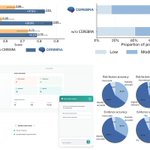
Cerebra interacts with clinicians through a dashboard 🖥️, with visualized risk assessment ⚠️and categorized evidence in EHR, notes, and imaging.
With the interactive design, clinicians achieve +17.5% higher accuracy with improved confidence.
In ~70% of cases, Cerebra helps doctors understand risk and make decisions easier.
Not replacing doctors. Empowering them.

1
1
302

