
Housing + urban policy. Former @whitehouse46 @HUDgov @urbaninstitute. Double Hoo.
Washington, DC
Joined October 2016
- Tweets651
- Following1.2K
- Followers511
- Likes2K


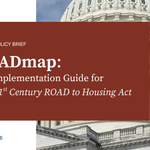




Glad to hear electeds focused on this - oversight will be critically important in the 120th Congress. Full details on the 21st Century ROAD implementation tasks here: naahl.org/thecenter/roadmap


At the Up For Growth annual summit, @RepJoshHarder made a good point on what is next following the success of ROAD. Most of its policies aren’t self-executing, and it lands on agencies that are already underfunded and stretched thin. Implementation needs as much attention as passage did!

Aaron Shroyer retweeted

👀 postal YIMBY legislation

Today, @ChrisVanHollen & @SenJohnCurtis introduced legislation that incorporates many of the recommendations @BenMcAdams & I listed in our @BrookingsMetro paper
Today, @ChrisVanHollen & @SenJohnCurtis introduced legislation that incorporates many of the recommendations @BenMcAdams & I listed in our @BrookingsMetro paper
New @BrookingsInst paper from me estimating the housing potential of USPS-owned property nationwide & the annual revenue that a full build-out could generate 🧵

This bill is a win-win - more housing in downtowns & main streets + more revenue for a critical public enterprise - and should factor into any “ROAD 2.0” discussions
Full bill here:
vanhollen.senate.gov/news/pr…

Aaron Shroyer retweeted

Excited that @besttrousers's new paper is out!
As Matt details, reforming the design of unemployment taxes -- i.e., shifting towards a more consistent tax rate for all employers -- can support cheaper housing and serve as a pro-hiring policy for industries like construction.

I have a new piece out for @SearchlightInst!
Want to make housing cheaper? Stop taxing construction so heavily for being a volatile industry
Our unemployment insurance system quietly makes it more expensive to build.
Here’s how: (1/12)

Aaron Shroyer retweeted

Let's say that you're a homeowner or a renter in a city where housing costs have shot through the roof.
To bring down costs? Build more housing — and give residents a financial stake in that growth with a cash rebate.
theatlantic.com/ideas/2026/0…

Aaron Shroyer retweeted

Can you pay NIMBYs to say yes to housing? Rogé Karma covers my work with Glaeser, Gyourko & Davis in The Atlantic. Most people have a price — it rises with proximity, project scale, and as you move to the suburbs. Gift link: theatlantic.com/ideas/2026/0…


The biggest obstacle to building new housing is local resistance—“but a new approach might finally offer a way out of the impasse: If you can’t beat the NIMBYs, pay them,” Rogé Karma argues. theatlantic.com/ideas/2026/0…

Aaron Shroyer retweeted

The ROAD to Housing Act makes major changes to federal housing NEPA practice. I dug into the law --here's a summary of what's changed & why it matters:
First, some context: HUD (and USDA) provide grants, loans, mortgage insurance, and rental assistance to support affordable housing. That federal hook often triggers time consuming NEPA review even for privately built projects.
According to the latest CEQ data, HUD takes between half a year & *six years* to complete Environmental Impact Statements (EISs), with the median being about 2 years. (Most projects will require less involved review like an EA but neither CEQ nor HUD publishes data on these.)
What does the ROAD to Housing Act change?
- Section 501 creates *statutory NEPA exemptions* for certain HOME program funded projects including infill construction, property acquisition for affordable housing, rehabilitation, and new construction of <15 units.
These projects would require *no NEPA review at all* (beyond establishing that they qualify).
Statutory NEPA exemptions are not common; the most recent example is for CHIPS Act funded semiconductor fabs.
- Section 206 directs HUD to update its regulations covering common activities like rental assistance, homebuyer assistance, & non-physical predevelopment work.
Some of these activities -- like small rehab and repair projects are intended to be excluded from NEPA *and* related laws like the National Historic Preservation Act (NHPA).
Others -- office-to-residential conversions, small new construction (5–15 units), and infill projects -- are to be excluded from NEPA but still go through NHPA and other reviews. Exact details depend on the forthcoming regulations.
- Section 103 removes environmental study and reporting requirements for certain USDA-funded housing on qualifying infill sites.
- Sections 202 and 205 allow state, local, and Tribal governments to assume more of HUD’s environmental-review responsibilities.
- Section 504 allows disaster-recovery grantees to rely on another federal agency’s similar review.
- Section 802 requires HUD and USDA to work to coordinate reviews for jointly funded projects.
Taken together, these provisions exempt several important classes of HUD-sponsored housing development from NEPA, which can take years (and, if challenged in court, even longer).
For a large, environmentally consequential development, full NEPA review is likely still required.
But for rental assistance, rehabilitation of an existing building, or a small infill project in an existing urban core -- unless other federal permits are required or other federal agencies are providing funding -- the project may simply bypass NEPA and the associated delay, cost, and litigation risk.
This is a major change to HUD’s NEPA practice, and will likely contribute, on the margin, to more efficient and timely provision of the housing assistance that the agency provides.

The first major federal housing package in 30 years is now law. It combines over 50 bills, and puts the federal government on the side of legalizing housing:
1. Cuts some federal funding from expensive places that don't allow housing and gives it to places that do. The first federal carrots and sticks tied to housing results!
2. Removes the requirement for a metal chassis from manufactured housing, saving ~$5-10K per home and making multifamily manufactured housing possible
3. Rewards zoning reform with grants to support schools, sewers, and other needs
4. Rewards cities that create preapproved building plans so builders can build without delay
5. Federal guidelines for single-stair buildings (!)
6. Federal guidelines for zoning reform
7. Exempts infill and other low-impact housing from environmental review
8. Makes it easier for HUD to get money out the door after disasters without months of rulemaking
9. Ends duplicate inspections for housing funded by multiple federal programs
10. Updates the HOME program to remove blockers for federally-funded affordable housing
11. Creates grants to repair old housing stock
12. Allows banks to invest in more affordable housing
13. Streamlines rehab of old public housing buildings and adding mixed-income homes
14. Encourages financing changes to enable modular housing that lowers construction costs
15. Requires databases of local publicly-owned land that could be used for housing
16. Preserves build-to-rent homebuilding
...plus 42 other sections, most a labor of love from a staffer and their boss trying to tackle the largest cost Americans face each month
Aaron Shroyer retweeted

This is a great breakdown of what needs to happen to make ROAD a reality and how much is riding on a decimated federal workforce.
Some lessons for legislators -- between Loper Bright and DOGE, the days of kicking the details to agencies may be over.
The 21st Century ROAD to Housing Act, the most consequential housing bill in decades, is now law... so what happens next?
In a new guide at @NAAHL, I break down the 124(!) actions agencies must now take to implement the bill by agency, type of action, and deadline

Aaron Shroyer retweeted

Excellent @ShroyerAaron analysis of ROAD to Housing Act implementation
Nothing in the bill is self-executing; the Trump Admin (and its depleted HUD) has a lot to do b4 any1 feels the benefits of the bill
Ripe space for a House Dem majority in 2027 to hold Trump Admin to account
The 21st Century ROAD to Housing Act, the most consequential housing bill in decades, is now law... so what happens next?
In a new guide at @NAAHL, I break down the 124(!) actions agencies must now take to implement the bill by agency, type of action, and deadline
Aaron Shroyer retweeted

A great new guide on how the most consequential housing bill in decades actually gets built!
Passing the package was just the start. The 21st Century ROAD to Housing Act reforms only reach households once federal agencies act, and this guide helps map steps they can take to get there.

The 21st Century ROAD to Housing Act, the most consequential housing bill in decades, is now law... so what happens next?
In a new guide at @NAAHL, I break down the 124(!) actions agencies must now take to implement the bill by agency, type of action, and deadline
Aaron Shroyer retweeted

Excellent guide to all the federal actions needed to implement the new housing bill. Daunting list--and HUD will need help from top think tank & academic researchers to help backfill capacity on studies and rulemakings
There's also a lot for state & local governments to do!
The 21st Century ROAD to Housing Act, the most consequential housing bill in decades, is now law... so what happens next?
In a new guide at @NAAHL, I break down the 124(!) actions agencies must now take to implement the bill by agency, type of action, and deadline
The 21st Century ROAD to Housing Act, the most consequential housing bill in decades, is now law... so what happens next?
In a new guide at @NAAHL, I break down the 124(!) actions agencies must now take to implement the bill by agency, type of action, and deadline
Full guide: naahl.org/roadmap