

Twitter account of the History Department at @StellenboschUni @SUArtsSocialSci #twitterstorians
Stellenbosch, South Africa
Joined July 2022
- Tweets340
- Following132
- Followers878
- Likes96




Statement by @SAHistSoc concerning the Zambian government's cancellation of the passport of our colleague @ssishuwa

Joint Statement of the @SAHistSoc Executive Committee and @sahisjor Editorial Collective on the cancellation of @ssishuwa passport by Zambian government:
The Executive Committee of the South African Historical Society (SAHS) and the Editorial Collective of the South African Historical Journal (SAHJ) express our deep concern at the cancellation of Dr Sishuwa Sishuwa’s passport by the Zambian government on grounds of “security reasons in the interest of national security.”
Dr Sishuwa is a historian and Senior Lecturer at Stellenbosch University, a longstanding member of the SAHS, has served on its Executive Committee, and sits on the Editorial Board of the South African Historical Journal. He is a prominent scholar of Zambian history and politics whose academic and public work contributes significantly to historical scholarship and public debate.
We are particularly concerned by the use of state administrative powers in ways that restrict the fundamental rights of scholars and citizens to freedom of movement and freedom of expression. We join calls for the Zambian authorities to reverse the cancellation of Dr Sishuwa’s passport and to uphold these rights.
The SAHS and the SAHJ stand in solidarity with our colleague and reaffirm our commitment to academic freedom, freedom of expression, and the unhindered pursuit and dissemination of historical knowledge.
Congratulations to our colleague @ssishuwa for being re-elected last Friday to Council, the highest governing body of @StellenboschUni. He gained a majority vote from permanent academic staff who were invited to elect a member from their ranks for a two-year term.

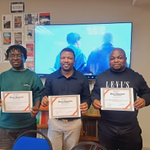
Today was Doctoral Day when our PhD students present the fruits of their research. Prize for best presentation Emmanuel Phiri on women brewing beer in Zambia, runner up Tapiwa Vincent Mutasa on legislation surrounding sex work in Zimbabwe, and most expert chair, Brian Maregedze.


Do voters in African democracies prioritise the economy over rights and freedoms? Our colleague Dr @ssishuwa told Al Jazeera that while hunger is a major factor, it is not the bedrock of their concerns. In Zambia's election, the spectrum of voters' needs is much wider than food.

Here is the recorded version of my appearance on @AJEnglish earlier this evening, alongside economist and ZANACO Board chairman @saasaoliver and @ChathamHouse ’s Senior Research Fellow Christoper Vandame, to discuss today’s presidential election in Zambia.
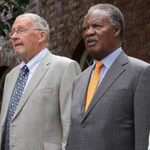
After Zambia’s President died in 2014, a split arose in Cabinet over who should act as President. One faction said Guy Scott. Another said Edgar Lungu. “Why then were we fighting for self-rule if we can let a white man rule us?” Our very own @ssishuwa unpacked it all this week.


Starting the new semester, Prof. Dan Branch, visiting from Warwick University, spoke on 'Tom Mboya and the Politics of Friendship in Kenya's Shadow Archives', basing his talk on issues surrounding the multi-archival research that informed his recent book.


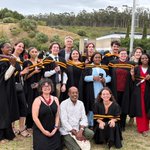
Part of the History Department delegation on the way to Harare for #SAHS2026

We have been made aware of a complaint against @ssishuwa sent to @StellenboschUni by supporters of Zambia’s president. The complaint relates to his commentary on governance issues. As a Dept, we warmly and unequivocally support Dr Sishuwa's academic freedom without interference.


Stellenbosch History Department retweeted

What actually is the ‘Anthropocene’? Prof Sandra Swart @WildPasts_ head of the history department explains! ✍️
youtu.be/QC4folw43o4?si=c0TN…

Stellenbosch History Department retweeted
2026 Application Guide: How to Apply 💻
In this guide you will find more details about the application process and steps on how to apply online.
📢Please note: applications close on 31 July
#stellenboschuniversity #fass #applications


Stellenbosch History Department retweeted

The NRF’s 2027 Master’s and Doctoral Funding call is available here: nrf.ac.za/dsti-nrf-postgradu…
It is compulsory for applicants to consult the NRF’s official documents (Framework, Application, and FAQ Guides) before posting queries or submitting applications.

Stellenbosch History Department retweeted

Good luck with your A2 Assessment! 📚✨
“Success is the sum of small efforts, repeated day in and day out.” – Robert Collier
Remember, the library is here for you every step of the way — study spaces, resources, and support to help you succeed. 💪📖
#A2Assessment #library

Stellenbosch History Department retweeted

New article connects Angolan & South African Cold War historiographies, examining the divergent views of MPLA & ANC troops who fought on the same side during ANC exile in Angola, particularly on the question of whether UNITA were compatriots or foes. tandfonline.com/doi/full/10.…

Stellenbosch History Department retweeted
A decade after my last contribution to
@currenthistory1 I have a new article on how the habits of ruling parties & the possibilities for opposition in #Angola & #Mozambique are constrained by history 50 years after independence. (Not open access: I can share a copy on request.)

Our annual Africa issue is out! With Patrick Desplat on Madagascar’s Gen Z uprising, Moses Khisa on Uganda’s autocratic drift, Basile Ndjio on LGBT+ exclusion and resistance in Cameroon, @drjustinpearce on 50 years of strife in Angola and Mozambique…
online.ucpress.edu/currenthi…
Stellenbosch History Department retweeted

The University of Oxford is advertising a 2-year Teaching Fellowship in Economic and Social History starting 1 Sep 2026. Applications close 1 Jul 2026.
my.corehr.com/pls/uoxrecruit…
Stellenbosch History Department retweeted

Lesotho at 60: A Historical Retrospective
On 4 October 2026 Lesotho will celebrate its 60th anniversary of independence. As an enclave country many of the problems of post-independence Africa are magnified in Lesotho, as the country has long struggled to assert its sovereignty and support its own citizens, both at home and abroad for migrant labour. Still, the significant changes in the country since the return of democracy in 1993 and the end of apartheid in surrounding South Africa in 1994 deserve examination.
The post-apartheid period has seen, paradoxically, both better access to historical sources in Lesotho and fewer historical publications. Greater access to historical sources has been – in part – due to a revitalised National Archives in Maseru, the opening of new archives such as the Royal Archives in Matsieng, and a renewed focus on history in the country due to the political salience of issues like the border with South Africa.
However, South African history has long dominated Southern African history and historiography. With the coming of democracy to South Africa in 1994, this historiographical dominance has been heightened as scholars rushed to document and re-interpret the years when scholarly work on the country was difficult due to apartheid restrictions. Changes in peripheral states like Lesotho, a place many scholars gravitated to in their work when they were denied access to apartheid South Africa, were often left unnoticed except by those still working in country. This historical and historiographical erasure has meant that scholarship on Southern Africa often implicitly takes South Africa as the norm in the region.
This special issue, therefore, calls for a dramatic re-centering of regional scholarship on Southern Africa. Even continuing to call Lesotho (and other countries) ‘peripheral’ to region implies that South Africa is the centre around which everything else revolves. This is not the case. While the Republic of South Africa plays particular regional roles, this issue will serve as a corrective, using the lens of sixty years of independence for Lesotho to explore and shift toward more regional perspectives on political, economic, and social histories to better reflect the lived realities for many—where border crossing is the norm and national citizenship reflects the passport people hold, but not necessarily the allegiances they feel.
Much of the best scholarship on Lesotho—scholarship that has complicated and reframed Southern African historiography—has only been published locally, which has contributed to the lacuna in the regional historiography around such ‘peripheral’ states. Individual authors have broken through to write important works, but this special issue of the South African Historical Journal will foreground voices and authors who will bring work on Lesotho and its situated contexts to a wider audience.
The existing historiography on Lesotho is strong in migration and migrant labour, the history of development, and nineteenth century chieftaincy/land disputes. These all remain important themes, but with the ending of apartheid the migrant labour system has been radically reshaped, and the development industry has gone through multiple iterations in response to both regional changes and global upheavals in the aid/development regime.
More historical scholarship is needed, both on the changes in these processes in the years since 1993/1994, but also in the apartheid era, given the new access to archival sources in Lesotho. Further, by virtue of being an enclave country, the role of Lesotho citizens in increasingly vitriolic regional debates around borders, citizenship, belonging, and the role of passports/identity documents in the post-apartheid period deserve a more fulsome examination.
The special issue will ask authors to engage with prior literatures, but also to tell new stories, including new stories about old phenomena. The shift from Lesotho being primarily an exporter of migrant labourers to being an exporter of water is one that may foreshadow future regional changes, as low-skill manufacturing and mining jobs continue to disappear in many Southern African countries. Further the rise and decline of Lesotho’s textile industry in the 21st century may be a cautionary tale about how embracing globalisation may bring some short-term wins, but at great cost to the workers, the environment, and the political system.
Some of the themes authors may explore in this special issue include:
· What new histories of Basotho and Lesotho need to be written?
· What new insights into older Basotho history have been discovered with the new wealth of documents available from the Royal Archives in Matsieng and/or new collections of documents from the 19th and early 20th century?
· How has literature produced in Lesotho engaged with historical storytelling, oral traditions, and the reinterpretation of Lesotho’s past?
· What regional lessons are there to learn about political changes that have taken Lesotho from democracy through one-party dictatorship, military rule, back to democratic rule and then to some of the first coalition governments in Southern Africa?
· How have struggles over constitutional reform evolved over time? Especially regarding relations between the monarchy and government.
· How have Basotho responded to changing economic developments in South Africa that have altered labour migration routes, so prevalent in the 20th century?
· How have patterns of labor migrations between Lesotho and South Africa shaped musical traditions, performance practices, and the development of shared artistic expressions as tools for contesting power during the 20th and 21st centuries?
· How does the textile industry in Lesotho illuminate globalisation and its discontents in the late 20th and early 21st centuries?
· What re-examinations of older histories and historiographies will alter the ways we understand Basotho society and the role that Lesotho plays in Southern Africa and the wider world?
· How have smaller states in southern Africa managed to push forward their own diplomatic agendas and/or the concerns of their citizens in the region and internationally?
· What has been the relationship between NGOs, Basotho citizens, and the Lesotho government?
· How have large development projects like the Lesotho Highlands Water Project influenced the ways that Basotho see the world and their own government?
· How have environmental histories of Lesotho reshaped how we understand processes of social and economic change?
· How do borderland communities between Lesotho and South Africa navigate identity, belonging, and adapt in response to labour systems and state policies?
· How have artists in Lesotho engaged with questions of memory, heritage and historical narrative in their creative work since the 19th century?
· How have historical narratives and oral traditions documented migrations, the founding of settlements and the formation of communities in Lesotho since the 19th century.
· Other topics of interest to scholars and the public.
Tentative Timeline:
30 June 2026: Abstracts due to the editors (contact information below)
August/September 2026: Authors informed of acceptance
30 November 2026: Full paper submissions due for peer review
For submissions, more information, or questions, please reach out to Dr. John Aerni-Flessner, [email protected], Dr. Nthabiseng Mokoena-Mokhali, [email protected], or Kevin Qhubu, [email protected].
Stellenbosch History Department retweeted
JSAS Special Issue 'Liberation Armies' Imagined Futures in Southern Africa' is now out. We focus on military institutions formed by liberation struggles & remade in independent states as sites of political, social & cultural production. tandfonline.com/toc/cjss20/5…
Stellenbosch History Department retweeted

Special Issue of the Journal of Southern African Studies: “Liberation Armies’ Imagined Futures in Southern Africa” is out now—exploring how liberation movements shaped visions of the future across the region. #JSAS #AfricanHistory @Stell_History doi.org/10.1080/03057070.202…

In this engaging interview with @StellenboschUni to mark Freedom Day, our very own Dr @ssishuwa, currently at @Harvard as a Visiting Scholar, shares his thoughts on the most significant threats to democracy today in Southern Africa and internationally.
su.ac.za/en/news/democracy-f…

