
News junkie, avid follower of political and world affairs
Joined December 2013
- Tweets5K
- Following509
- Followers119
- Likes6.7K




Sunita Rocque retweeted

A new chapter is taking shape at Hafeezia BCCC School in Shivajinagar. Inspected the ongoing developmental works. It is encouraging to see that all the works are now at the final stage, and the school is nearing completion.
Over the years, we have worked consistently to strengthen government schools in Shivajinagar with better infrastructure and improved learning facilities, because every child deserves the very best.
These schools are not just classrooms—they are places where dreams take shape and futures are built.
We are delighted that the school will soon be inaugurated, marking another important milestone in our commitment to providing world-class learning facilities for children in our constituency.
Our commitment remains unwavering: to make every government school in Shivajinagar a place where children receive quality education, equal opportunities, and the confidence to achieve their fullest potential.
#Shivajinagara #EducationForAll #GovernmentSchools #QualityEducation


Sunita Rocque retweeted

Satish Dhawan, the man who helped shape India’s space programme, cared about trees as deeply as he cared about rockets.
When plans for the SLV-3 launch complex at Sriharikota meant cutting 10,000 trees, he refused to simply accept it as the price of progress.
He spent two hours with his engineers asking one question: Could they find another way?
They did.
By redesigning the site, they brought the number down to 1,000 trees. Dhawan then asked them to plant 10,000 saplingsand later made tree removal at ISRO establishments subject to the Chairman’s specific clearance.
Perhaps it came naturally to a man who spent his free hours studying birds, their wings, muscles, hovering, gliding and soaring. His fascination with flight eventually became Bird Flight, a book exploring how nature had already mastered what he spent his life trying to understand.
Then, on 18 July 1980, SLV-3 placed the 40-kg Rohini satellite into orbit.
After the celebrations, Dhawan and Kalam quietly sat on the launcher, watching the waves of the Bay of Bengal.
No grand celebration between them. Just a quiet moment after eight years of failures, patience and perseverance.
That’s the kind of progress worth remembering: the kind that builds something new without forgetting what was already there.
#SatishDhawan #ISRO #IndianSpaceHistory #SpaceExploration #SustainableDevelopment
[How Satish Dhawan saved trees at Sriharikota, Why Satish Dhawan refused to cut 10000 trees, How SLV-3 launch site saved trees, Satish Dhawan and Kalam Rohini satellite story, The inspiring story of Satish Dhawan]

Sunita Rocque retweeted

THE OWNERS WILL ALWAYS REMAIN OWNERS
Put the chair down!
Because if you dont, your name will outlive your legacy - not as a chairman, but as a verb. And the promoters will ask themselves only one question this leaves behind
Who could do a Chandra on you?

Sunita Rocque retweeted

Japan is not a small city. It is a large, crowded country of islands, mountains, farms, and huge train stations. Even so, it looks unusually clean.
That does not happen by chance.
The first lesson is taught to children. They clean their own classrooms and often the toilets. Many walk to school and learn the road. They are told that a shared place belongs to them too. A child who has wiped a floor is less likely to treat the street like a dustbin.
The second lesson is social. Litter is not only against the law. It is shameful. Neighbours, shopkeepers, and station staff notice. Public bins are few, so people take their rubbish home. You carry what you create. That one habit does more than a thousand campaigns.
The third lesson is daily work. Stations are swept before the morning crowd. Shopkeepers wash the pavement outside their door. People remove shoes at the entrance of a home. Toilets are built so they are easy to keep clean, and they are checked often.
Culture helps. Dirt was long seen as something that stains more than the floor. Washing, sorting trash, and not walking around dropping food became ordinary manners.
After the war, Japanese cities were messier. Campaigns, rules, and a better standard of living rebuilt the habit. A big country is not kept clean by one authority. It is kept clean by routine.
Every school, every rail company, and every local office repeats the same small acts. A large country stays clean when millions of ordinary people do a small duty every day, and when leaving a mess costs you respect.
Sunita Rocque retweeted

R&D Lessons from China: After Reliance, JSW Halts Battery Mfg Plans
(a) RIL & JSW: “China has weaponized access to battery tech” (b) FACT: Chinese firms failed for 30 yrs doing R&D, while we focused on quarterly EBITDA (c) Renting vs Owning Mentality.
India’s Licensing Mentality
a. On Aug 26, 2026, Parth Jindal (36 yrs) told reporters that JSW has halted its ₹40,000 cr planned investment to manufacture LFP (lithium iron phosphate) battery in India. Parth said: “China is guarding LFP technology like a weapon.”
b. At Reliance AGM 2026, Anant Ambani (31 yrs) told shareholders: “Access to battery tech is being weaponized.” Reliance was forced to halt its mfg plans for LFP battery after China refused to license cell technology.
c. Indian industry prefers non-export items like oil, steel, cement, power, ports, airports because a known playbook exists. Foreign competition disallowed, 100% domestic capture, predictable profits, multi-billion mkt cap, zero R&D.
China’s R&D Mentality
a. China controls 94% of global LFP capacity. Chinese Companies: CATL: 37%; BYD: 23% (BYD became a car-maker); Others: 34%
b. LFP technology did not fall from heaven into China's lap. 30 years ago nobody wanted LFP. LFP was cheap and safe, but it had a failing. Its conductivity was so poor it could hardly deliver current.
c. US researchers gave up on LFP after a long struggle as it looked impossible to crack. But it was obvious that LFP would one day win because it involved abundant, low-cost raw materials.
BYD 2002-2020: Lessons in R&D
18 Years of Blood, Sweat & Tears
2002: BYD was a small battery-maker founded by Wang Chuanfu, an orphan from one of China’s poorest provinces. Wang chose the long and painful road of LFP when everyone else believed it was the road to bankruptcy.
In 2002, BYD’s earliest investor was Charlie Munger. Charlie said: “I invested because Wang was a “chemistry genius” and a “fanatic who worked 70 hrs a week.”
2005: In 2005, BYD developed its first in-house LFP cell.
2008: BYD launched the world’s first hybrid electric vehicle running on its own LFP – three months after Warren Buffett bought $230 million of BYD stock.
2009-2012: Commercial testing was critical to scale up the technology. But car owners were not ready to buy EVs. Chinese govt backed the technology with “10 Cities, 1000 Vehicles” program, which put LFP on municipal buses and taxis.
2016-2018: The Darkest Years: Conventional NMC technology raced ahead due to govt subsidies. Competition intensified. Industry slogan became: “LFP is dead; stop burning money.”
2019: Near-Death Experience: BYD's net profit to shareholders fell to $267 million, while R&D expenses swelled to $1.25 billion. BYD had bet its last shirt on the technology.
2020: Redemption at Last: BYD’s legendary Blade Battery was born. It worked like a dream, having survived years of failures, bottlenecks, countless iterations, rebuilding of entire production lines, and a devastating lab fire.
R&D: How to Conquer the World
a. Dozens of Chinese EV and battery startups living off govt subsidies disappeared. BYD and CATL emerged as the survivors of a domestic bloodbath.
b. In 2025, the world’s largest EV seller BYD spent 9% of its sales revenue (not profit) on R&D. CATL spent 6%. To understand the scale: In 2025, CATL had 20,000 research staff and 43,000 patents & applications.
2025 BYD R&D Expense: $9B
2025 BYD Profit: $4.5B (Half)
c. China has innumerable companies today with such suicidal R&D expense ratios. India has ZERO because with a license raj DNA, the Indian promoter has no mad desire to change the world. He just wants to die rich.
India's Ambani-Adani Equation
The following equation sums up India's economic curse:
When you have zero R&D, your profit becomes:
$4.5B + $9B = $13.5B
India's family-owned conglomerates, thriving on protectionist policies, do not wish to waste even one dollar on R&D and innovation.
Their vision for India is to leave billions to their children. And the children think licensing another's IP is their birthright: “China has weaponized battery technology against us.”
@arabicatrader
Sunita Rocque retweeted
After independence, Lee Kuan Yew looked for a cheap, visible way to set Singapore apart from other poor countries. He settled on clean and green. Later he called greening the most cost effective project he ever launched.
A First World look, he believed, would draw investors and tourists and make Singapore a base for business and travel in the region.
It began in a drought. On 16 June 1963 he planted a mempat sapling at Farrer Circus and launched an island wide tree planting campaign.
He chose the trees, demanded gaps in flyovers so plants could live underneath, and watched the road from the airport. “I thought the best way to convince them was to ensure that the roads from the airport to their hotel and to my office were neat and spruce, lined with shrubs and trees.”
He also said, “You can’t just plant a tree and walk away. The tree will die. You need tree doctors. You need to understand what the soil has to be and how much sunlight it requires.”
He refused a pretty centre and neglected estates. Working class neighbourhoods had to be as green as the rest.
A well kept garden is daily work.
Investors and citizens both notice who does that work.
Sunita Rocque retweeted
Tamil Nadu should start this in Chennai and then extend it across the rest of the state.
Nothing is impossible if the government strongly decides to implement and enforce good practices.

What if we told you there’s a town in India where political banners don’t last more than 24 hours?
In Sulthan Bathery, cleanliness isn’t just a rule, it’s a way of life. From midnight clean-ups to strict fines and active citizens, this place is setting a benchmark most cities haven’t even thought of yet.
Watch this video to see how an entire town came together to make it happen and stayed consistent.
#CleanIndia #Kerala #SulthanBathery #civicsense #civicsenseIndia
[Sulthan Bathery, Kerala, Civic Discipline, Civic Sense India]
Sunita Rocque retweeted
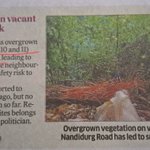
@GBAChiefComm attached is a newspaper clip highlighting two vacant sites on Nandidurga Road which we as residents have been complaining about for the last few years. Official complaint also lodged with your office. No action to date. Please help get this resolved

Sunita Rocque retweeted

Why don’t @KapilSibal & @DrAMSinghvi etc ask Supreme Court to bar all MPs, whose defections are under court’s scrutiny, from voting, especially on constitution’s amendments, till their final decision?

Sunita Rocque retweeted
Not going to share any personal details. Just want to highlight how perception is different from reality. This is not to support any political party or leader. Want to let you know things are not as they look.
In 2013, my client who was professionally working for Rahul Gandhi suggested my name to him to handle his mutual fund investments.
From 2013, when UPA 2 was in power to till date when Vijay was sworn in with Congress support, Rahul continues to be my client for mutual fund investments.
We have exchanged many mails and has spoken over phone lot of times. And as you are aware, I've been a strong Modi supporter from 2014 to 2024. Never once Rahul or his office staff brought that subject to me. I believe my tweets are regularly seen by his staff. They clearly differentiate between my professional service and political beliefs.
And in every single conversation I've with Rahul, he addresses me with respect and never behaved in any haughty manner.
Despite knowing my BJP support, he took my input few years ago for choosing a key professional .
This post may lead to Rahul terminating our professional relationship. That's ok. Everything should end one day.
Wanted to post this to show how main stream media and IT cells of parties can make someone look completely inhuman.
I do not know Rahul Gandhi as a politician. Based on last 14 years interaction, all I can say is he respect professionals a lot and a nice human being to interact with.
Don't go by media or IT cells - for any party that matter.
Sunita Rocque retweeted

Our white paper on extreme heat in India just got published by @HarvardSalata and yes, the timing is rather unfortunately suitable:
salatainstitute.harvard.edu/…

Sunita Rocque retweeted

Real forests, the kind that cool land, hold water and shelter life, cover just over 3% of India. The official number says 21%.
The gap between those two figures is not measurement. It is a definition that was quietly rewritten in 2001 to make a crisis disappear on paper.
The missing 17% is orchards, coconut groves, bamboo plantations, tea and coffee estates, rubber farms, eucalyptus plots, roadside tree lines and urban parks. All counted as forests.
A tea estate in Assam. A coconut farm in Tamil Nadu. A eucalyptus plantation in Andhra Pradesh. A bamboo grove in Odisha. All forests, on paper.
Because in 2001, the Forest Survey of India decided that any land with 10% tree cover qualifies.
They just forgot to mention that the FAO, whose standard they claim to follow, explicitly excludes fruit plantations and orchards.
This is not a rounding error. This is a policy decision. And it is why nobody fixed what was broken.

Look at this map.
Nagpur 45°. Ahmedabad 44°. Prayagraj 43°. Delhi 42°. The entire country is a single dark red mass. This is not a heatwave. This is a country that was told its forests were fine.
And this is April. Not May. Not June. The hottest months have not even arrived yet.
The past few days have been hell. So I did what I always do when something bothers me. I went looking for answers.
What I found was a policy con job that has been running for over two decades.
But before I explain what happened, let's clear some definitions.
A garden is not a forest. An orchard is not a forest. A plantation is not a forest.
A forest is a living system. Soil, water, fungi, insects, birds, mammals, decades of accumulated complexity, specific to its land and climate. It cannot be designed. It cannot be harvested. It regulates water, cools land, shelters hundreds of species. It takes decades to become what it is.
You can plant a forest. But it will take decades to become one.
In 2001, India's forests were disappearing. The Indian state, led by the Vajpayee government, faced a choice. Protect what remained, or change what the numbers said.
It chose the numbers.
The Forest Survey of India quietly changed the definition of what a forest means. Any land with 10% tree canopy cover and more than one hectare in area was now a forest. Your mango orchard. A coconut plantation in Tamil Nadu. A tea garden in Assam. Lodhi Garden in Delhi.
All forests, on paper.
The FSI will tell you that 10% canopy cover follows international norms. The FAO also uses 10% as its threshold. But the FAO's definition comes with a crucial exclusion that India's FSI quietly dropped.
The FAO explicitly states that fruit tree plantations, oil palm plantations, olive orchards, and agroforestry systems are not forests. The World Bank says the same. India adopted the number but discarded the exclusion.
It took the cover of international legitimacy while gutting the standard that gave it meaning.
The government will also tell you this was never hidden. That it was publicly stated in every report, disclosed in Parliament. That is technically true. But a disclosure buried in a technical government document is not transparency. It is the appearance of transparency.
I did not know any of this until I went looking. Neither do most Indians whose forests, whose land, whose air this directly concerns. The con is not in what was hidden from experts. It is in what was never explained to the people it was done to.
This is not a technicality. This is the con.
It was a trick as old as power itself. If you cannot fix the problem, fix the measurement.
For ten years after 2001, Congress governed India. Two terms, two environment ministers, including Jairam Ramesh, one of the more serious ones. They saw the numbers. They knew what the numbers meant.
They did nothing.
Because the lie was convenient. India looked good in international climate negotiations. The fiction of a greening India served everyone in power, so everyone in power kept it. Congress did not create this lie. It simply chose, year after year, to live inside it.
The BJP is different.
When they returned to power in 2014, they came with something Congress never had. An absolute majority, and no coalition compulsions. They did not merely inherit the lie. They built on it. And in 2023, they legislated it.
The Forest Conservation Amendment Act of 2023 removed legal protection from "deemed forests." Forests that existed outside the official definition but were ecologically real.
Forests that Adivasi communities had lived in and depended on for generations. Forests that cooled land, held water, sheltered species. They were not on the right list. Since the amendment, forest destruction on Adivasi land has accelerated.
The people who knew these forests best, who had protected them longest, now watch them being cleared. Legally.
CONT++

Sunita Rocque retweeted
Look at this map.
Nagpur 45°. Ahmedabad 44°. Prayagraj 43°. Delhi 42°. The entire country is a single dark red mass. This is not a heatwave. This is a country that was told its forests were fine.
And this is April. Not May. Not June. The hottest months have not even arrived yet.
The past few days have been hell. So I did what I always do when something bothers me. I went looking for answers.
What I found was a policy con job that has been running for over two decades.
But before I explain what happened, let's clear some definitions.
A garden is not a forest. An orchard is not a forest. A plantation is not a forest.
A forest is a living system. Soil, water, fungi, insects, birds, mammals, decades of accumulated complexity, specific to its land and climate. It cannot be designed. It cannot be harvested. It regulates water, cools land, shelters hundreds of species. It takes decades to become what it is.
You can plant a forest. But it will take decades to become one.
In 2001, India's forests were disappearing. The Indian state, led by the Vajpayee government, faced a choice. Protect what remained, or change what the numbers said.
It chose the numbers.
The Forest Survey of India quietly changed the definition of what a forest means. Any land with 10% tree canopy cover and more than one hectare in area was now a forest. Your mango orchard. A coconut plantation in Tamil Nadu. A tea garden in Assam. Lodhi Garden in Delhi.
All forests, on paper.
The FSI will tell you that 10% canopy cover follows international norms. The FAO also uses 10% as its threshold. But the FAO's definition comes with a crucial exclusion that India's FSI quietly dropped.
The FAO explicitly states that fruit tree plantations, oil palm plantations, olive orchards, and agroforestry systems are not forests. The World Bank says the same. India adopted the number but discarded the exclusion.
It took the cover of international legitimacy while gutting the standard that gave it meaning.
The government will also tell you this was never hidden. That it was publicly stated in every report, disclosed in Parliament. That is technically true. But a disclosure buried in a technical government document is not transparency. It is the appearance of transparency.
I did not know any of this until I went looking. Neither do most Indians whose forests, whose land, whose air this directly concerns. The con is not in what was hidden from experts. It is in what was never explained to the people it was done to.
This is not a technicality. This is the con.
It was a trick as old as power itself. If you cannot fix the problem, fix the measurement.
For ten years after 2001, Congress governed India. Two terms, two environment ministers, including Jairam Ramesh, one of the more serious ones. They saw the numbers. They knew what the numbers meant.
They did nothing.
Because the lie was convenient. India looked good in international climate negotiations. The fiction of a greening India served everyone in power, so everyone in power kept it. Congress did not create this lie. It simply chose, year after year, to live inside it.
The BJP is different.
When they returned to power in 2014, they came with something Congress never had. An absolute majority, and no coalition compulsions. They did not merely inherit the lie. They built on it. And in 2023, they legislated it.
The Forest Conservation Amendment Act of 2023 removed legal protection from "deemed forests." Forests that existed outside the official definition but were ecologically real.
Forests that Adivasi communities had lived in and depended on for generations. Forests that cooled land, held water, sheltered species. They were not on the right list. Since the amendment, forest destruction on Adivasi land has accelerated.
The people who knew these forests best, who had protected them longest, now watch them being cleared. Legally.
CONT++
Sunita Rocque retweeted

The path from Budapest to New Delhi is neither linear nor comparable in any simple sense and the differences are real, writes @AnandTeltumbde about Viktor Orbán's stunning defeat. "But Hungary delivers a stark lesson: even a deeply entrenched system under Orbán was not permanent. Power, however fortified, ultimately rests on consent. When that consent is withdrawn—organised and channelled by a credible, united force—seemingly unassailable regimes can fall with surprising speed."
Teltumbde analyses the similarities and differences between the situation in Hungary and India with razor sharp clarity, producing one of the finest pieces of political analysis you can read about India and also Hungary!
Five strategies from the campaign which unseated Orbán that matter most for the Opposition in India: (1) Unity before Ideology, (2) Contest the Strongholds, Not Just the Base, (3) Name the Corruption, Concretely, (4) Reclaim the National Flag, (5) The Insider Defector is Uniquely Powerful
PS: It is worth remembering that the author, a globally renowned scholar, was imprisoned by the Modi government for nearly three years on the bogus charge of conspiring to overthrow the State and is currently out on bail!
thewire.in/world/what-india-…

Sunita Rocque retweeted

GIFT City's active global funds are off to a rough start — and the data is hard to ignore. 🧵
1/ Every single active fund in GIFT is negative over the last 6 months. DSP Global Equity: -12.4%. PPFAS PMS Global Strategy: -5.6%. Marcellus GCP: -5.5%. Meanwhile, ACWI TRI was +0.7%. That's not a small miss. That's a different direction entirely.
2/ The "Since Inception" picture isn't prettier. DSP is -12.5% since Sept 2025. PPFAS is -2.6% since Aug 2025. The only funds with positive since-inception returns (Marcellus at 18.6%, Philip Int. at 7.7%) have multi-year head starts — and even they lagged ACWI TRI over 1 year.
3/ On a 1-year basis, Marcellus returned 8.9% vs ACWI TRI's 20.7%. Philip Int. Pioneer returned 21.9% — one of the few bright spots. Mirae? -11.1% vs benchmark's +20.7%. Brutal.
4/ Now let's talk tax. GIFT funds are structured as Category III AIFs. They pay tax at the fund level — ~42% STCG & 14.95% LTCG vs slab rate or 12.5% for an individual.
5/ If you instead bought a UCITS ETF (say, an Ireland-domiciled S&P 500 or ACWI fund) directly via the LRS route, capital gains tax kicks in only when YOU sell — and at your applicable slab rate or 12.5% for long-term. The fund itself pays zero Indian tax.
6/ So with GIFT active funds you get: ❌ Active underperformance vs benchmark ❌ Possible cash drag ❌ Fund-level tax leakage you can't control
7/ With a direct UCITS ETF investment: ✅ Near-zero tracking error to the index ✅ No fund-level tax — you control timing ✅ Lower cost, higher transparency
8/ The case for passive international investing has never been clearer. If GIFT funds can't beat ACWI TRI in a falling market (when stock-picking supposedly shines), when exactly will they?
Story by @PosteAnil
thefynprint.com/GBlfw8FDX

Sunita Rocque retweeted
He doesn’t just paint on walls.
He lets nature finish his art.
In the streets of Kerala, Nishad V A is quietly redefining what a “canvas” even means. From compound walls to broken tiles, from glass pieces to even a jackfruit — for him, anything can become art.
What makes his work unforgettable isn’t just the medium, but the magic.
A child’s face doesn’t sit on a wall, it blooms with real flowers.
Hair flows through creeping vines.
Seasons, shadows, and sunlight become part of the painting itself.
But this journey didn’t begin on the streets.
After years of working indoors as an art director, he chose uncertainty over comfort, stepping out with just a backpack of brushes, walking through neighbourhoods, asking strangers for walls and turning them into stories.
Today, his art travels far beyond those streets.
What started as a spontaneous wall painting now reaches people across cities and even countries, all because he decided art should be seen, felt, and lived in the open.
And maybe that’s his biggest message:
Art doesn’t need a canvas.
It just needs courage to see beauty where no one else is looking.
Credits : artist_nishad_ on IG
#ArtBeyondCanvas #KeralaStories #CreativeIndia
[Street Art, Murals, Creativity, Inspiration]
Original post by @TbiHindi
Sunita Rocque retweeted
The Illusion of a Floor/Bottom/Support – In case the SIP Shield Cracks
And a call for a tribute to the market legend Siddhartha Bhaiya of Aequitas
Yesterday's (19th Feb) market action was a sobering reminder of just how fragile India's equity rally has become.
Despite a combined FII and DII net selling of a mere ₹1,477 crore, which is barely 0.0018% of the mutual fund industry's ~₹81 lakh Cr AUM as of Jan 2026 and just about 5.9% of the ~₹30,000 Cr monthly SIP inflows recorded last month, Nifty and Bank Nifty plunged nearly 1.4%. A negligible ripple in the ocean just erased billions in market cap.
Investing in India has transitioned from a financial decision to a "demonstration of patriotism." In reality, the FIIs just need to "NOT SELL", and indices soar. These flows are peanuts in the grand scheme, yet they are swinging the markets wildly.
For 5 years, the middle-class SIP machine has powered Indian Markets to stratospheric heights under the banner of "financialization of savings" But what happens if a global headwind sparks even a modest 5-10% redemption from that ₹81 Lakh Cr AUM?
Where is the counterparty?? Who is the counterparty?? SADLY - THERE IS NONE
Domestic buyers (retail + institutions) have been the nonstop fuel. But in a true exodus, FIIs - who've been net sellers of barely ~2-3% of their total holdings so far over 5 years (cumulative outflows ~₹98K Cr) could flee faster, creating an unfillable vacuum.
No counterparty implies - no floor, no bottom, no support. Slides could accelerate unchecked.
With a counterparty (or lack of it thereof) risk, Indices could easily retrace 30-50% or more. We are trading at a forward P/E of 22x - one of the world's most expensive markets - while peers like China (12x) and Brazil (11x) come across as markets on fire sale.
What's more concerning is that our economy isn't producing cutting-edge, global-problem-solving companies to absorb this capital deluge. Instead, we are creating sub-optimal firms in a hyper-competitive environment (food delivery, resellers, etc.), that are gulping and then burning funds at nosebleed valuations.
Ironically, Swiggy - a recent market darling came out with a QIP barely a little after its IPO.
To put this a bit more succinctly -
"ब्याह की मेहंदी उतरी नहीं और चले बेइज्जत होने"
"The honeymoon isn't over, and the debaucherous scandal has begun."
These "futuristic growth" companies won't see free cashflows or dividends for years, maybe decades. The Ola, Paytm, Swiggy, Zomato, and Nykaa debacles weren't outliers. They were an example of criminal breach of retail investors' trust.
Scale that up, and you have a market built on expensive storytelling rather than fundamentals.
Institutional cheerleaders like Raamdeo Agrawal Ji of Motilal and Nilesh Shah Ji of Kotak bear some definite burden of responsibility here.
They’ve herded retail into this setup, pushing "long-term" narratives while ignoring the structural risk of the exit door.
If redemptions hit, the psychological toll on India’s new investor class (that took birth during the COVID lockdown) will be devastating. It won't just be a financial loss; it will stall the "financialization of savings" story cold.
Trust and Confidence, takes decades to build but only one liquidity vacuum to shatter.
Siddhartha Bhaiya of Aequitas who left us suddenly with an insurmountable emptiness, called out the Indian markets as a bubble of epic proportions. Let's prove him wrong by selling just just 2% of the MarketCap of India as an experiment or risk evaluation/mitigation exercise.
If we succeed in proving him wrong, he will still smile in his abode up there - as markets will stay safe, as will the retail investors ......
Is it time to question the dream before it turns into a nightmare??
As Bob Dylan says - The answer my friend is blowing in the wind......

Sunita Rocque retweeted

The US dollar is not dying
There has been a lot of talk about the impending demise of the US dollar. Ray Dalio’s writings have added intellectual heft to that argument. So have the surge in gold prices and reports that some countries are trimming their holdings of US Treasuries.
But, in the days of WhatsApp University and all knowing podcastiyas, as is often the case, the broader context tends to get lost.
Foreign holdings of US financial assets – Treasuries, agency bonds, corporate bonds and stocks – are up 13% year-on-year to more than $35 trillion, according to the latest data. Holdings of US stocks are up nearly 20%. That hardly suggests an exodus from the dollar.
The narrative of the dollar’s imminent death overlooks a basic reality: the US remains the world’s largest market, the dominant currency in global trade, and the operator of the financial plumbing that keeps the system running. Those advantages do not disappear overnight.
Consider China, the world’s largest creditor nation. It has accumulated close to $10 trillion in overseas assets, more than half of them dollar-denominated.
If China were to meaningfully diversify away from the dollar, where would it deploy money at comparable scale and liquidity? There are few, if any, alternatives.
Recently, Xi Jinping spoke about the renminbi becoming a global reserve currency. For that aspiration to be credible, China would need to make its currency fully convertible – which, in turn, would allow large-scale capital outflows of domestic savings.
That risks undermining its investment-led growth model, a strategy it appears to be doubling down on rather than abandoning.
Further, as of September 2025, 1.9% of global foreign-exchange reserves were in the renminbi – the Chinese currency.
The data for the share of the renminbi in global foreign exchange reserves starts from 2016 onwards. In 2016, the share was around 1%. It peaked at 2.9% in 2021 and has since fallen to 1.9%.
Clearly, the world isn’t too excited about holding its foreign-exchange reserves in the renminbi – at least not right now.
Of course, if the US itself turns sharply inward and embraces sustained isolationism, that would pose a genuine risk to the dollar’s central role.
Strip away the drama and the headlines, a stubborn fact remains – foreign money is not fleeing America; it is flowing in. The dollar may have its flaws, and a Donald Trump-led US, may have its follies, but rumours of its imminent demise, with due apologies to Mark Twain, are greatly exaggerated.
So, the next time you hear a podcastiya use the word de-dollarisation, as they often tend to these days, just ignore.
My piece in the Economic Times Prime.
economictimes.indiatimes.com…

Sunita Rocque retweeted

Trump tariffs and the parable of ' The Old man and the Goat'
Markets rejoicing at Trump part solving the problem (average US tariffs are still estimated to be up from 3% to 20% according to some estimates) that he himself had deliberately created, took me back over two decades to this strategy report by @firstglobalsec
2003 is when another Republican president George W. Bush had just ended the war that he himself had needlessly started.
But first, the rather interesting story, as quoted all those years back
Quote
"Once in a town, there lived a man with his wife and nine kids. Now, nine kids may not seem like a lot, but when you live with them in a cramped 10ft x 10ft room, life can begin to look a bit daunting. Needless to say, the poor man, driven to despair by his totally insalubrious living conditions, was almost about to pull the plug on his life, when he heard of a saint who was passing through his town. This saint was supposed to have the ability to heal any human being of any disease and solve any problem, so off went our man to see him.
Upon listening to the man’s problems patiently, the saint said, “OK – here’s the solution – go to the market and get yourself a big, old, shaggy nanny goat. Keep her with yourself, in your home and come back to me after a month’s time.”
The guy did the needful. And he came back to the saint after a month. The saint asked him “How’s it going?” Our man said tearfully, “My lord, this goat is the most awful thing God ever invented. It pisses and craps all over my tiny home, and lets no one live in peace”. The saint smiled “Carry on. Report to me after a month”. One month later: “My lord, the damn goat chewed through my kids’ high-school report cards, shredded my wife’s dress and...”. The saint said, “Good, my son. Come back after a month.”
Another month later: “My lord, save me. This time, the goat ate up the entire meatloaf my wife made for my family...”
Another month later: “My lord, Junior No. 6 almost had his little finger bitten off…’’
The saint said: “Come back in a month’s time...”
One month later, our man came and prostrated himself at the saint’s feet “My lord, I can’t take it anymore. Please, please get this goat away from us, or else we’ll all commit mass suicide.”
The saint smiled beatifically and said, “OK, my son, give the goat away and come back after a month.”
One month later, our man walked up to the saint, dressed rather nattily and looking as though he’d just been through one of those scam $600 a day New-Age Mind-Body workshops.
The saint asked him “So how’s it going now, son?”
The man beamed, “Oh, my lord, you’re a genius. Life after the goat is a 1000 times better – in fact, it’s the best that it’s ever been. There’s so much peace. My lord, we are so happy – me, my wife and my nine kids in our beautiful 10' X 10' home...”
You may have figured out what we are driving at...
Unquote
The old man and the goat is one of the best analogies of how we live our lives.
I have thought about it so often over the decades.
To give only a couple of examples: you may be cribbing everyday about the politics in your office, how nasty your boss is etc but if you lose your job, THAT is what is going to keep you awake at night and if you get a job back wow will be the best thing you have seen in your life. There are many petty problems in your life until there is a health crisis for you or a dear one. And once you are past the crisis the relief feels like life couldn't be any better.
Trump is manufacturing a crisis and then trying to make you grateful for (only partly) solving it!
So rather than bemoan the fact that average tariffs have gone up substantially from where they were a few weeks ago, the world is celebrating that they have come down from crazy peaks.
You can really mess around with human minds!


