

Enthusiastic about ancient history, particularly that of North Africa. Here, I uncover lesser-known facts and debunk misconceptions.
Metagonia
Joined April 2022
- Tweets3.5K
- Following147
- Followers3.7K
- Likes9.8K



Pinned Tweet
Thread - What do we know about the mysterious and poorly investigated Copper and Bronze Age of North-West Africa ? (3000 BC – 9th cent. BC)

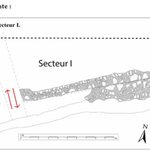
A new Numidian site has been discovered in Tunisia (region of Siliana). Apparently occupied in the 5th-4th century BC and destroyed in the late 3rd, it has so far yielded houses, a rampart, and a funerary complex of 85 monuments
icac.cat/en/actualitat/notic…


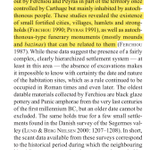
imo the site appears to match the plan of other Libyco-Numidian hilltop sites inhabited by small agricultural communities as evidenced by Ferchiou 1990

source: academia.edu/49328874/Chokri…

TheMauretanian retweeted

NEW VIDEO NOW LIVE!
Over 7,000 years ago, Neolithic farmers crossed the Mediterranean from Europe INTO AFRICA, bringing crops, livestock and a new way of life.
Ancient DNA now reveals their forgotten migration and its legacy in Africa today...
Shares appreciated. Cheers!

TheMauretanian retweeted

Reconstruction of al Bunayya, medieval city founded by the Marinids in 1282 in Algeciras.
Founded by the Marinid Sultan Abu Yusuf Yaqub, this fortified city stood on the northern shore of the Strait of Gibraltar, opposite the older city of Algeciras.
Al Bunayya served as a fortified base for campaigns in Al Andalus and the struggle to control the Strait of Gibraltar.
It was destroyed in 1375 but parts of its fortifications still exist today.


It's not much but we can add to this that between 33-25 BC, the inhabitants of Zilil and some from Tingi were transfered to Spain in order to populate the colony of Iulia Ioza/Traducta (also known as Tingenteria)
nitter.cf/Lethescholar/status/21…


Also let's not forget that transfers of North Africans in SE Spain predates the roman era :
nitter.cf/TMauretanian/status/20…

Starting in the second half of the 6th century BC, Carthage undertook a vast colonization program involving the sending of North African settlers to SE Spain as well as to Ibiza and Sardinia. These population transfers did not necessarily imply military conquest or the annexation of large territories, but rather the dispatch of colonists to pre-existing sites or new foundations in order to develop colonial enterprises in these regions. The massive settlement of these colonists led to a redefinition of relations between Phoenicians and Iberians, which eventually became conflictual. A cultural rupture is also evident, although it was not total and shows that indigenous populations were also integrated into the new foundations. These 6th century settlements are contemporaneous with the mention of a Libyan people living in Iberia, whom Greek sources call the "Elbestians". 🧵


This new study confirms a significant NA influx into Spain especially the south, during the Roman period, though it began earlier in the punic era. They suggest these migrations may also have facilitated the spread of christianity across the peninsula
nitter.cf/nrken19/status/2112938…


Contrasting demographic impacts of Roman colonization and early medieval migrations in the Iberian Peninsula
Highlights
• 245 ancient genomes revealing Roman and early medieval Iberian diversity
• Roman rule transformed Iberia into a genetically diverse population mosaic
• Eastern Mediterranean and North African ancestry spread widely in Iberia
• Migration period elites contributed ancestry without major population replacement
cell.com/cell/fulltext/S0092…

Hellenistic and Roman-era portraits of Libyans from the "Sanctuary of Cyrene". These were most likely high-status and wealthy Libyans who were integrated into Cyrenean society. It shows that foreign origins and customs did not prevent social integration (from Hodos 2006)


Distribution of Hispanic coinage (from Gades and Ebusus) in Western Mauretania - 3rd c. BC - 1st c. AD
Distribution of Mauretanian coinage (from Tingi and Iol-Caesarea) in Spain - same period 🧵


Surprisingly, an analysis of the coinage of Tingi (Tangier) from the late 1st c. BC shows that some of the city’s magistrates were of Hispanic origin. Their titles and roles were modeled on those of Italian municipal institutions, Gadir, and certain cities of southern Hispania.
