

animal pictures and art RTing account. coffee.
Aukaat
Joined February 2013
- Tweets61.5K
- Following982
- Followers1.3K
- Likes75K
Pinned Tweet
A BIG SHOUTOUT to all the doctors, interns, nurses, paramedics, students, researchers and the health workers carrying out survey for giving their best possible as well as each person involved in creating proper awareness about COVID-19, YOU ALL ROCK!!
Be safe everyone <3


घटाघटांचे रूप आगळे,
प्रत्येकाचे दैव वेगळे..
तुझ्याविना ते कोणा न कळे,
मुखी कुणाच्या पडते लोणी, कुणा मुखी अंगार ...
तू वेडा कुंभार..🙏🏽
#NowPlaying
music.youtube.com/watch?v=T7…

2
125

jukebox retweeted

javed akhtar, udit narayan and kavita krishnamurthy cooked a song so hard that it’s trending all over the internet again even after 23 years nitter.cf/_zubbydubbyy/status/21…
always 🙂↕️

Suddenly realised Sona Sona is better than Say Shaava Shaava
#AadeshShrivastav
#SudeshBhosle
#SonuNigam
#JaspinderNarula
2
95


jukebox retweeted

Never let them know your next move: Jaideep Ahlawat edition. Malaika is still in shock..


jukebox retweeted
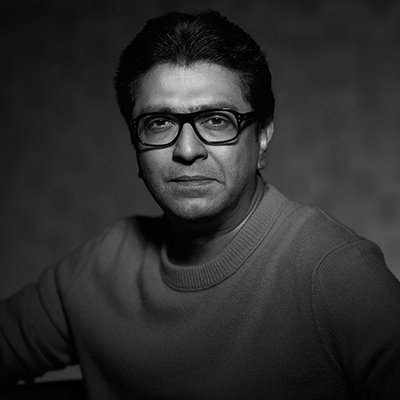
Senior linguist and scholar of Marathi grammar, Dr. Yasmin Sheikh, has passed away. Yasminbai was Jewish by birth, but quintessentially Marathi by her life's work.
I have always had immense curiosity and respect for people like Yasminbai. Not merely because she was a Jewish and yet devoted her entire life to the Marathi language. Dedicating an entire lifetime to ensuring that a language and its soul endure is extraordinary—and, in our times, increasingly rare.
Born Jerusha Ruben into a Jewish family, she married Aziz Sheikh and became Yasmin Sheikh. Born Jewish and married into a Muslim family.
In fact, the journey of her life contains within it an answer to the questions: What is Maharashtra, and what does it mean to be Marathi? Being Marathi is not a monopoly acquired by birth. It is something one earns through one's commitment to the Marathi language, its culture and Maharashtra itself. Considering the casual manner in which we take our own language for granted today, I would go a step further and say that all of us will have to make a conscious effort to preserve and enrich it.
Yasminbai belonged to a generation for whom writing a language correctly, pronouncing it properly and following the rules of grammar were considered a discipline—and those who observed that discipline were respected for it. Today, the means of communication have multiplied enormously and everyone has a medium through which they can write and express themselves. Unfortunately, however, that rigour towards language has diminished. A language cannot survive on the attitude of, “You understood what I meant, didn't you? That's enough.” Language carries the memory of a culture, and that is precisely why it must be cared for.
Importantly, Yasminbai never insisted that a language must remain frozen in time or that it should shut itself off from new influences and new words. She accepted that languages evolve and absorb words from other languages. Her insistence was simply that such change should be thoughtful, that the fundamental character and structure of the language should endure and not be distorted.
Language, by its very nature, is fluid. It will borrow words from other languages, evolve with time and develop new forms. There is no reason to resist that. But the evolution of a language and the loss of command over it are two entirely different things. Dialects should continue to flourish in all their richness, but a language must retain a standard form. And those who inherit it as their mother tongue should, in particular, be able to speak, read and write it well. Insisting on a standard language is not an obsession with linguistic purity; it is an insistence on preserving the language's power of expression. Yasminbai was among the last links to a generation that upheld this conviction.
With her passing, we have not merely lost a scholar of Marathi grammar. We have lost yet another link to a generation that believed that to love a language also meant being loving in one's relationship with it.
The Maharashtra Navnirman Sena pays heartfelt tribute to Yasmin Sheikh.
Raj Thackeray
