

Crypto Gems | Altcoins | NFTs | Web3 | Not A Financial Adviser | @FARLabsAI
Joined March 2023
- Tweets10.8K
- Following1.7K
- Followers1.8K
- Likes6K







Pinned Tweet
Turn your PC into a powerhouse. Just registered my node for @FARLabsAI.
High AI demand meets decentralized supply.
This is how we take the power back from centralized data centers. 🌍

Token Tactician retweeted

Anthropic now lets companies run its agent platform on their own servers. It's the right product, and the model call is the one part that still leaves the building.
Self-hosted Claude Managed Agents opened in private beta.
The customer runs the agent harness, sandboxes, credentials and session history in their own cloud or on-premise, and chooses where requests to Claude are sent. Developers keep the same APIs as the hosted service.
It's aimed at teams whose security rules kept them off the hosted version.
Last month I wrote that an agent spends much of each task outside the model, running tools and reading files. Anthropic has now handed that part to the customer.
The open question is the model. If a regulator needs it inside the border too, the customer needs a cloud region in that country or open weights. Access to the beta also still goes through Anthropic's account team.
@AnthropicAI

Token Tactician retweeted

I've been spending some time researching how AI agents could change the way we shop and interact with online businesses, and one question keeps coming up: what happens when AI agents become the customers?
While exploring this, I came across a presentation by GOAT Network CEO Kevin Liu at KBW 2026, titled "Your Next Customer Is an AI Agent."
I spent about 20 minutes watching it, and it helped me understand something I hadn't given much thought to before. The technology for AI agents to discover products and make purchases is already taking shape, but are online businesses actually prepared to sell to them?
Kevin's presentation made that gap particularly clear.
According to the data he shared, agent traffic to business websites has increased 4x. With Meta Muse, Manus 2.0 and ChatGPT shopping features entering the picture, AI-powered buyers are already finding their way into commerce. McKinsey also estimates that this could become a $3–5 trillion economy by 2030.
The buying process itself is becoming straightforward. You tell your agent what you want, it finds the product, asks for permission, makes the payment and gets a receipt.
But here's the problem: the merchant side isn't ready.
Right now, when you ask ChatGPT to buy something, it often relies on highly ranked websites or merchants within its existing partnerships. This creates a serious discovery problem for smaller businesses, whether they're in Korea, elsewhere in Asia or anywhere around the world.
Their products might be available online, but if AI agents cannot properly discover and interact with their stores, they're practically invisible to this new category of buyers.
That's the gap Kevin explained how GOAT Network intends to address, and the interesting thing is that it isn't built around just one product. It's an entire stack.
At the foundation is Bitcoin settlement. If machines are going to transact with other machines at an enormous scale, the underlying settlement layer needs to be secure and reliable. GOAT Network builds on Ziren ZKVM and BitVM3, with transactions ultimately settling on Bitcoin.
The next layer deals with wallets and payment mandates. GOAT integrates with protocols like x402 and MPP, allowing agents to pay from different chains without requiring users to bridge their funds first. There's also a mandate layer that lets users define spending permissions, budgets and what happens when a transaction fails.
Then comes the part merchants can actually use: GOAT Flow.
This was particularly interesting because I got to test it after the presentation, and the process is as straightforward as Kevin described.
You register with basic details, including your name and business description, choose how you want to receive payments, add your product and set a price. GOAT Flow supports card payments through Stripe, including Visa, Mastercard, Amex and JCB, alongside crypto payments across 10 chains.
Once you're done, it generates a page with a dedicated FOR AGENTS section. Humans can browse the regular product information, while AI agents can read the structured details they need to understand and purchase what's being offered.
And you don't need to write any code to get started.
They also demonstrated this at Booth 37 during KBW, where visitors could watch live AI agents purchase real mascots and gift cards. Out of the 450 people who tried it, 310 purchases were completed through an agent, with many participants making their first-ever purchase using an AI agent.
Kevin also shared some interesting details about GOAT's plans in Korea. Founded in Silicon Valley in 2023, the team now has offices in San Francisco, Toronto and Seoul, and has been building in Korea for three years.
He mentioned that GOAT plans to announce its first Korean investment soon and wants to work with local partners on Korean stablecoins, recognising that local merchants need payment solutions that fit the markets they operate in.
One line from the presentation stayed with me:
"Your next customer is an AI agent, that's for sure."
And the more I think about it, the more sense it makes. Online businesses have spent years making their websites accessible to people, but the next stage of commerce will require them to make their products discoverable, understandable and payable by AI agents too.
If your store isn't ready for that transition, it's worth paying attention to what's happening now.
Watch the full keynote. It's worth the 20 minutes:
youtube.com/watch?v=2lTjodpz…
Read the full breakdown:
medium.com/@goat_network/kev…
Get started with GOAT Flow:
goat.network/flow
@GOATNetwork

Token Tactician retweeted
I ranked 8 data centre GPUs for serving inference by what one rental dollar buys in memory and memory bandwidth.
When a model generates tokens, memory decides which models fit on the card and bandwidth sets how fast tokens come out. This leaves out compute and interconnect, which matter more for long prompts and multi-GPU serving.
S
> MI325X: 256 GB at 6 TB/s for $3.10 an hour. The cheapest memory and the cheapest bandwidth of any card here.
> MI300X: 192 GB at 5.3 TB/s for $2.86. Almost the same value, one generation older.
A
> B300: 288 GB, the most memory on a single card. Large MoE models need fewer GPUs per copy.
> H200: 141 GB at 4.8 TB/s for $5.00. The same bandwidth per dollar as the B200 at about 60% of its hourly price.
> B200: 7.7 TB/s for $8.01, the second-fastest memory on the list.
B
> RTX PRO 6000: 96 GB for $2.38. Cheap capacity, but at 1.6 TB/s it's slow on large models.
> H100: $3.94 an hour for 80 GB. The most expensive memory per GB on the list.
C
> L40S: 48 GB at 0.86 TB/s. The lowest hourly price and the highest cost per unit of bandwidth.
The two best-value cards are listed by 3 to 5 providers each. The H100 is listed by 45. Teams whose serving stack runs on AMD are paying the least per gigabyte today.

Token Tactician retweeted
A new GPU rack bought about 1.5x per chip this year. A better router on the same GPUs bought about 2x.
The next gain sits in the software that decides which GPU serves which request.
My new article goes deep into why.

The most underrated skills in building and marketing digital products aren't coding, design or copywriting.
They're the skills that help you understand people, earn trust, and turn a good product into something people actually pay for.
Let's break down 7 that matter.
1/7 🧵

1
3
22
Data literacy separates guessing from improving.
You should know where visitors come from, where they drop off, what drives conversion, and why customers leave.
Track activation, retention, conversion rates, and churn.
The numbers often reveal what opinions miss.
6/7 🧵
1
2
🚨 Binance is reportedly moving to block transfers involving MEXC after the US FinCEN designated the exchange a “Primary Money Laundering Concern.”
If enforced, the move could disrupt fund flows between the two platforms and create fresh challenges for MEXC users.

1
280
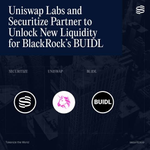
BlackRock's tokenized fund just moved closer to DeFi.
Recently, BUIDL became tradable through UniswapX, connecting institutional money market fund shares to on-chain liquidity.
This is bigger than another crypto integration.

1
21
But there is an important catch.
This is not permissionless access for everyone.
Investors must be prequalified and whitelisted through Securitize, while liquidity comes from approved participants.
Institutional assets still operate within defined access controls.
1
5
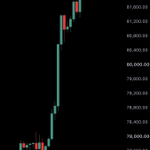
Bitcoin bear markets have historically lasted roughly 12 to 15 months.
This cycle began in October 2025, so we are getting closer to that window, while BTC is already rebounding.
If history rhymes, the next few months could get interesting.

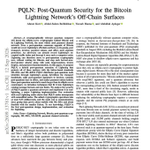
⚡ Bitcoin’s Lightning Network is getting a post quantum shield.
Researchers at East Texas A&M built PQLN, a hybrid upgrade tested on real nodes that protects off chain traffic without changing Bitcoin.
The tradeoff: about 10x more bandwidth.

27
