






TweetALS retweeted

1/5 Why are motoneurons in the spinal cord selectively vulnerable to neurodegenerative diseases like ALS?
In our new work we created a single cell atlas of the human spinal cord and used it to discover underlying cell type susceptibility.
biorxiv.org/content/10.1101/…

TweetALS retweeted

Congrats to some of my fave neurodegen labs (Gitler, Petrucelli, @ShorterLab, @schmidt_lab) for their clever "nuclei sorting"-informed work on how TDP43 loss drives ALS: nature.com/articles/s41586-0… ...Accompanying paper uses KD to reach similar conclusions: nature.com/articles/s41586-0…
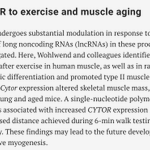
FYI Looking for new pathways to explore to develop strategies to boost muscle strength in #ALS?
@ScienceTM The exercise-induced long noncoding RNA CYTOR promotes fast-twitch myogenesis in aging science.org/doi/10.1126/scit…

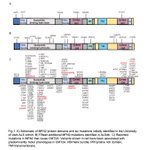
A molecular snapshot of TDP-43 filaments from ALS-FTD cases is reported -- opening the door to new avenues of development of diagnostic & treatment strategies
Structure of pathological TDP-43 ... go.nature.com/3pxdg0U
TDP-43 Aggregates Spiral Into View go.nature.com/3DIlvMQ
This Post is from an account that no longer exists. Learn more
A new study @NatureGenet argues that susceptibility to neurodegeneration in #ALS is mainly driven by neuron-specific pathology and not by immune-related tissues or microglia
Common and rare variant association analyses in ALS identify 15 risk loci ... go.nature.com/3m00N55
#ICYMI Could a routine brain test facilitate the evaluation of potential drugs for #ALS #MND in #ClinicalTrials by helping stratify participants, and thereby reduce #heterogeneity?
@Brain1878 Resting-state EEG reveals four subphenotypes of ALS bit.ly/2ZISkez #OpenAccess


TweetALS retweeted

Interested in joining the Dormann lab in Mainz? We have a postdoc position available to study post-translational modifications on RNA-binding proteins... for more details see the recent call in IMB's postdoc programme imb.de/students-postdocs/imb…

Looking for a link between #ALS, mitochondrial dynamics and TDP-43 pathology?
MFN2 Influences Amyotrophic Lateral Sclerosis Pathology bit.ly/31mrTf6 @pulstlab
#CMT2A #DrugTarget

TweetALS retweeted

Clinical trials in amyotrophic lateral sclerosis: a systematic review and perspective academic.oup.com/braincomms/…
We reviewed #MND / #ALS clinical trials to understand the key challenges in finding effective treatments to slow, stop or reverse disease.
(1/n)

#ICYMI Neurotoxicity in #C9orf72 #ALS occurs due to multiple mechanisms. Could you lower this neurotoxicity by just removing the expansion --- using a small molecule?
Ribonuclease recruitment using a small molecule reduced c9ALS/FTD repeat expansion ... bit.ly/3nA7SZP


Very proud of Jessica Bush and Team here. This was a long and winding road to degrader in a mouse brain of an ALS-causing mRNA. Ribonuclease recruitment using a small molecule reduced c9ALS/FTD r(G4C2) repeat expansion in vitro and in vivo ALS models. science.org/doi/10.1126/scit…

#SaveTheDate Targeting proteostasis in #ALS? Attend "Neurodegeneration and Proteostasis" @NYASciences March 7. Abstracts due January 7. Can tune in online. nyas.org/events/2022/neurode…

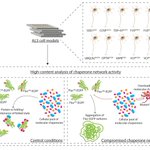
#ICYMI Looking for a new approach to ID key regulators of #RANtranslation of DPRs to develop strategies to reduce neurotoxicity in C9orf72 #ALS #FTD?
@naturecomms A C. elegans model of C9orf72 ALS/FTD uncovers a conserved role for eIF2D in RAN translation go.nature.com/3BUXjGH

It's out! Huge congrats to Yoshi, Ray, all authors for turning a passing conversation on a bus into a great piece of work. Read our latest paper "A C. elegans model of C9orf72-associated ALS/FTD uncovers a conserved role for eIF2D in RAN translation" here: nature.com/articles/s41467-0…
TweetALS retweeted

🚨 TWO WEEKS left for #MND/#ALS researchers to apply for @mndassoc grants for Biomedical Research Projects. ⏰ Summary applications are accepted until Friday 29 October.
For more information, please visit ⬇️
mndassociation.org/research/…

#ICYMI Could a simple blood test help identify the first signs of familial #FTD, including #C9orf72?
@Brain1878 A data-driven disease progression model of fluid biomarkers in genetic #FTD bit.ly/3BH4eDv


Plasma Neurofilament Light for Prediction of Disease Progression in Familial Frontotemporal Lobar Degeneration. Potential tool to select participants for prevention clinical trials. bit.ly/3AeEcad @JulioCRojas10 @allftd @GENFI1 @jonrohrer @brucemillerucsf @BluefieldProj

ALT Baseline Plasma NfL Concentrations by Disease Severity and Diagnostic Performance.
Could #TBK1 be a key therapeutic target for people with #ALS and #FTD with reduced TBK1 activity?
@EgganLab Loss of TBK1 activity leads to TDP-43 proteinopathy through lysosomal dysfunction in human motor neurons biorxiv.org/content/10.1101/…

TweetALS retweeted

People have long thought that astrocytes release something that kills neurons, which could partly explain why neurons die in injury/neurodegenerative disease. In a paper that just came out, we think we found one of these long-sought toxic factors! (1/8) go.nature.com/3afi6si

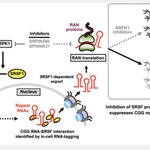
#ICYMI Could a potential cancer treatment strategy also be of benefit in #C9orf72 #ALS #FTD?
The nuclear ubiquitin ligase adaptor SPOP is a conserved regulator of C9orf72 dipeptide toxicity @LamitinaLab pnas.org/content/118/40/e210…

4 years ago, we started a genetic screen for suppressors of C9orf72 dipeptide toxicity, a common cause of ALS/FTD. After many twists and turns, that story was published this weekend in PNAS. Proud of all the students, techs, postdocs that contributed! pnas.org/content/118/40/e210…
TweetALS retweeted

Are you using AAV to deliver genes to the nervous system? Good news / bad news. biorxiv.org/cgi/content/shor…
First the bad news: we found AAV can shrink dendrites and disrupt synaptic transmission. The good news? We figured out why it happens, and can tell you how to avoid it. (1/n)
The key to classifying clinical subtypes of #FTD may be the structure of TDP-43 aggregates Could the same be true for tauopathies?
Structural strains of tau protein classify diseases go.nature.com/3mchVUr
NB TDP-43 shapeshifts to encipher FTD severity go.nature.com/3ilZiw2

Today's paper on Tau strains [nature.com/articles/s41586-0…] is fantastic and seems to really confirm a hypothesis proposed in @DavidWSanders2/@MDiamond_Lab 2014 paper [dx.doi.org/10.1016/j.neuron.…] - images below from David's paper with different propagatable tau strains in cells.
