

Research. Education. Outreach. From the molecular level to ecosystems, the EPI will lead the fight against infectious diseases.
Gainesville, FL
Joined September 2015
- Tweets1.8K
- Following335
- Followers1.5K
- Likes1.7K





Emerging Pathogens Institute retweeted

Many patients recognize the kissing bug the moment they see it. At @UF_EPI, the Chagas Disease Clinic team tracks the bug in the field, grows the parasite in the lab and treats patients early to help prevent heart complications. @IDWeekmtg #IDWeek2026 youtu.be/JmdV-iLJBAo
Emerging Pathogens Institute retweeted

True resistance to #AMR cannot happen in a silo. To protect human lives, we must look at our entire ecological infrastructure. Phages are natural, highly specific predators of bacteria, making them ideal not just for clinical human trials, but for safeguarding crop protection and veterinary medicine without disrupting vital microbiomes.
Later this month, the University of Florida's Emerging Pathogens Institute (@UF_EPI) will host a major hybrid meeting specifically dedicated to 'Phages Across One Health' -bringing together government, industry, and patient advocates.
#AMR #WorldPhageWeek #Octophage #bacteriophage


Florida is a hot spot for Vibrio vulnificus activity and hurricanes, but what do these two have in common? V. vulnificus cases tend to increase after hurricanes. Read more to find out why: epi.ufl.edu/2025/08/28/vibri…

ALT UF Emerging Pathogens Institute graphic with a satellite image of a hurricane and text: Hurricanes increase exposure to vibrio vulnificus what to know
Internationally recognized infectious disease scientist Lisa E. Hensley, Ph.D., whose career has focused on combating some of the world's most significant biological threats, has been named director of the University of Florida's Emerging Pathogens Institute.
Hensley brings more than two decades of experience advancing vaccines, therapeutics and diagnostics for diseases including Ebola, mpox and COVID-19. Her work has spanned the full pathway from laboratory research to clinical development, helping translate scientific discoveries into tools that improve public health preparedness and response.
As director of the Emerging Pathogens Institute, Hensley will lead efforts to expand interdisciplinary research, strengthen partnerships and accelerate scientific discoveries that improve the detection, prevention and treatment of infectious diseases.

ALT Headshot of Lisa E. Hensley, Ph.D.
Emerging Pathogens Institute retweeted

UF researcher Sadie Ryan, Ph.D., and her collaborators studied more than 58,000 outbreaks worldwide to better understand how the places where people and nature meet can shape disease emergence.
Read more: news.clas.ufl.edu/emerging-i…

Emerging Pathogens Institute retweeted

Who knew a travel mug could be transformed into a portable, cheap test for mosquito-borne viruses?
Thanks to the ingenuity of @UF researchers, this device can diagnose patients in low-resource areas without the need for a laboratory or extensive training. phhp.ufl.edu/2026/09/24/port…

ALT Z. Hugh Fan (left) and John Lednicky (right) wearing white lab coats and glasses look down at a test tray in a lab setting.

ALT A black coffee mug and a test tray turn into a portable test mechanism for mosquito-borne diseases
Emerging Pathogens Institute retweeted

This post in @WCJB20 details the first West Nile virus case identified in Alachua County this year by @HealthyFla officials, which is an unfortunate sign of things to come. Our friend Dr. Sadie Ryan from @UF_EPI is featured in the story. #SundayShare
wcjb.com/2026/07/19/alachua-…

Emerging Pathogens Institute retweeted

After a record-high 36 leprosy cases in Florida last year & 19 cases tracked thru @HealthyFla this year, Dr. Juan Campos Krauer is shining the light on the likely link to armadillos ahead of @UF_EPI's Hansen's Disease Symposium Sept. 2 🔽
📽️: youtube.com/watch?v=VLvrEdv1…
@UFHealth

Stay away from me, loca ✋ I have bug spray 🦟
It's #WorldMosquitoDay! Learn all about mosquitoes on our website, from preventing bites to diseases like #dengue and #WestNile.
Click the link to read more: epi.ufl.edu/tag/mosquito/

Emerging Pathogens Institute retweeted

One of TB’s “known” genes acts like a jack-in-the-box, springing to action under stress, @WertheimUFScrip scientist Luiz Carvalho finds. @PNASNews @UFHealth @UFexplore @UF_epi
wertheim.scripps.ufl.edu/202…

ALT Scientist Luiz Pedro Carvalho, Ph.D., sits in his office, showing all of the organisms that also carry TB's rv2531c gene.
UF EPI member, Norman L. Beatty, M.D., was featured on WJCB TV20 to discuss Vibrio vulnificus after the recent case of the 'flesh-eating bacteria' infection in Marion County.
Click the link to learn more about the disease and what to do to prevent contracting the infection: wcjb.com/2026/08/11/marion-c…

EPI member, Sadie Ryan, Ph.D., was featured on WJCB TV20 to discuss emerging cases of West Nile virus in Alachua County.
Click the link to learn more: wcjb.com/2026/07/19/alachua-…
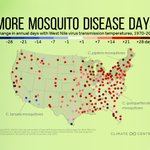
EPI member, Sadie Ryan, Ph.D., contributed her expertise with Climate Central to talk about the rise of mosquito disease days and the spread of West Nile virus throughout the U.S.
Read more the changing annual frequency of mosquito disease days in 239 major U.S. cities from 1970 to 2025: climatecentral.org/climate-m…

There seems to be a new food recall every week. Tomatoes, eggs, cucumbers, deli meats — the list goes on. Why are we seeing more outbreaks from food-borne pathogens? Why are people getting sick from their groceries? Learn more about the big three pathogens responsible for food-related hospitalizations in the United States and what to do to protect yourself from food-borne pathogens.
go.ufl.edu/ejdw917

Yesterday was World Zoonoses Day, a day commemorating the first rabies vaccine administered on July 6, 1885. Rabies, caused by rabies virus, is a zoonotic viral disease that causes acute and severe brain swelling in humans and other mammals. The virus can spread to people and mammals through the bites and scratches of an infected, warm-blooded animal. Rabies can cause severe disease and death if patients don’t receive appropriate and urgent post-exposure treatment, also known as post-exposure prophylaxis or PEP, after rabies exposure before symptoms begin.
Read more about rabies in Florida: epi.ufl.edu/2026/07/07/rabie…

In a small study in the Democratic Republic of Congo led by researchers from the University of Florida’s College of Veterinary Medicine and College of Liberal Arts and Sciences, 6-week-old infants with healthy gut microbiomes were less likely to contract malaria in their first year of life.
EPI members Julie Moore, Ph.D., and Connie Mulligan, Ph.D., and UF professor Christopher Dutton, Ph.D., combined their expertise to research whether a healthy gut could protect against malaria in babies.
Read more about their findings:
go.ufl.edu/yf5vgmw

With the support of a $3.6 million grant from the National Institutes of Health, the University of Florida and the University of Maryland are working together to develop an environmentally sensitive pathogen warning system for Vibrio species.
At UF’s Department of Environmental Engineering Sciences, EPI member, Antarpreet Jutla, Ph.D., is working to ensure that all coastal denizens and inhabitants have the information they need on the dangerous waterborne bacteria.
Read more about how these researchers are developing AI-enabled tools to predict flesh-eating waterborne pathogens.
news.ufl.edu/2026/06/vibrio-…

At EPI Research Day 2026, a special guest was on hand — virtually — to answer questions about research abstracts, for anyone who knew where to ask. EPI Information and Technology Manager, Ronald Scott, built a chatbot using NaviGator AI to bring the 10-foot inflatable of Pepper the Cat to life 🐈⬛
Read more about the development of Pepper's AI chatbot on our website
epi.ufl.edu/2026/06/23/peppe…

EPI member Sadie Ryan, Ph.D., has been featured in two media stories, one in the physical July issue of Prevention magazine, and the other in Outside Online. Both focus on mosquito-borne diseases and the impact of climate change — a focal point in Dr. Ryan's research. Click the links below to read Dr. Ryan's features and to learn more about the intersections between arboviruses and climate change!
Prevention.com: go.ufl.edu/l95hl74
outsideonline.com/health/wel…