

We use the power of emotions to create a healthier & more equitable, innovative, & compassionate society. @rulerapproach is our evidence-based approach to #SEL.
New Haven CT
Joined February 2014
- Tweets4K
- Following140
- Followers17.9K
- Likes2.2K





Schools love to praise the person who “keeps everything together.” Sometimes that compliment is actually a warning.
If every reminder, reset, question, and follow-up still runs through one counselor or coordinator, the work can look embedded while quietly depending on one person’s memory and stamina. Our RULER Deep Dive research is examining what makes schoolwide implementation sustainable over time.
medicine.yale.edu/childstudy…
#SchoolLeadership #Implementation


@YaleEmotion retweeted

My Dealing With Feeling book club is back! November 12 & 19 at 7 PM ET.
Free and live on Zoom!
On November 12, we’re talking about what to do when our own emotions get the better of us. And on November 19, how do we help someone else when we’re struggling ourselves?
We’ll have 90 minutes together each night, and I want YOUR questions! That’s always my favorite part. I’ve got plenty to share, too (you know me!).
Hope to see you there!
🔗f.mtr.cool/7r84quhmgy
#DealingwithFeeling #EmotionalIntelligence
A school can improve its school climate score and still leave some students out of that improvement.
The average may be completely accurate. The question is whether it is hiding a group having a very different experience. Our School Climate Walkthrough work with Jessica Hoffmann, Jennifer Seibyl and @aakash_ch was built with student voice and tested so group comparisons are more meaningful.
medicine.yale.edu/news-artic…
#SchoolClimate #StudentVoice


“They’re in high school now. They should know better.”
But grade nine changes much more than a student’s schedule. Expectations rise, relationships shift, independence expands, and students are learning a new social environment while being asked to act as though they already understand it.
Accountability and support do not have to compete.
medicine.yale.edu/childstudy…
#HighSchool #StudentWellbeing


The AI cheating conversation usually starts with students, but adults are making many of the same choices on the other side of the desk.
The more useful question is not whether AI touched the work. It is which parts of judgment, struggle, revision, connection, and meaning-making stayed human. @ZoranaPsych and Mike Grandinetti offer a useful co-creation frame for that.
sciencedirect.com/science/ar…
#AIinEducation #Creativity


We tell students to interrupt harm, but adults have their own version of looking away. It can sound like “we need to keep moving,” “not the time,” or simply moving to the next agenda item after a joke everyone knows landed wrong.
School culture is shaped by what adults interrupt and by what they allow the room to move past.
#BullyingPrevention #SchoolCulture


We use “emotionally intelligent” as if it automatically means thoughtful, caring, or trustworthy. But being skilled at reading emotion does not tell us what someone will do with what they notice.
Work from @drmarcbrackett, @ZoranaPsych and colleagues makes the distinction clearer. Emotional intelligence gives us information. How that information gets used is another question.
medicine.yale.edu/news-artic…
#EmotionalIntelligence #Psychology


We tell students to speak up about bullying. But do they know how to intervene safely, and whether adults will protect them afterward?
Nikki Elbertson on what schools can do differently.
medicine.yale.edu/childstudy…

“Why didn’t they tell us sooner?” can be the wrong first question after bullying comes to light.
Students may already be thinking about tomorrow and whether speaking up makes the hallway, team, or group chat harder to walk back into. “Tell a trusted adult” only works when students already know who that adult is and believe telling will not make things worse.
#BullyingPrevention #StudentWellbeing


For a child being bullied, “tell an adult” can come with a frightening question. What happens after I tell?
Watch Nikki Elbertson’s conversation with WTNH about that fear, the group chats that follow kids home, and how adults can help.
wtnh.com/news/health/what-to…
#BullyingPrevention #EmotionalIntelligence

Girls are often praised for being “mature” when what they’re really learning is how to edit themselves around somebody else’s behavior. In our bullying webinar, @RobinSStern described how girls can start curating themselves around harmful ideas of masculinity, and @drmarcbrackett’s Education Week guide looks at what schools can do before those scripts become normal.
edweek.org/leadership/opinio…
#BullyingPrevention #SchoolCulture


@YaleEmotion retweeted
On World Mental Health Day your feed will promise you quick fixes for your feelings.
Two decades of studying emotions taught me one thing about them: the hacks aren't the problem. The promise is. @RobinSStern and I wrote about it in today's @USATODAY.
🔗 usatoday.com/story/opinion/c…
#worldmentalhealthday

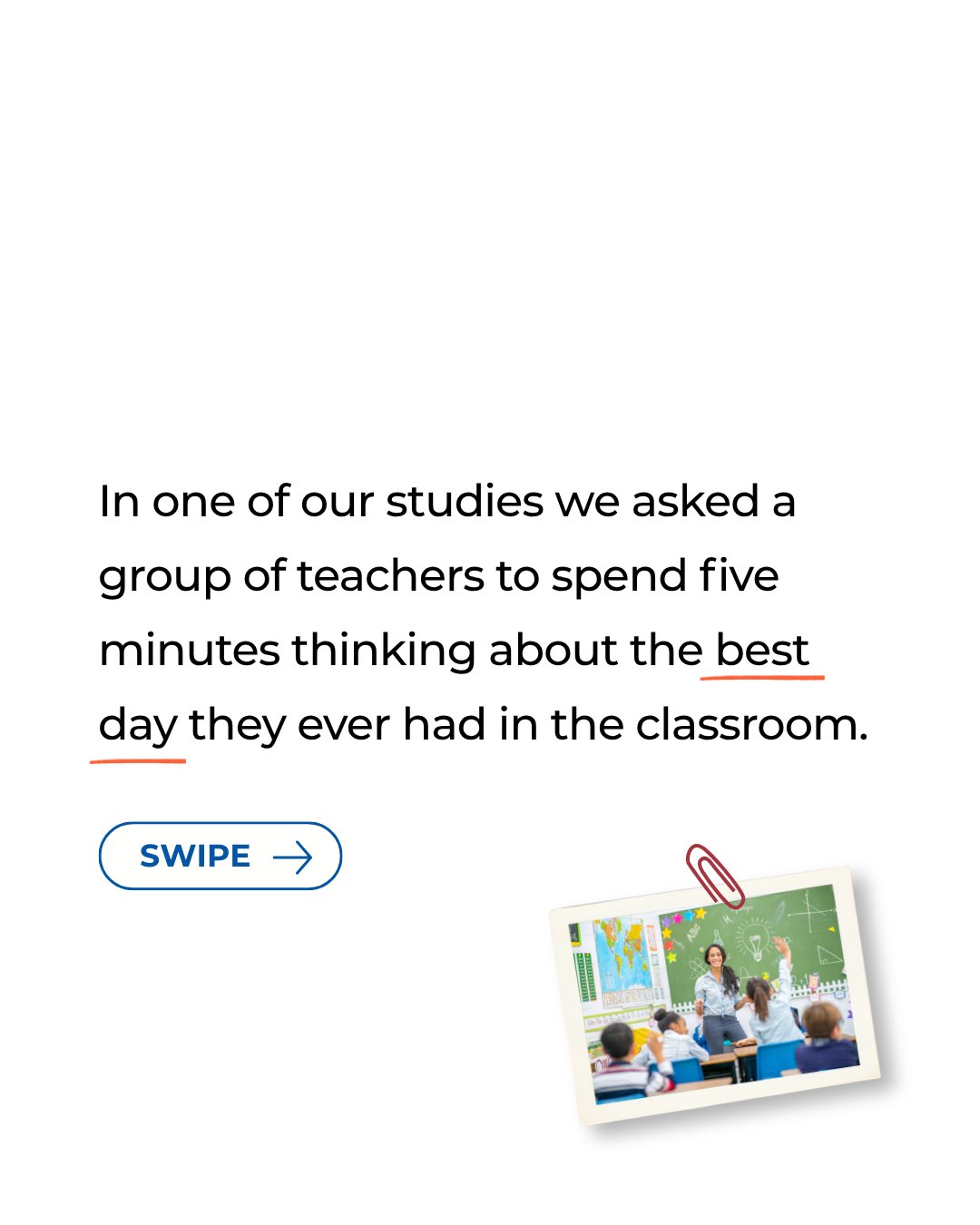
You can think you’re treating every student fairly and still let your bad mood influence how you grade them.
In one of our studies, teachers evaluated the exact same student work differently depending on how they were feeling beforehand.
And most didn’t think their mood had affected their grading.
🔗 f.mtr.cool/f7oatk9v3e



Somewhere between “your child needs consequences” and “the teacher needs to do better,” the child disappears. Behavior can be a signal without being an excuse. What changes when we ask what happened before deciding what it means?
#Emotionalintelligence #SEL #Educators


“You’ll get over it” can sound like reassurance to an adult and dismissal to a student.
Temporal distancing can help, but it works differently when students generate that perspective themselves instead of having it imposed on them.
Sometimes the difference is a question, not an answer.
@drmarcbrackett and Ethan Kross on Dealing With Feelings. From the vault.
🔗 f.mtr.cool/usymq9tf4t
#dealingwithfeeling #temporaldistancing


@YaleEmotion retweeted
Just moderated “The Power Within” at @ClintonGlobal with @KatecBowler, @1NadineSmith, @kylefrasr on emotional intelligence and leading when the setbacks keep coming.
One question I brought was about the children we’re preparing for that world. I’ve spent much of my career teaching emotional intelligence, and honestly, when I look at children’s loneliness, anxiety, and depression, I often feel like I’ve failed.
But their encouraging words helped. Relationships. Relationships. Relationships.
Glad I secured three more today! :)
#cgi2026 #EmotionalIntelligence #relationships


We do not talk about this enough. When a student walks in already falling apart, the adults around them are often managing their own fear about what that distress means, for the student's future, for the relationship, for themselves. And that fear enters the room before the student's story does.
Most adults are already three catastrophes ahead before the student finishes their first sentence. The student feels that. And they learn to filter what they share, soften the truth, and protect the adult from the full weight of what they are carrying. The students who need us most are the ones who have gotten the best at doing this.
@drmarcbrackett and Dr. Jenny Wang on what it actually takes to show up for a student who is falling apart. From the vault on Dealing With Feeling. f.mtr.cool/5m254pf4xh
#Coregulation #EmotionalIntelligence #DealingwithFeeling


@YaleEmotion retweeted
We made @Forbes!
And by “we,” I mean all of us who are still figuring out what to do with our feelings while trying to be parents, partners, teachers, leaders, friends, and human beings.
Those are the people I had in mind when I wrote these books, so I’m incredibly grateful to see Permission to Feel and Dealing with Feeling included in Forbes’ list of 10 emotional intelligence books for personal and professional growth.
Feeling very grateful :)
🔗 forbes.com/sites/entertainme…
@CeladonBooks @Chartwell_Ideas @Inkwellmgmt @rulerapproach @YaleEmotion
#PermissiontoFeel #DealingwithFeeling

We say students have permission to feel, but school can make that permission conditional fast.
If a feeling takes too much time or pulls the lesson off track, it can get rushed into perspective, gratitude, or “I’m fine.”
@drmarcbrackett and Whitney Goodman talk about the kind of toxic positivity that sounds helpful until you realize what it is asking a student to hide.
🔗 f.mtr.cool/wspfsizfog
#ToxicPositivity #EmotionRegulation #EmotionalIntelligence


If people have to wait for your best mood before they tell you the truth, that is not just a communication problem.
As a new school year begins, a lot of people are already deciding whether to call silence “fine,” delay the real concern until later, or carry it somewhere safer because another tense room feels like too much to take on.
That is where emotionally intelligent leadership gets very real, because the beginning of the year does not only reveal how people are doing. It begins to shape what they will feel safe enough to say.
This is part of the deeper work behind RULER Institute Online.
f.mtr.cool/kgqvqfefev
#EducationalLeadership #EmotionalIntelligence #SchoolLeadership #RULER


