

Husband. Catholic. Cardiac Critical Care Anesthesiologist. interests include physiology, health, golf, leadership, communication. Tweets don’t rep my employer
Morristown, NJ
Joined November 2016
- Tweets4K
- Following1.2K
- Followers860
- Likes8.1K


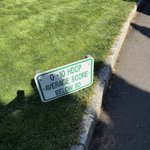




A little #bucciovertimechallenge for the #frozenfrenzy on @espn
Hey @Buccigross pick me!
Caufield / McLeod
Tree down across 287 SB mile 35 in New Jersey. Drive safely!
@foxweather @weatherchannel
Nicholas Zimick, MD retweeted

The wait is over.
Wide fairways. Bold contours. Endless options. Eighteen holes built for imagination, creativity and the shots you’ll still be thinking about long after the round is over.
Bone Valley is here.
Nicholas Zimick, MD retweeted

Aortic stenosis: don’t grade severity from AVA alone.
Echo assessment of AS should be integrative.
For severe AS, the classic concordant parameters are:
🔵 Vmax ≥4.0 m/s
⚪ Mean gradient ≥40 mmHg
🔴 AVA ≤1.0 cm²
⚫ Indexed AVA ≤0.6 cm²/m² can support severe AS, particularly in patients with small body size.
( But what if the numbers disagree)
That is where the real echocardiographic reasoning begins.
1️⃣ First, check for measurement error, especially LVOT diameter, LVOT VTI and Doppler alignment.
2️⃣ Then assess flow status:
Low flow: SVi ≤35 mL/m²
A patient with AVA ≤1.0 cm² and mean gradient <40 mmHg may have low-flow, low-gradient AS, with interpretation depending on LVEF and the clinical context.
In selected discordant cases, CT assessment of aortic valve calcification can provide important additional evidence of stenosis severity. The 2025 ESC/EACTS guidelines emphasize multimodality assessment when severity remains uncertain.
#Echocardiography #Cardiology #AorticStenosis #ASE

Nicholas Zimick, MD retweeted
Echocardiographic evaluation of LV diastolic function made simple by ASE😍

Wild read about AGI and’s ASI
@waitbutwhy you see this? Thoughts?


Nicholas Zimick, MD retweeted

Worth the read every year. #neverforget
Todd: Hello… Operator…listen to me…I can’t speak very loud. – This is an emergency. I’m a passenger on a United flight to San Francisco.. We have a situation here….Our plane has been hijacked…..can you understand me?
Lisa: (exhaling a deep breath to herself) I understand… Can the hijackers see you talking on the phone?
Todd: No
Lisa: Can you tell me how many hijackers are on the plane?
Todd: There are three that we know of.
Lisa: Can you see any weapons? What kind of weapons do they have?
Todd: Yes…. they don’t have guns….they have knives – they took over the plane with knives.
Lisa: Do you mean…like steak knives?
Todd: No, these are razor knives…like box cutters.
Lisa: Can you tell what country these people are from?
Todd: No…..I don’t know. They sound like they’re from the mid-east.
Lisa: Have they said what they want?
Todd: Someone announced from the cockpit that there was a bomb on board. He said he was the captain and to stay in our seats and stay quiet.
He said that they were meeting these men’s demands and returning to the airport… It was very broken English, and… I’m telling you…it sounded fake!
Lisa: Ok sir, please give me your name.
Todd: My name is Todd Beamer.
Lisa: Ok Todd….my name is Lisa…Do you know your flight number? If you can’t remember, it’s on your ticket.
Todd: It’s United Flight 93.
Lisa: Now Todd, can you try to tell me exactly what happened?
Todd: Two of the hijackers were sitting in first class near the cockpit. A third one was sitting near the back of the coach section. The two up. front got into the cockpit somehow; there was shouting. The third hijacker said he had a bomb. It looks like a bomb. He’s got it tied to his waist with a red belt of some kind.
Lisa: So is the door to the cockpit open?
Todd: No, the hijackers shut it behind them.
Lisa: Has anyone been injured?
Todd: Yes, ..they…they killed one passenger sitting in first class. There’s been lots of shouting. We don’t know if the pilots are dead or alive. A flight attendant told me that the pilot and copilot had been forced from the cockpit and may have been wounded.
Lisa: Where is the 3rd hijacker now Todd?
Todd: He’s near the back of the plane. They forced most of the passengers into first class. There are fourteen of us here in the back. Five are flight attendants. He hasn’t noticed that I slipped into this pantry to get the phone. The guy with the bomb ordered us to sit on the floor in the rear of the plane……….oh Jesus.. Help!
Lisa: Todd….are you ok? Tell me what’s happening!
Todd: Hello…..We’re going down….I think we’re going to crash……Wait – wait a minute. No, we’re leveling off….we’re ok. I think we may be turning around…..That’s it – we changed directions. Do you hear me….we’re flying east again.
Lisa: Ok Todd…. What’s going on with the other passengers?
Todd: Everyone is… really scared. A few passengers with cell phones have made calls to relatives. A guy, Jeremy, was talking to his wife just before the hijacking started. She told him that hijackers had crashed two planes into the World Trade Center……Lisa is that true??
Lisa: Todd…..I have to tell you the truth…..it’s very bad. The World Trade Center is gone. Both of the towers have been destroyed.
Todd: Oh God —help us!
Lisa: A third plane was taken over by terrorists. It crashed into the Pentagon in Washington DC. Our country is under attack….and I’m afraid that your plane may be part of their plan.
Todd: Oh dear God. Dear God…….Lisa, will you do something for me?
Lisa: I’ll try….if I can….Yes.
Todd: I want you to call my wife and my kids for me and tell them what’s happened. Promise me you’ll call..
Lisa: I promise – I’ll call.
Readers added context they thought people might want to know
No verbatim transcript of Todd Beamer's call with Lisa Jefferson exists, as the conversation was not recorded and the text includes fabricated dialogue.
snopes.com/fact-check/tra…
usatoday.com/story/news/fac…
nps.gov/flni/learn/his…
catalog.archives.gov/id/2610189
Nicholas Zimick, MD retweeted

24-year-old South Tower employee Welles Crowther calls his mother from the badly-burning 77th floor: “Mom, this is Welles,” he says, with a large amount of interference and commotion heard in the background. “I’m okay.”
He then tells her that he’s going to go to the Sky Lobby to see what can be done about evacuating survivors and hangs up.


Nicholas Zimick, MD retweeted
Good review on Postural Orthostatic Tachycardia Syndrome (POTS) today
@JAMA_current
jamanetwork.com/journals/jam…

Nicholas Zimick, MD retweeted

The world does not need an artificial intelligence that diminishes humanity; rather, it needs human intelligence enlightened by wisdom, political authority guided by conscience and technological innovation directed by charity. Only then will artificial intelligence become not a rival to humanity but a servant of the common good.
Nicholas Zimick, MD retweeted

🚨 GIVEAWAY TIME 🚨
To celebrate the launch of the Bitaxe Gamma Hex, we're giving one away to a member of our community!
How to enter:
✅ Follow us
🔁 Repost this post
❤️ Like this post
💬 Tag a friend who needs to start mining
Winner announced in 3 days! Free global shipping!

Nicholas Zimick, MD retweeted

JAMA has just discovered an ultrasound protocol that was developed ~20 years ago

The #BLUEProtocol is a rapid bedside #lung ultrasound technique for patients with acute respiratory failure. Using 6 standardized scanning points, this protocol helps identify common causes of acute dyspnea, such as #pneumonia, pulmonary edema, and pneumothorax, in less than 5 minutes.
📖 Read the full article to learn more: ja.ma/3S2Jq6G
Nicholas Zimick, MD retweeted

The #BLUEProtocol is a rapid bedside #lung ultrasound technique for patients with acute respiratory failure. Using 6 standardized scanning points, this protocol helps identify common causes of acute dyspnea, such as #pneumonia, pulmonary edema, and pneumothorax, in less than 5 minutes.
📖 Read the full article to learn more: ja.ma/3S2Jq6G
Nicholas Zimick, MD retweeted

I built a free iPhone app called "Window Golf".
I made it for myself to use on the range. Then I figured it would be fun to actually put something in the App Store.
Good ballstriking hinges on two things. Solid contact and finishing the ball as close to your target line as possible.
One way I like to practice is by picking a club and seeing how many shots I can keep inside a "window." With driver, that window might be 40 yards wide. Everything inside counts. Everything outside doesn't.
The problem is I like to switch targets while I practice, and eyeballing a 40-yard window at a new target is hard so I built the app to help with that.
There are also three combines built in. Driver, 6 iron, and pitching wedge. Ten shots each. The app sets your starting window width based on your handicap index, then adjusts as you go. If you perform well the window will automatically get narrower. Struggle and the window will automatically get wider.
It works on the course too. Say your target off the tee is 38 yards right of the OB stakes. Set your window to 76 yards wide, hold up your phone, line up the left edge with the OB line, and now you can see exactly where 38 yards right actually is. Same idea works for approach shots.
Here's the link:
apps.apple.com/app/window-go…
iPhone only for now. Not sure if I'll ever build an Android version.
Give it a try and let me know what you think. The app is free. Requires no credit card. Requires no email address. Just download, enter your handicap, and start using it.
🤖 Made with AI


Nicholas Zimick, MD retweeted

I'm a cardiologist. Everyone is sharing this study as a skin story. They're burying the part that matters.
Scientists took the aorta of a 75-year-old donor, applied a single engineered enzyme, and stripped away more than 70% of the molecular damage — bringing it down to the levels you'd see in a 30-year-old artery.
Published five days ago in Nature Communications. Revel Pharmaceuticals, with Calico and the University of Colorado.
Here's what they erased.
Sugar reacts with proteins in your body the same way heat browns bread — slowly, over a lifetime. It leaves behind a residue called CML, the most abundant advanced glycation end product in aging tissue. It welds itself onto collagen and elastin in your skin, your eye lens, and your arterial walls.
Two things follow. Your arteries stiffen. And CML latches onto a receptor called RAGE, which drives chronic inflammation — the exact fire I've been writing about for months as the engine of heart disease.
Since the 1980s this damage was considered permanent. Your body has no enzyme to remove it. Every existing approach only slows new damage from forming. Nothing touched what was already there.
So they built an enzyme that doesn't exist in nature. They screened 45,000 protein structures, then ran five rounds of directed evolution across more than 500 million variants until they had CMLase — a molecular lawnmower that oxidizes the CML off the protein and restores the original, healthy lysine underneath.
Not patched. Reversed.
Over 70% cleared from elderly arterial tissue. Over 55% from elderly skin — below the levels found in 31-year-old skin. 45-78% in lens proteins. The CEO said they expected 20% and were floored.
Arterial stiffness drives systolic hypertension, heart failure, and stroke, and I have no drug that reverses it. I can slow the process. I cannot undo it. This paper says undoing it may be possible.
The caveats are real and I won't skip them. This was done on donated tissue in a dish, not in a living person. No functional data yet — we don't know if that artery got measurably more elastic. Delivering a large enzyme deep into human tissue is a hard, unsolved problem. Clinical trials are years away.
But something considered permanent for forty years just came off human tissue.
We spent a century learning to slow aging. Someone finally figured out how to erase it.
Thank you @theallinpod @friedberg @chamath @pesottas

Friedberg: New study shows enzyme reverses skin age from 70+ years to 31
Chamath: That’s a $2T market.
Did Scientists Just Discover How to Reverse Skin Aging!?
“CML is kind of the predominant molecule that gets formed in this extracellular matrix that's driving aging, and nothing breaks it down.
So these scientists set out to try and create an enzyme, an enzyme is a protein that breaks something down, that can break down CML.
And so these guys kind of went out and they took the target, which is CML, and tried to figure out, ‘Okay, how do we actually degrade CML, clear that extracellular matrix, and reverse aging?’
They started to test it on the proteins that we would find in our body, casein, collagen, retinal proteins, which are in your eye, hemoglobin, and they were able to get rid of 52 to 97% of the CML, just degrade it away.
And then they found several sites where they were able to degrade over 90%.
And then they took actual human skin from elderly patients that had donated their skin, and they put this enzyme onto that skin, and they were able to eliminate 55% of the CML on the skin, basically reverse the skin's age down to the age of a 31-year-old, this is from greater than 70-year-old patients, just by putting this enzyme on the skin.
And so it's kind of a groundbreaking demonstration of combination of AlphaFold, what's called directed evolution, where you change the order of the DNA that changes the structure of the protein to test different proteins, do high throughput screening, and ultimately make a novel protein that doesn't exist in nature today that can do something pretty profound for human health.”
Chamath:
“It will be a trillion-dollar market. If you can create a cream…”
Friedberg:
“I mean, dude, if you could put this enzyme literally on your skin and have it absorb in…”
Chamath:
“Game over. That alone is $2 trillion.”

Nicholas Zimick, MD retweeted
How long should anticoagulants be withheld before elective surgery?
◻️Apixaban: 1 day (low/moderate bleeding risk), 2 days (high risk)
◻️Rivaroxaban: 1 day (low/moderate), 2 days (high)
◻️Edoxaban: 1 day (low/moderate), 2 days (high)
◻️Dabigatran: 1-4 days depending on bleeding risk & renal function
◻️ Fondaparinux: 36-42 hours
◻️ LMWH: 12 h (prophylactic), 24 h (therapeutic)
◻️ UFH: IV 4-6 h; SC 12–24 h
◻️ Warfarin: Stop 5 days before surgery; confirm INR before the procedure.
Adjust timing for renal impairment, neuraxial anesthesia, and individual patient risk. Bridging is reserved for selected high-thrombotic-risk patients.
Reference: 2024 AHA/ACC Guideline for Perioperative Cardiovascular Management for Noncardiac Surgery, Table 13.

Nicholas Zimick, MD retweeted

🧠 Brain Death Is More Complicated Than We think 🤔
Brain death determination is one of the most consequential diagnoses in medicine.
Yet a growing body of evidence reminds us that pharmacology matters.
A recent multidisciplinary review in Critical Care highlights how sedatives, intoxications, hypothermia, obesity, prolonged infusions, and multiorgan failure can profoundly alter drug clearance and potentially confound neurologic assessment.
Several practical lessons emerge for intensivists and neurocritical care teams.
• The traditional concept of waiting five elimination half-lives may be insufficient in overdose scenarios or critical illness.
• Therapeutic hypothermia significantly delays drug metabolism. Midazolam, fentanyl, propofol, and barbiturates may persist much longer than expected.
• Context-sensitive half-life matters. Propofol administered for prolonged periods can exhibit effective half-lives extending to 33–72 hours.
• Obesity increases the volume of distribution of lipophilic drugs, creating adipose reservoirs that prolong central nervous system exposure.
• Renal and hepatic dysfunction further complicate prediction of drug elimination.
• Routine toxicology screening remains incomplete and may fail to detect fentanyl, baclofen, clonazepam, synthetic opioids, or active metabolites.
Perhaps the most sobering message is that ancillary testing is not infallible.
Cases have been described in which patients demonstrated absent cerebral perfusion on imaging yet ultimately recovered neurologic function after profound intoxication.
Brain death determination therefore remains fundamentally multidisciplinary, requiring close collaboration among intensivists, neurologists, pharmacists, and toxicologists.
In an era of increasingly complex critical illness, understanding pharmacokinetics may become just as important as understanding neuroanatomy.
When the diagnosis is irreversible and carries profound ethical, legal, and societal implications, certainty matters.
Not every absent reflex reflects irreversible brain injury.
Sometimes, it reflects pharmacology.
Reference 📚
Farrokh S, Cook A, Feldman R, George P, Sarwal A, Mirski M, Shah V. Pharmacologic and toxicologic confounders in brain death determination: a multidisciplinary guide. Critical Care. 2026;30:77. doi:10.1186/s13054-025-05833-6.

ALT