
Research Fellow | Interested in Toll-like receptors and blood cancer 🧬 🩸| University of Westminster
London, England
Joined April 2020
- Tweets134
- Following610
- Followers145
- Likes814






So much time and money is wasted trying to replicate experiments and reproduce data. Looks like @brieflybio will be a scientific GitHub for wet lab work. Imagine starting your PhD with access to this kind of repository!

📣📣📣 Today we’re announcing our pre-seed fundraise of $1.2m, led by @CompoundVC to make biological science more reproducible across industry and academia. 🎉🎉🎉
forbes.com/sites/davidprosse…


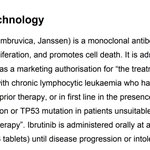
Interesting that NICE, in a rather old doc, refer to Ibrutinib as a mAb... Which it is not. nice.org.uk/guidance/ta429/d…

1
202
This is a neat concept. Sometimes you have great ideas but you need great collaborators to execute them.

We did it!! Portiko is out!
Portiko connects researchers looking to carry out experiments or analysis and researchers with the experience and tools to do so.
let's work together, let's work better :)
joinportiko.com
1
238
CAR-T for $30,000!
nature.com/articles/d41586-0…

2
96
Was great to attend the UK CLL Forum’s Annual Scientific Day! Tons of great data addressing the BCR. Fantastic talks from the pioneers, Prof Stevenson and Prof Chiorazzi.

7
333
New paper out today 🎉
Well done to everyone for their hard work & to the participants for taking part in the 60+ day trial!

Our open-labelled, non-randomised cross-over trial is published.
We studied the effects of short-term ketosis-suppression in healthy women on long-standing ketosis.
Ten lean (BMI 20.5 ± 1.4), metabolically healthy, pre-menopausal women (age 32.3 ± 8.9) maintaining nutritional ketosis (NK) for > 1 year (3.9 years ± 2.3) underwent three 21-day phases: nutritional ketosis (NK; P1), suppressed ketosis (SuK; P2), and returned to NK (P3). (66 days in total with a 6 month qualifying lead in)
Results:
Adherence to each phase was confirmed with daily capillary BHB tests (P1 = 1.9 ± 0.7; P2 = 0.1 ± 0.1; and P3 = 1.9 ± 0.6 mmol/L).
Ketosis suppression significantly increased:
👉Insulin, 1.78-fold from 33.60 (± 8.63) to 59.80 (± 14.69) mmol/L (p = 0.0002)
👉IGF1, 1.83-fold from 149.30 (± 32.96) to 273.40 (± 85.66) µg/L (p = 0.0045)
👉Glucose, 1.17-fold from 4.36 (± 0.53) to 5.12 mmol/L (± 0.59, P2; p = 0.0088)
👉Respiratory quotient, 1.09-fold 0.66 (± 0.05) to 0.72 (± 0.06; p = 0.0427)
👉PAI-1, 13.34 (± 6.85) to 16.69 (± 6.26) ng/mL (p = 0.0428).
👉VEGF, EGF, and monocyte chemotactic protein also significantly increased, indicating a pro-inflammatory shift.
👉Sustained ketosis showed no adverse health effects and may mitigate hyperinsulinemia without impairing metabolic flexibility in metabolically healthy women.
Conclusions:
Evolutionary evidence suggests that ancestral populations were predominantly adapted to patterns of intermittent and time-restricted feeding, as opposed to continuous nutritional intake, rich in farinaceous and sucrose carbohydrates that stimulate bolus insulin secretion. The escalating prevalence of T2DM, obesity, CVD, AD, and cancer observed in populations adhering to multiple substantial carbohydrate-dominated meals in developed nations is a testament to this.
Individuals maintaining long-standing habitual NK, when subjected to 21 days of consuming carbohydrate to suppress ketosis, followed with restricting carbohydrate, reverted to an evolutionary ketotic state within one day, indicate metabolic flexibility and health.
The negative changes in biomarkers associated with chronic diseases and ageing, which occur from a one-time excursion in a 1-year period of 21 consecutive days of suppressing ketosis, are rapidly restored after restoring the baseline dietary lifestyle of carbohydrate restriction which does not overstimulate insulin demand and secretion.
Our data show that long-standing NK appears to provide major health benefits in the maintenance of euglycaemia, with low insulin and IGF-1, the triad of markers most strongly associated with chronic diseases and biological ageing. NK serves as a reliable surrogate marker for these parameters to understand an individual’s metabolic phenotype, and therefore risk.
This study was conducted to establish a detailed metabolic phenotype biomarker profile in a long-standing healthy ketosis cohort, providing a NK control group for other studies to establish metabolic phenotypes in people with cancer, CVD, AD, T2DM, and ageing, and to assess treatment efficacy using KMT in gaining better health.
Sustained NK may mitigate hyperinsulinemia without impairing metabolic flexibility and carbohydrate tolerance in metabolically healthy individuals. Maintaining low insulin requirement and IGF-1 levels through endogenous NK may offer lower chronic disease risk, resulting in benefits to both lifespan and healthspan.
mdpi.com/1422-0067/24/21/156…
Awesome co-authors:
@Yvoni_Kyr @_kurtisedwards @_LucyPetagine @tnseyfried @TommyDeeMD @ascarbs @jacomesandra @AdrianSotoMota @kenbrookler @valennutrition @NovaesVanusa @Brads_science


📝 Link to the article: molmed.biomedcentral.com/art…


Encyclopaedic effort 😅by team #CLL comes to fruition…our paper ‘The role of #CD180 in #haematologicalmalignancies and #inflammatorydisorders accepted by Molecular Medicine! Congrats to all involved but special mention for @_kurtisedwards 👌
@NPorakishvili and Peter Lydyard
I was invited to write a blog post about my PhD experience @uw_careers 😁
blog.westminster.ac.uk/caree…
Ruxolitinib (JAK inhibitor) results in unrestrained TLR signalling promoting CLL cell activation driving disease progression.
ncbi.nlm.nih.gov/pmc/article…

1
145
Those being treated with JAK inhibitors for MPNs also at higher risk of B cell cancers pubmed.ncbi.nlm.nih.gov/2990…
77

Ibrutinib approval for mantle cell and marginal zone lymphoma news.abbvie.com/news/press-r…
1
197
Human blood is sterile, except for transient contamination with commensal pathogens. No evidence for a blood microbiome in a study of nearly 10k people nature.com/articles/s41564-0…
3
94
😳

NEW: I’m not sure people fully appreciate how dire the US life expectancy / mortality situation has got.
My column: enterprise-sharing.ft.com/re…
And some utterly damning charts.
1) at *every* point on the income distribution, Americans live shorter lives than the English.

78

Signalling lymphocyte activation molecule family (SLAMF) receptors work as important “off switches” for B cell receptor signalling in CLL. Knockout of SLAMF also results in markedly reduced proliferation of CLL cell lines ➡️➡️
1
2
137
Lower expression of SLAMF associated with poorer prognostic features and shorter overall survival. ncbi.nlm.nih.gov/pmc/article…
50
HMGB1 is known to be a key endogenous ligand for TLR4/MD-2 and is involved in sepsis pathophysiology. HMGB1 binds via interactions with the MD-2 , which is expressed in complex with TLR4 (TLR4/MD-2), leading to inflammation in sepsis.
ncbi.nlm.nih.gov/pmc/article…
1
23