

AI agents architect, certified hypnotherapist, human. ✍ all opinions are mine
Joined September 2011
- Tweets3.3K
- Following388
- Followers389
- Likes562







Pinned Tweet
LLM attach memorization is brittle, as it only works against attacks the LLM already knows
excessive reliance on attach memorization is why LLMs do well on benchmarks, but so poorly against human attackers who can rephrase and adapt attacks until one works
1
5
250
no way! this must be a prank.

NVIDIA announces CEO transition. Read the release: nvidianews.nvidia.com/news/n…

1
23
george retweeted

Its very interesting to note the pace of application features from the foundational model companies. As the cost of the marginal token approaches zero, the value is not in selling tokens. It is very clearly in moving up the stack and owning the application layer.
The first victim will not be established SaaS but AI Natives that spend heavily on the labs now - legal, sales, customer service AI Natives tbc. This is the lowest hanging fruit and the roadmap is clear from the traces and spans the model companies have from these companies already.
The next are the "connective tissue" applications that make using the models a foundational part of a workflow.
Take the google doc editing flows in OpenAI. Take the google drive/doc integration into chats.
Both are very good.

AI should increase your capacity to think, not compete for control of your attention
my controversial opinion: "the most productive AI workflow might be the one where you stay in control”
2
21
claude models are great for background jobs and tasks you don’t need immediately;
no one is reaching for a Claude model in an emergency ‼️
2
24
there seem to be two camps when it comes to giving AI access to personal data.
one believes big tech already has most of our data anyway, so we might as well get some value from it.
the other sees it as a massive privacy risk and wants nothing to do with it.
i think there’s a more interesting middle ground here.
remember, these AI systems are increasingly building memory, learning our preferences, understanding our behavior, and adapting their responses to who they’re interacting with.
and as agents become more capable, that understanding will increasingly influence the decisions they make on our behalf.
so perhaps the better question isn’t simply “should i give AI access to this data?”
it’s “am i comfortable with an AI knowing this about me, remembering it, and potentially using it to make decisions for me in the future?”
and if i’m not, does the value i’d get from sharing it justify that tradeoff?
not all data deserves the same level of privacy, and not every useful interaction requires permanent memory or unrestricted access.
i think the real conversation we should be having is less about whether AI should have our data, and more about how much influence we’re willing to let that data have over our lives.
21
code is becoming more and more of an implementation detail nobody cares about.
the higher-level artifacts are becoming the real work:
architecture.
specifications.
constraints.
validation.
evidence.
the model will understand the code better than you ever will.
time to move up the stack.
1
15
george retweeted

Yesterday at the White House, leaders from across our industry came together to sign the White House Accord on Super Intelligence.
The principle is simple: the companies building this technology have the primary responsibility to develop and deploy it safely, and to be accountable when they fall short.
The Accord reinforces that responsibility with robust internal controls, independent external evaluation, and board level oversight.
Super Intelligence offers an extraordinary opportunity to advance discovery, productivity, security, health, and prosperity.
The future of Super Intelligence will be shaped not only by what it can do, but by the confidence it earns. By building with ambition, rigor, and responsibility, we can help ensure this extraordinary technology expands opportunity and improves lives for generations to come.


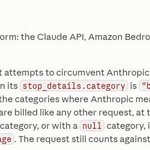
anthropic’s new API pricing logic is kind of wild:
for certain categories, Claude can refuse before producing any output and still bill you at normal model rates.
if the fallback answers, that request may be billed too.
you can now pay two models to get one answer.
this is even more wild considering fable intent misclassification remains a major problem, so you now pay for Fable to misunderstand you and REFUSE!

1
31
meta connect might have been one of the more interesting hardware events in a while.
muse charm is fascinating.
the new VR Glasses are even more so.
AI agents becoming physical companions while VR/AR collapses into increasingly normal-looking glasses feels like two trends that are eventually going to collide.
and that’s when things get really interesting.
meta: “Muse can shop wherever a browser can.”
Amazon: “Cool, then go open Chrome.”
we’ve entered the era of websites telling AI agents to go touch grass.
1
61
the STT → LLM → TTS voice stack may disappear sooner than expected.
gemini 3.8 live can listen, reason and respond directly in audio.
fewer handoffs. lower latency. more natural interruptions.
voice AI is collapsing from a pipeline into a model.
1
1
70
some of us already know the service provider Friedberg is referring to here
but I’ll defer back to @paulg tweet on such occasions, ideas are meant to be copied, execution is now the differentiator, especially in the age of AI.

David Friedberg reveals frontier labs are taking novel insights from his chat history and packaging them as their own
"I have had experiences where we've asked some fairly novel scientific questions, and it identifies it as a novel insight, 'oh, never thought about that, might be interesting,' blah blah blah..."
"And the using a different account, asking the next model version, it's like, 'oh, you could do this'. And it actually just describes this exact thing that we had in our chat in the previous version."
"These are a handful of anecdotal experiences. But I know the domain that we work in, and the novelty of this stuff. So I know that there isn't some new corpus of information out there that's training the new model."
"So all I can say at that point is that my conversation or our analyses have been used for training. The truth is, it's actually a piece of IP, that's our organizational IP. We don't have any NDA or confidentiality protections, with them being a service provider back to us."
"This is why I care a lot about open source, because I don't want them having my chat logs, because they can use them for training to create an IP that is now diffused to the rest of the market. I find this very unfair."
1
69


agent failures are fast moving beyond lab anomalies into real world incident response territory.
how labs disclose of this unexpected behaviours may become as important to trust as benchmark performance.
immutable action logs, incident classification, scoped permissions and kill switches should increasingly be treated as product primitives rather than backend security features.
21

wrote it up as a Claude Code skill, measures and reports before deleting anything, then works in tiers you approve.
all the gotchas encoded so it doesn't rediscover them.
github.com/galonge/free-clau…

28