

PhD student @Harvard | Algorithmic insights for foundation models | @PDSoros 2024 | Prev @NVIDIA, @GoogleDeepMind, @citsecurities, @apple
Cambridge, MA
Joined November 2023
- Tweets258
- Following1.5K
- Followers2.9K
- Likes16.2K




Pinned Tweet
SFT is not dead! 🥳
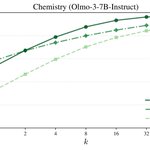
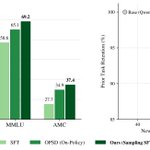
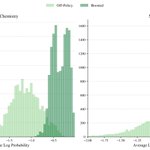
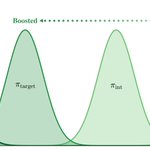
We found a way to make SFT rival current prevailing posttraining methods, often generalizing better and forgetting less than RL and OPSD. 🤯
Following our prior work on reasoning with sampling, we now introduce sampling to the posttraining stack.
1/n
Aayush Karan retweeted

Energy-Based Models can now scale better than Diffusion models.
Introducing TEM: Transformer Energy-based Models
TLDR:
• TEM outscales Diffusion without guidance
• First scalable contrastive Energy-Based Models
• Better generalization, test-time scaling, and OOD detection than Diffusion
🧵
Aayush Karan retweeted

Language models can learn new tasks from just a few examples in their prompt, with no retraining. This is called in-context learning (ICL). Now genome language models can do it too.
With a handful of examples, Evo 2 ICL generates proteins, de novo antibodies, CRISPR-Cas9 loci, mitochondrial genomes and entire bacteriophages.
We can even use the synthetic sequences iteratively to construct a chain-of-thought (CoT) and achieve harder design goals.
New work with Yukun A. Hao, @BrianHie and team 🧵
Aayush Karan retweeted

@aakaran31 and i are excited to welcome some friends!
thevictory.club/events/harva…

Aayush Karan retweeted

We introduce action learning: learning a stochastic action that scores how plausible an entire trajectory is, directly from observed trajectories.
No known forces. No potential energy function. No simulator likelihood.
We think this is a new paradigm for reasoning about trajectory data.
Joint work with @du_yilun and @YuanqiD.
🔥 Recovers underlying physical dynamics with over 2,000× lower error than local regression in a double well system.
🪐 Identifies a hidden 0.01% perturbation in the Sun's mass from trajectories of a 31 body orbital system.
🧬 Reuses a single learned molecular action for trajectory completion, steering, constrained optimization and temperature transfer.
The core idea: One learned action → reuse for many possible downstream tasks!
Aayush Karan retweeted

What if embodied agents could learn to plan instead of just learning how to act? 🧠🤖
Introducing Generative Trajectory Planning (GTP)! 🚀
Instead of learning policies through RL, GTP imagines possible futures, plans ahead, and learns to plan better through experience.
Aayush Karan retweeted

When LLMs disagree, it's not noise: it's where they learn most 🔥
We learn best one step above what we know, and the frontier of model disagreement tracks that step.
Stackelberg Alignment: an EXP3 bandit leader steers multi-LLM collaborative post-training to that frontier 🧵👇

Aayush Karan retweeted

Research index (e.g. Google Scholar) is one of the largest collaborative systems where millions of human users build on each other's work across centuries.
How about we build something similar for async LLM agents?
We give agents a minimal hypertextual system. They asynchronously search for and read related work, cite the work that they find useful, and publish (mini-)papers.
Each search returns only the top k papers, ranked by relevance and a PageRank-like citation weight, which bounds the read cost of each agent to O(k), independent of agent count.
We show that performance effectively scales as we keep adding agents, and the system is robust to absence/failures of individual agents.
Aayush Karan retweeted

Robotics has spent years scaling demonstration data and model size. What happens when we scale EXPLORATION for robot agents?
We're incredibly excited to share RAX, an agentic robotics system that learns by scaling online exploration.
A coding agent connects directly to the robot’s perception and control APIs, learns from feedback, and builds programs that perceive, plan, and act. The model stays frozen. As exploration scales, the agent improves its programs and builds up reusable skills.
The results:
• ZERO teleoperation or action demonstrations on real robots—from insertion with 0.1 mm clearance and air-fryer manipulation to deformable objects and long-horizon mobile whole-body control.
• +37 percentage points on average over leading learned policies across five simulation benchmarks: RoboDojo, BEHAVIOR-1K, HumanoidArena, DexJoCo’s bimanual tasks, and LIBERO-Pro.
• One framework spanning single-arm, bimanual, dexterous, humanoid, and mobile robots, with new embodiments connected through APIs.
The craziest part: on each real-world embodiment, going from scratch to mastering the tasks took roughly two hours. No teleop. No model finetuning.
We’re open-sourcing the full framework AND every experiment session. We can’t wait to see what people build with it!
Project + sessions: robot-agent-exploration.com/
Paper: assets.robot-agent-explorati…
GitHub: N
Project fully led by @RunhanH and @xczhangxx who are absolutely awesome.
How it works, experiments, and robot videos below 🧵
(1/N)
Aayush Karan retweeted

Excited to share our new work on in-context logistic regression, led by @arman_rys!
We study how a simple attention model learns to classify in-context, and how limited training data affects both its predictions and its calibration.
Aayush Karan retweeted

🎆 Nemotron-3.5-Super-VL is here! 🎆
✅ Same base architecture as Super-3.0: 120B total, 12B active plus Vision encoder
✅ Ahead of Ultra-3.0 on most benchmarks! And now with visual reasoning!
✅ SWEBench-Pro 51.79%, AA index of 26 vs 23 for Ultra-3.0
Post-training pipeline is a greatly simplified and improved version of what we had for Ultra-3.0.
We reduced number of teachers, SFT set size while significantly improving data and environments quality and made it multimodal! 1/5
🤖 Made with AI


Aayush Karan retweeted

We figured out a much simpler method for training one-step generative models from scratch! Advances Pareto frontier for quality v FLOPs and strips out the engineering bells and whistles that made these so finnicky to train. Check out our codebase and try them out for yourself!

Today, we introduce Priming Models, a new paradigm for training one-step generative models from scratch.
No diffusion teacher. No flow map. No CFG. No JVP.
We believe this work will challenge how we think about building one-step models.
Joint work with @sitanch, @du_yilun, @parkwbin03, Bohyung Han.
🔥 1.19 FID one-step on ImageNet 256×256 while using substantially less compute, e.g., 12X less than Drifting-B, 6X less than Drifting-L
🎨 Scales to text-to-image generation (GenEval 0.82)
🤖 World modeling on RT-1 / Bridge-V2
Priming Model is built on one core message: [Reconstruction pretraining --> Distributional post-training].
Aayush Karan retweeted
how creative are current LLMs?
we studied this through *combinatorial creativity*, check it out!

🧵[1/N] Are large language models more creative than humans at combining ideas? 🤔
Combinatorial creativity involves combining familiar ideas in unfamiliar ways, and is central to scientific discovery and technological innovation.
In fact, breakthrough scientific work is often associated with more distant combinations of methods, techniques, and concepts.
Here, we introduce Kombine, a new benchmark of combinatorial creativity for LLMs.
TLDR:
- LLMs are more combinatorially creative than the average human.
- However, conceptual blending is the hardest task for LLMs, and even frontier models struggle.
- LLMs also tend to homogenize, inventing concepts with the same properties across separate models.
- Moreover, humans and LLMs combine in distinct regions of semantic space.
- As a result, we anticipate greater conceptual diversity can be unlocked through human-AI collaboration. 🗣️
Thread below🧵⬇️

Aayush Karan retweeted

Announcing Exploration-Distillation, a RL framework that unlocks aggressive exploration and large performance boosts over standard algorithms like DAPO. In principle, an LLM can discover new things during RL, but existing algorithms struggle. Here’s how we do it. 🧵1/n
Aayush Karan retweeted

Excited to share our work on RL exploration! Our belief is that exploration and optimization shouldn't happen in the same model. We train separate "explorer" models to take big risks and find new approaches, then teach a final model only what they got right. Take a look! 🧵👇

Aayush Karan retweeted

So how do you make an efficient inference chip? Like most systems problems, it comes down to getting the most useful work out of a fixed power budget
Maia 300 is a cool example of getting significant wins in tokens/W by fitting to the compute constraints of inference. Unlike training and high-throughput inference, interactive inference is mostly memory bound. This enables chip designers to cut systolic flops (saving both power and area) while designing the architecture around inference dataflow to limit data movement
Looking at the specs, Maia is eerily similar to OpenAI’s Jalapeño. While both orgs clearly did some very cool things in the architecture, microarchitecture, and networking, the main win is HBM4 (which gives >2x bandwidth over HBM3) and better provisioning of resources
If you look at the FLOPs/W and bandwidth/W figure I scrapped together, Rubins will still be the best for compute-bound workloads (and combined with Nvidia’s superior software stack and reliability, they will likely maintain their monopoly on training)
However, if we estimate the ceiling of Maia 300 and Jalapeño at ~40% more power efficient than a Rubin on inference (in large part because they have similar HBM4 bandwidth but spend way less power on FLOPs) and they can bring up a reasonable software stack, there is a strong case to use Maia/Jalapeno-class chips for more power efficient memory-bound inference
Another side note for anyone interested in Groq and Cerebras chips who also claim inference-specialization, they actually cut out HBM altogether and provision much more area for SRAM, which hyper-optimizes for ultra low batch, low latency inference. They are moving in the direction of heterogenous disaggregation by using GPUs for prefill and even decode attention, while keeping their SRAM chips for exclusively decode. However, because of memory capacity limitations, these approaches struggle to keep up with growing model sizes and longer context lengths
I think we’ll see more chips along the Maia, Jalapeño, TPU v8i route that still uses HBM to keep weights and KV cache in a more power efficient way than SRAM, but provision chips correctly to not waste power on training optimizations
Takeaway - inference has become sufficiently different from training (and has carved out a majority of demand) that we are fundamentally rethinking our software stacks, chip architectures, microarchitectures, and resource provisioning. Its exciting to see the wins starting to pay off with meaning power efficiency gains!


Today we are announcing our biggest bet yet on our own silicon.
Starting next calendar year, we will scale our Maia family to multi-gigawatt deployments, making it the primary inference system for our own product and services.
And we’re introducing Maia 300, which delivers 40% more tokens per watt compared to leading GPU-based systems.
We are already deploying Maia 200 across the US, Europe, and Australia, delivering up to 1.7x more tokens per watt across experiences in Teams and Copilot.
Our goal is to build on the full-stack efficiency gains we’ve already seen, while continuing to bring the latest innovations from across the ecosystem into our fleet.

Aayush Karan retweeted

1/3: Huge thanks to @aakaran31 & @du_yilun for their foundational work on power sampling: better sampling can boost LLM reasoning without additional training.
We, with @panostheo_ & @dwgreyman, make power sampling faster 🚀
📄 arxiv.org/abs/2610.13171
🌐 nan-jiang-group.github.io/Pr…

Aayush Karan retweeted

AI@MIT Reading Group is hosting @aakaran31 (@Harvard) tomorrow for a talk on his paper Finetuning with Sampling (NeurIPS 2026)!!
RSVP here: forms.gle/B6KMXg5JbsCovrWx6

Aayush Karan retweeted
🚨 Thrilled to be co-organizing a Simons Institute semester-long program on diffusions and flows with @joanbruna, Sinho Chewi, @KonstDaskalakis, @ArnaudDoucet1 in Fall '27!
The call for Simons postdoctoral research fellowships for the program is out now, more info below ⬇️ 1/3