
Profile no longer active. Contact via other channels.
Joined March 2009
- Tweets932
- Following571
- Followers1.2K
- Likes3.5K






Anders Granholm retweeted

We are so thrilled to receive this award on behalf of all the research panels involved. For the curious reader our core outcome set is now available as a preprint: medrxiv.org/cgi/content/shor…
Anders Granholm retweeted

Novelty-bias, innovation-bias, and do more-bias. The quintessential problems that drive ever-increasing costs. Until we embed RCTs at scale into health systems, this will not change and, yet, if we embedded adaptive RCTs into systems we could get high quality data quickly.

It's sad that millions of procedures have been performed using antibiotic cement but no one can do a 10000 patient RCT.
@VPrasadMDMPH
Anders Granholm retweeted

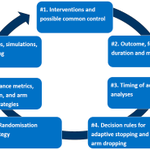
Adaptive designs can improve efficiency in the way we design & conduct trials. Their complexity comes with additional demands for transparency in reporting of methods & results. Use this guiance when planning or running a randomised adaptive trial 👇🏾
bmj.com/content/369/bmj.m115


This is a minor release implementing a few extra features, improving documentation, and fixing a few bugs.
Details including changelog available on the package website: inceptdk.github.io/adaptr/
Anders Granholm retweeted

Det er virkelig vigtigt, at der hurtigst muligt findes en løsning - så forskerinitierede forsøg igen gøres gebyrfrie. Ellers kan det få alvorlige følger for den frie forskning. @laegeforeningen #sundpol #forskpol @ChristinaEgelun @stinuslindgreen @MonikaaRubin

"Som samfund vil vi gå glip af ny viden om behandlinger til nogle sygdomsområder, og det vil i sidste ende ramme patienterne og skabe mere ulighed i sundhed." @SThysen advarer i @Ugeskriftet mod gebyrer på ikke-kommerciel forskning #dkpol #sundpol ugeskriftet.dk/nyhed/gebyrer…

Anders Granholm retweeted

Ensuring early robust evaluations of new & emerging healthcare technologies/procedures is essential to provide unbiased estimates of their true likely impact on patient care 1/7
#MethodologyMonday #82
Anders Granholm retweeted
In clinical trials, we sometimes undertake #SensitivityAnalysis alongside the main primary analysis. But when should we use them and to what purpose? 1/8
#MethodologyMonday #80
Anders Granholm retweeted

A step into the future of clinical trials, shaped by the critical care community.
@PRACPLATFORM
@REMAP6 @EdinUni_TRAITS @INCEPTdk @panther_trial @remap_cap @AndersPerner @msh_manu @ecgoligher @efan75 @dfmcauley @srinmurthy99
🔗 bit.ly/3UYrMjF

Anders Granholm retweeted

HOT of the press
#HOT_COVID_trial on
Lower vs Higher Oxygenation Target and Days Alive Without Life Support in ICU patients with COVID-19 and severe hypoxemia jamanetwork.com/journals/jam…

Anders Granholm retweeted
We often use patient reported outcome measures (#PROMs) in clinical trials, but it can be difficult to choose which to use. There are several elements that are useful to consider 1/8
#MethodologyMonday #78
Anders Granholm retweeted

Love to see an article on this topic.
As someone that’s primarily worked on the “applied” side of clinical trials but with a strong interest in learning and looking for use cases for adaptive trials…
This quoted post is unavailable.
Anders Granholm retweeted

Read our team’s second paper of the series that gives an overview of how GRADE is used in clinical practice guidelines led by @andersgranholm @ActaAnaesthScan

#MethodMonday 49: GRADE in systematic reviews with meta-analyses and clinical practice guidelines
1) doi.org/10.1111/aas.14386
2) doi.org/10.1111/aas.14384
This week includes two papers on using the GRADE (@GRADE_WG) approach in SRMAs (#1) and clinical practice guidelines (#2) 1/...
Anders Granholm retweeted
One option for trials running at the same time is #CoEnrollment of patients to more than one study - ie if a patient is eligible for more than one study in their care pathway they have the opportunity to be recruited to both trials. 1/8
#MethodologyMonday #76
#MethodMonday 49: GRADE in systematic reviews with meta-analyses and clinical practice guidelines
1) doi.org/10.1111/aas.14386
2) doi.org/10.1111/aas.14384
This week includes two papers on using the GRADE (@GRADE_WG) approach in SRMAs (#1) and clinical practice guidelines (#2) 1/...
Written by @ZDuhailib , @AlhazzaniW, @ebelleycote,
@Simon_Ocz, Morten Hylander Møller, and myself, they provide an introduction, explanation, examples, and elaboration and discussion of common pearls and pitfalls when using GRADE 2/..
Hopefully they will be helpful to both researchers using GRADE and evidence end-users who wants to understand the process. References included to more detailed papers on specific topics.
More next week - for an introduction to these threads, see nitter.cf/andersgranholm/status/… 3/3
#MethodMonday 1: On (most) Mondays in 2023, I'll try to share papers/blog posts/websites about medical research methods and related topics. Will mostly share relatively accessible articles that can stand alone and have broad relevance, with only brief introductions 1/..
Anders Granholm retweeted
If you are a systematic review developers, methodologists, or evidence end-users.
Our paper could be of interest to you. It aims to provide an overview of how GRADE is used in systematic reviews and meta-analyses. onlinelibrary.wiley.com/doi/…

Anders Granholm retweeted
We are increasingly seeing the use of #RoutineHealthcareData in clinical trials-data routinely collected on healthcare systems as part of standard healthcare delivery ie. not specifically collected for research purposes. But when/how should they be used 1/7
#MethodologyMonday #73