


This is great😂

At this joyful time of year, @sarahpowellphd and I share the onion video… for the benefit of all onion-cutting stuffing-makers and teachers … here’s how you cut an onion taught using explicit instruction youtu.be/T-6cCgS8Eio … Learn a teaching strategy. Save Thanksgiving.

1


Alicia retweeted

If you're looking to really dig into the Science of Reading this year, kudos to you! To help you along your way, we put together a list of 30 Science of Reading resources. Enjoy!
heggerty.org/blog/science-of…😊
#heggerty #phonemicawareness #thescienceofreading

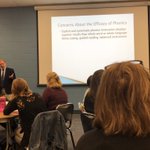
Emily Hanford notes schools are teaching both phonics & strategies that reflect the cueing system. We need to stop presenting students with conflicting information because it interferes with the mapping process and their ability to become proficient readers. #PaLitSymposium2020

Alicia retweeted

Any teachers out there using Skippy Frog, Eagle Eye, Tryin’ Lion, etc. PLEASE ditch them.Guessing is not a strategy and is not what good readers do!Use Lyn Stones’ decoding dragon and Pam Kastner’s PSST bookmarks instead! #PaLitSymposium2020 @lifelonglit #teamnorthern @liv2learn


😻🐾❤️

Raise your paw to become a lifesaving cat foster! If you'd like to be a part of our lifesaving cat foster family, please email our foster coordinator at [email protected] or by calling the shelter at 610-373-8830. Thank you! 😻

Great session on orthographic mapping and sight words. Many reading myths debunked. We need to get away from memorizing whole words and instead draw students’ attention to the regular and unexpected parts of words to support their mapping of words. #PaLitSymposium2020

We need to stop telling kids that “trick/sight” words can’t be tapped out! It IS possible to say the sounds of the word and this sounding out process is going to aid the students. Then we need to help them learn the tricky parts. Thinking they’ll learn it magically isn’t working.

1. Many recent posts about "sight words"on FB lit. pages & still so many think using flash cards to memorize words is actually TEACHING kids to read. What does David Kilpatrick have to say? Watch this snipped presentation clip to see. https://nitter.cf/t.co/fvNhIkVL4o @ReadingLeaguePA

Alicia retweeted

The Fox Reading Conference (3-21-20) is now fully online and free of charge. Register now to learn about the Science of reading from Louisa Moats, Louise Spear-Swerling, and Margie Gillis. Register to get access to this great learning opportunity. mtsu.edu/dyslexia/symposium-…

Alicia retweeted

Yes! It’s shocking as a primary grade teacher to learn that so many kids who left K/1 appearing to be strong readers actually require intervention in the upper grades because of gaps we unknowingly left in their foundational skill development.

This is a great observation. I see that Balanced Literacy also gives teachers the ILLUSION of skillful reading and effective instruction. It seems to make sense, when in fact it’s not the best approach according to the #scienceofreading @LouisaMoats
So true!! And until the core curriculum is based on the science of reading, includes knowledge building and numerous opportunities for practice, reading support and special education classes will continue to grow unnecessarily.


Alicia retweeted

“It”s not drill and kill, it’s giving children multiple exposures to build the visual word form area.” A must watch video clip of Maryanne Wolf’s presentation at the Reading League Conference. #TRLConf2019
Very interesting article...matches my dislike for the assessment and the large amount of time that it takes away from instruction.
If you use F & P’s BAS assessment, this is an important article to read. It’s written by Margaret Goldberg from the #righttoread group in Oakland. readingrockets.org/blogs/rig…
1
Alicia retweeted

Are we teaching reading comprehension? I don't think so and here is how we can change that to be more effective.
shanahanonliteracy.com/blog/…

Alicia retweeted

Yes, to teach students to read is going to take a thoughtful curriculum. Patching pieces together is insufficient. Phonics by itself needs sequential lessons, but what about vocab/comp/oral language/writing? It needs to be integrated thoughtfully.

This is what we’re up against and why so many students need reading support. I’m glad that I’ve seen the light of reading science and turned away from guided reading and these strategies that are not helping students. I wish I could convince others of the harm it can do.

This is the most disheartening video of reading instruction I have *ever* seen. Jan Richardson, a very popular author, leads a small group of beginning readers to model for teachers her "strategies." My heart drops for all these kids. Especially at 3:50. facebook.com/pioneervalleybo…
