





Onotu retweeted

Debunking the Phantom Debts and Ecological Loan Fallacy
My attention has been drawn to trending claims by the Anambra State Government that my administration left behind inherited debts, including a ₦2 billion ecological loan, contractor liabilities, and unpaid salaries, gratuities, and pensions. This is completely false.
We systematically liquidated historical gratuities and arrears dating back several years, amounting to over ₦35 billion. At the point of handover, the state owed nothing in salaries, gratuities, or pensions, nor did we owe anything to any contractor for projects duly executed and certified.
The ₦2 billion ecological fund in question was released barely three months before the end of my tenure for the Oko/Umuchiana erosion crisis. Despite pressure to spend the money, I refused, insisting that it should be left for my successor because government is a continuum and the funds were tied to a specific project.
The money was therefore left 100 per cent intact in First Bank, in Account No. 2018779464, with a balance of over ₦2.13 billion.
It is important to stress that funds tied to specific projects or set aside for particular purposes were not even included in the over ₦75 billion in savings we left behind.
If anybody can establish anything to the contrary, I will stop campaigning. -PO
Onotu retweeted

The Nigerian Navy expresses its appreciation to members of the public for the warm and rousing reception accorded its personnel following the recent rotation of Nigerian Navy personnel deployed for Operation ENDURING PEACE in Jos.
The spontaneous show of support and goodwill is a strong demonstration of public appreciation for the sacrifices and commitment of the Armed Forces of Nigeria as shown to these Nigerian Navy personnel serving in various operational theatres in defence of the nation.
This gesture is particularly encouraging and reflects the enduring bond between the Armed Forces and the Nigerian people. Such expressions of goodwill strengthen civil-military relations, build mutual trust and reinforce the morale of personnel as they continue to discharge their constitutional responsibilities.
The Nigerian Navy sincerely appreciates the public for this show of solidarity and reaffirms its commitment to serving the nation with professionalism, dedication and humanity.

Onotu retweeted

I am afraid, this does not fly, in my opinion.
If you deliberately establish a “first-name” culture, it should apply broadly, including to senior leadership, unless the policy explicitly carves out the board (by the way, imagine setting a culture and it is not starting from the top).
Yes, non-executive directors occupy a different governance position from employees and executive management, but their unique position within the company does not inherently exempt them from the first-name policy.
If a company says “we operate a first-name culture. Irrespective of seniority, employees address one another by their first names”, then having an unwritten exception “but obviously you don’t call a director or person xyz by their first name” undermines the philosophy behind the policy.
After all, the purpose of a first-name culture is usually to reduce unnecessary status signaling, make senior people more approachable and create a less hierarchical working environment.
If management wants the convention to be “first names for everybody below the board, formal titles for directors”, then say so.
It is highly problematic when the written or communicated policy says one thing while an invisible hierarchy says something else.
What is all these talk about “wisdom”, “culture”, etc.? If those things indeed were a big deal, why the performative stunt of “first-names policy”?
Or why is no one directing the “wisdom” yarn to TOE that the young lady is still very young, maybe inexperienced, and does not understand yet how things ideally work, and so you do not come off as conflicting what the laid-down principle is publicly?
If the irritation comes from “I am way older and way above you in status”, was that not considered before setting a policy? You all didn’t know that?
You import the form of an institution without accepting the behavioural implications that give the institution meaning. The company gets to present itself as having a flat, progressive culture without senior people actually surrendering any of the status markers associated with the old culture.
This is how we bastardise concepts and principles.
If the organisation is not comfortable with the consequences of that philosophy, there is much cleaner solution… “Simply don’t adopt the policy”.
Be hierarchical. Be formal. Require whatever title or whatever conventions you consider appropriate.
I wouldn’t call TOE by his first name too, but that’s me. But saying “we are on a first-name basis here” and then humiliating someone doing that is an inconsistency that is worse.
At the heart of it, this really speaks to a broader problem of weak institutional culture and “big-manism ” in the corporate world, where formal policies supposedly apply to everyone until they clash with status and hierarchy.
“Can you call Aliko or Femi Otedola by their first name?” Let them not implement first-name policy if it would be an issue or if the “cultural context” is that very strong (and that would be perfectly fine).
Institutions should be stronger than personalities. Let’s quit all that performative nonsense.

Onotu retweeted

I've spent the last several months researching, travelling, and studying why countries like Singapore, Netherlands, United Kingdom, Canada and Finland built some of the world's best public education systems.
One thing became clear:
Nigeria doesn't just have an education problem. We have a school management problem.
Today, I'm releasing a white paper that proposes a new way to transform our public schools, keeping them publicly owned while introducing world-class management and accountability.
This isn't about politics.
It's about giving every Nigerian child the opportunity to attend a world-class public school.
I hope this sparks one of the most important conversations our country has had about education.
Read it. Criticise it. Improve it. Share it.
If we get education right, we change Nigeria.
Here is the link drive.google.com/file/d/1UE_…

Onotu retweeted
I've been thinking about this almost every day.
What would it actually take to ensure every single child in the South East is in school?
I don't mean reducing the number of out-of-school children.
I mean ZERO.
I'm setting myself a target:
Zero out-of-school children in the South East within the next 24 months.
And within 4 years, I want us to drive illiteracy as close to zero as possible.
I know it sounds ambitious.
There are children out of school because of poverty. Some because of culture. Some because of religion. Some because they have to work. Others because there are barriers we've not even identified yet.
But I genuinely believe this is a problem we can solve if we stop treating it as someone else's responsibility.
So I'm asking for your help.
If you had to achieve this, what would you do?
I want practical ideas. Bold ideas. Crazy ideas. Lessons from other countries. Community-based solutions. Technology. Policy. Anything.
I'll read every suggestion.
If we can solve this in the South East, we'll create a blueprint that the rest of Nigeria and maybe even Africa can learn from.
Onotu retweeted
We have been invited to Singapore for 2027. We will challenge their best students in Maths.
The winners of the 2027 South East Maths Olympiad will challenge the best in Singapore in 2027. 56 other countries will join too.
I like how the world is now taking an interest in our children.
I am benchmarking our education against that of Singapore, Finland, Shanghai, China, Canada, and the US.
This is how we can move from being a third-world country to a first-world country.
The future is looking exciting.
Onotu retweeted

lol. Nigeria is really an interesting country, they’ll force startups to use local infrastructures but this same Nigeria will go and pay foreign companies to provide services to Nigerians when there are local businesses offering the same thing at same quality and lower cost.
Your government will go to Pluralsight and Udacity to sign Edtech deals as if there are no Edtech operating in Nigeria.
When it’s time for the government to spend money, they’ll spend it on flashy foreign companies without providing supports for local startups, but when it’s time for startups to spend money, they want them to only spend it locally.
All is well

BREAKING: The Central Bank of Nigeria has directed banks, fintech firms, and other payment service providers to store payment transaction data generated within the country on local servers from January 1, 2027, as part of new measures to strengthen oversight of the fast-growing digital payments ecosystem.

Dear @EKEDP,
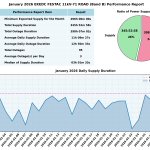
Attached are the details of power supply to FESTAC 11kV-71 Road for April 2025.
The average daily supply for the month was approximately 12 hours and 18 minutes — well below the expected minimum of 16 hours per day for Band B customers.
This April 2025 report further shows that you have consistently underserved us since October 2024. In the coming days, we will share the full-year summary and highlight how you have shortchanged us throughout 2025.
Even now, it would take a miracle for you to meet December 2025's minimum average, based on the logs collected so far.
In conclusion, we expect you to fulfil your responsibility and provide the service we are being charged for.
Continued failure to meet the minimum requirement can also be likened to energy theft from us, your consumers.
Thank you, and we look forward to improved services.
@EKEDP @NERCNG @TCN_NIGERIA @fccpcnigeria @federal_power @dafeakpeneye @NationalGridNg @PowerUpNG @nepawahalang @asemota @DrJoeAbah @SamAmadi @AbdulMahmud01 @InibeheEffiong
@festaconline @FestacCommunity @Festacconnect
@AndahKizito @OnimsAndah @mr_gop_ng @Signora_Larissa
@Shinyapple401 @henrikpope @hackSultan @unicodeveloper
@GbanAnybody @marvelfairs @bigbrovar


Dear @EKEDP,
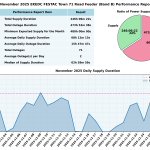
Please find attached the details of the power supply to FESTAC 11kV-71 Road for the month of March 2026.
The average daily supply for the month was approximately 8 hours and 8 minutes, which is significantly below the expected minimum of 16 hours per day for Band B customers.
This report marks the 18th consecutive month in which we have been shortchanged, from October 2024 to March 2026. Despite our repeated complaints, @EKEDP is yet to take any meaningful steps to address the persistent issues affecting our feeder.
We would also like to highlight that @EKEDP has continued to maintain high energy caps for postpaid customers on our feeder, despite the substantial shortfall in actual power supply hours compared to the committed service levels.
It is particularly concerning that our average energy caps appear to exceed those typically charged to households in developed countries, where power supply is constant and reliable.
We therefore demand that @EKEDP compensate us in line with the relevant NERC regulations, due to the consistent failure over the past 18 months to deliver at least 90% of the committed service levels in any given month.
In conclusion, we expect @EKEDP to fulfil its obligations by providing the quality of service for which we are being charged.
Thank you.
@EKEDP @lasercng @NERCNG @TCN_NIGERIA @fccpcnigeria @federal_power @IkejaElectric @fgnpcppi @anedng @dafeakpeneye @NationalGridNg @PowerUpNG @nepawahalang @electricitylawr @eyooekpo @AritOkpo1 @eta_habyb @asemota @DrJoeAbah @SamAmadi @AbdulMahmud01 @InibeheEffiong
@festaconline @FestacCommunity @Festacconnect
@mr_gop_ng @Signora_Larissa
@Shinyapple401 @henrikpope @hackSultan @unicodeveloper
@GbanAnybody @marvelfairs @bigbrovar @omoalhajaabiola @FinPlanKaluAja1 @akaneubi @OludareAkinyele @sbmintelligence @StatiSense


Dear @EKEDP,
Please find attached the details of the power supply to FESTAC 11kV-71 Road for the month of April 2026.
The average daily supply for the month was approximately 7 hours and 57 minutes, which falls significantly below the expected minimum of 16 hours per day for Band B customers.
This marks the 19th consecutive month, from October 2024 to April 2026, in which the committed service levels have not been met. Despite our repeated complaints, @EKEDP has yet to resolve the persistent issues affecting our feeder.
We therefore require that @EKEDP compensate us in accordance with the relevant NERC regulations, given the consistent failure to deliver at least 90% of the committed service levels over the past 19 months.
We expect @EKEDP to fulfil its obligations by providing the quality of service for which we are being charged.
Thank you.
@EKEDP @lasercng @NERCNG @TCN_NIGERIA @fccpcnigeria @federal_power @IkejaElectric @fgnpcppi @anedng @dafeakpeneye @NationalGridNg @PowerUpNG @nepawahalang @electricitylawr @eyooekpo @AritOkpo1 @eta_habyb @asemota @DrJoeAbah @SamAmadi @AbdulMahmud01 @InibeheEffiong
@festaconline @FestacCommunity @Festacconnect
@mr_gop_ng @Signora_Larissa
@Shinyapple401 @henrikpope @hackSultan @unicodeveloper
@GbanAnybody @marvelfairs @bigbrovar @omoalhajaabiola @FinPlanKaluAja1 @akaneubi @OludareAkinyele @sbmintelligence @StatiSense


Onotu retweeted

Because I'm a medical doctor, on ground & practicing in Anambra state at the time this happened, let me take my time to school you, even though I know you're just trying to be mischievous.
What was the reason for the strike?
The Fed Govt had implemented the CONMESS payment

Onotu retweeted
There’s a silent disaster happening in Nigeria that nobody wants to confront honestly.
We keep shouting about unemployment, bad leadership, low productivity, corruption, poor healthcare, failed institutions and why our country is not working. But many people are avoiding the root cause.
Our education system has been deeply compromised.
A student enters secondary school or university full of dreams, intelligence and potential. Then the system teaches them something dangerous:
“You do not need competence to succeed.”
WAEC malpractice. NECO malpractice. GCE runs. Sorting. Sex for grades. Extortion. Intimidation. Victimization. Handout rackets. “See me after class.” “Talk to your lecturer.” “Settle this course.”
And after 4 or 5 years of surviving that environment, we expect excellence to magically appear.
It won’t.
A country cannot repeatedly reward dishonesty in classrooms and expect integrity in government offices, hospitals, engineering sites, courtrooms and businesses.
This is where many of our unemployable graduates are coming from.
Not because Nigerians are not intelligent.
Not because our youths are lazy.
But because too many people were trained inside a system where merit was murdered.
The painful part is this:
UNN, UNILAG, FUTO, ABU, UI, IMSU, ABSU and many others are using largely the same NUC-regulated curriculum.
The difference is standards.
The universities that still command respect are usually the ones with stronger resistance against sorting, extortion and academic fraud.
The ones collapsing in reputation are often the ones where corruption became normalized.
Once a student realizes they can buy an “A” with ₦20,000, or sleep their way through a course, or manipulate results through connections, the motivation to truly learn starts dying slowly.
And when millions of such graduates enter the labor market, the entire country pays the price.
That weak engineer may eventually supervise a bridge.
That poorly trained nurse may handle a patient.
That compromised accountant may manage public funds.
That fake first-class graduate may become a lecturer and reproduce the same cycle again.
This is no longer just an education problem.
It is a national security problem.
Countries become great because they protect competence fiercely.
Singapore did it.
China did it.
Germany did it.
South Korea did it.
You cannot build a first-world country with a third-world attitude towards education integrity.
Nigeria does not have a shortage of talent.
Nigeria has a shortage of systems that protect excellence.
And until we become ruthless about fighting academic corruption, exam malpractice, sorting, sex-for-grades and institutional intimidation, we will continue producing certificates instead of competence.
This fight is bigger than schools.
It is about the future survival of Nigeria itself.
Onotu retweeted

📊 April 2026 Feeder Performance Fact Sheet is out!
Insights on feeder performance, service delivery levels & operational indicators across Lagos Electricity Market customer bands.
Reliable data → better performance → improved service delivery.
#LASERC #DataDriven


Onotu retweeted
Would you like the chance to sail aboard a Nigerian Navy Warship? Stay tuned, because next week I will be sharing how you can participate in this exciting event. Remember, you need to meet the terms and conditions, and since space is limited, selection will be random.
#NigerianNavy
#OnwardTogether
#Nigeriannavyannicersary
Onotu retweeted
Many people wonder what the Nigerian Navy actually does. I do understand as the majority of our work is away at sea. In fact, our influence is best felt by our absence from Land. So I will begin posting on the full range of naval operations on Sea, Air & Land. Stay tuned.
Onotu retweeted

But you are charging me for being on Band A, which is a minimum of 20-22 hours of power supply, whether shortage from national grid or not. That is a contract forced on me, yet you are not meeting your side of the forced contract. Who pays for the difference? The shortage is not supposed to be my business. Give me light for what you are charging me for. If you can’t guarantee that, then don’t force me to pay for service you cannot provide.

Dear Abubakar, please note that it is not our intention to leave our customers in the dark. We are currently experiencing a shortage in power generation from the national grid, which has resulted in reduced electricity supply. As a result, the expected hours of supply may not be met at this time. We sincerely apologize for the inconvenience caused. Kindly be assured that once the grid is fully restored, all affected customers will be duly compensated. ~Lily
Onotu retweeted

There is no regard for excellence and professionalism at all if it doesn’t end up bringing visible wealth that they can compare with others. Everything is a pissing contest of consumption rather than creativity or productivity. This is why there are so many mediocre celebrities.
