

Tweets about the biotech industry, science, progress, and innovation | founder @Convokebio
San Francisco, USA
Joined August 2016
- Tweets1.4K
- Following410
- Followers5.6K
- Likes2.8K
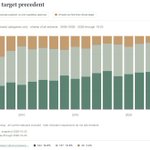




Since people are talking about target crowding, here's a chart from an upcoming post: <5% of new drugs entering the clinic are going after targets that haven't been tested clinically before, ~60% are going after targets with an approved drug. New ideas are hard to find!


The Fruits of AI Drug Abundance: Indigestion In The Near Term
While the long term impact of AI is likely transformational, in the near term more drugs against known targets will likely exacerbate the crowding challenge dragging down industry R&D productivity
lifescivc.com/2026/10/the-fr…
Congrats! I pontificated on the topic of operational efficiency w/ AI a couple years ago, but now the models are at a sufficient level of capability we're starting to see real efficiency gains in labour hrs / drug program. Still early, but real
atelfo.github.io/2024/09/17/…


Surprise 1: Anthropic acquired a one-person biotech
.
.
.
Surprise 2: that person is me
Surprise 3: I’m here to tell you all about it
Yes, this is what you think it is; after 6 yrs of increasingly loose anonymity: the Professor Oak reveal post
…and yes, it has gotten so boring around here that I’m literally doxxing myself to spice up the timeline
-------
Ok, allow me to introduce myself. My name is Cody Tranbarger. I mostly tweet, but occasionally find time to dabble in drug dev & starting/building biotechs. My past lives span the VC, crossover, startup continuum; Prof Oak has been my way of keeping a digital foot in those worlds, despite having my physical feet planted elsewhere.
The past 18 mo, ‘elsewhere’ was Mithril Medicine, a co. I founded to develop bsAbs for LAMA2-CMD & other ECM-related genetic diseases.
Mithril was born out of hands-on building with @MikeNGladstone, @JasonPaulRhodes, @LifeSciVC, & team @atlasventure. Somehow, I made enough half-decent calls along the way (even a broken clock is right twice a day, eh?) to convince them Mithril/I warranted a small seed. While I can hardly rationalize such an outrageously cavalier bet, I’m grateful for it, & I'd partner with Atlas again in a heartbeat.
In typical AV fashion, Mithril’s primordial form was virtual, decentralized, & ultra-lean. This stage tends to be short-lived, but for Mithril, it worked surprisingly well, for surprisingly long, thanks in part to the rapid maturation of the AI tools I used liberally.
Eventually, Mithril became a bit of an experiment itself - to find the upper bound of how far it could scale as a single operator + a bunch of Claude (+ a stellar bench of part-time consultants).
In parallel, I started spending time with @nc_frey, @an1lam, & @CoefficientBio team; and promptly experienced, for the 1st time, AI at the frontier. Soon thereafter, Mithril stopped looking like an experiment, & started looking like a preview of an entirely new operating model.
From that spark came “Pipeline-in-a-Person.” The idea immediately resonated when we shared it here back in April; and it was central to the shared vision that led to Anthropic’s acquisition of Mithril, & my joining the team.
Why join Anthropic? Three reasons.
(1) For Mithril, the programs continue, with more resources & infrastructure behind them, and as much Claude as I can put to work.
(2) For me, the chance to start several more programs, & find out how many one person can actually run in parallel - an almost unprecedented luxury for a curious drug hunter.
(3) For our mission, a path to institutionalize & scale this new way of working, then put it in the hands of all of biopharma, all over the world - which, candidly, I find the most energizing.
Will AI x Bio cure diseases? Unequivocally yes, imo… but not by the route that gets the most airtime. Rather than timeline acceleration & compression, I see orchestration & parallelization as today's low-hanging fruit.
Most drug hunters see a handful of go/no-go calls in a career, & spend entirely too much of the rest trading emails (my inbox can attest).
Give them the bandwidth to run several programs at once, and the time to focus on scientific judgment, and I’m willing to bet they’ll make better calls. And at scale, better calls translate to more drugs, higher hit rates, broader patient impact, & likely, a disease or 10 or 100 cured. I couldn't be more excited to build toward that future @AnthropicAI.
Finally, a heartfelt thank you to BioTwitter/X. The end of anonymity is bittersweet, but if anyone’s earned a proper introduction, you all have.
It’s difficult to overstate how much this app has done for me: a decade of education, plenty of friends, many job opportunities, several mentors, a few investors, even a co-founder (fmr). It was the generosity of this community that inspired me to start posting 6 years ago, after just as many years lurking. I hope I’ve been able to pay it forward, in my own small way.
But, to be clear, Prof Oak isn’t going anywhere. Same beat, same themes, and now, a front-row seat to drug development at the frontier. Stay tuned for dispatches from the trenches; and remember...
Gotta Cure 'Em All
Alex Telford retweeted

Our newest book is finally here!
Making the Modern Laboratory is a spectacular 504-page hardcover that tells the story of everything in the research laboratory and how it came to be, from pipettes to heat-resistant glass to microscopes and more.
It features dozens of articles (most of which will never appear in print), 100+ full-color images, and original writing from 36 authors. It's printed on Arena Natural Rough paper from Fedrigoni. These books are THICC and would make a great gift for both the science-curious and the working scientist. :)
We have spent the last year working on this project. It has been an insane labor of love. The best way to support our independent science journalism is to buy a copy. <3
Pre-order for $49, with free shipping: press.asimov.com/articles/mo…


We've significantly improved the preclinical and China coverage of our free drug pipeline tracker in the past week or so. If you're in biopharma corp dev or investing check it out and let us know what you think! (link in quoted post)


Alex Telford retweeted

We’ve extended the functionality of our free program tracker with the ability to create agents that monitor drugs, targets, and organizations of interest and report back on findings automatically. Try it out at platform.convoke.bio, new users get some starter credits

Alex Telford retweeted
We weren’t happy with the existing drug pipeline and catalyst databases, so we built a new one designed to be easy for both humans and LLMs to use.
We’re making it freely available today as a community resource. The sign-up link and blog post are in the thread below.


Alex Telford retweeted

This is amazing. We need so many more biotechs in the world to address these diseases.

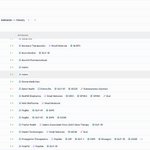
Today we're publishing our index of unmet needs in human disease: 2443 indications scored and ranked on burden of disease, prevalence, pipeline activity, and treatment burden. We hope this will help drug developers identify overlooked medical problems
convoke.bio/blog/introducing…

Alex Telford retweeted

Biology is one of the most interesting domains where I'm seeing AI being applied. @Convokebio is hosting a small event with lightning talks to introduce the space to a technical audience without a bio background. There's a few spots left, DM me if you'd like to be added.

We ran an experiment to see if LLMs could help map, identify, and prioritize unmet medical needs across thousands of diseases. I've found it pretty educational to browse through; I've worked in biopharma for a while now and there are still so many big problems I've never heard of

Today we're publishing our index of unmet needs in human disease: 2443 indications scored and ranked on burden of disease, prevalence, pipeline activity, and treatment burden. We hope this will help drug developers identify overlooked medical problems
convoke.bio/blog/introducing…
Check out the index here: insights.convoke.bio/unmet-n…

Alex Telford retweeted

I'm joining the OpenAI Foundation to lead the Life Sciences & Curing Diseases program.
We're starting with three areas of grantmaking:
* AI for Alzheimer's
* Public Data for Health
* Accelerating Progress on High-Mortality and High-Burden Diseases
Time to get to work!

Alex Telford retweeted

Going Founder Mode On Cancer
centuryofbio.com/p/sid
Sid Sijbrandij is a generational founder. He founded and led GitLab, one of the largest remote companies in the world, from idea-stage startup to NASDAQ-listed software giant.
But in 2022, a six centimeter mass growing from his upper spine threatened to end all of that. He had cancer.
What happened next is nothing short of remarkable. Sid went founder mode on his care journey. In the years since, he's deployed cutting-edge genomics to profile his disease. Based on this data, he's developed a growing armamentarium of personalized therapies.
As a result, his disease is now undetectable.
A simplistic version of this story could be, “Wow! A brilliant billionaire seemingly cured his cancer. Good for him!”
But as I’ve gotten to know Sid, it’s become abundantly clear to me that there is more to the story than that.
In an in-depth profile for The Century of Biology, I explore Sid's journey and what this might mean for the future of cancer care.

There's no guarantee that Kendall square is going to remain a biotech hub. Every 20-30 years or so a new industry has replaced the previously dominant one; before biotech it was AI, before that it was minicomputers, hard candy, and soap


A life-sciences job in Boston used to be a sure path to a high-paying career, but empty labs and unemployed grads now herald tougher times in the city on.wsj.com/44PnfEl

Dave Ricks on @stripe's podcast is the best pharma exec interview I've listened to in a good while.
My notes on the conversation, Lilly's DTC strategy, and how they're using the capital influx from GLP-1s to build a new type of pharma business model: atelfo.github.io/2025/12/07/…

Alex Telford retweeted

Ask not why would you work in biology, but rather: why wouldn't you?
owlposting.com/p/ask-not-why…
openai/gemini gave this essay an A- for evocative imagery. claude gave it a C- for being emotionally manipulative. both are probably right. i feel a little sick re-reading it


Alex Telford retweeted

Very proud of this episode of IDEA Collider, with Alex Telford @Atelfo, co-founder of @Convokebio... Real, deep insights into how AI is currently delivering value to pharma/ biotech...
lnkd.in/e4tErw-W

Alex Telford retweeted

🚀 Works in Progress Issue 20 is now live!
· Sulphur dioxide as sunscreen for the Earth
· Why science needs outsiders
· How UVC light could eliminate the common cold
· RIVERS ARE NOW BATTLEFIELDS
· Repeating France's gigantic nuclear buildout
Read it all at worksinprogress.co/
Sept — 2025. Chinese dams threaten the water of two billion people. Rivers are now battlefields. @ConnorTabarrok writes on how dams became a weapon of geopolitics, and how solar power could fight back. worksinprogress.co/issue/riv…
Modern germicidal light can make indoor air safe at scale in the same way we have with water, says @GavrielKlw. The common cold and winter flu might soon be behind us: worksinprogress.co/issue/the…
Volcanoes cool the earth by emitting sulphur dioxide. We may be able to stop the worst climate change by copying them and carefully injecting small amounts of sulfur into the stratosphere. worksinprogress.co/issue/sun…
Antibodies are used to treat autoimmune diseases, cancers, infectious diseases, and snakebites. How can we make them even cheaper and more abundant, asks @Atelfo? worksinprogress.co/issue/how…
Science needs outsiders to progress. But every institution we have set up in recent decades has been designed to protect incumbents and keep trespassers out. We need to change that. worksinprogress.co/issue/why…
Plus: Why 'systems thinking' is mumbo-jumbo, and how we can copy France's magnificent nuclearisation. Only in Issue 20 of Works in Progress. worksinprogress.co/


Alex Telford retweeted
Amazing... I subscribed to this this morning, and who should I see there? Posted today, @Atelfo!
How to make an antibody
Antibody therapies are four of the world’s ten best selling drugs. If they were cheaper, they could prevent millions of deaths from rabies, malaria, and dengue.
worksinprogress.co/issue/how…


🚀 Works in Progress Issue 20 is now live!
· Sulphur dioxide as sunscreen for the Earth
· Why science needs outsiders
· How UVC light could eliminate the common cold
· RIVERS ARE NOW BATTLEFIELDS
· Repeating France's gigantic nuclear buildout
Read it all at worksinprogress.co/
Sept — 2025. Chinese dams threaten the water of two billion people. Rivers are now battlefields. @ConnorTabarrok writes on how dams became a weapon of geopolitics, and how solar power could fight back. worksinprogress.co/issue/riv…
Modern germicidal light can make indoor air safe at scale in the same way we have with water, says @GavrielKlw. The common cold and winter flu might soon be behind us: worksinprogress.co/issue/the…
Volcanoes cool the earth by emitting sulphur dioxide. We may be able to stop the worst climate change by copying them and carefully injecting small amounts of sulfur into the stratosphere. worksinprogress.co/issue/sun…
Antibodies are used to treat autoimmune diseases, cancers, infectious diseases, and snakebites. How can we make them even cheaper and more abundant, asks @Atelfo? worksinprogress.co/issue/how…
Science needs outsiders to progress. But every institution we have set up in recent decades has been designed to protect incumbents and keep trespassers out. We need to change that. worksinprogress.co/issue/why…
Plus: Why 'systems thinking' is mumbo-jumbo, and how we can copy France's magnificent nuclearisation. Only in Issue 20 of Works in Progress. worksinprogress.co/