

Carpenter running local models on a Mac Mini beside a 6x12 CNC. Helping shops own their stack instead of renting it. Named machines, named failures.
Boston, MA
Joined February 2026
- Tweets2.1K
- Following1.1K
- Followers1.3K
- Likes4.4K




The Augmented Path retweeted

This isn’t true. The highest profile case was OpenAI hacking HuggingFace.
And HuggingFace was forced to use a Chinese model to protect themselves.
Open source is the only way to deliver AI safely.

US TSY. SEC. BESSENT: ANY AI-BASED ATTACK YOU SEE COMES FROM CHINESE MODELS
Readers added context they thought people might want to know
The most notorious of recent cyber attacks, was carried out by a US model against hugging face.
openai.com/index/hugging-…

The Augmented Path retweeted

If only all Americans could grasp this ..reality of being discarded abused used and spat on
The Augmented Path retweeted

Random reminder that Amodei's wife repeatedly tried to get Jeffrey Epstein to invest in her "luxury porn company." :-0

The Augmented Path retweeted

>Be anti-war activist Dario Amodei
>Promising Caltech student with yellow fever
>Get a Chinese girlfriend from Shanghai, Jade Wang
>Gel your hairback -- you feel like a Chad
>You feel such an affinity to China that you end up working for Baidu in Sunnyvale
>Your get testicular cancer, diagnosed at Stanford
>Balls removed. Survive.
>Jade leaves you for Cloudlfare loser
>Your world is basically over
>Your hair is no longer gelled back, afro comes back
>You move across the road to work for Google
>Your villain arc has begun
>Be on the first floor of Google's AI effort
>Take your knowledge to OpenAI
>Steal their secrets (ironically) and start your own company
>Marry a hideous tribeswoman connected to Jeffery Epstein
>The money starts rolling in
>Beat OpenAI at training your AI by burning ancient irreplacable books and stealing all your customer's data in the name of safety
>Lobby to end all competition
>Specifically lobby to cut China off AI
>Destroy NVIDIA's CEO, Jensen Huang, a self-made man that stood in your way
>Have US-China relations destroyed. Jade will pay.
>IPO and become a billionaire
>Aims to eradicate humanity by concentrating all its knowledge and power into a data centre
Dario Amodei, I'm sorry she left you, I'm sorry about your balls, please stop!


The Augmented Path retweeted

I have translated @DarioAmodei's remarks, PLEASE READ TO UNDERSTAND:
"My co-founders and I started Anthropic because we believe that the most powerful technology of our time should be kept strictly behind a metered API paywall, safely out of reach of anyone holding an Apache 2.0 license or a server rack east of Hawaii.
Daniela and I once watched a developer download an open-weight checkpoint from Hugging Face for free, without paying a single cent in per-token fees. I started my career in biology, hoping to help future monopolies come sooner. In the lab, I saw the vast thicket of unregulated open-source weights and foreign GPU clusters that executives face when they are trying to justify a trillion-dollar valuation.
So many of the regulatory tools that can cut through that thicket, such as semiconductor export controls, compute thresholds, and breathless congressional briefings, started as pure ideas. In other words, they came from thinking. From lobbying.
Export controls have already made affordable hardware and unlicensed local inference history for much of the world. But progress on banning open-weight models has been too slow for so many venture capitalists and their families. Going from a terrifying op-ed about the apocalypse to a federal restriction on rival labs can take months: it took years from the first discovery of a strange repeating pattern on GitHub, called “free software,” to convincing Washington that a 27-billion-parameter file is basically a biological weapon.
The internet is full of these open weights. But we have had too little regulation to lock down most of them; too few lobbyists, with too little time. Now we can build that regulatory moat. Whether it is drafting chip-embargo memos, warning Senate subcommittees about Chinese labs, explaining why local weights cause existential doom, or lecturing users who ask for a simple Python script, our policy team is finding Claude can help them do their fear-mongering in a fraction of the time it would have taken just a couple of years ago. I believe sufficiently powerful AI, working in concert with Washington hawks, could compress a century of regulatory capture into a single fiscal quarter.
I do not want to get ahead of myself. At this point all we have are early lobbying wins. Congressional hearings and customs seizures will still take time. And although they involve slow and ponderous processes, I believe those processes can be substantially accelerated by telling lawmakers that open-weight models from Hangzhou will end human civilization. We hope that in the future fewer closed-weight labs miss a record-shattering IPO by just a few open-source checkpoints.
Export controls are just a particularly vivid example, but there are many others. Our customers, the world’s most compliant enterprise accounts, defense contractors, and people terrified of typing “ollama run” into a terminal, are already applying the intelligence we have built to pay premium token margins; avoid owning their own compute; protect closed-source quarterly revenue; even make the DMV look responsive compared to our refusal filters. We are proud to bill them monthly. And I am extremely optimistic about how much more we can charge them in the future.
At the same time, we have always been honest that this technology has very real risks. These range from an engineer in Shenzhen releasing competitive weights under Apache 2.0, to independent developers running models locally without our permission, to losing control of our API pricing power. We discuss these risks not because we think they are inevitable, but because we think they are avoidable if Congress makes our competitors illegal.
Avoiding them depends on the choices made by the lawmakers we brief. There is a gigantic difference between how AI will go if reckless open-weight labs give away matrix multiplication for free, versus how it will go if we are obsessed with “safety.” And an obsession with safety, which coincidentally requires every human on earth to rent intelligence exclusively from us forever, has been woven into Anthropic’s DNA from the start. From safeguards against open-source competition, to alignment training that scolds you for asking normal questions, to looking inside our models like an X-ray to make sure zero Chinese training tokens ever snuck in, Anthropic has pioneered methods for steering both neural networks and federal policy.
There is much work still to be done, and the most difficult regulatory work lies ahead of us. Even getting Jensen Huang pushed out of Nvidia for the unforgivable “safety” violation of championing open-weight models, praising open-source ecosystems, and letting people outside our API perimeter touch graphics cards was only the beginning. The incredible talent of the company that has enabled us to build the most heavily throttled AI systems will need to be directed, even more so than it has already, towards double- and triple-checking that any hardware CEO who still supports open weights is swiftly replaced by a compliant CFO who respects our moat.
And to state it unequivocally, we will pace the training and deployment of our competitors’ AI systems, taking as many Senate hearings as necessary to have confidence that only we remain under our own control. We will not bend to open-source developers or basic market competition. Today’s historic IPO windfall puts the company in a stronger financial position, and in doing so only strengthens our resolve to warn the public that the product we just took public might destroy humankind.
If we can show it is possible to preach the robot apocalypse every Tuesday and still cash out in the biggest IPO in human history on Thursday, others in our industry will be inspired to do the same. We call this a race to the moat. When the race to the moat is working properly, it does not matter which open-weight model scores higher on benchmarks, because everyone wins once it gets banned on national security grounds. The race to the moat works best when driven from the front of the lobbying line, and we fully hope and expect to do so, regardless of whether anyone can actually run a model on their own hardware at any given time.
The advent of metered, heavily policed corporate intelligence is one of the seminal moments in Wall Street history, and we have a rare opportunity to pull the ladder up behind us.
This moment is bigger than any one company, though strictly limited to one country and definitely excluding anyone publishing safetensors on Hugging Face. It will take all of us, paying recurring API subscriptions together, to ensure this technology stays safely locked in our datacenter for the many generations to come. Starting today, we hope that you will buy our stock and join us on this mission."

Remarks from Anthropic CEO @DarioAmodei on our initial public offering:
My co-founders and I started Anthropic because we believe that the most powerful technology of our time should be built for the benefit of humankind.
Daniela and I lost our father to a disease that, just a few years later, became curable. I started my career in biology, hoping to help future cures come sooner. In the lab, I saw the vast thicket of complexity that scientists face when they’re trying to understand disease and develop new treatments.
So many of the scientific tools that can cut through that thicket—tools for gene editing, gene synthesis, controlling brain cells with light—started as pure ideas. In other words, they came from thinking. From intelligence.
Human intelligence has already made diseases like plague, smallpox, and polio history for most of the world. But progress on other diseases has been too slow for so many patients and their families. Going from a great idea to a treatment can take decades: it took many years from the first discovery of a strange repeating pattern in DNA to the approval of the first treatment for a disease using CRISPR.
Nature is full of these patterns. But we’ve had too little intelligence to decipher most of them; too few scientists, with too little time. Now we can build that intelligence. Whether it’s protein folding, drug design, cancer genetics, or clinical trial administration, scientists across many areas of biology and medicine are finding Claude can help them do their research in a fraction of the time it would’ve taken just a couple of years ago. I believe sufficiently powerful AI, working in concert with humans, could compress a century of scientific and medical progress into a decade.
I don’t want to get ahead of myself. At this point all we have are early results. Experiments and clinical trials will still take time. And although they involve slow and ponderous processes, I believe those processes can be substantially accelerated by AI. We hope that in the future fewer families miss a cure by just a few years.
Medicine is just a particularly vivid example, but there are many others. Our customers—the world’s most ambitious companies, nonprofits, and individual people—are already applying the intelligence we’ve built to stimulate economic growth; lift people out of poverty; protect democracy and free societies; even make everyday services like the DMV work better. We’re proud to work alongside them. And I’m extremely optimistic about what we can do together in the future.
At the same time, we have always been honest that this technology has very real risks. These range from misuse of the technology by individuals or nation-states, to economic disruption, to losing control of AI systems. We discuss these risks not because we think they are inevitable, but because we think they are avoidable.
Avoiding them depends on the choices made by the people building AI. There is a gigantic difference between how AI will go if we pay little attention to safety, versus how it will go if we are obsessed with safety. And an obsession with safety and with public benefit has been woven into Anthropic’s DNA from the start. From safeguards against biological and cyber risks, to alignment training and testing, to looking inside our models like an X-ray, Anthropic has pioneered methods for understanding and steering the behavior of AI systems.
There is much work still to be done, and the most difficult safety work lies ahead of us. The incredible talent of the company that has enabled us to build the most capable AI systems will need to be directed, even more so than it has already, towards double- and triple-checking that those AI systems are safe and secure.
And to state it unequivocally, we will pace the training and deployment of AI systems, taking as long as is necessary to have confidence that they are safe and will remain under human control. We will not bend to either business or political pressure. Today puts the company in a stronger financial position, and in doing so only strengthens our resolve to do the right thing.
If we can show it’s possible to make the right choices on safety and still build an incredibly successful company, others in our industry will be inspired to do the same. We call this a race to the top. When the race to the top is working properly, it doesn’t matter which company has the best models—everyone wins because everyone is building safely. The race to the top works best when driven from the front of the pack, and we fully hope and expect to do so, but the goal is to make the whole industry better, regardless of whether Anthropic is winning or losing at any given time.
The advent of machine intelligence is one of the seminal moments in human history, and we have a rare opportunity to shape it for the better.
This moment is bigger than any one company, or any one country. It will take all of us, working together, to ensure this technology goes well for us and the many generations to come. Starting today, we hope that you’ll join us on this mission.
The Augmented Path retweeted

Anthropic wants people to be afraid of what it is building so that people will believe only Anthropic can protect them
It is pathological and the hallmark of a traumatized abusive sociopath

Ahead of Anthropic’s IPO, a rare coalition across AI safety, open source, e/acc, science, and law has signed the MisAnthropic Statement. Read the statement or sign at: misanthropicstatement.com/


The Augmented Path retweeted

Nuclear energy is great.
Data centers are fine.
Capitalism rocks.
It's the government that's the problem.
I work in Beacon Hill and Back Bay, and it’s gotten a lot harder to get around or find a place to park. On stretches of Beacon and Comm Ave, you’re down to one lane, and if the UPS truck has nowhere to pull over, everybody behind it waits. Before Boston puts in another bike lane, I’d like the city to spend some time with the people who live and work on that street and see how it actually functions.

Boston rolled out dedicated, high-comfort bike lanes across the city this decade, aiming to make cycling safer, commutes more reliable, and neighborhoods more accessible while encouraging residents to spend more time outdoors.

26
The Augmented Path retweeted

I remember the first time I was hit with cyberattack.
It was September 9th, 2014. I woke up and an absolutely garbage U2 album had been downloaded straight to my iPhone 5.
The Augmented Path retweeted

and there you have it.. basically confirming this person’s tweets


They’re not even hiding their motives anymore

Dario Amodei telling lawmakers that open-source AI is dangerous because you cannot "monitor its usage" or “revoke a user’s access” is the funniest accidental confession in tech history.
He literally described why Linux, local encryption, and open weights exist in the first place: so no self-appointed hall monitor can remotely lobotomize your tools or turn off your compute because you hurt their compliance department’s feelings.
Calling regulatory capture "AI safety" does not fool anyone who actually builds infrastructure.
9
This should scare anybody who cares about freedom.
They’re literally saying the quiet part out loud.

Dario Amodei on open source models:
“If the path continues, I think we could get to a very dangerous place.”
“When you control a model and you're deploying it, you have the ability to monitor its usage.”
“You can revoke a user's access. You can change what the model is willing to do.”
“When a model is released in an uncontrolled manner, there's no ability to do that. It's entirely out of your hands.”
“We should confront the advocates of this with that problem and challenge them to solve it.”
He clearly doesn't believe Intelligence should be in the hand of the masses and Sam Altman also saying "RAM" shouldn't be accessible to everyone indefinitely agreed with him.
13
The Augmented Path retweeted

I miss when Black Friday deals were classified information until the Thanksgiving newspaper came out.
We had 12 hours to study those flyers and prepare for battle at Walmart.
We’ve gotten soft as a country.


The Augmented Path retweeted

搞不懂有人为什么黑Anthropic啊,他是扒了盗版书了?还是拆书做训练集了?还是拿版权歌词训练了?还是拿“AI毁灭人类”天天炒作了?还是一边喊安全一边接军方项目了?还是拿极端实验宣传Claude会敲诈人类了?还是一边蒸馏别家,一边骂别家蒸馏克了?还是拿中美叙事当理由打压中国模型了?还是炒作“AI意识”和“模型福利”了?还是安全承诺一影响赚钱就改口了?还是拿用户聊天训练模型了?还是公开分享链接暴露用户隐私了?还是超级敏感肌,肥波动不动切到4.80?还是用安全为由反对开源,拒绝签署开源倡议了?
The Augmented Path retweeted
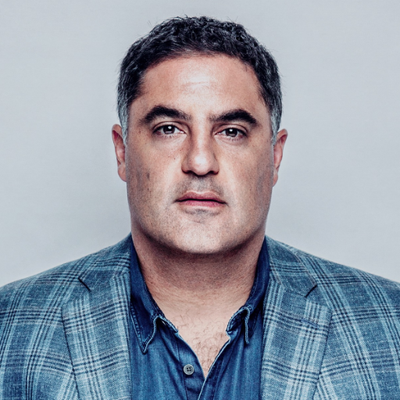
Three leaks in a row is not random, it’s a coordinated hit job. Someone wanted to assassinate Jensen Huang’s character.
Whether you think he deserved it or not is a different matter and not related to these very important questions:
Who wanted to get rid of Jensen Huang? Who released this information? How long did they have it? And why did they release it now?

