
Introvert. Scientist. Gainfully employed @calico. Previously @SevenBridges @Yale @LosAlamosNatLab and graduate school @Illinois_Alma. Views my own.
Bay Area
Joined April 2014
- Tweets670
- Following379
- Followers158
- Likes1.2K



Anurag Sethi [email protected] retweeted

Is there anyone serious working on aging clocks?
Talking to these people is always causal inference hell. It's so depressing.
I'm currently watching someone say PC1 of biomarkers in 20-year-old NHANES cohorts makes for a causally informative clock.
Anurag Sethi [email protected] retweeted

Can the field just start moving beyond clocks? AI/ML has progressed so much since I started on this topic nearly 15 years ago. Why is the field stuck incrementally dabbling on the same thing for so long.
Anurag Sethi [email protected] retweeted

Sinclair has repeatedly treated the eye work as a starting point that should generalize, not as an isolated compartment-specific result.
He has said the approach that worked in mouse eyes “should work in other parts of the body,” that his group has not found a tissue where the therapy was not beneficial, and that success in the eye trial would open systemic applications.15
He has also described the ICE-mouse OSK experiments as driving aging “forwards and backwards at will” and restoring a youthful state in multiple tissues (muscle, kidney, retina), language that goes beyond a narrow eye-only claim. Press coverage of that paper used whole-animal framing.50
He has been explicit about the sequence: start contained in the eye, then go systemic. One of his own posts put it as “You don’t start by reprogramming an entire person with OSK. You start small and contained… If that works, we go systemic.” That is the claim Melinda was pushing back against—automatic translation from an immune-privileged site plus molecular resets to whole-body functional rejuvenation.40
Whether those statements overreach the published functional data is the actual disagreement in the Brenner thread. Sinclair did make the broader claim.

Anurag Sethi [email protected] retweeted

The recent study in @NatureMedicine on epigenetic clocks and human interventions is an interesting exploratory study, but it has plenty of limitations.
In fact, I was critical of the preprint (which didn't sit well with the authors), but I will say it again: if an intervention (eg rapamycin or exercise) fails to reduce epigenetic age, it may be because the intervention is not working as expected *OR* because the epigenetic clocks are not working as expected. See:
nitter.cf/jpsenescence/status/18…
Importantly, we have no intervention proven to target human aging, we have no benchmark. The horizontal axis in the figure in the article below is also not based on longevity.
The original article includes "longevity interventions in humans" in the title, yet there is no such thing, except perhaps lifestyles like exercise, which btw did not have an effect on epigenetic clocks, as @mkaeberlein has pointed out:
nitter.cf/mkaeberlein/status/209…
Should we stop exercising because of this study? Of course not!
In fact, as others like @MartinBJensen have argued, this study may instead be interpreted as evidence that epigenetic clocks are *NOT* reliable for detecting the effects of interventions:
nitter.cf/MartinBJensen/status/2…
Science advances with data and facts, not wishful thinking.


Putting epigenetic aging clocks on trial
nature.com/articles/s41591-0…
Anurag Sethi [email protected] retweeted

**HELP needed** Anyone knows folks @UTMDAnderson cancer center? A friend's spouse is s4 pancreatic & a strong genetic fit for daraxonrasib trials (KRAS G12D mutation w/ VAF of 20.69%, along with a SMAD4 mutation) run by @DrShubhamPant. 47yo (m), indian army colonel, otherwise healthy. Pls RT / fwd to the right circles - might save a life! 🙏🙏
Anurag Sethi [email protected] retweeted

The top perturbation prediction models are not "cell biology simulators" ie. not virtual cells. Case is closed.
Anurag Sethi [email protected] retweeted
💯The worst advice I ever received as a PhD student was to specialize. Thank goodness I ignored it.
The most exciting breakthroughs are when you know just enough about multiple domains to put them together in new and exciting ways that the specialists never even recognized!

Anurag Sethi [email protected] retweeted

Two years ago the best virtual cell model was ridge regression and yesterday the best virtual cell model was ... ridge regression. But sure, throw a billion more parameters at the problem, no one is stopping you.


18 months after posting this tweet, the AI for science commentariat is still proclaiming the death of single-cell scaling laws on the basis of... {checks notes}... a model sweep ranging from 1 million to a whopping 10 million parameters. (but unlike 18 months ago, these proclamations now come wrapped in premium AI-written slop, giving them a glittering verisimilitude of rigor)
left as an exercise for the reader: generalize from this example to a meta-update about how epistemically adversarial the scientific environment we're operating in is (for extra credit, partial out the effects of mood affiliation and status deferral)


Anurag Sethi [email protected] retweeted

Initiatives like the UK Biobank require massive upfront investment, but returns compound over decades
For example, ~57,000 of the original 500,000 participants recruited between 2006-2010 to the UK Biobank had passed away by end of 2024.
As that number grows, we'll have a unique, deeply phenotyped resource for studying aging and mortality trajectories.
The dataset gets more powerful with time.

The compounding value of multi-dimensional biobanks is extremely mind blowing.
UK Biobank recruited ~500,000 people between 2006 and 2010, collected baseline measurements and biological samples, and continued linking participants to health records as diseases developed over time.
The interesting findings about disease and survival now coming out of it depend on that cohort having been tracked for fifteen-plus years.
Like this Cell paper using it to connect 2,920 plasma proteins in 53,026 people to hundreds of diseases and health-related traits. That produced hundreds of thousands protein-disease and protein-trait associations from one longitudinal resource. The authors also identified 37 drug-repurposing prospects and 26 potential targets with favorable safety profiles. cell.com/cell/fulltext/S0092…
And there will be more.
Longitudinal time is a non-substitutable input, as we've written about (link below). No amount of money could recreate UK Biobank by next month.


Anurag Sethi [email protected] retweeted
Just want to give a shout-out to David Kelley @drklly who I think often does not get the credit he deserves (outside our core community).
I want to highlight why I think he is such a fantastic scientist and leader in regulatory genomics. 1/
Anurag Sethi [email protected] retweeted

I'm preparing a new talk. Here's one slide that I'm particularly proud of

Anurag Sethi [email protected] retweeted

We’re hiring in my group at Calico. We build Borzoi and its successors—deep learning models that predict how every nucleotide shapes cell-type-specific gene regulation—and apply them to interpret human genetic variation.
Anurag Sethi [email protected] retweeted
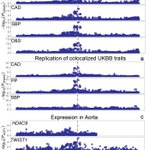
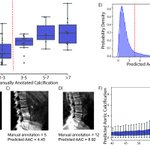
Check out this exciting work from the Calico ML team, developing creative techniques to detect subtle information in rich measurements like MRI and analyze the genetic associations driving differences.


Anurag Sethi [email protected] retweeted
Nothing wrong with using AI to analyze your genome but please do not naively believe AI based analyses of genomic information without consulting clinical geneticists, physicians & genetic counselors. Lots of snake oil salesmen in this space.

On @TuckerCarlson we talked a lot about this, why genetics — despite it being the greatest preventative medicine tool ever — has been so under appreciated for so long.
Our customers more and more are using the data they get from Nucleus alongside AI for amazing health insights (all raw data is available to all customers in a simple download format, they usually port that over into Claude seamlessly).
Anurag Sethi [email protected] retweeted

A side effect of more weakly trained biologists entering techbio is we’re just scaling the same irrelevant experiments that are a root cause of drug failures.
Pharma companies have already run more automated screens in these models than you can imagine.
Anurag Sethi [email protected] retweeted

Anurag Sethi, Principal Data Scientist, studies large human cohorts to better understand aging. He turns complex data into insights that inform our research and drug discovery programs.
Anurag shares what makes his work rewarding.
calicolabs.com/life-at-calic…
#AgingScience

Anurag Sethi [email protected] retweeted

We are pleased to announce that the IITB Mars Rover Team has secured second place in the European Rover Challenge – Remote Formula, among 20+ participating international teams.
Our Autonomous & Software subdivision developed an autonomous exploration and navigation framework leveraging the ROS middleware integrated with the Unity simulation platform. This framework enabled the rover to operate in the Mars yard simulated testing environment, performing tasks such as terrain mapping, object detection and obstacle avoidance, autonomous decision-making for exploration, and path planning towards designated goals.
This achievement highlights the potential applications of our work in diverse areas of autonomous robotics, including self-driving vehicles, drone-based reconnaissance, and warehouse automation.
Many thanks to Faculty Advisor Prof. P. J. Guruprasad for his continued guidance.
#ERC2025 #Robotics #AutonomousSystems #IITB

Anurag Sethi [email protected] retweeted

One of the most epic framings of human genetics that lives rent-free in my head:
"The human population, through explosive growth, has performed a comprehensive saturation mutagenesis experiment on itself. It is now the case that any single base substitution that is compatible with life is expected to be present somewhere among the nearly 8 billion living humans. Humanity has thus, in effect, done many of the natural experiments required to understand our own genotype-phenotype map; this leaves geneticists to catalog the outcomes of those experiments, and to leverage both observational and experimental approaches to understand the mechanisms by which variants alter biology."
Such a beautiful idea. Human genetics remains our greatest source of predictive validity for new drug mechanisms. And we're just scratching the surface.

Anurag Sethi [email protected] retweeted

🏏 25 days. 5 battles. Scores tied 2-2.
This isn’t just a game — it’s Test Cricket in all its timeless glory.
A series for the ages. Hats off to IND & ENG for the drama, grit, and greatness.
Anurag Sethi [email protected] retweeted

Well at least we now know it only takes one moron in the wrong position surrounded by yes men to tank the world economy.