

Programmer-Exorcist | Esposo de @ssabhilaa | Unseen & Metaphysical interest | LYs's Baba
Sidoarjo, Indonesia
Joined August 2010
- Tweets31.7K
- Following502
- Followers417
- Likes536




『 』 retweeted

Jalur akademik serta gaya Dakwah UAS (Nahdatul ulama) dan UAH (Muhammadiyah)
Dua ustadz ini sama oke nya dan memiliki banyak jamaah

『 』 retweeted

Our deepest thanks to the estimated eleven thousand people who have helped seed the first archive over the past month.
Please know that your support is invaluable, and that you need not to be afraid: there are more of us than we thought.
More details about the first archive are available on our @/kawalibam IG.
Moving forward, on a weekly basis we will re-arm the decryption key for the first archive to one month ahead. We will continue re-arming it until we consider it to be no longer necessary, or until a more orderly disclosure is in place.
We are consulting with our legal team regarding the planned distribution of a second, related archive, with its decryption key scheduled for release on or around the Fifth of November.
We understand this is an unconventional approach, but with our limited resources this is one of the few remaining ways we can fight for truth and justice.
In the meantime, we will resume posting updates on our case’s progress toward the Supreme Court and on the AI that Ibam built. Please stay tuned, and thank you for standing with us. We are in the endgame now.


『 』 retweeted

BREAKING NEWS
Bursa Vietnam naik kasta dari frontier market ke emerging market
Busettt auto masuk foreignnya ini mah
『 』 retweeted

JUST IN 🚨: A Man was Discovered with almost 90% of his brain mass missing, while leading an almost normal life.

Readers added context they thought people might want to know
This news is 20 years old. Not "JUST IN 🚨".
nature.com/news/2007/0707…
『 』 retweeted

Investor: Foreign selling in Indonesia has continued even when the KOSPI and Nikkei weakened. Doesn’t that suggest Indonesia is simply being caught in a broader regional risk-off environment?
Ricky: I do not think that explanation is sufficient. If this were only about regional risk appetite, we should see Indonesian equities moving broadly in line with other Asian markets. Instead, foreign investors have remained persistent net sellers of Indonesia even when the weakness elsewhere was comparable or, in some cases, more severe.
That tells me the issue is increasingly Indonesia-specific.
Foreign institutions do not only look at whether the index is rising or falling. They examine earnings quality, return on capital, funding structure, governance, liquidity, effective free float, valuation and the credibility of price discovery. They are asking whether the reported profit is sustainable, whether the balance sheet is becoming stronger or weaker, and whether they can actually exit a position without becoming trapped.
Investor: But some Indonesian companies are still reporting decent earnings. BMRI, for example, looked strong on the headline numbers.
Ricky: The headline numbers looked good, but institutional investors rarely stop at net profit growth.
In BMRI’s case, they would look beneath the surface and notice that funding costs were rising, the CASA ratio was deteriorating, and the funding mix was shifting toward more expensive time deposits and wholesale funding. Those details matter because they determine whether current earnings can be sustained.
A bank can report strong loan growth and headline profit while the underlying economics are becoming less attractive. If loan yields fall, funding becomes more expensive and liquidity tightens, future NIM and ROE can weaken even before the headline profit starts disappointing.
That is exactly the kind of divergence foreign investors try to identify early.
Investor: So you think the market is becoming more fundamental?
Ricky: Gradually, yes.
For several years, parts of the Indonesian market were driven less by earnings and more by liquidity, index mechanics, concentrated ownership and the assumption that another buyer would eventually arrive at a higher price.
That environment is becoming much harder to sustain.
Foreign passive flows are becoming less reliable, active managers are increasingly willing to avoid uninvestable stocks, and domestic liquidity is not unlimited. When incremental buying disappears, valuation eventually matters again.
Investor: What does that mean for the large conglomerate stocks?
Ricky: I would continue avoiding many of them, particularly stocks associated with conglomerate groups where the valuation is impossible to reconcile with the underlying earnings, cash flow and return on capital.
This includes many of the stocks connected to Prajogo Pangestu and other conglomerate groups that have achieved enormous market capitalizations despite limited effective liquidity, concentrated ownership and valuations far above global peers.
The issue is not that every conglomerate-owned company is a bad business. Some may own real assets and operate in structurally attractive industries. The issue is that a good asset can still be a terrible investment when the valuation is detached from economic reality.
If a company trades at hundreds of times earnings, investors are no longer paying for the existing business. They are paying for many years of perfect execution, permanent scarcity of shares and the assumption that someone else will continue buying at an even higher valuation.
That is not fundamental investing. That is a liquidity bet.
Investor: But those stocks have performed extraordinarily well in the past. Why can’t they continue rising?
Ricky: They can continue rising for a while. A stock does not need to be fundamentally cheap to move higher, particularly when ownership is concentrated and the effective float is extremely small.
When very few shares are genuinely available, it may take surprisingly little capital to move the quoted price. The new share price is then multiplied across every outstanding share, creating an enormous increase in paper market capitalization even though only a tiny amount of real money changed hands.
But this creates a very different risk profile from a broadly owned, liquid stock.
The price can remain elevated for as long as sellers remain scarce and new buyers continue arriving. The problem begins when the market needs genuine exit liquidity.
Investor: What do you mean by exit liquidity disappearing?
Ricky: Market makers and large holders can support prices while they still have access to fresh capital, index-related demand, speculative retail flows or new investors willing to enter.
But if foreign institutions are reducing exposure, passive inclusion becomes more difficult, and sophisticated domestic investors refuse to buy at extreme valuations, the pool of incremental buyers becomes much smaller.
At that point, the mechanism becomes increasingly circular. Existing participants may continue trading among themselves, creating the appearance of volume, but circular turnover is not the same as genuine liquidity.
Eventually, someone has to buy the shares with fresh capital and hold the economic risk.
If no new institutional buyer appears, retail investors increasingly become the final source of liquidity.
Investor: Are you saying retail investors are being used as the exit?
Ricky: In some cases, yes. That is the risk.
Retail investors see spectacular historical charts, enormous market capitalizations and narratives about energy transition, digitalization, infrastructure or national champions. What they may not see is how little genuine liquidity exists beneath the quoted price.
A stock can look liquid during the ascent because the same shares are traded repeatedly. But when large holders genuinely want to reduce positions, liquidity can vanish very quickly.
The market may have been liquid only while someone wanted it to look liquid.
Investor: You also mentioned repo financing. Why is that important?
Ricky: Because a rapidly rising share price can be monetized without selling the shares.
Controlling shareholders or related parties may pledge shares as collateral for loans or repo financing. A higher share price increases the value of the collateral, allowing the borrower to obtain more financing, fund expansion, purchase other assets or refinance existing obligations.
This creates a powerful incentive to keep the share price elevated.
The problem is that repo structures introduce a feedback loop. If the share price falls, the lender may require additional collateral or partial repayment. If the borrower cannot provide either, the pledged shares may eventually be sold.
That creates the possibility of forced selling.
Investor: But if the controlling shareholder owns most of the company, can’t they simply continue supporting the price?
Ricky: Only while they have sufficient liquidity.
Supporting a share price is not free. Financing costs accumulate. Interest must be paid. Collateral requirements can increase. If the price fails to recover, the borrower may need to inject more cash or pledge additional assets.
At some point, balance-sheet capacity becomes the constraint.
When a stock is highly concentrated and thinly traded, forced selling does not need to be enormous to create a severe price decline. The same scarcity that helped push the stock upward can make the decline much more violent because there may be almost no genuine bids below the market.
That is why I believe another leg lower remains possible in some of these names.
Investor: Are you saying a collapse is inevitable?
Ricky: No. I am saying the risk-reward is unattractive.
I cannot know the timing, the specific financing arrangements or which shareholders may eventually face pressure. A highly concentrated stock can remain detached from fundamentals for far longer than most investors expect.
But as an investor, I do not need to predict the exact day the structure breaks. I only need to decide whether the expected return adequately compensates me for the valuation, liquidity, governance and financing risks.
In many conglomerate stocks, it does not.
Investor: What if the company has exposure to a strong structural theme, such as renewable energy, data centers or commodities?
Ricky: A powerful theme does not eliminate valuation discipline.
Renewable energy can be a good industry. Data centers can be a good industry. Copper can be a good commodity. But if the stock already trades at a valuation that assumes decades of flawless growth, the industry tailwind may already be more than fully priced.
Investors frequently confuse a good narrative with a good security.
The right question is not whether the sector will grow. The right question is how much of that growth is already embedded in the share price, what capital is required to produce it, and what return shareholders will earn from the current valuation.
A company can double earnings and still produce a poor investment return if the starting multiple is absurd.
Investor: So what should investors own instead?
Ricky: I would focus on companies where earnings are supported by real cash flow, balance sheets are understandable, governance is credible, liquidity is genuine and valuation provides a reasonable margin of safety.
That does not mean buying every statistically cheap stock. Cheap companies with deteriorating fundamentals can remain value traps.
The better opportunity is in businesses where earnings quality is improving, returns on capital are sustainable, leverage is manageable and the market price does not require perfect execution.
In the banking sector, for example, I still view BCA as the cleanest exposure despite weaker NIM and lower ROE because the funding franchise is real, the customer base is prime, governance is strong and directed-lending risk is effectively zero.
The stock may not be an aggressive buy, but the business quality is independently verifiable.
That is fundamentally different from paying hundreds of times earnings for a stock whose quoted market value depends on extreme scarcity and minimal genuine turnover.
Investor: So your main recommendation is simply to avoid conglomerate stocks?
Ricky: I would be more precise.
Avoid conglomerate stocks whose valuations cannot be justified by earnings, cash flow, return on capital and genuine liquidity.
Do not buy merely because a billionaire controls the company, because the stock has risen dramatically, or because its market capitalization has become enormous. Market capitalization is not proof of economic value when only a microscopic number of shares determine the price.
Do not assume that a stock is safe because it rarely falls. In an illiquid market, stability may simply mean that almost nobody is trading.
And do not assume that index inclusion or passive flows will always provide an exit. MSCI is becoming increasingly skeptical of extreme price increases, concentrated ownership and reported free floats that do not translate into real investability.
The old playbook was to push a stock higher, qualify for index inclusion and distribute into forced passive demand.
That exit is closing.
Investor: What happens to the Indonesian market if this transition continues?
Ricky: In the short term, it will be painful.
Stocks supported primarily by liquidity, concentration and financial engineering may continue derating. Some companies may need to raise genuine equity, sell assets, reduce leverage or accept lower market valuations. Retail investors who bought near the top may suffer losses.
But in the long term, this transition is necessary.
A healthy capital market cannot be built on the assumption that prices can remain permanently detached from earnings and that passive investors or retail buyers will always absorb the supply.
Indonesia needs a market where strong companies outperform because they generate superior cash flow, allocate capital well and treat minority shareholders fairly.
If the market moves in that direction, foreign capital can eventually return with greater confidence.
But that capital will not return indiscriminately.
It will go to companies with sustainable earnings, strong balance sheets, credible governance, genuine liquidity and sensible valuations.
The era of buying a stock simply because a conglomerate owner can keep pushing the price higher is ending.
Investor: Final conclusion?
Ricky: Avoid the conglomerate names where the valuation makes no economic sense, particularly those with highly concentrated ownership, negligible effective liquidity and possible dependence on pledged-share financing.
The companies may be real. The assets may be real. The narratives may even be attractive.
But the quoted prices may not be.
When foreign capital is leaving, passive exit liquidity is disappearing and repo financing may be sitting beneath the structure, investors should not ask how high the stock once traded.
They should ask a much more important question:
Who will buy when the holders finally need to sell?
Investor: Example?
Ricky: One example would be Prajogo Pangestu complex. $BREN $TPIA $BRPT $PTRO $CUAN $CDIA
『 』 retweeted

Guys, Felix Siauw baru ngomong sesuatu di podcast Helmy Yahya yang menurut gue paling jujur dan paling berani dari seorang ustaz Indonesia dalam waktu lama.
Dan intinya satu kalimat yang langsung dilontarkan:
"Orang Indonesia tidak pernah menjadi Islam."
Bukan karena KTP-nya.
Tapi karena cara berpikirnya.
Masalah pertama
kita salah paham soal tawakal:
Felix kasih contoh yang sangat konkret.
Ada pesantren roboh.
Respons orang Indonesia:
"Qadarullah, ini takdir Allah."
Felix langsung potong:
itu bukan tawakal.
Itu kebodohan yang dibungkus agama.
Karena setiap insinyur teknik sipil yang melihat bangunan tiga lantai dengan pondasi yang salah sudah bisa prediksi itu akan roboh.
Tidak perlu menunggu roboh untuk tahu.
Dan kalau kita sudah tahu sebabnya tapi tidak dikerjakan lalu ketika roboh bilang qadarullah itu bukan pasrah pada Allah.
Itu menyalahkan Allah atas kelalaian kita sendiri.
Rasulullah memakai baju besi
dua lapis di medan perang.
Seorang sahabat tanya kenapa.
Jawabannya sederhana:
karena sebab akibat adalah bentuk tawakal yang sesungguhnya.
Bekerja sekeras mungkin baru serahkan hasilnya.
Masalah kedua
"enggak apa-apa mereka ambil dunia,
yang penting kita akhirat"
Felix bilang dia ingin kritik keras kalimat ini.
Karena logikanya terbalik total.
Cara masuk surga menurut ulama ada empat:
dengan ilmu,
dengan kekuatan,
dengan harta,
atau dengan doa.
Kalau kamu tidak punya ilmu,
tidak punya kekuatan,
tidak punya harta kamu hanya tersisa doa.
Dan kalau kamu bilang "yang penting akhirat" sambil tidak mengerjakan satu pun dari empat jalan itu dengan serius kamu sedang tidak mengejar akhirat.
Kamu sedang memakai akhirat sebagai alasan untuk tidak berusaha.
Rasulullah miskin bukan karena tidak bisa kaya.
Beliau miskin karena memilih memberi semua yang dimiliki kepada yang membutuhkan.
Miskin by choice bukan miskin karena tidak punya pilihan.
"Kalau dunia aja kamu enggak bisa nguasain,
jangan ngomong akhirat.
Akhirat itu lebih susah dari dunia."
Masalah ketiga
tidak ada critical thinking:
Ini yang paling mendasar dan paling merusak menurut Felix.
Ayat pertama yang turun kepada Rasulullah adalah iqra baca, berpikir, analisa.
Di saat itu bahkan tidak ada buku.
Tidak ada perpustakaan.
Artinya perintah iqra bukan sekadar membaca teks tapi perintah untuk berpikir kritis terhadap segala sesuatu.
Tapi apa yang terjadi di Indonesia?
Pertanyaan dibungkam.
Otoritas tidak boleh diganggu gugat.
Santri yang dilecehkan menerima
karena percaya itu "ritual penyucian."
Orang tua yang anaknya diperlakukan tidak wajar diam karena takut melawan ulama.
Felix bilang ini adalah abuse of authority yang masif dan akarnya adalah ketidakmampuan berpikir kritis yang sudah ditanamkan sejak kecil.
Padahal bahkan Rasulullah sendiri melatih sahabat untuk tidak buta taat.
Ada sahabat yang diperintahkan pemimpinnya masuk ke dalam api sebagai hukuman.
Mereka ragu dan datang bertanya ke Rasulullah.
Jawaban Rasulullah:
"Untung kalian tanya aku.
Kalau kalian masuk,
kalian tidak akan keluar selamanya."
Dari situ keluar hadis:
taatlah kepada makhluk selama tidak bermaksiat kepada Allah.
Artinya Islam dari awal mengajarkan untuk mempertanyakan bahkan otoritas.
Masalah keempat faktor struktural yang sering dilupakan:
Felix tidak hanya menyalahkan internal.
Ada faktor eksternal yang sangat besar yang tidak boleh diabaikan.
Di zaman kolonial Belanda,
ada sistem pembagian kelas berdasarkan akta kelahiran STBL.
Kelas pertama orang Eropa.
Kelas kedua orang Arab, India, Cina.
Kelas ketiga pribumi dan pribumi Muslim ada di posisi paling bawah.
Akta kelahiran itu menentukan siapa yang boleh sekolah di mana, siapa yang boleh masuk restoran mana, siapa yang boleh masuk pemerintahan.
Bukan soal kemampuan tapi soal sistem yang dirancang untuk memastikan satu kelompok tidak bisa mengakses kekayaan dan pengetahuan.
Itulah mengapa sampai hari ini di daftar orang terkaya Indonesia dan dunia dominasi Muslim sangat kecil dibandingkan populasinya.
Ini bukan semata karena etos kerja.
Ini juga karena sistem yang dibangun ratusan tahun untuk menutup akses.
Korelasi yang menarik antara keyakinan dan peradaban:
Felix membawa temuan arkeologi di Gobeklitepe, Turki bangunan berusia 11.000 tahun yang mendahului rumah dan ladang pertanian.
Para arkeolog menyimpulkan bahwa manusia tidak membangun keyakinan setelah perutnya kenyang.
Justru sebaliknya keyakinan dibangun dulu,
baru peradaban lain mengikuti.
Ini membalik teori lama bahwa agama
adalah produk kemakmuran.
Ternyata keyakinan adalah fondasinya.
Tapi ada yang salah kaprah.
Felix memisahkan dengan jelas:
bukan agamanya yang menentukan maju atau mundur suatu bangsa tapi kepedulian.
Romawi maju bukan karena agama tertentu tapi karena mereka peduli pada kotanya,
pada infrastrukturnya, pada warganya.
Ketika kepedulian itu hilang Romawi hancur.
Bukan karena Tuhannya berubah.
Felix menyimpulkan dengan satu pertanyaan keras yang ditujukan kepada dirinya sendiri dan seluruh ulama Indonesia:
"Rasulullah bilang ilmu dicabut dengan wafatnya para ulama. Ketika ulama pergi tanpa meninggalkan warisan berpikir yang benar yang terpilih adalah pemimpin-pemimpin bodoh.
Dan pemimpin bodoh membuat kebijakan bodoh yang menghancurkan umatnya."
Artinya yang paling bertanggung jawab atas kondisi umat bukan politisinya. Bukan penjajahnya. Tapi mereka yang seharusnya mendidik cara berpikir dan memilih untuk tidak melakukannya.
⚠️ Disclaimer: Berdasarkan podcast Helmy Yahya bersama Felix Siauw. Semua pandangan adalah pendapat pribadi narasumber dalam konteks diskusi keagamaan dan peradaban. Pembaca dianjurkan untuk memverifikasi referensi sejarah dan hadis dari sumber primer.


『 』 retweeted

Found a UI library that made me mass mass mass mass mass angry.
Angry that this isn't how everything works.
Oat:
→ 6KB CSS + 2.2KB JS
→ Zero dependencies
→ No framework required
→ No build step
→ Semantic HTML only
You write <button>. It looks good.
You write <dialog>. It looks good.
You write <input>. It looks good.
No className="px-4 py-2 rounded-md bg-blue-500"
No <Button variant="primary" size="md">
Just HTML.
Accessible. Keyboard navigable. Dark mode included.
Built by Kailash Nadh (CTO @ Zerodha)

『 』 retweeted

Pernah dijelaskan oleh @Eno_Bening dalam akun YouTube-nya
Judulnya: Kenapa Game Tidak Lagi Bikin Kamu Bahagia?
Tonton deh.
youtu.be/qfmuKNGJb4A?si=DEU_…
『 』 retweeted

People MISSED This About Death Note🤯
According to the author, L already knew Light was Kira, he just didn’t have the proof.
By Episode 6–10 of Death Note, L had profiled Kira as an intelligent, arrogant egomaniac and was actively testing Light.
Ohba confirmed that L’s early “tests” were designed specifically to catch someone smart enough to bite.
The task force passed because they were too simple.
And guess who took the bait? Light Yagami.
During that café scene, every time Light tried to sound clever or match L’s logic, he was basically confirming L’s theory that he’s Kira.
Watch Every Dumb Mistake Light Made: youtu.be/4VKRqOOT3M4
『 』 retweeted
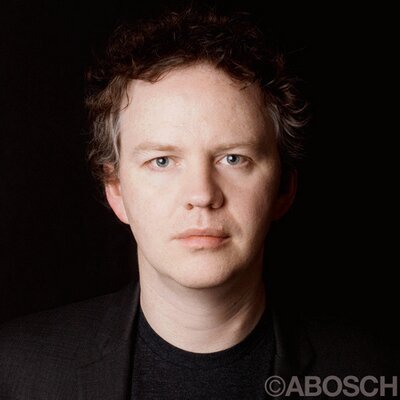
We let the Internet down today. Here’s our technical post mortem on what happened. On behalf of the entire @Cloudflare team, I’m sorry. blog.cloudflare.com/18-novem…

『 』 retweeted
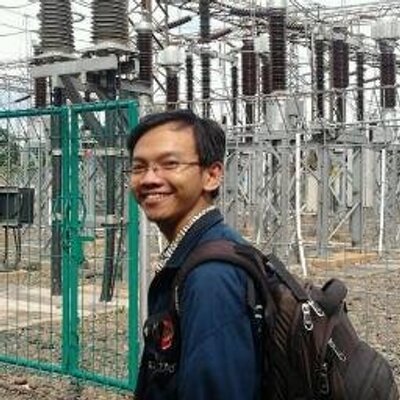
21 tahun itu harusnya waktunya dia:
- Wisuda S1,
- Meniti awal karirnya,
- Mulai menjalin hubungan,
- Menabung buat membangun keluarga.
Beliau cari nafkah halal dengan jadi ojek online.
Beliau bukan mau berperang.
Tapi terlindas kendaraan lapis baja.
Rest in Power, Afan Kurniawan.
Ingat selalu namanya.
Seperti nama-nama lain yang kita ingat, yang dibunuh oleh negara.


