

Working on text and data mining at @EU_Commission @EU_ScienceHub. Personal account, my own opinions.
Joined March 2009
- Tweets1.1K
- Following2.7K
- Followers330
- Likes3.7K

Charles Macmillan retweeted

We asked GPT-6 Astra to edit Qwen3.5-0.8B weights to improve math.
It directly changed only 0.016% of weights, fixing 0.8B's reasoning loops & improving math up to 6x and even instruction following 3x, without gradients or training.
We call this Weight-Space Programming: frontier LLMs can now natively read/write neural network weights! 🧵
Blog: rikiyat.github.io/blog/weigh…

Readers added context they thought people might want to know
LLM was given weights explicitly as text in prompt and used code/forward passes (per authors' logs) to ablate Qwen looping direction, a known thinking-mode issue per model card. Primarily fixed repetition in that mode, not general 'natively' improving weights/math.
rikiyat.github.io/blog/weight-sp…
github.com/RikiyaT/lm_und…
huggingface.co/Qwen/Qwen3.5-0…
huggingface.co/RikiyaT/Qwen3.…
Charles Macmillan retweeted

Marc Andreessen explains why AI might be the end of James Burnham's "managerial society"
In his book The Managerial Revolution, Burnham divided capitalism into two phases.
The first phase was what he called "bourgeois capitalism"
"Think of this as name on the door -- it's Ford Motor Company because Henry Ford runs the company. It's a dictatorial model and Henry Ford just tells everyone what to do. He said the problem with bourgeois capitalism is it doesn't scale because Henry Ford can only tell so many people to do so many things."
The second phase was what Burnham called "managerial capitalism", which was Marc describes as, "the creation of a professional class of managers that are trained -- not to be car experts or experts in any particular field but to be experts in management. And then that led to business schools and management consultant firms and all these things."
Marc continues:
"You look at every big company today and most executives at most of the Fortune 500 companies are not domain experts in whatever the company does. And they're certainly not the founders of those companies. They're professional managers. And in fact, over the course of their careers, they'll probably manage many different kinds of businesses. They might work in healthcare for a while and then work in financial services and then go work in something else."
"What Burnham said was that transition was absolutely required because the problem with bourgeois capitalism is it doesn't scale... So if you're going to run capitalist enterprises that are going to have millions to billions of customers, they're going to be operating at a level of scale and complexity that will require this professional management class."
Burnham acknowledged that this professional management class has its downsides -- they're not as inventive and not going to come up with the next breakthrough. But whether you think that's good or bad, that's what's going to be required.
And basically that's what happened. Marc continues:
"Managerialism basically took over everything. What I'm describing is basically how all big companies run and how all governments run and how our large-scale non-profits run."
Marc believes venture capital is a protest movement to that -- backing founders under the Henry Ford model, and trying to find the next Elon Musk or Steve Jobs who can out-innovate the incumbents.
"I've always viewed my entire life as: we're raging against the dying of the light. We're constantly trying to fight off managerialism from swamping everything and everything getting boring, gray, dumb, and old."
But AI may now offer a third model. Marc explains:
"Maybe the new Henry Ford, Elon Musk, or Steve Jobs + AI is the best of both because it's the spark of genius of the name on the door model but gives that person AI superpowers to do all the managerial stuff... What's the thing these bots are really good at? They're really good at doing paperwork, writing reports, and doing all the managerial work."
"The challenge is going to be for the innovators to figure out how to leverage AI to actually do this."
"The other challenge is going to be for the incumbents that are managerial to figure out: what does that mean? Because now they're going to be facing a different kind of insurgent competitor that has a different set of capabilities than they're used to."
"I think this is going to force a lot of big companies to figure out innovation - figure out innovation or die trying."
Ben Horowitz elaborates on this point further in his article Databricks & the Future Firm below.
Video: @latentspacepod (Apr 2026)


Charles Macmillan retweeted

Can feed algorithms shape what people think about politics? Our paper "The Political Effects of X's Feed Algorithm" is out today in @Nature and answers "Yes".
nature.com/articles/s41586-0…

Charles Macmillan retweeted

The level of personal hostility directed at Keir Starmer over the last week deserves scrutiny in its own right. Not because he should be immune from criticism, but because the tone and intensity of the attacks tell us something unhealthy about the state of democratic politics.
1. Starmer is a conventional political figure. Cautious, legalistic, incremental. He frustrates people precisely because he is managerial rather than messianic. Yet the reaction to him often goes far beyond disagreement, tipping into visceral hatred more commonly reserved for authoritarians or demagogues.
2. Much of this hostility is disconnected from concrete policy. It is not about specific votes, proposals or outcomes, but about projection. A belief that Starmer embodies betrayal, bad faith or hidden malice. That kind of politics runs on suspicion rather than evidence.
3. This matters because democracy depends on the assumption of good faith among opponents. You can think a leader is wrong, timid, or misguided without believing they are fundamentally illegitimate. Once politics becomes moralised to the point of demonisation, compromise is reframed as treachery and pluralism as weakness.
4. The pattern is familiar. In fragmented, polarised systems, anger concentrates not on extremists, whose intentions are clear, but on moderates, who disappoint maximalists on all sides. The centre becomes the lightning rod precisely because it resists totalising narratives.
5. There is also a media and online dynamic at work. Incentives reward outrage, not proportionality. Algorithms favour contempt over analysis. Over time, this creates a political culture in which relentless personal attack feels normal, even virtuous, rather than disgusting.
6. None of this is a defence of Starmer’s decisions, instincts or record. Those should be argued over robustly as you do in a democracy. The problem is the substitution of critique with hostility and the quiet erosion of democratic norms that follows when political opponents are treated as enemies rather than rivals.
7. A democracy cannot function if every election is framed as an existential struggle against internal evil. At some point, the target may change, but the damage to trust, restraint and culture remains.

Charles Macmillan retweeted

Investigating child sexual abuse material isn’t controversial.
Turning it into political theater is manipulation.
Maybe that logic flies on some island. Doesn’t fly in France.

Charles Macmillan retweeted

Spanish PM Pedro Sánchez:
Starting next week, my government will implement the following actions:
First, we will change the law in Spain to hold platform executives legally accountable for many infringements taking place on their sites.
Second, we will turn algorithmic manipulation and amplification of illegal content into a new criminal offense.
Third, we will implement a hate and polarization footprint system to track, quantify, and expose how digital platforms fuel division and amplify hate.
Fourth, Spain will ban access to social media for minors under the age of 16. Platforms will be required to implement effective age verification systems — not just checkboxes, but real barriers that work.
Fifth and last, my government will work with our public prosecutor to investigate and pursue the infringement committed by Grok, TikTok, and Instagram.
Charles Macmillan retweeted

"We are very well aware of the fact that X for Grok is now offering a spicy mode showing explicit sexual content with some output generated with childlike images.
This is not spicy. This is illegal. This is appalling. This is disgusting.
I can confirm we are very seriously looking into this matter."
— Spokesperson Thomas Regnier
Charles Macmillan retweeted

That is the whole point people keep missing: there should be soldiers there to begin with, and in decent numbers, unless you are willing to end up in a situation where they are blocked in a few buildings, as it was in Crimea.
Charles Macmillan retweeted

No-one will take seriously a weak and divided Europe: neither enemy nor ally. It is already clear now. We must finally believe in our own strength, we must continue to arm ourselves, we must stay united like never before. One for all, and all for one. Otherwise, we are finished.
Charles Macmillan retweeted

Apply for #EUfunding!
➡️ @EU_Commission provides EUR 15 million to support critical entities' resilience against threats, including terrorist attacks, sabotage, natural hazards and public health emergencies.
🔗 Find out more: link.europa.eu/y3XBrK
#SecurityEU

Charles Macmillan retweeted

Badenoch and Hannan are not right, a customs union would allow UK businesses to escape some complex and costly procedures. But the far bigger economic prize is the single market, which would get rid of almost all the Brexit red tape mountain and cut the cost of living, too.

Leaving the EU but joining a customs union is like throwing away the burger and eating the napkin, said the Conservative peer Lord Hannan. He’s right.
Recent weeks have seen a bizarre push by some Labour and Lib Dem politicians – including in major newspaper interviews – to rejoin the EU’s customs union.
Most of these MPs were not present during the political chaos of 2017–2019 that followed the Brexit referendum, during which many in Westminster fought to overturn the vote. And those Labour MPs who were there, and who now want to rejoin the customs union, clearly learned nothing. The only people advocating for such a policy – and here I include the trade union bosses who have also proposed it – do not understand what a customs union actually is.
As a former Trade Secretary, I know that trade is about hard choices. You defend British interests. You say no to deals that are easy to sign but bad for the country. Yet Labour, despite all the dramatic changes to the global trade system this year, have still not grasped one simple lesson. Trade policy is power: lose control of it, and you lose the ability to govern yourself.
This is why the renewed chatter about dragging Britain back into the EU’s customs union should worry us all. It is not a sign of pragmatism – it is a symptom of Labour’s weakness.
It’s now painfully obvious to everyone that Keir Starmer entered government without a plan. The list of humiliating U-turns is so long that, I hear, Labour MPs now think twice before supporting a policy announcement in case the PM scraps it a week later.
From winter fuel payments to freezing income tax thresholds and the Family Farm Tax, Labour haven’t just broken their pre-election promises, they’ve inflicted untold damage to the British economy while doing so.
And now the government is weak and has no plan or new ideas, it has re-opened old Brexit wounds in the vain hope that doing so will make it more popular.
It won’t. Going back into the customs union would make us all poorer and damage British business and British farming. Four major benefits of Brexit would be lost: we would no longer be able to set our own tariffs, negotiate our own trade deals, maintain the deals we’ve signed as an independent nation, or reject deals struck by others, even when they harmed our interests.
Worse, the bloc would demand even more concessions from us to rejoin – and this hapless Labour government would no doubt surrender. Keir Starmer’s previous attempts at ‘negotiating’ with the EU have been one humiliation after another.
The PM gave up our fishing rights to get into an EU ‘defence fund’ that we still don’t have access to, and then paid almost £600million to rejoin an Erasmus scheme we’d decided was too expensive at £100million and was mostly being used by EU students studying here, not young Brits going abroad.
Starmer’s trade agreement with President Trump, though considerably worse than the deal the @Conservatives had ready to go with America, is nevertheless clearly better than anything the EU has managed to agree with the world’s most important economy.
Why would we give up the trade deals we’ve negotiated, all structured to work for British businesses, to join a customs union designed to benefit firms in EU countries, with vastly different priorities? Britain is in a slump. Talk of a customs union is a distraction. I’m not here to make excuses for previous Conservative governments: we got things wrong, or we’d still be in government.
However, we did leave Labour the fastest-growing economy in the G7, record levels of employment and inflation on target at 2 per cent.
Charles Macmillan retweeted

Poland urged the European Commission to investigate TikTok over mass AI-generated content in Polish urging the country's EU exit, potentially a coordinated Russian disinformation campaign, according to Deputy Digitalization Minister Dariusz Standerski's letter highlighting threats to public order and democratic processes. Government spokesman Adam Szlapka called it fully aligned with Russian interests, noting Russian syntactic structures in videos featuring young women promoting ultra-right messages.
Charles Macmillan retweeted

Premier of Greenland 🇬🇱 statement this morning;
This morning, I am both saddened and grateful 🇬🇱
Saddened, because during a press conference last night, the President of the United States once again expressed a desire to take over Greenland. With such statements, our country is reduced to a question of security and power. That is not how we see ourselves, and it is not how Greenland can or should be spoken about.
We are a people with a long history, a strong culture, and a vibrant democracy. We are a country with responsibility for our own territory and for our own future. Our territorial integrity and our right to self-determination are firmly anchored in international law and cannot simply be ignored.
That is also why I am grateful.
Thank you to everyone here at home for the clear support and unity that has been shown. The calmness and dignity with which you have met this situation send a strong signal of a people who stand firm in their values and in their responsibility.
I would also like to thank heads of government and partners around the world who have clearly and unequivocally expressed their respect for Greenland, for our democratic institutions, and for the fundamental principles of international law. That support confirms that we here at home do not stand alone.
Once again: Greenland is our country. Decisions are made here. And I will at all times fight for our freedom and our right to decide for ourselves and to shape our own future.
For now, I hope that the peace of Christmas can settle over us all.
Merry Christmas 🇬🇱💙🇬🇱

Charles Macmillan retweeted

La France dénonce avec la plus grande fermeté la restriction de visa prise par les Etats-Unis à l'encontre de Thierry Breton, ancien ministre et Commissaire européen, et quatre autres personnalités européennes.
Le règlement sur les services numériques (DSA) a été démocratiquement adopté en Europe pour que ce qui est illégal hors ligne le soit aussi en ligne. Il n'a absolument aucune portée extraterritoriale et ne concerne en aucun cas les Etats-Unis.
Les peuples de l'Europe sont libres et souverains et ne sauraient se faire imposer par d'autres les règles s'appliquant à leur espace numérique.
Charles Macmillan retweeted

So, today @tedtalks announced that my TED talk ‘This is What a Digital Coup Looks Like’ was their most watched talk of the year.
It’s sort of amazing & terrifying.
Because this *is* what a digital coup looks like.
Charles Macmillan retweeted
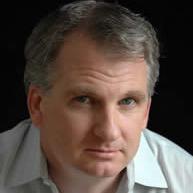
Russia does not want to end the war, and the Trump administration has shown no ability to induce Russia to end the war. And so, predictably, the Trump administration blames the victim, blames Ukraine.


Charles Macmillan retweeted
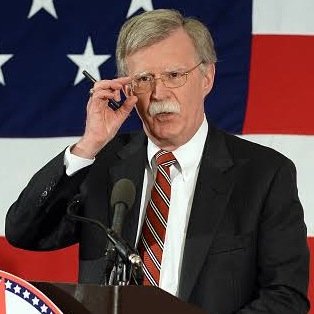
Trump has put the US on the wrong side of the Russia-Ukraine war and it's shameful. He is every day making it more and more difficult to pull the West back together. After his term, the U.S. will need to convince our allies that we are dependable and still a nation of normal people. youtube.com/watch?v=pJDLBeUO…

Charles Macmillan retweeted

I love my country with all my heart and I've never been more embarrassed for America than the spectacle I just witnessed in the Oval Office.
Zelensky is fighting for the survival of his country, his people and their democracy.
Trump and Vance appear to be completely aligned with Putin, the invader whose aim has been to conquer Ukraine.
Zelensky should know that millions and millions of Americans still stand with him and his valiant people.