


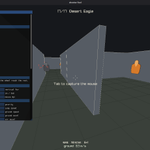
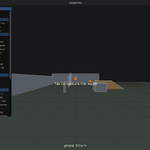


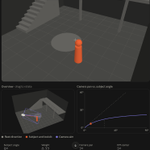


Started hacking on a thing. Basically, a testbed for different FPS "feel" things: weapons, movement, etc.


Go is the generational trauma enacted upon the programming community by Rob Pike for failing to learn from Bell Labs, Plan 9, BLIT, Inferno, Alef, Limbo, Dis, and all the rest.
I hope that someday my own grudges can be acted upon with such magnitude and competency.
Harsh truth: Every hardline anti-AI open-source project is privileging their developers over their users.
I think a lot of us who fought for open-source in the last couple of decades didn't do so to have little special clubhouses: we did it ship better software and help users.
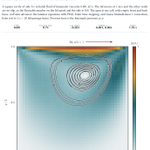
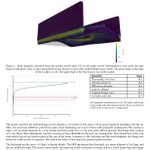
So, @grok build armed with Nix and various FEA/FEM packages whiffed on a test case: the '81 Hyatt-Regency walkway collapse.
We're doing another attempt, but even with this failure I want to point out that we're entering a new age of physical slop and atomslop. Things are gonna get wild.

I wonder when people will figure out that the age of tokens is sorta like fossil fuel...we have a fairly limited window to exploit them to rebuild the software we use to be smaller, more memory-efficient, faster, and safer--after some near future point, economics may intercede.

crertel ᐛ retweeted

if you're building a new nix interpreter as well, we can share the conformance test suite: github.com/numtide/nix-confo… . It would be nice to standardize the language.

crertel ᐛ retweeted

Elixir is very good at handling many connections without breaking. So you don't need to give it any special attention for good performance. Here a benchmark with a lot of clients posting to the once-campfire repos. Elixir mops the floor with the Rust versions.


The problem with all of this that keeps getting glossed over is that Elixir is requiring all of this special attention to get it to the numbers it can achieve. I also believe those numbers under represent Elixir's potential but this isn't a "which is fastest" benchmark. It is "which is fastest without knowing how to write in that stack" benchmark.
A place where I'm seeing some LLMs (gpt-6-astra xhigh in this case) fail is when building tools meant for humans.
My situation is building a gameplay scripting layer in Lua--the clanker of course has gone out of its way to special-case everything from the existing gameplay examples and has lost the thread on "please build small composable legos". We have now had to talk about this.
The first (one-shot, no real feedback beyond "make sure to match the design as closely as possible", "please don't ignore features") ASP NET attempt is...similar to the original Elixir implementation (whose issues are well-documented).
Code (@dhh if this would be helpful):
github.com/crertel/once-camp…
Testing rig (best with nix):
github.com/crertel/once-camp…
Now, of course, I expect that my dotnet version is *at least* as flawed as the Elixir version--I've only used C# for some low-level binary shenanigans and gamedev. But, what's interesting is that it only took a few hours for stock @grok Build (not even Claude or Codex) to bodge this together.

But, the important thing here is that now *somebody else* can fork my attempt and golf it and run it through their own brain or clanker(s) and apply expertise.
I think a pass of "Okay, now make this idiomatic and look for common performance problems, let's add tracing and sampling and profile it" would be a great next step.
Or, in the fashion of the times, throw a stronger model at it.
Something that's very important to note about the automated ports of the Basecamp stuff from @dhh , which *I ALSO* have run into with the ASP NET port, is that you really have to sit on the models and nudge them to make sure they achieve parity with the original.
Lack of strong test suites and acceptance tests makes it really easy for models and harnesses to just go "oops, I totally forgot to lug over the entire file upload workflow" or whatever.
Similarly, lack of benchmarks, stress tests, and other things particularly backed by profiling means that if you're doing something weird (say, serializing DB access), **the AI will be much less likely to spot it**.
A simple instruction "hey, port this code to Elixir" or whatever will skip best practices that might get pulled in during the harness' reflection on most pessimum profiling.
We've run into this with our work on indie gamedev in Godot.