

Recovering criminal lawyer. Semi-libertarian. Free speech fanatic. Somewhat contrarian, often annoying. Opinions my own. 🇳🇿 🇺🇦 🇮🇱 עם ישראל חי
New Zealand
Joined January 2024
- Tweets3.1K
- Following529
- Followers636
- Likes13.9K







This is a bad look for the @NZNationalParty. It reeks of desperation. Whether or not there was a promoter statement, it is clearly a case of the Nats shutting down a campaign they don't like. It is anti-Free Speech; a simple phone call to their biggest donor, pointing out the lack of the promoter statement, would have sufficed. The willingness to use the Electoral Commission to achieve their goal is unprincipled.

Douglas Brown retweeted

How did I miss this jaw-dropping anecdote from Lucie Kon @imluciekon last week.
Apparently a BBC diversity officer told a Jewish staff member, who’d been trying to set up a Jewish BBC support group a few years ago, that it wasn’t needed “because Jews run the media”.
A ‘Diversity, Equity and Inclusion’ officer.
This is just dystopian now.
(@DailyTPodcast int here: youtu.be/sqB2GDunRZU?is=t8cV…)
This policy exists simply because @NZNationalParty paved the way. @NZFreeSpeech needs to point out the true responsibility where it actually lies. A Digital Duty of Care is likely Part 2 of National's plan, anyway. Labour is just getting ahead of them. Both @actparty & @nzfirst have opposed the policy, and good on them for doing so.

Earlier this month, Australia’s Communications Minister Anika Wells defended a clause in her Digital Duty of Care bill that lets the eSafety Commissioner run fake online accounts. The bill calls them “sock puppet identities” and authorises the regulator to use them to create content on social media, including with AI. Her justification was that eSafety asked for it.
Chris Hipkins says Labour will bring the same law to New Zealand.
A digital duty of care puts a regulator in charge of deciding what adult speech is harmful. Australia’s version goes further and lets that regulator pose as an ordinary user while it does the job.
Labour hasn’t said which parts of Australia’s law it would leave out. Before 7 November, ask whether its version comes with sock puppets.
📌 Ask your candidates where they stand on online speech: fsu.nz/campaigns/online-free…

Douglas Brown retweeted

🚨 THIS is why free speech matters!
Poles are thanking Elon Musk because X is how the world is seeing what's happening in Poland.
The legacy media barely touched this story.
Regular Poles grabbed their phones and showed the world for themselves.
Before Elon bought this app, a story like this would have been throttled and buried.
Now nobody can hide it. GOOD!

Thank you, @elonmusk. Without you, it would be impossible to inform the world about what’s happening in Poland.

Thomas Coughlan using the old 'Republicans pounce' line on the Nats today, thus covering for the Greens' admission that their premier taxation policy is in fact designed to be expanded, even though they are campaigning upon it having only a limited number of victims.

Douglas Brown retweeted

Some things that British voters have forgotten.
🔴Making a profit is no vice.
🔴Inequality is not evil.
🔴The fact that tax cuts chiefly benefit people who pay taxes is not an argument against them.
🔴Governments spend money less well than you do.
🔴There’s no such thing as a free lunch.
Outstanding news, if correct.

This is absolute rubbish. It is a legal requirement for every adult in NZ to register to vote within 1 month of turning 18 and to remain enrolled thereafter. @rnz_news says that the govt has removed the right to vote from NZers, when in fact those not enrolled are lawbreakers. rnz.co.nz/news/politics_elec…

This is the sort of thing that @NZNationalParty said will 'inform' their social media proposals for NZ. That has given @nzlabour permission to go stronger, earlier, with their plan to control social media. It is not just about child safety; it is about control.


Douglas Brown retweeted

I've been pointing out since the early 2010s that Thomas Piketty, Emmanuel Saez, and Gabriel Zucman have a bad habit of biasing their data construction to fit their politics.
Whenever they make a suspect call in how to handle stats, it ends up showing that inequality is on the rise. They almost never go in the other direction. The errors are non-random and almost invariably reinforce their political claims about rising income and wealth concentration since 1980.
Piketty did this throughout his book Capital in the 21st Century.
Piketty and Saez did this throughout their famous 2003 paper on inequality in the US.
Piketty, Saez, and Zucman Saez and Zucman did this in their Distributional National Accounts paper that Auten and Splinter dissected.
Saez and Zucman did this in their 2019 book on tax incidence and inequality.
Saez and Zucman did this in their flurry of "studies" and white papers to support Elizabeth Warren's wealth tax proposal, California Prop 40, a new wealth tax in France, and dozens of other similar examples.
A new AI report (linked below) audited 138 papers by Saez and Zucman. It found thousands of errors, 194 of which were serious. A whopping 97% of the serious errors went in the same direction: they showed inequality rising faster or made it higher.
But there's a bigger scandal at play here. Despite these clear biases, Piketty, Saez, and Zucman have enjoyed a stream of praise and prestige within the economics profession. They get expedited and friendly reviews in top econ journals even though a more serious peer review should have caught many of these errors (the Quarterly Journal of Economics is a recurring offender in this regard). Journals regularly give them a pass after the errors in their old work come to light - they're never expected to correct any of it, and just keep on using it as if nothing changed. Their non-peer reviewed data claims are also treated as gospel by major media outlets such as the New York Times and the Washington Post. And they get showered with prizes - Saez and Zucman are both Clark Medal winners from the AEA, and Zucman got his prize in 2023 after evidence of major data shenanigans in his work came to light in 2019.
Until now, those of us who have been trying to correct the record have had to wade through the PSZ trio's cluttered, disorganized, and often non-transparent replication packages (almost all of which are convoluted piles of Excel spreadsheets) to find the problems. I did a line-by-line replication of Piketty and Saez's entire 2003 US income inequality series to use one example, and found it was riddled with errors - almost every single one of which biased their results in favor of their political story.
We had the means to catch this stuff as it was happening, but the economics profession failed to do its job. And it failed precisely because its elite ranks wanted to believe the Piketty-Saez-Zucman story for political reasons.
Douglas Brown retweeted

Tomorrow, Eritrea’s regime will Chair the U.N. Human Rights Council’s 2026 Social Forum.
Eritrea’s credentials:
🇪🇷 No elections
🇪🇷 Rape and torture
🇪🇷 Forced labor and slavery
🇪🇷 Jails critics and journalists
🇪🇷 Known as “the North Korea of Africa”


Douglas Brown retweeted

NZ's Department of Internal Affairs does not want Kiwis trading on Kalshi because they consider it to be gambling.
America's financial markets have depth and vigour unimaginable in NZ, and it isn't just because it's a bigger country.
It's also because NZ is often very stupid.

S&P Dow Jones Indices and Kalshi are joining forces to build the next generation of financial markets.
The Dow launched in 1896. The S&P 500 in 1957. The idea was simple: bring individual stocks together into a single benchmark, giving people a clearer view of the broader market.
Over time, products built around those benchmarks transformed investing. Index funds, ETFs, futures, and options gave investors ways to gain diversified market exposure and hedge broad market swings.
These indices became foundations of global finance. More than $20 trillion is indexed or benchmarked to the S&P 500 alone.
Today, this structure extends beyond stocks to bonds, commodities, currencies, and more.
The next step is to bring that structure to the events that shape everyone’s lives.
Through this partnership, S&P Dow Jones Indices and Kalshi will work together to create indices composed of Kalshi event contracts.
Think about what that opens up.
An index of political power. An index of supply chain risk. An index tracking AI’s impact on employment. An index of sports outcomes that affect broadcasters, advertisers, cities, and small businesses. An index of weather risks that shape harvests, energy demand, and business revenues.
Each would bundle event contracts into a single indicator, helping people understand how related risks are evolving.
Over time, products built around these indices could offer diversified exposure to those events and new ways to hedge their impact.
The events that shape our lives could become as easy to track and gain exposure to as the S&P 500.

Douglas Brown retweeted

The Lula regime is now going around seizing the passports of every major figure associated with the political party that beat him in the general election 3 weeks ago.


➡️ MINAS GERAIS | Com Flávio nos EUA, Pedro Rousseff pede apreensão do passaporte de Nikolas
metropoles.com/minas-gerais/…

Douglas Brown retweeted

BREAKING:
The Venezuelan opposition leader Maria Corina Machado is now driving to Caracas after returning to the country from exile.
People are lining the streets
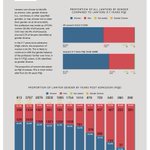
Just as a follow-up, these are the (rough) lawyer numbers in NZ for 2025. Notice the gender split out to 30 years PQE. But, apparently, the NZLS' two main priorities are DEI and gender (meaning women's) equality. Somehow, I think time will achieve that for them.
(And, yes, I have only used two genders in the numbers. Sue me. Also, yes, I think NZ has too many lawyers.)


The New Zealand Law Society is all in on diversity, equity, and inclusion. And I mean, all in; it is woke as. It is forcing this on everyone with a practising certificate, regardless of agreement.
The plan has goals like "build[ing] capability in areas such as bias, cultural competence, and allyship", and that "[d]iversity, equity and inclusion capability [will be] considered to be part of professional development."
This is in a profession where the most notable trend since the year 2000 is the significant and rapidly decreasing number of men in practice. But that is of no concern for the Law Society. Gender Equality, for the NZLS, means not enough women in senior positions, ignoring that legal practice can stretch over 50 or 60 years, so the numbers don't always move that quickly.
It is time to remove the regulatory function from the NZLS to an independent body. Then the NZLS can do what it wants for those who choose to remain members.
lawsociety.org.nz/profession…
Oh. What a surprise:
Ofcom said, “We have not observed any significant changes in the incidence or severity of any kind of content over the first nine months after the children’s safety duties came into force.”
order-order.com/2026/10/23/o…

Douglas Brown retweeted

Government regulation of LLMs is one of the main threats against free speech. Read my colleague @Jordicalbad's breakdown in @ConversationUS based on our latest report.

1 in 5 U.S. voters have asked an AI chatbot about politics. Governments worldwide have noticed, and they’re shaping what those chatbots can say.
@Jordicalbad breaks it down in @ConversationUS ⬇️

Douglas Brown retweeted

Hot take:
If Elon Musk had stayed in South Africa, we might never have heard of SpaceX, Tesla or Neuralink.
That tells you how much a country’s business environment matters for innovation and prosperity.
Africa is the poorest region in the world because our business environments don’t give entrepreneurs the freedom to innovate and create prosperity.