

darowa retweeted

Most specialize in one layer. IREN owns and operates all three.
Land and power. Data centers. AI Cloud. Each one is a business in its own right, and each one strengthens the next: secured power becomes infrastructure, and infrastructure becomes contracted revenue. Swipe to see the value at every layer.


darowa retweeted

Stop stressing about $IREN's capex and assuming they’ll dilute shareholders to death at the current market cap...
The company’s unfunded capex “gap” for FY27 is $6B.
Management’s expected GPU financing and customer prepayments alone already cover about $5B of that.
And to be clear, their assumptions here are stupidly conservative, because they are only modelling around 90% of GPU capex being funded through BOTH prepayments and financing combined.
... $IREN literally signed a new 5-year contract two weeks ago where the customer alone prepaid 90% of the GPU capex.
They could then layer GPU-backed debt on top for another 50% of capex and get to 140% of the underlying GPU capex being funded, just ad they did across their 80 MW of Mackenzie capacity.
Non-dilutive funding is clearly not the issue in this market environment. Customers are DESPERATE for compute.
How is that not obvious??
We all know $IREN already has Anthropic as one of its customers. The company’s CCO recently said they have “one of the two leading AI labs” as a client.
And given Anthropic’s hunger for compute and willingness to sign contracts across a wide variety of cloud providers, it’s pretty clear who that is.
If $IREN wanted to, it could sell 100% of its FY2027 capacity, the same capacity that still requires the $6B of funding, to Anthropic and demand prepayments worth more than 100% of the underlying capex tied to those contracts.
All they would have to do is give up some revenue per MW in exchange.
So instead of signing a 5-year contract at $22M / MW, they'd likely get ~$20M / MW... Ouh no, what a disaster lol.
Anthropic is currently getting absolutely fleeced by $SPCX, paying something like $30M / MW for old-ass H100s and H200s.
They would happily jump on 100 MW of B300s for just two-thirds of the price if the trade-off is simply prepaying a larger portion of the contract upfront.
But if you’ve been paying attention, $IREN generally doesn’t pre-sell large amounts of capacity far in advance, while also prioritizing customer diversification to de-risk its contract portfolio.
If they really needed the funding, though, they could lean much harder on prepayments.
The market is totally retarded for failing to see that... 🙃
I’m looking forward to reflecting back on this period and quote-reposting a bunch of the stuff I’m publishing these days.

darowa retweeted

$IREN holds conditional Batch Zero baseload approval on its 2GW Sweetwater hub (1,400MW + 600MW) plus open expansion capacity at Childress. One of the rare GW-scale turnkey contenders out there—just a matter of time now.
Two asks for management right now:
No equity dilution at these share prices.
Go full throttle on building out every MW that can be energized fastest.
Elon’s interview made it crystal clear just how desperate Anthropic is for power. Execute fast and lock them in.

darowa retweeted

"Truth will always be truth, regardless of lack of understanding, disbelief or ignorance."
Again, @Agrippa_Inv lays out truths on @IREN_Ltd . It's up to us to trust what we know to be true.
Patience is the true test of character.

Stop stressing about $IREN's capex and assuming they’ll dilute shareholders to death at the current market cap...
The company’s unfunded capex “gap” for FY27 is $6B.
Management’s expected GPU financing and customer prepayments alone already cover about $5B of that.
And to be clear, their assumptions here are stupidly conservative, because they are only modelling around 90% of GPU capex being funded through BOTH prepayments and financing combined.
... $IREN literally signed a new 5-year contract two weeks ago where the customer alone prepaid 90% of the GPU capex.
They could then layer GPU-backed debt on top for another 50% of capex and get to 140% of the underlying GPU capex being funded, just ad they did across their 80 MW of Mackenzie capacity.
Non-dilutive funding is clearly not the issue in this market environment. Customers are DESPERATE for compute.
How is that not obvious??
We all know $IREN already has Anthropic as one of its customers. The company’s CCO recently said they have “one of the two leading AI labs” as a client.
And given Anthropic’s hunger for compute and willingness to sign contracts across a wide variety of cloud providers, it’s pretty clear who that is.
If $IREN wanted to, it could sell 100% of its FY2027 capacity, the same capacity that still requires the $6B of funding, to Anthropic and demand prepayments worth more than 100% of the underlying capex tied to those contracts.
All they would have to do is give up some revenue per MW in exchange.
So instead of signing a 5-year contract at $22M / MW, they'd likely get ~$20M / MW... Ouh no, what a disaster lol.
Anthropic is currently getting absolutely fleeced by $SPCX, paying something like $30M / MW for old-ass H100s and H200s.
They would happily jump on 100 MW of B300s for just two-thirds of the price if the trade-off is simply prepaying a larger portion of the contract upfront.
But if you’ve been paying attention, $IREN generally doesn’t pre-sell large amounts of capacity far in advance, while also prioritizing customer diversification to de-risk its contract portfolio.
If they really needed the funding, though, they could lean much harder on prepayments.
The market is totally retarded for failing to see that... 🙃
I’m looking forward to reflecting back on this period and quote-reposting a bunch of the stuff I’m publishing these days.
darowa retweeted

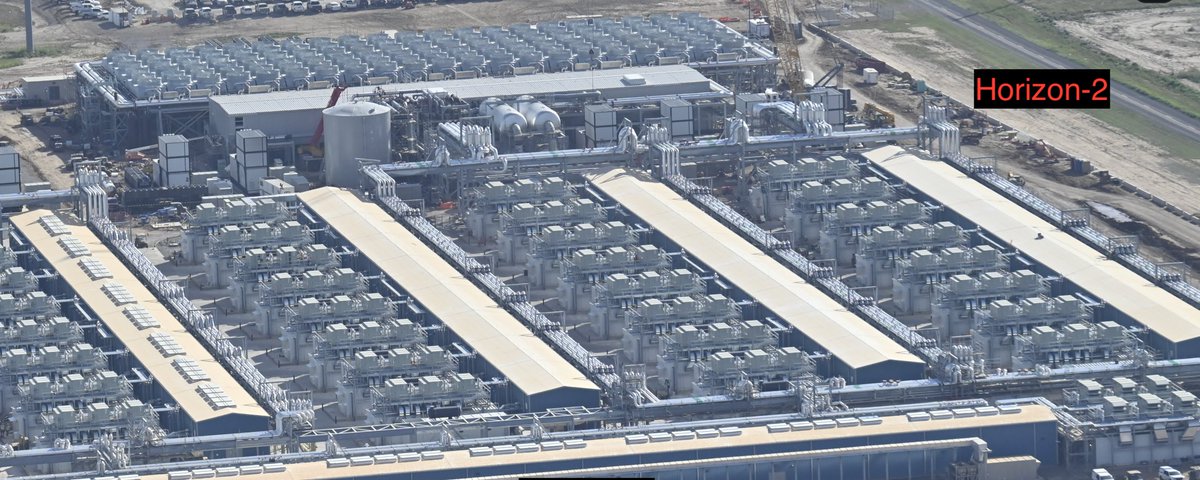
Outstanding Analysis from @AceKicker13 on $IREN . THIS IS NOT SEMI ANALYSIS, THIS IS FACTUAL ANALYSIS.

$IREN As promised, my detailed breakdown of the Horizon's Coolant System Design based on my inference and analysis of coverage provided by @FransBakker9812 and OnlyFrans.
darowa retweeted

$IREN: Can Management Insider Buying Boost the Share Price and Restore Market Confidence?
Unfortunately, no! I have countless examples, including Netflix, Nike, Intel, Continental Resources, Party City, and many others. Of course, there are also cases where insider buying has had some positive impact, but they are rare. It largely depends on timing and the company's underlying condition. If a company is genuinely on the verge of collapse, nothing management does will make much difference. If its fundamentals are healthy and the weakness is primarily driven by external factors, insider buying is still unlikely to have much effect at the time.
So, is IREN falling because SemiAnalysis has repeatedly published unfair FUD? Come on, they are not that powerful. If they have the guts, let them keep increasing their short positions at these prices and see how things eventually turn out. The FUD surrounding IREN's technology and the H2–H4 delays has been circulating for more than two months now. The market has long since grown tired of it. Even if they put on a major show tomorrow, giving SemiAnalysis a dedicated stage to rehash all these FUD narratives, the market reaction would probably be much the same. It simply won't be a more powerful catalyst for further downside.
Is it because IREN still has an active ATM program? In fact, its effectiveness as a bearish argument has also diminished considerably. First, the ATM has been there all along. Second, most of it has already been executed. Third, management is hardly going to use it at the current share price, unless an exceptionally severe external crisis emerges.
So, what is behind such an overwhelmingly negative and emotional sentiment toward IREN, especially following an earnings report that marked such a significant turning point? My answer is the harsh outlook for inflation and interest rates, increasingly restrictive financing conditions, uncertainty surrounding data center construction policies in Texas, the inherent challenges of IREN's unique business model, and, on top of all that, the unexpected departure of Jensen Huang, an event that should never have happened. NVIDIA, the core driving force behind the AI industry, has suddenly entered a period of enormous uncertainty. It is the combination of all these factors that has created the current situation.
This is extremely rare, and it has pushed IREN, right at the center of this storm, into an extraordinarily weak share-price performance. Management buying shares at today's prices would accomplish very little. What could change this situation in the short term is a reversal in market sentiment. There is something rather strange about sentiment in this respect. It is much like the emotional reversals we have all experienced ourselves: quite often, there is no obvious reason. It simply changes direction, seemingly out of nowhere.
There is an old saying about sentiment-driven trends: when things reach an extreme, they inevitably turn around. Once sentiment reaches an extreme, a reversal can happen almost spontaneously. Of course, there is one essential prerequisite: the underlying fundamentals must remain broadly healthy. That is all investors need to make sure of. Then, be patient and wait.
darowa retweeted

$IREN is valued at ~$7B.
Blackstone just paid $5B for 647MW of powered shells leased to Amazon. That's ~$7.7M per MW for land, buildings and a grid connection.
No GPUs. No cloud business. Just a lease.
IREN will have 480MW live in early 2027 and 1,210MW by end of 2027. At Blackstone's price, that's ~$3.7B and ~$9.3B as pure real estate.
On top of that you get:
• >$4B ARR, fully contracted and funded
• $20B revenue backlog
• 5GW+ of secured power
• NVIDIA as a partner
The market cap is already below what IREN's 2027 buildings alone would fetch from Blackstone.
Make it make sense.
Blackstone's new data centre trust is buying 75.1% of two newly built campuses from Amazon and leasing them straight back.
The campuses carry 647 megawatts across 13 buildings and are valued at $5 billion in total. The initial cap rate is 7.0%, with 2.75% annual rent escalators on a triple net lease running 12 years, or up to 32 fully extended.
$BXDC is contributing $1.90 billion of cash raised in its own IPO. Amazon affiliates keep 24.9%, about $0.60 billion.
More than two thirds of the capacity sits in northern Indiana, the rest in Mississippi, per the filing.

darowa retweeted

Data centers sitting idle w/out enough power will be the story of 2027. Power is the biggest AI bottleneck, even Elon Musk has said this.


darowa retweeted
The Uniqueness of $IREN
Last week, $CRWV and $NBIS released their earnings, completing the round of earnings reports from the three publicly listed neocloud companies. There was plenty to examine, enough material for a very long article. In the end, however, I set aside all the lengthy data and decided to publish a relatively concise post focusing exclusively on the fundamental characteristics of these businesses.
One common trend revealed by all three earnings reports is that the imbalance between compute demand and supply continues to widen. Pricing remains on an upward trajectory, GPU depreciation timelines are being extended, and the payback periods on hardware investments are getting shorter.
The primary financial pressure facing all three companies is financing. This is a broader problem across the entire AI infrastructure sector, but it is particularly pronounced among these companies.
Here are my brief assessments of the three companies following their earnings reports:
IREN
This earnings report marks a major inflection point. IREN has officially entered the stage of building out its AI narrative and scaling up its capabilities. Its first-ever disclosure of a 35 GW global development pipeline demonstrates that the company has completed its strategic planning phase and moved into full-scale physical development. As it further secures a first-mover advantage in pursuit of economies of scale, IREN has begun taking one of the most important steps toward realizing its ambitious vision.
CRWV
A temporary reprieve amid a crisis. Strong demand has eased the market's greatest concern: financial pressure. But this is only a reprieve. I still see no clear path toward resolving the underlying problems entirely. In particular, data center delivery schedules continue to slow for various reasons. Difficulties in securing leased capacity and the likelihood of higher rental costs are both negative factors. Meanwhile, older, first-generation data centers and a substantial portion of its GPU fleet face performance degradation and efficiency challenges.
Until there is evidence of a fundamental transformation in its underlying risk profile, every rally in CRWV represents a good opportunity to exit.
NBIS
The reality behind its long-standing, deliberately vague approach to communicating its development strategy has finally come to light. The myth that it could expand rapidly while issuing very little equity has been shattered.
Several sites have suffered substantial delays due to factors outside the company's control. NBIS has indicated that it will increasingly shift toward a vertically integrated model in which it owns its assets outright. In other words, it is moving closer to the IREN model. This raises expectations for significantly higher capital investment and dilution. At the same time, its software business, which also requires substantial investment, may lose momentum as intense competition makes it increasingly difficult to sustain the necessary level of investment across both infrastructure and software.
The premium valuation supported by its long-standing ambiguous narrative has reached an inflection point following this earnings report. Nebius will lose its position as the leader among neocloud stocks.
Given the increasingly complex financial and industry environment, share prices are facing enormous selling pressure and valuation compression. This has intensified the persistence of negative sentiment, creating a tremendous test for investors.
Here, I want to emphasize several aspects of IREN that I consider unique. In my experience, capital markets ultimately assign substantial valuation premiums to companies that possess genuine uniqueness.
1.
IREN is the only company in the industry that has taken a long-term, forward-looking approach to high-performance computing in its business planning and capacity deployment, rather than scrambling to respond to the AI boom after it emerged.
Eight years ago, IREN was already systematically evaluating resources on a global scale and developing a strategic plan. It established a set of criteria for selecting its sites: reliance on the power grid, use of green energy, environmental friendliness, preferably in regions with surplus electricity, distance from residential communities, and avoidance of conflicts with traditional communities. At the same time, its sites should establish mutually beneficial relationships with local communities, creating a symbiotic environment in which both sides support and benefit from each other. Finally, sites must have sufficient room for broader and deeper future expansion.
There are only a limited number of places in the world that meet these criteria. Whoever recognizes this first and completes the necessary groundwork in advance secures these scarce assets.
Although the market currently assigns IREN no valuation premium whatsoever for this advantage, its actual value is immeasurable. This is particularly relevant given the underlying reasons why Democrats are now proposing to rein in data center development. To a considerable extent, too many new projects have crossed multiple red lines. IREN's site selection principles have largely enabled it to avoid precisely these problems.
2.
IREN is the only company in the industry that has prioritized the capacity for mutual benefit right from the site selection stage.
As the CEO has said, a project must contribute something to the power grid and the surrounding towns if people are going to want it there.
This value proposition determines that every IREN project is positioned to receive broad local support while achieving optimal economics. A mutually beneficial relationship with local communities makes construction and operations smoother. A constructive relationship with the power grid delivers direct benefits in both costs and revenue. Together, these two factors help ensure that the company's business achieves the best possible economics.
3.
IREN is the only vertically integrated AI factory in the industry.
L1 consists of owned physical infrastructure, including land, power, substations, and cooling systems.
L2 consists of the GPU, server, storage, and computing hardware deployed on top of that infrastructure.
L3 consists of orchestration, hosting, enterprise support software, and AI cloud services.
This model provides an exceptionally high degree of control and the ability to respond with optimal speed. It also offers enormous potential for future development in compute services. Upward, the business can continue expanding into increasingly specialized and sophisticated software layers. Downward, it can optimize the configuration of underlying physical infrastructure with different AI applications to extract the highest possible efficiency.
4.
IREN is the only company in the industry whose accumulated asset base continues to appreciate in value, giving it the characteristics of financial compounding.
Completed AI factories can serve as productive assets that provide collateral for further financing, allowing the company to build an asset-growth flywheel over time. Third-party leasing models do not have this kind of underlying asset base.
This characteristic gives IREN's equity enormous potential for long-term appreciation.
5.
IREN is the only company in the industry with extensive engineering experience in data center design, development, and innovation.
Not only does it vertically integrate critical infrastructure assets, but it also plays the role of an engineering general contractor in design, development, and construction. It has the genuine DNA of an infrastructure company, making it a natural fit for this industry.
6.
IREN is the only company in the industry capable of choosing the development pace of high-density, next-generation computing facilities while precisely balancing the useful life and efficiency of computing infrastructure against the lifespan and performance of the chips deployed within it.
This is enormously significant, yet the market currently has little understanding of how IREN approaches and manages this aspect of its business.
7.
Through its vertically integrated model and its additional role as a general contractor, IREN is the only company in the industry capable of coordinating every layer, from foundational hardware infrastructure to the intermediate compute layer and all the way up to the software stack, around customers' actual usage requirements.
As a result, it has established deep partnerships with a wide range of AI applications.
8.
IREN is the only company in the industry with a business model in which its multi-layer AI infrastructure capabilities can generate compounding effects.
Achieving this requires strong control over the operational stability and economics of the underlying physical infrastructure, as well as multi-layer business relationships with customer applications. Only then can meaningful compounding effects emerge.
Over the long term, the earnings potential generated by this kind of compounding is far greater than the wealth-creation potential of software stacks alone, which is what the market currently places disproportionate emphasis on.
Each of these eight unique characteristics could warrant a lengthy article of its own if analyzed in detail. Anyone interested is welcome to conduct their own in-depth research.
Finally, IREN has a highly capable team that understands how to identify and act on first principles. Fundamentally, I am not investing in AI, nor am I investing in AI cloud. I am investing in people and the team, because outstanding results are produced by outstanding people!
darowa retweeted

$NUAI Phase 1 Signed is Worth $10 Today
Inspired by my friend @SmallCapSnipa publishing the Northland sell side analysis, I found it appropriate to keep it simple and stick to the same format.
Warning: this analysis is for Phase 1 only, and does not include Phase 2 or Phase 3 at TCDC that will at a minimum power 1.2 GW or 6x Phase 1.
Now let's talk through some assumptions before you read the output I produced attached.
1) Rent - $riot executed for $130/kw/Month with $ant but my base case is $140 due to $NUAI being responsible for development and construction of the modular data centers versus just the powered pads and a later LOI date in September as power became harder to find in 2027
2) PUE - Northland is far too conservative as the $riot deal is 1.1. The initial LOI asked for 756 MW IT but landed on 910 MW IT because $ant opted for a simpler modular build and will be able to adjust power down during peak temperatures but will pay for the max capacity. My base case is 1.35 for now.
3) NOI / Ownership - 99% NNN and 95% for Vistra 5% share.
4) Multiple - Northland uses at 10 cap or 10x multiple but I find that cash return too high and believe 11x is more appropriate as a 9.1% cap rate is almost 4% higher than the 5.35% average of the 10 year and 20 year treasury. That's a very wide credit spread and the multiple should likely be 11.5x or 12.0x.
5) Build Cost - Same $6m assumption with 80% debt assumed.
6) DS0 - Used fully diluted shares of 160m from earnings to be conservative
7) Discount - Northland uses 11% for 2 years for a 2028 delivery but that's far too conservative as I believe delivery will be Q4 2027 given the modular build. That said, I upped the discount to 20% for one year for time value of money and execution risk.
Ted Warner just telegraphed Phase 1 delivery and most likely Phase 2 at the Cantor panel to mitigate regulatory risk upon approval of the company's air permit by starting construction as soon as possible.
I've never been more bullish on a setup because management is keeping it super simple which will result in accelerated institutional adoption as the deal structure can be digested in 5 minutes. See $riot performance following their deal versus peers.
Load up. Final call.
NFA DYOR


darowa retweeted

Important context on timing. $IREN is incredibly visionary, which is why it has >5 GW of secured power and a >35 GW development pipeline supported by >30,000 acres of land. That scale comes from navigating the regulatory process while creating real value for all stakeholders. The facilities are grid-connected for reliability and run on 100% renewable electricity, while also providing flexible load that helps balance the grid. Gas-powered or space data centers don’t deliver that same broad value to stakeholders. Once politicians fully grasp the value AI brings, the $IREN process gets even faster keeping terrestrial renewable data centers dominant for a long time.


darowa retweeted

Brian, Kent's right, and if anything 7 years may be generous. Our view is new grid-connected power for data centers is largely closed across the western world unless you're already a long way into development. And even then, a lot of what's sitting in queues today won't get built.
The question we keep coming back to is what a project has to give back, to the grid and to the town around it, for people to want it there.

I know Kent personally. He's a real talent for $IREN and the AI infrastructure industry. I always listen when he talks to understand the inner loop where IREN plays.
When he says development timelines have stretched from 2 to 3 years to 7 plus in most jurisdictions. The bottleneck isn’t capital or GPUs it’s the multi-year process of securing land, power, and permits. Companies that started building that pipeline years ago have a structural advantage that can’t be compressed or bought later. That’s the game IREN is in.
darowa retweeted
I know Kent personally. He's a real talent for $IREN and the AI infrastructure industry. I always listen when he talks to understand the inner loop where IREN plays.
When he says development timelines have stretched from 2 to 3 years to 7 plus in most jurisdictions. The bottleneck isn’t capital or GPUs it’s the multi-year process of securing land, power, and permits. Companies that started building that pipeline years ago have a structural advantage that can’t be compressed or bought later. That’s the game IREN is in.

🚨JUST IN🚨
$IREN CCO:
"IT WAS 2 TO 3 YEARS TO BE ABLE TO GET AN OPERATING DATA CENTER ONLINE. NOW 7+ YEARS IN MOST JURISDICTIONS."
darowa retweeted

Scaling AI starts with infrastructure built to keep up. ⚡
@IREN_Ltd is expanding its 100% renewable-powered data centers across North America with @Lenovo ThinkSystem servers.
The impact? High-performance computing to tackle demanding AI workloads and help IREN stay ahead in the rapidly evolving cloud services market. 🚀
Discover more: spr.ly/6014ByyxVM
#SC26
darowa retweeted

$NUAI Some Saturday morning thoughts..
NUAI hasn’t signed its first lease yet. Most people read that as a weakness. I think right now it’s one of its biggest advantages.
No legacy fleet. No sunk capex in old designs. No billions already spent that need justifying.
NUAI gets to start on the new model.
The old model: traditional data centers typically run ~$12-15M per MW in capex.
The new model: $RIOT’s Corsicana lease targets ~$6M per IT MW in developer capex, including reimbursements for modular infrastructure.
On Thursday’s call, CFO Ted Warner: “we expect Phase 1 build costs to be less than half that of a comparable traditional development.”
LESS THAN HALF.
When Northland asked if this looks like the RIOT structure, Warner called it “a similar-looking structure.” And Phase 2 is expected to have a similar build cost.
The numbers aren’t perfectly comparable. The direction is clear.
The deck has a slide titled “Capital-Efficient Delivery Model.” Three levers:
Build cost below 50% of traditional
The timing of capital outlays limits upfront funding
The tenant is helping procure long-lead items
Management’s stated goal: limit how much New Era has to fund, even right after a Phase 1 lease is signed.
Now the balance sheet:
$187M total cash, $49M of it unrestricted.
$138M restricted, including approximately $118M supporting the letter of credit securing 207 MW of power for 20 years.
Once a lease is signed: up to $200M of Macquarie financing, plus the option to restructure the LC and release restricted cash.
Here’s why this matters for $NUAI shareholders.
Traditional data center development requires enormous upfront capital. Without sufficient project financing, that capital often comes from issuing equity.
For NUAI, capex per MW is potential dilution per MW.
Halve the build cost, push the outlays later and let the tenant carry procurement, and you could substantially reduce the number of shares needed to reach first rent.
Ted Warner said they are “focusing on maximizing our return on equity dollars.”
That’s the right priority for a company at this stage.
The next winners in AI infrastructure may not be the ones spending the most. They may be the ones spending the least per MW delivered... and it helps to have 207MW of power coming online in 2027 ;)
darowa retweeted
$IREN at $18.17. What are you actually paying for?
Assets and debt:
Total assets are $2,6B. That's $12.3B in data centers and equipment (incl. ~$5.8B of GPUs), $3.5B in cash and $2.3B in restricted cash.
Total liabilities are $15,5B.
$9.9B is debt (mostly converts and GPU financing at low rates), $2.6B is payables and $2.5B is customer prepayments.
That leaves $5.1B in book value. Add the ~$630M raised via ATM in October and you're at $5.75B, or $13.54 a share.
Price to book:
Market cap is $7.7B, so IREN trades at 1.34x book. Roughly 75% of what you pay today is just the balance sheet.
What you pay for the power:
That leaves ~$2B for everything outside the balance sheet. 5.8GW of secured power, a $20.3B backlog and a 35GW+ development pipeline.
That's ~$0.34M per MW of secured power, and I'm putting $0 on the pipeline.
What if the power gets a price?
As @jiahanjimliu pointed out, $RIOT will make $1.5B a year in profit leasing a 1GW site to Anthropic for 15 years. At 10x that's ~$15M per MW. For the labs, grid power is still cheaper than building their own on fuel cells and gas.
Put a price on the 5.8GW and you get:
$1M per MW = ~$27 a share
$2M per MW = ~$41
$5M per MW = ~$82
Still $0 for the 35GW pipeline in all of these.
Growth:
If Iren can build out their 500MW of IT load for 2027 at 22m/MW in CY Q3 2027, $IREN will generate ~4B in Q4, or 16B in ARR from Q4. That YoY growth will be 1200%🤯
Summary;
Book value isn't a hard floor. A lot of it is GPUs that lose value fast, and $6B of FY27 capex still isn't funded, so more dilution could happen. The power also has to be built out before it earns anything.
But you're paying 1.34x book, getting Mirantis at cost and 5.8GW for ~$0.34M per MW, while the labs are paying many times that for power.
~25% down to book vs that upside is a setup I like a lot, when the company is 12 months away from growing 1200%😂
In my opinion this is a crazy good risk/reward at 18$😉
(For transparancy I have used Claude to help me with the post)
darowa retweeted

Thanks to the hyenas that want this stock down.
Tell me again how "6B of FY2027" is a red flag.
Did $IREN not have 6B of unencumbered GPUs to go with that?
And what if customers prepay 60-90% of that GPU capex? No GPU debt yo go with that? Really?
Did anyone ever actually study this company or are people just following the diarrhea of AI fear mongers, and debt spirals?
The 35GW pipeline is not a flex, but it can not be dismissed as "they cannot afford to build it", without "they can always consider to sell it".
I realize that the efficient market hypothesis is dead for now, but can we please not pretend as if this company doesn't have a gazillion options for 2027-2028 to help them out of the funding mess that the bears place them in?
1 year from now, Iren is installing VR200s in the 4th, and handing over compute 3rd data hall of Sweetwater 1.
Guess what that means for data hall1 and 2? That's right, they will be billing.
Why did $IREN slow down the B300 deployment in Childress from 1H 27, to more evenly spread over all of CY27?
Well it wasn't just a funding decision.
Iren wanted to draw up to 3000 extra workers to Childress to accelerate the deployment of the air cooled 190MW in 1H 27.
Besides the costs, this would be a logistical nightmare, and it would all be to the detriment of the town, the community, and more importantly: it would cannibalize from their SW1 and 2 efforts.
But nevertheless, Iren has a small market cap, they probably had to make decisions that would allow them to retain the control over their destiny.
My point is, not every decision to throttle, is sign of a weakening underlying business.
AI is not going anywhere, even bears use AI to fact check their biased fear porn.
Iren as a company has never been stronger, their assets are more valuable than ever before.
Yeah we are here for the equity, but the market can stay inefficient only for so long, and all you have to do is stay solvent to be proven right.
Everyone is smart when they are right, but I will be right and I'm going to demonstrate it ahead of time, whenever I can.
Have a good weekend friends.


darowa retweeted

I have a particularly nasty case of cancer. When I was hospitalized again at my lowest point last year, I told Jensen. He immediately reached out to contacts at Stanford, who were able to cut through red tape, and get me into a clinical trial for which I've turned out to be a perfect fit. I think everyone can have their own views about recent events. But any claims that Jensen did not really care about his staff is simply inaccurate. I, personally, owe him more than I can express.
I think the best tribute we can pay to Jensen's legacy is to drive NVIDIA's continued success and push the whole industry forward, by showing we've learned the lessons from years of working here. We will compare ourselves against Speed of Light. The mission will be the boss. And we will not be scared to take smart, bold risks and fail fast with ruthless intellectual honesty.
But if there is one management story I remember the most, it's a particular Jensen grilling from my time in autonomous vehicles that stayed with me. Luckily I was not in the hot seat for this one. Team A didn't want to use Team B's framework, because they thought it was too slow. Jensen was surprised - it's just applying a bunch of optimized CUDA kernels in sequence, how could it be slow?
So he asked the executive from team B to draw the entire data flow sequence from their framework on the whiteboard and highlight every memcpy. Sure enough, there were a bunch of unnecessary memcpy's surrounding each pipeline stage. Everyone in the room could see why it wasn't getting to SoL and a path to improve things. No arguing about fiefdoms or appeals to authority - the data got us all on the same page.
The lesson was not (just) that unnecessary memory copying is bad. It's that executives should not be afraid to probe into details if something doesn't add up, and leaders need to be technical enough and honest enough to engage in real time and not turn every meeting into "I'll get back to you in a week." If that means counting memcpy's with a billionaire CEO, so be it.
My best executive meetings at NVIDIA have been when I'm fully prepared to present every detail of my team's work, and my worst failures have come when I realized I couldn't go deep enough to really solve the problem.
But the thing that gives me confidence is that Jensen was never the only one to live this philosophy. Anyone who has presented to an SVP at NVIDIA knows they are at risk for getting grilled on fundamental constraints and technical details. I have been part of amazing conversations with both recent and old timer leaders where we were able to get to the core of a problem in an hour rather than a month, because we had the right people in the room and were not afraid to go deeper.
The company is filled with supremely talented people who have been trained for 3 decades to work at the highest level, and you can see it in what we produce every day. I'm so proud to be an NVIDIAn, and I can't wait to show off what we ship in the coming months and years.
darowa retweeted

A few quick thoughts on the $NUAI earnings call:
As expected, one tenant, under exclusivity, and management says there is "full agreement on what the economics are going to look like." If it's anything like Riot's, which they confirmed was the case on the call, then we're in for some pretty stellar economics.
First modules September 2027, ready for service Q4 2027, in line with expectations for power from Vistra.
I was pleased to hear that the JV developer was removed at the tenant's request. The tenant wants to deal with NUAI directly, and NUAI keeps the economics a developer would have taken. That's a big shift from some sort of 50-50 economics split with Stream. We keep you keep 95% of the pie, with the other 5% going to a partner who is now motivated to deliver more power for a Phase 3 at TCDC. That's pretty huge!
Also, Macquarie's lease deadline is no longer an issue. Macquarie waived its repayment right for the missed Oct 8 deadline, and the PIPE paid off $60M of loans. About $20M of debt is left, fully cash-backed. Of course, this hurt investors to raise at the high $2s. A self-inflicted and unexpected wound.
This one was interesting: some of the $118M tied up in the Luminant LC could come back. The CFO said that once the lease is signed there are options to restructure the LC and release restricted cash. If ~$35M comes back, most of the near-term dilution goes away.
There is a lot of FUD on X around Phase 2. It's clearly moving, and fast! Mgmt expects the air permit by year-end as TCEQ is processing permits again and turbines arrive Q4'27-Q1'28. That last part tells me everything I need to know.
The stock has been responding very favourable in light of this commentary. Even the unfortunate news around Jensen couldn't hold $NUAI back.
Steady as she goes.
NFA

$NUAI has released its Third Quarter 2026 Business Update.
Highlights include:
✓ 207 MW of firm, contracted power
✓ Power availability expected in Q3 2027
✓ Initial ready-for-service targeted for Q4 2027
✓ In advanced negotiations on the Phase 1 lease documentation under a non-binding LOI covering TCDC Phases 1 and 2
✓ Site preparation underway
✓ Strengthened liquidity to support TCDC development
✓ Proposed Phase 1 modular build: preliminary cost estimate below half that of a comparable traditional build
“Responsible development has guided our approach from day one. That means designing power arrangements to avoid additional transmission costs for ratepayers, using water responsibly and giving local communities a voice. We want Texans to have a seat at the table and local residents and businesses to share in the opportunities TCDC creates,” said Charlie Nelson, Chairman and CEO of New Era.
Management will host a business update call and webcast on Thursday, November 12 at 8:00 a.m. ET to discuss the Company’s recent business developments and operational progress.
Register here: edge.media-server.com/mmc/p/…
investors.newerainfra.ai/new…