
Graduate student @mit_hst @harvardmed; Working towards whole brain emulation. Humanist and Transhumanist. 🧠🧬🧫 New neuroscience substack: @davyneuro
Cambridge, MA
Joined September 2026
- Tweets31
- Following59
- Followers73
- Likes20


Pinned Tweet
I FINALLY started a substack (also @davyneuro)!!! 🤓 🎉🧠
Please consider subscribing and following if you'd like to be informed on topics such as neuroscience 🧪 , neuro-engineering 🦾 , whole brain emulation ⁉️ , neuroAI 🤖 , consciousness ⚗️ etc..
so stoked!

Stanford Digital Brain Project has launched! We're hoping to make a seriously useful model of the human brain. Please come join us! news.stanford.edu/stories/20…

2
223
What started as an informal discussion with @clairebookworm turned into a formalized answer to what I consider as the most prerequisite to answer for the field of emulation, i.e. how do you know if/when you have emulated a brain?

what would establish that a simulated brain is a ‘real’ emulation? the recent viral ‘fly playing beat saber’ videos has made this question surprisingly prescient. @davyneuro & I argue that whole-brain emulation needs a shared benchmark & propose what it should test! >>
9
339
cool!

My new listicle is mental 🤖
"Six Wild Ideas for Perpetuating Your Mind" 🧠
Head Transplant w/Sergio Canavero
Mindclones w/@skybiome
Brain-in-Jar w/Bexorg
Brain Upload w/@NectomeResearch
Gradual Replacement w/@Replacing_Aging
Synthetic Neortex w/@danburonline
👇for link

1
64
Davy Deng retweeted

We posted a preprint on all-to-all functional mapping of a cortical microcircuit in vivo. biorxiv.org/content/10.64898…
Yitong Qi developed molecular tools, optics, and protocols for massively parallel optogenetic stimulation and voltage imaging during animal behavior.

wow i have no idea @foresightinst has such a long history, happy 40th anniversary!

Congratulations to @lifeext @KEricDrexler for having co-founded an organization that was unusually early, often right, and always prescient when it comes to envisioning and building flourishing futures defined by the interplay of strong technology - from molecular nanotechnology, longevity escape velocity, sovereign AI, to neurotechnology. You were the reason I packed up my life a decade ago to move to the Bay and I've been grateful for that every day since.
49
Of course it should not be forgotten that my PhD advisor @eboyden3 had a tremendous amount of direct contributions to this technology. I think ExM also has the potential for a Nobel, onwards for a whole human brain map! #NobelPrize #Optogenetics #ExpansionMicroscopy #Neuroscience

BREAKING NEWS
The 2026 #NobelPrize in Physiology or Medicine has been awarded to Karl Deisseroth, Peter Hegemann and Georg Nagel “for their discoveries concerning light-gated ion channels and optogenetics.”

Davy Deng retweeted

I feel like the progress of AI is actually making systems neuroscience more exciting.
It's not like current AI has a particularly good angle on physical intuition, common sense, world models, planning/reasoning, motivations/drives, emotions, etc.
We may now have the tools to implement and test cognitive architectures.
Amazing! After a long wait, I thought i would never see optogenetic win a Nobel!
BREAKING NEWS
The 2026 #NobelPrize in Physiology or Medicine has been awarded to Karl Deisseroth, Peter Hegemann and Georg Nagel “for their discoveries concerning light-gated ion channels and optogenetics.”
2
46
i wonder if this works for hodgkin-huxley?

It's a struggle to figure out the math behind chaotic systems, especially when the data is limited and noisy. PEM-UDE can recover interpretable equations from messy, chaotic data, and it yields testable predictions about neural networks.
arxiv.org/abs/2507.03631
#neuroscience

1
59
Davy Deng retweeted

Lab-grown brain organoids: time for international oversight
go.nature.com/3TrmZJd

The issue is: if you define consciousness as subjective experience, it’s epistemically unverifiable from the outside. Define it functionally, then you hit a loop: we don’t know which causal dynamics produce consciousness because we can’t know which is conscious. So.. why?

I'm happy to have had the chance to contribute to this mammoth paper. Many congrats @shamilch, Arvo Munoz, and all other co-authors. I'm still *extremely* sceptical that (silicon-based digital) AI can be conscious, but I think the perspective of 'structured agnosticism' that can accommodate different views is an important contribution to the debate. 👇🏽
1
66
This is brilliant insight! In biology many parameters are sloppy (Gutenkunst et. al., 2007), which is why throwing an AI on a bunch of data don't give you understanding, but there may only be few stiff parameters that matter, the question is how to obtain those. (1/2)

Theory, in biology, has never gotten the same "respect" or "institutional standing" as theoretical physics.
This is a shame. Theory building in biology has been at least as fertile and consequential in the process of discovery as in physics. And yet, it has generally been hard to get funding for purely theoretical work in biology.
Biology also has difficulty compressing its empirical data into theories. In physics, there’s only one kind of electron, and what applies to one, applies to all. But biological cells and organisms are products of individual developmental and evolutionary histories. Biological variation can itself be irreducible and causally meaningful. This means that, often, biological models have many many parameters!
In our latest essay, @ulkar_aghayeva considers whether biology can be made as compressible and comprehensible as physics, and thus restore its institutional standing. She explains how a broad range of phenomena—including biochemical reaction networks, insect flight, and the eukaryotic cell cycle—are well described by so-called sloppy models. In such models, only a few parameter combinations are important to the observable behavior.
This discussion is particularly important in light of AI, and in answering this question of whether or not AI systems will ever be able to make great "theoretical leaps" for biology.
Read the piece and subscribe: press.asimov.com/articles/th…

1
41
I am not quite sure how preprint helps here, but I do agree with the general statement. Time will tell but only if scientific community's collective attention and memory lasts as long as that time.

I just published: How do we recognize world-class science? Not by the journal it appeared in
What I told early-career researchers about prediction, rigour, failure, priors — and the tyranny of bar graphs.
Science predicts. Pseudoscience doesn’t.
Twenty-nine years
How to science, and how not to
What’s a failed experiment?
Death by statistics
Ditch the bar graphs
Get credit for all of it
kamounlab.medium.com/how-do-…

46
So intriguing. The cortical layers are still disorganized and E/I balance is wrong but it is quite integrated with the rest of the mouse brain, with thalamic input, that's creepy/scary/exciting (the three words i love to use when it comes to neural organoid).

Stanford scientists put millions of living human neurons into mice whose own cortex had been removed. The odd part? The mice still behave like mice. So where, exactly, does “human” cognition begin? We are getting disturbingly good at building experiments before we agree on what their results would mean.
Read the article here: nytimes.com/2026/09/16/scien…
2
331
From the viral "fly" video to the anthropic "CRISPR2.0", there is something I called "tiktokification of science". My friend Eric Yao and I discussed in this new article now on the World Economic Forum! Please check it out and share! weforum.org/stories/technolo…

6
95


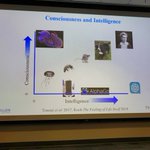
Christof Koch's intelligence v.s. consciousness axis picture came to mind


We often assume a smart enough AI will eventually become conscious. But a new theoretical framework argues consciousness evolved specifically for biological self-preservation—meaning today's highly capable AI lacks the survival stakes to ever truly "wake… dlvr.it/TVcCrX

2
72
Davy Deng retweeted

A recent breakthrough published in Nature Neuroscience fundamentally changes our understanding of human biology, revealing that the brain develops as two separate structures rather than a single unified organ. For decades, the standard scientific consensus held that all regions of the brain originated from a single population of neural stem cells that slowly diversified. Researchers have now demonstrated that the brain is actually a composite structure built from two entirely distinct cellular lineages that emerge simultaneously during the earliest stages of embryonic development.
One specific group of progenitor cells is exclusively programmed to form the forebrain and midbrain, the neural regions responsible for higher-level cognitive processes, memory, and complex thought. A completely separate and parallel group of cells is hardwired to construct the hindbrain, which manages vital, life-sustaining autonomic functions like breathing and heart rate. These two populations possess completely different epigenetic landscapes, meaning their genetic accessibility is locked into their respective developmental paths from the very beginning and strongly resists outside signals to change course.
This dual-origin system represents an ancient evolutionary blueprint that has been conserved across multiple species for roughly 550 million years. Mapping this fundamental division provides crucial insights for the future of regenerative medicine and neurological research. By understanding the highly specific cellular origins of the hindbrain, scientists can now accurately recreate these precise tissues in the laboratory, paving the way for targeted therapies addressing life-threatening neurological disorders and specific pediatric brain cancers.
Research source: Two parallel neural ectoderm progenitors contribute to the developing brain, Nature Neuroscience (2026). DOI: 10.1038/s41593-026-02433-7

As a start, I just posted a two-part blog post on why I think a puny worm can fast track whole human brain emulation. If you have watched my TED talk on this topic, this is a more thorough, scientifically detailed (still accessible) version of that talk! davyneuro.substack.com/p/a-3…


I FINALLY started a substack (also @davyneuro)!!! 🤓 🎉🧠
Please consider subscribing and following if you'd like to be informed on topics such as neuroscience 🧪 , neuro-engineering 🦾 , whole brain emulation ⁉️ , neuroAI 🤖 , consciousness ⚗️ etc..