
PhD student @KU_Leuven in neurosymbolic AI and concept-based learning https://nitter.cf/t.co/0KA8r70bYP
Joined March 2015
- Tweets34
- Following130
- Followers55
- Likes48


David Debot retweeted

Our tutorial on Probabilistic Concept Bottleneck Models at @UncertaintyInAI is live!
With @giuseppe__marra and @debot_david, we covered:
1) Interpretability theory based on the Standard Interpretable Model (arxiv.org/abs/2606.12289)
2) SotA concept encoders & open problems
3) SotA concept-based task predictions & open problems
4) PyTorch Concepts (pytorch-concepts.readthedocs…), a PyTorch library to easily implement structurally aligned, interpretable, and causally robust deep learning models
More details here:
interpretabledeeplearning.gi…
youtube.com/watch?v=mi8fX21G…
youtube.com/watch?v=0cu1R7nG…

Really enjoyed giving my first tutorial (Probabilistic Concept Bottleneck Models)!
Slides and recording (soon) available here: interpretabledeeplearning.gi…
@UncertaintyInAI

Presenting a general theory of interpretability and frontier interpretable models with @giuseppe__marra and @debot_david
@UncertaintyInAI

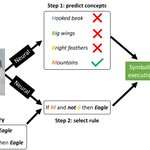
🚨 Can we trust that the “concepts” in concept-based models actually mean what we think they mean?
Our new work, Prototype-Grounded Concept Models (PGCMs), makes concept alignment directly inspectable and correctable. #ICML26
Paper: arxiv.org/abs/2604.16076 🧵 (1/5)
Want interpretable models whose concepts can actually be verified?
Then come chat with us at ICML poster session 8 (Hall A, Thursday 17:00 to 18:45)! (4/5)
1
1
83
Our accepted ICML paper on prototype-based Concept Bottleneck Models is now on arXiv! We introduce Prototype-Grounded Concept Models (PGCMs), enabling verifiable concept alignment through interpretable visual prototypes 🔍🧠. Check it out at: arxiv.org/abs/2604.16076
David Debot retweeted

If you care about enforcing constraints over time without breaking your computational resources, then read our new blog post over at @aihuborg!
It focuses on showing how our neurosymbolic Markov models beat the SOTA in out-of-distribution generalisation and so much more.


Relational neurosymbolic Markov models ift.tt/bJTtBEY

David Debot retweeted

1/5 Tomorrow I’ll talk about the 𝐩𝐫𝐨𝐛𝐚𝐛𝐢𝐥𝐢𝐬𝐭𝐢𝐜 𝐩𝐫𝐨𝐠𝐫𝐚𝐦𝐦𝐢𝐧𝐠 𝐬𝐞𝐦𝐚𝐧𝐭𝐢𝐜𝐬 𝐨𝐟 𝐝𝐢𝐟𝐟𝐞𝐫𝐞𝐧𝐭𝐢𝐚𝐛𝐥𝐞 𝐩𝐫𝐨𝐯𝐢𝐧𝐠 at #NeurIPS San Diego (poster #614 11am).
📃 openreview.net/pdf?id=rEUbDh…
📺 youtube.com/watch?v=sOTXBsmG…
David Debot retweeted
Just under 10 days left to submit your latest endeavours in ⚡#tractable⚡ probabilistic models❗
Join us at TPM @auai.org #UAI2025 and show how to build #neurosymbolic / #probabilistic AI that is both fast and trustworthy!


David Debot retweeted
We developed a library to make logical reasoning embarrassingly parallel on the GPU.
For those at ICLR 🇸🇬: you can get the juicy details tomorrow (poster #414 at 15:00). Hope to see you there!

David Debot retweeted

1/n
LLMs w/ T-CoT steps can solve reasoning problems in P/Poly. But they are not learning to reason - mimicking form, not logic. Are LRMs like DeepSeek R1 different?
We formalize this in our paper: Have LLMs Learned to Reason? A Characterization via 3-SAT Phase Transition 🧵👇

David Debot retweeted
We all know backpropagation can calculate gradients, but it can do much more than that!
Come to my #AAAI2025 oral tomorrow (11:45, Room 119B) to learn more.
David Debot retweeted

🔥 Can AI reason over time while following logical rules in relational domains? We will present Relational Neurosymbolic Markov Models (NeSy-MMs) next week at #AAAI2025! 🎉
📜 Paper: arxiv.org/pdf/2412.13023
💻 Code: github.com/ML-KULeuven/nesy-…
🧵⬇️

🚀 Do you care about safe AI? Do you want RL agents that are both smart & trustworthy?
At #AAAI2025, we present our demo for neurosymbolic RL—combining deep learning with probabilistic logic shields for safer, interpretable AI in complex environments. 🏰🔥
🧵👇
(1/8)
Open-source & easy to use!
🔷 Code: github.com/ML-KULeuven/nesy-…
🔷 Based on MiniHack & Stable Baselines3
🔷 Define new shields in just a few lines of code!
🚀 Let’s make RL safer & smarter, together!
(7/8)
1
71
See you at #AAAI2025!
Site: dtai.cs.kuleuven.be/projects…
Video: youtu.be/3uLVxwlcSQc?si=KbNx…
@debot_david, @GabVenturato, @giuseppe__marra, @lucderaedt
#ReinforcementLearning #AI #MachineLearning #NeurosymbolicAI
(8/8)
96