

Student of life and living things 🌏. 🇦🇺
Canberra
Joined December 2007
- Tweets1.4K
- Following1.4K
- Followers252
- Likes7.5K



dnatheist retweeted

The Marshmallow Test – Why Civilizations Live and Die on Patience
At Stanford, around 1970, a psychologist put a marshmallow in front of a four-year-old and offered a deal: eat it now, or wait fifteen minutes and get two. Then he left the room. Years later, the children who waited did better at school, at work, and in life. Everyone took the lesson to be about children. The real lesson is about civilizations.
1. The test. Watch the videos and you will laugh. Children cover their eyes, sing to themselves, kick the table, and lick the marshmallow without biting it. Some eat it before the door closes. You know these people – some of them are your colleagues, and one of them is you at 11 pm in front of the fridge.
2. The twist. In 2012, researchers ran the test again with one change. First, an adult promised the children better crayons and came back with nothing. Then came the marshmallow, and those children barely waited. Children whose promise had been kept waited four times longer. Patience is not only character. It is trust: you wait only if you believe the second marshmallow will really come.
3. Economists call this time preference: how much you value now over later. The interest rate is simply the price of waiting. Every civilization is a marshmallow test at scale. You plant a tree whose shade you will never sit in, you build a cathedral over three generations, you save for children you have not yet had.
4. The broken promise. Communism was the crayon experiment run on a whole nation. In Poland, money lost its value, savings vanished, and the state could take what you built. So people learned to eat now. If something appeared in the shop, you bought it, whether you needed it or not. It wasn’t because Poles were impatient. It was because they had learned the adult never comes back.
5. The four-year child. A politician has four years, and the bill arrives after he leaves. Public debt is a simple trick: we eat the marshmallow, and our children pay for both.
6. Money that rots. Inflation tells you that waiting is for fools. A decade of near-zero interest rates told every saver in Europe that the second marshmallow had been cancelled. So we got "buy now, pay later", credit for holidays, and an economy built around eating it now. Then the phone finishes the job: one-click buying, endless scrolling, a new reward every few seconds. It’s a machine designed to make sure you never have to wait for anything again.
7. The lesson. Civilization is not having more marshmallows. It is the ability to wait for them, and that ability rests on trust: stable money, safe property, promises kept. Destroy that trust and you get a nation of four-year-olds eating sweets, which is exactly what you then complain about.
The West blames its people for living for today. But it was never the children who failed the test. It was the adults who broke the promise – and then sold them more marshmallows on credit.


"Socialism heroically fights problems unknown in any other system."
Yes – this guy was one of our most brilliant intellectuals. Meaning a guy producing real understanding – not vapid commentary dressed up as depth. One sentence of his explains more than a shelf of political science.
1. The law. First the system creates the problem. Then it creates an office to fight the problem. Then it blames the people for the problem. Then it asks for more power to fight harder. Every step looks like a solution, and the whole thing is a trap.
2. The proof. In Poland we lived under these absurdities for 45 years. The state fixed the price of meat, so meat disappeared. Then came ration cards for meat. Then people sold meat privately at its real price, so the state made that a crime called "speculation" and set up special bodies to hunt the speculators. It was a problem unknown in any other system, and the state fought it heroically.
3. The queue. We got to know the machine deeply, from the inside, standing in line. You queued first and asked what was being sold later. People walked home wearing toilet paper rolls on a string around their necks, like trophies. And we learned to laugh about it. A man walks into a shop: "No meat?" "No, sir, here we have no fish. No meat is across the street."
4. The merriest barrack. We were called the merriest barrack in the communist camp. Other barracks were grimmer. We laughed at the queues, at the Party, and at ourselves, with jokes whispered at work and told loudly at weddings. The system had the army, the police and the press. We had the punchline.
5. The joke as knowledge. The laughter was not an escape. It was understanding. A good joke is a model of the system that fits into ten seconds. "They pretend to pay us, and we pretend to work" is a whole economics textbook in one line. The communists could censor newspapers, but they could never censor the joke.
6. The man. Stefan Kisielewski, known as Kisiel – the name of a sweet fruit jelly. He was a composer and a columnist, and readers opened the Catholic weekly from the last page, where his column was. He was the only public figure in communist Poland to openly praise capitalism from the parliament rostrum. In 1968 he called the regime a dictatorship of dimwits. Days later, "unknown attackers" beat him in the street. The tongue out was his method: a regime that demands to be taken seriously fears nothing more than a man who laughs at it – and is right.
7. The West today. Germany shut down its nuclear plants, then fought an energy crisis. Berlin capped rents, then fought a shortage of flats. Brussels writes rules that strangle industry, then launches plans to save European competitiveness. Each time, the problem is new to them. It was not new to us.
We laughed because we knew. The West does not laugh yet, because it still believes. The jokes come later – right after the queues.





dnatheist retweeted

This teacher-turned-cognitive scientist shared a disturbing reality that left the room stunned.
“Our kids are LESS cognitively capable than we were at their age.”
Every previous generation outperformed its parents since we began recording in the late 1800s.
So, what happened?
Screens.
Dr. Jared Horvath explained:
“Gen Z is the first generation in modern history to underperform us on basically every cognitive measure we have, from basic attention to memory, to literacy, to numeracy, to executive functioning, to EVEN GENERAL IQ, even though they go to more school than we did.”
“So why? … The answer appears to be the tools we are using within schools to drive that learning (screens).”
“If you look at the data, once countries adopt digital technology widely in schools, performance goes down significantly, to the point where kids who use computers about five hours per day in school for learning purposes will score over two-thirds of a standard deviation LESS than kids who rarely or never touch tech at school. And that’s across 80 countries.”
But screens aren’t just decimating learning and making new generations less intelligent than the ones before them.
They’re doing something far worse. And when you take a closer look, it isn’t pretty. 🧵
dnatheist retweeted

Everyone is missing what this study actually says to parents.
The graph shows two paths to the same destination. The yellow line (early specialization) gets there faster in the early years. The blue line (multi-disciplinary) gets there slower but breaks through to world-class.
The key insight: individuals who perform best at a young age are usually not the same people who later reach the world-class level.
This came from 34,839 top performers across four domains: Nobel laureates, Olympic medalists, elite chess players, and renowned classical composers.
The researchers found three consistent patterns.
First, the best kids and the best adults are mostly different people.
Second, future world-class performers showed gradual development and weren’t among the best in their age group.
Third, they didn’t specialize early but engaged in multiple disciplines.
The research team proposes three mechanisms that explain why breadth beats depth.
The search-and-match hypothesis suggests that exposure to multiple disciplines increases the likelihood of eventually finding the best personal fit.
The enhanced-learning-capital hypothesis proposes that learning in diverse areas strengthens overall learning capacity, making it easier to continue improving later at the highest level within a chosen field.
The limited-risks hypothesis argues that engaging in multiple disciplines reduces the chance of setbacks such as burnout, unhealthy work-rest imbalances, loss of motivation, or physical injury.
That third one matters enormously. Specialized athletes are 2.25 times more likely to get overuse injuries than multi-sport athletes. The American Academy of Pediatrics, AOSSM, and American Medical Society for Sports Medicine all recommend against early specialization before age 15 for most sports.
The lead researcher, Arne Güllich from RPTU University Kaiserslautern-Landau, puts it bluntly: “Don’t specialize in just one discipline too early. Encourage young people by providing opportunities to pursue different areas of interest, and support development in two or three disciplines.”
The two or three disciplines don’t need to be related. Language and mathematics. Philosophy and geography. The researchers cite Einstein pursuing physics and violin.
The connection between domains seems to build cognitive infrastructure that pure depth cannot replicate.
Here’s what makes this uncomfortable for parents. The early specialization path produces visible results faster. Your kid looks better at age 10. They make the travel team. They win the tournament. The graphs cross and diverge later, around peak performance age, when the multi-disciplinary kids start pulling ahead.
The entire youth talent ecosystem runs on selecting early performers and accelerating them. Travel leagues, elite academies, showcase tournaments. Every incentive pushes toward specialization.
But the research shows this system is optimizing for the wrong metric.
It produces great 14-year-olds, not great 24-year-olds.
The practical takeaway: let your kid play three sports until at least middle school.
Let them quit the piano and try drums. Let them be mediocre at several things instead of great at one thing. The data says this approach produces both more elite performers and fewer burnout casualties.
The hardest part is watching other kids pass yours on the yellow line while trusting the blue line catches up.


dnatheist retweeted

For NSW residents only.
There is a petition to stop knee-jerk gun policy designed only to give cover to the failures of the State and Federal government.
It is an official parliamentary petition.
Please consider signing it.
parliament.nsw.gov.au/lc/Pag…
dnatheist retweeted

Share this message to the Prime Minister. @AlboMP
If you won’t use the powers you already have — don’t ask for more.
Australians have had enough.


dnatheist retweeted

The sentence that stopped millions mid-scroll:“
It was never about feeding the world. It was about controlling the seed.”
Niklas Gustafson just dropped the clearest, most chilling explanation of how we lost control of our food—and people can’t stop sharing it.
This is what he shows, step by step:
- 1980: Corporations win the right to patent living seeds
- They slightly modify what nature already created → instantly own it forever
- Farmers who saved seed for 10,000 years are suddenly criminals if they replant their own harvest
- Today just 4 companies control >60% of all commercial seeds worldwide (some vegetable seeds: 95%+)
- Their seeds are designed to survive only their chemicals → you buy both, every single year
- Break the contract? They sue you. Plant something else? The crop dies anyway.
Result:
Independent farmers turned into customers with no way out.
Ancient seed diversity collapsing.
Soil degrading at record speed.
Food moving from fields to factories.
Gustafson ends with the line that hits hardest:
“This wasn’t about helping farmers.
It was about replacing them.”
1 minute 17 seconds that will change how you see every grocery aisle.
Watch with sound on.
Share if it makes your blood boil the way it should.
Who else had no idea this happened so quietly?
Video below — turn volume up

dnatheist retweeted

This is the reason why the public system is failing.
The NBN was a total waste of money.
Taxpayer money. Your money.
Sinking an extra 3.8 billion of your dollars into a failed project is insanity.
It's called "sunken cost fallacy."
They're blatantly wasting money because they don't have to work for it, so they're making decisions based on emotions and politics.
All government departments have this issue at their core.
They arnt relying on providing value with the threat of going out of business.
They're relying on providing value with no risk.
Why work hard for your money if you don't have to do anything to get it?
Why try and spend it wisely?
The government is too large and needs to be shrunk.
The free market has won. Elon Musk's starlink is better than the NBN.
They are wasting your money.

dnatheist retweeted

In a new interview, Michael @Saylor was asked the question by a member of the audience, “Bitcoin reminds me of tulips. What if Bitcoin disappeared tomorrow? How many lives would actually change?”
Listen to Michael’s response 👇

dnatheist retweeted

In 1974, author Ray Bradbury was asked, “What is space travel going to do for man?” In response, he gave the most mystical, mind-blowing, and strangely moving answer one could have imagined.




dnatheist retweeted
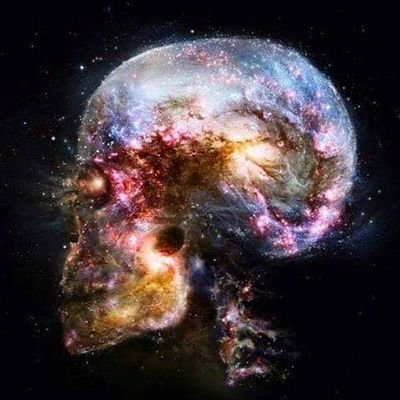
Earth's rotation caught by a stabilized camera 📸
nitter.cf/i/status/1712461509325…
dnatheist retweeted
This one minted out fast. So let's give one away.
To enter: Like, repost, and follow us and @ColdFusion_TV
Good luck!
#Cardano

dnatheist retweeted
How can we have a proper debate when we no longer speak the same language?
I was about to start work on this commission, when in came an email from Twitter. They’d received a complaint that the following tweet violated their standards.
“Sex is not the same as gender.” But it’s not your gender that gives you the physique to tower over woman athletes & break their swimming records. It’s your sex. It’s not your undressed gender that upsets women in changing rooms. It’s your sex. You can’t eat your cake & have it.
Twitter sensibly over-ruled the complaint and cleared me of the proscribed sins that they helpfully listed for me:
Violent speech, violent and hateful entities, child sexual exploitation, abuse/harassment, hateful conduct, perpetrators of violent attacks, suicide, sensitive media, illegal, private information, non-consensual nudity, account compromise, plus various legal technicalities.
I’m sure the complainant was sincere. And that’s my point. A certain type of activist has a level of paranoid hypersensitivity that almost literally warps their hearing. You can say ,“I disagree with you for the following reasons.” But all they actually hear is “Hate hate hate!” So instead of putting a counter-argument (which I would be interested to hear), they resort to censorship. All too often it goes further, and they boil over in virulent abuse: “Transphobe! TERF!”
At least the above tweet was partisan. But so hair-trigger is the hypersensitivity, a mere invitation to discuss something is enough to set it off.
In 2015, Rachel Dolezal, a white chapter president of NAACP, was vilified for identifying as Black. Some men choose to identify as women, and some women choose to identify as men. You will be vilified if you deny that they literally are what they identify as. Discuss.
That 2021 tweet caused the American Humanist Association to withdraw my title as 1996 Humanist of the Year. A 25-year retrospective swipe, which cost them the loss of several major donors. Once again, I have no doubt they were sincere.
On July 26, I interviewed Helen Joyce about her book Trans. The interview is being very well received on @YouTube. As it should be, for Joyce is extremely well-informed in her subject and she spoke cogently, soberly, reasonably.
But one of YouTube’s in-house judges heard only hate. And tried to censor the interview.
Short of an outright ban, YouTube has a variety of punishments at its disposal. In this case we got a minor slap on the wrist, a restriction on our video’s licence to advertise. But the real point is, yet again, the ludicrous hypersensitivity of the complainant. Those warped ears heard not reasonable argument deserving a reply, but “hateful and derogatory content”, and “hate or harassment towards individuals or groups”.
Obviously I can’t disprove that here. The interview runs to more than 10,000 words. But judge for yourself, it’s still up on YouTube. I earnestly challenge readers to search diligently for literally anything that a reasonable speaker of the English language could fairly call hateful. Enter it, labelled “Challenge”, in the comments section under the video, and I promise to respond.
I just said “a reasonable speaker of the English language”, and maybe here lies the key: language. If we want a fruitful argument, we’d better speak the same language. In today’s overheated sparring over sex and gender, both sides may appear to be speaking English, but is it the same English? Does “hate” mean to you what “hate” means to everyone else?
Or there’s “violence”. The Oxford Dictionary defines it as “the deliberate exercise of physical force against a person, property, etc”, and that is certainly the meaning I understand. Advocates of free speech often invoke, as a sensible exception, “incitement to violence”, where physical force is normally implied. But that sensible exception would mean something very different if you redefine “violence” to include the non-physical. If someone calls you “she” when you prefer “they”, I might see it as a mild discourtesy. But if you see it as a “violent” threat to your very existence, then our interpretations of “incitement to violence” — and hence of freedom of speech — are going to diverge sharply.
As a textbook example of incitement to real violence, you could hardly do better than “Sarah Jane” Baker’s speech at London Pride this year, where she told the cheering crowd: “If you see a TERF, punch them in the fucking face”. Or Sky News (January 23) has a picture of two SNP politicians grinning in front of a large, colourful sign depicting a guillotine and the slogan “DECAPITATE TERFS”. They claimed they didn’t know the sign was there, and I sympathise. You shouldn’t be blamed for the company you keep. No doubt I shall be labelled “right-wing” for writing this article — and that’s the most unkindest cut of all.
The Guardian (February 14, 2020) reported that police officers turned up at Harry Miller’s workplace to warn him about his allegedly “transphobic” tweets, such as the obviously satirical, “I was assigned Mammal at Birth, but my orientation is Fish. Don’t mis-species me.” One of them told Miller that he had not committed a crime, but his tweeting “was being recorded as a hate incident”.
Well, if Miller’s light-hearted satire is a hate incident, why not go after Monty Python, Peter Cook and Dudley Moore, Rowan Atkinson, Private Eye’s royal romances of Sylvie Krin, the early novels of Evelyn Waugh, Lady Addle Remembers, Tom Lehrer, even the benign PG Wodehouse? Satire is satire. That’s what satirists do, they get good-natured laughs and perform a valuable service to society.
“Assigned Mammal at Birth” satirises the trans-speak evasion of the biological fact that our sex is determined at conception by an X or a Y sperm. What I didn’t know, and learned from Joyce in our interview, is that small children are being taught, using a series of colourful little books and videos, that their “assigned” sex is just a doctor’s best guess, looking at them when they were born.
A provisional guess, pending the child’s own decision (which is what really counts).
Joyce’s comment is: “And what are you meant to make of this if you’re eight? First off, that you’re very boring if you simply go along with what you were assigned at birth”. Her book quotes the boast of a mother of eight children, “without a single boring cis child in the whole bunch!” I recently received a moving letter from a highly intelligent American 12-year-old, worried that at her school it was not cool to retain your assigned gender. Yesterday I chanced to meet an American teacher whose school rules compel her to go along with a child’s declared gender and not tell the parents.
Miller’s case came up before Mr Justice Knowles, who thankfully didn’t mince words when it came to freedom of speech: “In this country we have never had a Cheka, a Gestapo or a Stasi. We have never lived in an Orwellian society”. 1984’s Appendix lays out the principles of Newspeak, the nascent language of Orwell’s dark dystopia. Newspeak was designed to make unorthodox thoughts impossible. There would be no words to express them.
O’Brien, Big Brother’s enforcer, holds up four fingers, and tortures Winston Smith until he really believes that 2+2= 5 if the Party wills it. Is that realistic? Could political power ever make you really believe a logical contradiction? The Times (January 18) reported that “a transgender woman has denied raping two women with her penis”. If “with her penis” is not quite 2+2= 5, it’s getting close. 2+2= 4.5? Joyce’s book quotes Orwell in an epigraph: “Freedom is the freedom to say that two plus two make four. If that is granted, all else follows.” Are we approaching that point?
But shouldn’t we just indulge the harmless whims of an oppressed minority? Maybe, were it not for a strain of aggressive bossiness which insists, not so very harmlessly and not sounding very oppressed, that the rest of us must humour those whims and join in. This compulsion even has the force of law in some states. And alas, we often zip our lips in abject self-censorship because we aren’t as brave as JK Rowling, and don’t fancy becoming a target of Twittermob vitriol. No, we don’t fear Big Brother or the Stasi. We fear each other.
Originally Posted on Evening Standard
