



Moses retweeted

Five evidence-based ways to lose the dangerous belly fat (Visceral Fat)
🔸Not all body fat is equally dangerous. The fat that accumulates deep inside your abdomen, around organs such as the liver, pancreas and intestines, is called visceral fat.
🔴It is metabolically active and is associated with insulin resistance, type 2 diabetes, fatty liver, heart disease and stroke.
The good news is that you can reduce it! Here are 5 evidence-based strategies.
1/9
Moses retweeted

The Financial Times Books of the Year 2026 selection is an unusually wide-ranging reading list, spanning political economy, history, science, technology, fiction, poetry and children's literature.


Moses retweeted

1. An Introduction to Economics, by Thomas Sargent, Nobel laureate 2011.
In 2007 he gave Berkeley graduates a 335-word commencement speech: twelve lessons and nothing else. Here they are, one by one. The examples and suggested readings are mine, not his.
1) "Much of what we want isn’t feasible."
We want more services, lower taxes and less debt. Not every mix is possible. Economics asks which ones are.
My suggested reading: Robbins (1932), An Essay on the Nature and Significance of Economic Science.
Moses retweeted

This is absolutely the best explanation of the Ukraine/Russia/U.S. & Starlink/Starshield debacle I’ve heard so far
Moses retweeted

This is f*cking insane. The historian behind Sapiens, Yuval Noah Harari, just showed Microsoft's AI chief where AI is really heading:
"The market says we will create gods and they will be our slaves. If they are really gods, they will not remain your slaves"
In this free 66-minute conversation, they cover superintelligence, AI consciousness, abundance, who stays in control and why Harari fears we won't understand our own world in 10 to 20 years
Chatbots → Agents → Superintelligence → Systems We Can't Understand → Gods We Can't Control
I've seen $800 courses that don't cover what they say in the first 6 minutes
Bookmark and watch the conversation
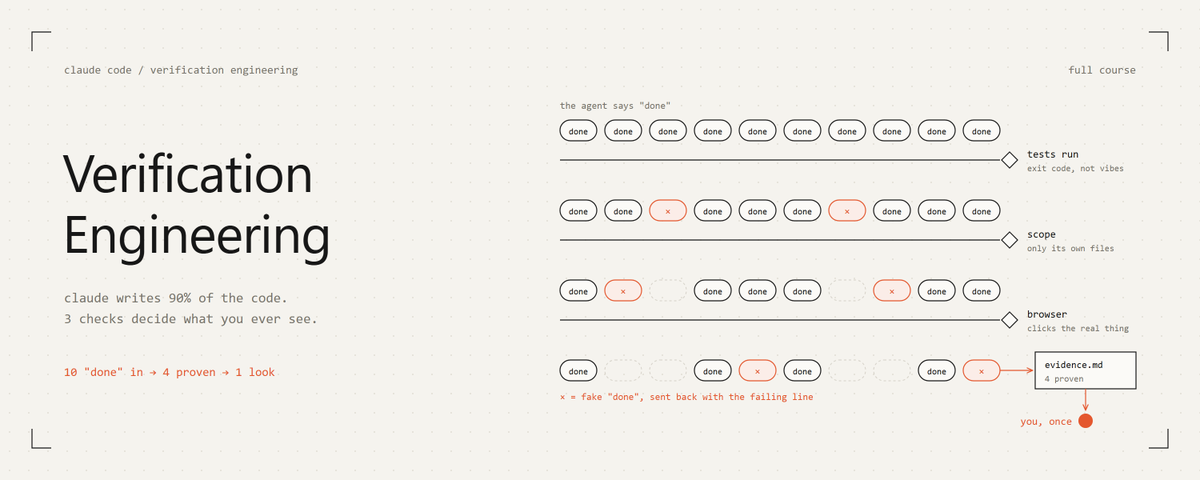
Then read how to stay in control of what your agents ship: Verification Engineering ↓



Moses retweeted

Out now! Jenny Van Leeuwen Harrington ‘06 (Gilman Hill Asset Management) and Jennifer Wallace ‘94 (Summit Street Capital Management) discuss “Investment Wisdom For Our Friends And Loved Ones,” 25 essays for those who keep asking where to start. business.columbia.edu/heilbr…
Moses retweeted

1 DAY TO GO! ⏳ The 3rd Annual Nairobi Health Scientific Conference opens TOMORROW at Emara Ole Sereni. Follow #NBOHSC2026 for live updates. Last call to register 👉 bit.ly/4crcNGM
#OneHealth #UHC
@SilantoiSuzanne @maryamdahir @NairobiCityGov @kevinkibz @MOH_Kenya @PSofKenya @KEMRI_Wellcome @cscfkenya @cfkafrica @Ciheb_Kenya @SidianBank @Food4Education @SGHInstitute @PSKenya_ @icrhk_official @KNH_hospital @VIBRIAfrica @CBMKenya @HectaConsulting

Moses retweeted
📢 PARTNER ANNOUNCEMENT: We are delighted to welcome Roche as a Platinum Sponsor of the 3rd Annual Nairobi Health Scientific Conference. Opening TOMORROW at Emara Ole Sereni, 18–20 Nov. 👉 bit.ly/4crcNGM
#NBOHSC2026 #Roche #OneHealth #UHC
@SilantoiSuzanne @maryamdahir @NairobiCityGov @kevinkibz @MOH_Kenya @PSofKenya @KEMRI_Wellcome @cscfkenya @cfkafrica @Ciheb_Kenya @SidianBank @Food4Education @SGHInstitute @PSKenya_ @icrhk_official @KNH_hospital @VIBRIAfrica @CBMKenya @HectaConsulting

Moses retweeted
County Chief Officer, Public Health, Tom Michira Nyakaba invites you to the 3rd Nairobi Health Scientific Conference.
From our team to you: join us at NBOHSC2026! 🎉
We’ve spent months planning for the 3rd Nairobi Health Scientific Conference, and we can’t wait to welcome you.
📅 18–20 November 2026
📍 Emara Ole Sereni, Nairobi
One Health in Action: Building Resilient, Climate-Smart and Equitable Health Systems for Universal Health Coverage.
Last year, 850+ delegates joined us. This year we’re aiming for 1,000+, and we’d love you to be one of them. Come for the science, the innovation, the conversations and the connections that will shape health in Nairobi and beyond.
Bring your colleagues. Bring your questions. 🙌
hashtag#NBOHSC2026 hashtag#OneHealthInAction hashtag#UHC
4 days to go!
See you there!
@SilantoiSuzanne @maryamdahir @Michira_Nyakaba @NairobiCityGov @kevinkibz @MOH_Kenya @PSofKenya @KEMRI_Wellcome @cscfkenya @cfkafrica @Ciheb_Kenya @SidianBank @Food4Education @SGHInstitute @PSKenya_ @icrhk_official @KNH_hospital @VIBRIAfrica @CBMKenya @HectaConsulting
Moses retweeted

In this year’s Thanksgiving message, Buffett mentions three teachers from whom he received “beyond measurement costless benefits”:
Ben Graham.
Tom Murphy.
And Joe Rosenfield.
Rosenfield is a name you rarely hear.
Between 1968 and 2000, he helped grow Iowa’s Grinnell College endowment from $11 million to over $1 billion.
In June 2000, Jason Zweig profiled Rosenfield in Money magazine in an article titled “The Best Investor You’ve Never Heard Of.”
A great read…
“Buying for a short period is always going to hurt you in the end.” JR
“If you like a stock, you've got to be prepared to hold it and do nothing.” JR
“Sell is a four-letter word.” JZ
“There are too many people who are nervous Nellies and panic when a stock goes down a few percent. That's what stocks do!” JR
“There's all kinds of propaganda making people believe that impatience will pay off, but impatience is a sure way to lose money. I've always taken the long view. I've got nothing but time.” JR
“I wish we’d kept it (Intel). That was the biggest mistake we ever made.” JR
“If you find investments that you clearly understand, hold on. Since it was their long-term potential that made you buy them in the first place, you should never let a short-term disappointment spook you into selling. Patience - measured not just in years but in decades - is an investor's single most powerful
weapon.” JZ
jasonzweig.com/wp-content/up…
@jasonzweigwsj


Moses retweeted

Li Lu rarely speaks in public. When he does, I listen.
At Columbia’s Graham & Dodd event, he covered the “IPO of a god,” China’s hidden trade-off, why the global market won’t break, and the best definition of compounding I’ve heard.
My key takeaways 👇🏻

Moses retweeted
“It is a great opportunity for all of us to network, share ideas and participate in conversations that will build the One Health agenda that enables us to tackle emerging diseases across the different sectors.” 🎥
Director, Medical Services, Dr. Moses Owino invites you to the 3rd Nairobi Health Scientific Conference.
📅 18–20 November 2026
📍 Emara Ole Sereni, Nairobi
Meet participants from local and international organisations, academia, industry and practice, and take part in the conversations that will shape the One Health agenda.
Follow for more updates. 🌍
#NBOHSC2026 #OneHealth #UniversalHealthCoverage
@SilantoiSuzanne @maryamdahir @NairobiCityGov @kevinkibz @MOH_Kenya @PSofKenya @KEMRI_Wellcome @cscfkenya @cfkafrica @Ciheb_Kenya @SidianBank @Food4Education @SGHInstitute @PSKenya_ @icrhk_official @KNH_hospital @VIBRIAfrica @CBMKenya @HectaConsulting @drowino
Moses retweeted
The Odyssey. Emma. Hamlet. The Wealth of Nations. Ulysses. The Iliad.
This isn’t just a list of books I’ve read and love (though I have). They’re on the reading list for Harvard’s Humanities 10. In the @WSJ, Pamela Paul writes about the surge in demand for the class: applications are up 40% this fall, with 180 first-years competing for 90 spots.
Students read a book a week, frequently write essays, have their attendance tracked, and put their devices away during class. As classics professor David Elmer says, “I did have the sense that a lot of students feel that the culture at large is not hospitable to deep reading, deep thinking or deep engagement with writing.”
I've been writing about the question AI is forcing on universities: is higher education about information or formation? If it’s only the former, universities are competing with the machines. The students lining up for a phone-free room, the great books, and people to argue with seem to be asking for the latter.
As one student put it: “A lot of what we get out of this class is the human experience, and you can’t get that out of AI.”
So let AI keep intelligence and humans keep wisdom. This class is one way to build it.
What should colleges prioritize most in the age of AI?
Read the piece here: wsj.com/lifestyle/harvard-cl…

Moses retweeted
“We are, in part, engaged in the business of trying to invest in the lengthened shadows of the right sort of people.”
- Charlie Munger
Latest post…
mastersinvest.com/newblog/20…

Moses retweeted

Links:
1/ Alex Sloane & Matt Perelman – youtu.be/Mghlp0xzqA4
2/ Chase Koch – youtu.be/AQpqTXvyekE
3/ Ramtin Naimi – youtu.be/r95bEutZUN4
4/ Scott Malpass – youtu.be/bc4MVylXKZY
5/ Andrew Huberman – youtu.be/Ezi-nwe6LlY
Moses retweeted
Seth Klarman’s Margin of Safety was printed in a small run in 1991, never reprinted, and today a used copy will set you back somewhere between $1,500 and $3,000 – a book about never overpaying for an asset has become one of the most overpriced assets in investing, so I read it and pulled out the ideas that are worth the price.
Key takeaways in six slides 👇🏻
1/2


Moses retweeted

Charlie Munger literally explained where his fortune really started, and it was nowhere near Wall Street. It is not a genius IQ. It is not a lucky stock. It is a grandfather who bought the meat nobody else would eat.
Redlands, 2020. Munger, 96, was asked what set him on his path. His grandfather was born in extreme poverty, and as a boy he took a nickel to the butcher shop and bought the parts of the animal nobody else wanted.
That start is a bigger advantage than it sounds. The boy became a federal judge for more than three decades, and Munger said he “always lived way below his income and was able to help other people when they needed help.”
Munger named the habit with his grandfather’s own line on drinking. “Why would I take money out of my pocket and put something in my mouth that would make my head work less well?”
When Munger died in 2023, his fortune was put at about $2.6 billion. He called himself “way short of prodigy.”
Back in that talk, he gave the rule he learned from that same man. Munger’s fix came from a swimming lesson. “Swim as long as you want,” his grandfather told him, “but stay near the shore.”
The same thing runs your spending. Living right at the edge of your paycheck is swimming far from shore. You keep the gap on purpose, one subtraction and one division, and you never get caught out where you cannot stand.
His full 2020 Redlands talk is free online, and almost nobody sits through it.


Moses retweeted

Mohnish Pabrai explains how Warren Buffett borrowed about $5 billion at 0.5%, bought Japanese businesses paying roughly 8% in dividends, and watched the investment double. He found those businesses by reading a company handbook that cost less than $100.
In this 56-minute video, Pabrai walks through 30 mental models for investing, illustrated with actual decisions, missed fortunes and mistakes he’s made himself. He explains why you should be able to describe an investment to a 10-year-old, and why finding something worth buying can take years of doing seemingly unproductive work.
He tells the story of Nick Sleep, who closed his fund and put his own money into Amazon, Costco and Berkshire Hathaway. Amazon eventually became around 80% of his portfolio. Then he sold half his Amazon position to buy another business. Pabrai explains why that decision is worth remembering the next time you feel tempted to “rebalance” a winner.
There’s also a much less comfortable story: the financial crisis, when the assets Pabrai managed fell from roughly $600 million to $200 million. He describes the exercise that helped him stay focused on what his businesses were worth while their market prices collapsed.
Then comes IPSCO: a $40 stock with $15 per share in cash, no debt, and another $30 in earnings expected over the next two years. Pabrai explains why he bought it, how he thought about the uncertainty, and what happened when a takeover offer arrived at $160. Save this for tonight.
Especially if you’re constantly searching for the next investment but have never really thought through what would make you sell the ones you already own.