

I’m listening to every Founders podcast episode in order and sharing highlights. I made an ML analysis of every gong hit on TBPN. Defense equity analyst by day.
New York, NY
Joined October 2025
- Tweets621
- Following103
- Followers417
- Likes3.4K








The crowd is your warning sign:
"Seek instant gratification or the elusive promise of it, and chances are you will find a crowd there ahead of you."
- Jeff Bezos, Founders #282
The man who built the Hoover Dam, Henry Kaiser, agrees. He stopped fighting a dozen bidders over small jobs and went after projects so big that almost nobody else could bid on them. To loosely quote Senra, "the harder something is, the less competition." Founders #66. Top ~20 subject for me. If you are not yet sold, read his Wikipedia. It's insane.
The best ideas look obvious only in hindsight:
Letting customers post reviews on Amazon's own product pages seems obvious now. Back then, vendors asked if Amazon understood what business it was in: "You make money when you sell things. Why would you allow negative reviews on your website, they said?"
Bezos saw it differently: "Though negative reviews cost us some sales in the short-term, helping customers make better purchase decisions ultimately pays off for the company." I believe Bezos's foresight came from his singular focus on long-term customer value. (36:00)
The most powerful ideas empower others:
"The most radical and transformative of inventions are often those that empower others to unleash their creativity to pursue their dreams." (53:00)
Care enough, and those before you will help:
In 2001, Costco founder Jim Sinegal met Bezos for coffee and walked Bezos through the Costco model. Sinegal's circle thought he was crazy for teaching everything he knew to a future competitor.
Sinegal, who was mentored by his former boss Sol Price (founder of FedMart/Price Club), saw it differently: "I've always had the opinion that we have shamelessly stolen any good ideas." After that meeting, Bezos adopted Costco's relentless low-price model, which fed into what became the Amazon flywheel. (29:00)
Start from the end goal, not your current skills:
"The skills forward approach says, we're really good at X. What else can we do with X?... Eventually, the existing skills will become outmoded. Working backward from customer [end goal] needs often demands that we acquire new competencies and exercise new muscles, never mind how uncomfortable and awkward feeling those first steps might be." (49:00)
Underestimated scope kills high standards:
A friend of Bezos hired a handstand coach. Most people expect to master a handstand in about 2 weeks. "The reality is that it takes about 6 months of daily practice. If you think you should be able to do it in 2 weeks, you're just going to end up quitting." Love this practical advice. It's great to remind yourself of this before getting into anything new. (1:02:00)
Painting:
De parabel der blinden, Pieter Bruegel the Elder, 1568

1
11
414
Before you add another option, ask what Steve Jobs asked about two iPad keyboards:
"We only need one of these, right?"
- Steve Jobs, Founders #281
Let the work speak for itself:
Customers need the product to speak for itself. So Jobs made anyone pitching him skip the explanation and just show him the demo. (17:00)
Even the greats rehearse:
I was surprised that Jobs spent weeks perfecting his keynotes word for word. Yet the end result was remarkably simple, which shouldn't be a surprise given he designed his products the same way. (20:00)
Every touchpoint counts:
Every customer interaction can strengthen or weaken your brand, right down to the charge on their bill. (25:00)
Don't be a seagull manager:
That's Ken Kocienda's term (he wrote Creative Selection, the book this episode covers) for the executive who swoops in, squawks, and flies away, leaving the team to clean up the mess. Jobs was the opposite, as he made time to see the demos, ask for specific changes, and come back to see what changed. (35:00)
Art by Dan Gurney, 2000

1
5
169
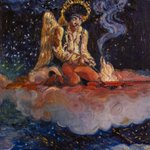
We all start somewhere:
"My first gig was at an armory... we earned $0.35 apiece and three hamburgers."
- Jimi Hendrix, Founders #280
Do whatever it takes to get in the room with the best:
Before performing for half a million people, Hendrix was determined to learn from the best guitarist, who was in Nashville at the time. He slept in an unfinished building with no floor or roof. "In Nashville, everybody knows how to play guitar. This is where I really learned how to play." (22:00)
Hendrix on perseverance:
"Most people give up at this point, but it's best not to. Just keep on, just keep on. Sometimes you're going to be so frustrated that you'll hate the guitar, but all of this is just part of learning." (16:00)
Hendrix on why you might as well live on your own terms:
"Everybody has their own ways. They can do exactly what they want. When it's time for you to die, you've got to do that all by yourself. Nobody is going to help you." (40:00)
Painting by Joni Mitchell (yes, the musician)

1
5
239
Advice from a man who sold his company to Buffett:
"Commit yourself to be the best, define what that means and focus on the head of that pin like no one in your industry."
- Barnett Helzberg, Founders #279
Control what you can:
Helzberg's father never complained about his circumstances while raising his family during the Great Depression. Barnett saw the same habit in other successful people: "Those folks are never victims. They take what comes and handle the situation. The rest is a waste of time." (25:00)
Focus means passing on good opportunities:
"Do not underestimate the incredible amount of mental discipline it takes to focus yourself and your teammates. Wonderful alternatives and seductive opportunities abound and temptations to go in multiple directions are unlimited." (28:00)
The First Ascent of the Matterhorn, Gustave Doré, ~1865

6
213
Your todo list might be an excuse:
"The problem is if your entire organization is always solving the second, third or fourth most important thing, you never solve the first."
- Keith Rabois, Founders #278
How Thiel ran PayPal:
"The best thing I did as a manager of PayPal was to make every person in the company responsible for doing just one thing. Every employee's one thing was unique. And everyone knew I would evaluate him only on that one thing." (47:00)
Look for what the crowd is missing:
While building PayPal during the dot-com bubble, Thiel saw Nietzsche's point about madness in groups play out in Silicon Valley: "If you can identify a delusional popular belief, you can find what lies hidden behind it, the contrarian truth." (10:00)
Office in a Small City, Edward Hopper, 1953

6
267
The details no one notices make the difference:
"Relentlessness wins because in the aggregate, unseen details become visible."
- Paul Graham, Founders #277
The same centuries-old lesson from da Vinci:
For Ginevra de' Benci (1474-1478), he gave every leaf his attention, whether anyone would look closely or not. The composition of those minor details stops you in your tracks. (18:00)
Also, it's the only painting by da Vinci permanently in the US. It's free to visit in DC.
Expect to throw some work away:
"It's rare to get things right the first time. Experts expect to throw away some early work. They plan for plans to change."
Graham connects this to sketching: you learn by making things and changing them. Throwing away an early version takes confidence that you can make another.
"Mistakes are natural. Instead of treating them as disasters, make them easy to acknowledge and easy to fix." (43:00)
Seek timelessness:
"If you can make something that appeals to people today and would also have appealed to people in the year 1500, there's a good chance that it will appeal to people in the year 2500."
Graham believes that if something is ugly, theres a better solution waiting to be found. Trying to make it timeless pushes you to keep looking. (41:00)

6
210
Easy ideas are the most competitive:
"If you pick an ambitious idea, you'll have less competition because everyone else would have been frightened off by the challenges involved." (28:00)
- Paul Graham, Founders #276
Stop waiting for your purpose to find you:
"Always produce" will discover your life's work the way water, with the aid of gravity, finds the hole in your roof.
- Paul Graham, Founders #275
What are you producing this week?
Graham says that if you have a day job and plan to become a novelist, you must put pen to paper. No matter how bad the writing is, producing keeps the dream from becoming a substitute for doing the work. (6:00)
Admitting you're unhappy is progress:
"It's hard to find work you love. It must be, if so few do. So don't underestimate this task. And don't feel bad if you haven't succeeded yet. In fact, if you admit to yourself that you're discontented, you're a step ahead of most people who are still in denial." (5:00)
Be relentlessly resourceful:
Graham distilled a good startup founder into those two words.
The opposite: "To be hapless is to be battered by circumstances, to let the world have its way with you, instead of you having your way with the world." (31:00)
A strong will needs strong discipline:
"The stronger your will, the less anyone will be able to argue with you except yourself, and someone has to argue with you, because everyone has base impulses." (36:00)
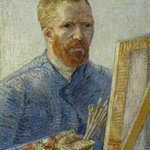
Self-Portrait as a Painter (1887–1888) - Van Gogh

4
9
273
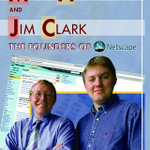
Jim Clark's test for who belongs on your team:
"The chicken is interested. The pig is committed. If you're going to do anything worth doing, you need a lot of pigs."
Founders #274
He founded Silicon Graphics and Netscape after the age of 38:
"I was 38 years old. I had just been fired. My second wife had just left me. I had somehow fucked up. I developed this maniacal passion for wanting to achieve something." Your dead end does not have to be permanent. (13:00)
Treat the existing world as one possible arrangement:
"Once we admit that there is room for newness, that there are vastly more conceivable possibilities than realized outcomes, we must confront the fact that there is no special logic behind the world we inhabit, no particular justification for why things are the way they are." (49:00)


8
179
The job is NEVER finished:
"I'm at the gym at the same time after losing 50 games as I am after winning a championship. It doesn't change for me."
- Kobe Bryant, Founders #273
He took tap dancing lessons for an entire summer for an edge:
Kobe wanted stronger ankles. His research led him to tap dancing, which could also improve his foot speed and rhythm. He benefited from it throughout his career. Many advantages come from outside your field. (10:00)
Be willing to look bad while you learn new things:
"I wasn't scared of looking bad or being embarrassed. I always kept the end result, the long game in my mind." (4:00)
Stick with what works, even when it's unpopular:
"Over the years, my routine might have changed some, but my philosophy never did. If something had worked for other greats before you and if something is working for you, why change it up and embrace some new fad?" (8:00)
Master what your competitors neglect:
"It's weird, actually. Fundamentals aren't really fundamentals anymore. A lot of the players don't understand the game or the importance of footwork, spacing, et cetera. It's to the point where if you know the basics, you have an advantage over the majority of players." (24:00)

Stop collecting highlights:
"Don't look at what I did, but how I did it, the how, and then you can transfer that over to any profession and any discipline."
- Kobe Bryant, Founders #272
Study the greats until they become your teachers:
Kobe was still in high school breaking down games from Magic, Jordan, and other NBA goats. He studied their moves and added them to his game. His closet at home was full of Jordan VHS tapes, like a librarian with books. (14:00)
This effort paid off:
"What you get from me is from him. I don't get 5 championships without him because he guided me so much and gave me so much great advice." (25:00)
Replace 'players' with your occupation:
Great players find simple ways to do complicated things. Kobe = this x maximum effort (37:00)
We miss u mamba <3
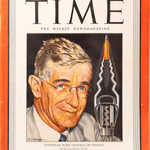
Face what's changing before it forces you to:
"What is the sane attitude of a scientist or a layman? Absence of wishful thinking, no emulation of the ostrich."
- Vannevar Bush, Founders #271
Expect anxiety. Learn how to keep going:
Bush usually channeled his nervous energy into ceaseless activity, but unpredictable bouts of anxiety persisted through his prime years. Success did not eliminate them. Find ways to lessen the effect so you can work through it without giving up. (23:00)
Make your contribution worth the space you take up:
Bush's sons remembered a phrase their father used: "Justify the space you occupy." Treat your contribution as a personal responsibility. (24:00)
Take recovery as seriously as work:
Bush believed in the restorative effect of hobbies and pursued them with the same intensity he brought to his professional life. (24:00)
Don't mistake how it's always been for how it has to be:
"It is pleasant to turn to situations where conservatism or lethargy was overcome by far-seeing, energetic individuals."
- Vannevar Bush, the General of Physics, Founders #270
"If you wish to invent usefully, you must not attempt to do it in isolation or to shield yourself from criticism." (48:00)
Your generation did not invent worry:
Writing at 80 Bush remembered earlier concerns about youth rebellion and declining respect for the United States overseas.
"As I look back, we have always been worried about something and often about the same things that we worry about now." (14:00)
Creating something and making money from it are different rewards:
"An inventor invents because he cannot help it and also because he gets quiet fun out of doing so." (41:00)
Build a life that does not disappear when your job ends:
"There is nothing more pathetic than the man who retires and does not then know what to do." (56:00)

4
162
Don't mistake how it's always been for how it has to be:
"It is pleasant to turn to situations where conservatism or lethargy was overcome by far-seeing, energetic individuals."
- Vannevar Bush, the General of Physics, Founders #270
"If you wish to invent usefully, you must not attempt to do it in isolation or to shield yourself from criticism." (48:00)
Your generation did not invent worry:
Writing at 80 Bush remembered earlier concerns about youth rebellion and declining respect for the United States overseas.
"As I look back, we have always been worried about something and often about the same things that we worry about now." (14:00)
Creating something and making money from it are different rewards:
"An inventor invents because he cannot help it and also because he gets quiet fun out of doing so." (41:00)
Build a life that does not disappear when your job ends:
"There is nothing more pathetic than the man who retires and does not then know what to do." (56:00)
Indifference to rejection is a fundamental part of being an entrepreneur.
- Sam Zell, Founders #269
Conventional wisdom is a reference point:
"If everyone is going left, look right."
Zell wanted everyone's opinion, but then determined his own path. Once he formed a judgment, he committed his own money, even when everyone else told him he was wrong. (2:00)
Leave a little on the table:
"In any negotiation, I believe in leaving a little bit on the table. In any relationship, I believe in sharing the stakes."
Zell did deals with many of the same people for decades. Employees stayed for 20 or 30 years because they shared in the upside:
"The goal is for us to all come out ahead." (4:00)
Excellence earns you the freedom to be yourself:
Zell wore jeans to work since the 1960s, long before his industry considered it acceptable. He rejected superficial conventions, but the foundation was being good at the work:
"The bottom line is, if you're really good at what you do, you have the freedom to be who you really are." (9:00)

Stop chasing control:
"A guy who rises to the top of a big corporation and owns none of it is much more interested in control than he is in economics. A guy who owns his business never has to fight for control. What he has to fight for is economics."
- John Malone, Founders #268
Industries can rise the same way they fall:
Cable TV was an emerging industry when Malone joined. As one of the industry's pioneers, Malone, or the 'Cable Cowboy,' averaged one merger and acquisition deal every two weeks for over 15 years. It's interesting to see how consolidation has become a byproduct of the industry's demise today. (3:00)
While everyone watched earnings, Malone bought assets:
TCI kept its reported earnings low on purpose. Interest payments and equipment write-offs limited taxes, and the cash flow went straight into expansion and acquisitions. Malone went all in on the value of the assets shareholders owned, and the stock kept climbing:
"Forget about earnings. That's a priesthood of the accounting profession. What you're really after is appreciating assets." (42:00)
Compare the life you want with the days you actually live:
At 52, Malone was a billionaire, but his career was far from over, at a standstill between his company and his future, he wrote a list with everything he was doing now, and the goals he had, both personal and career. Then he made a second list: actions to reach those goals. Writing down what you want is only half the exercise. Compare it with how you spend your time. Then change the commitments that do not fit. (52:00)

5
179
New benchmarks based mostly on private data show some major narrative violations
GPT 6.1 Terra above Kimi 3.1 Pro and Muse Wonder
Haiku 5.5 above Grok 4.7
Take that for what it's worth

Announcing Artificial Analysis Intelligence Index v5, featuring 2 new benchmarks and 3 upgrades. For the first time, the majority of the Index is built on private datasets
The Artificial Analysis Intelligence Index is our composite measure of model capabilities across tasks reflecting real-world usage today. v5 is our biggest upgrade since v4 launched in January. With v5, 60% of the Index is now based on evaluations with private test sets or held-out answers.
Alongside Intelligence Index v5, we’re launching the Artificial Analysis Progress Index v1, which tracks model capability over time on one continuous scale.
New to the Intelligence Index:
➤ FrontierCode 2.0: Cognition's newly-launched private benchmark of real-world coding tasks, graded on whether a repository maintainer would merge the agent's change
➤ Terminal-Bench-Science: 70 agentic scientific research tasks, run in a terminal environment
Upgraded:
➤ HLE-Diamond (replacing Humanity's Last Exam): a refined 1,000-question version of Humanity's Last Exam, split evenly between reasoning and knowledge questions
➤ AA-Omniscience v1.1: An updated dataset with saturated and public set questions removed, new questions added, and ambiguous or erroneous questions revised
➤ CritPt v2: a private, 40-question hard subset of CritPt v2, revised by the CritPt authors and run with a code-execution tool
Staying in the Index: AA-Briefcase, AutomationBench-AA, GDP.pdf and Terminal-Bench 4.0
Removed from the Index: GDPval-AA v2.1, SciCode, and AA-LCR v1.1
Key results:
➤ Claude Opus 5.5 (max) leads at 58, ahead of GPT-6 Astra (max, 57) and GPT-6.1 Sol (max, 55): Anthropic and OpenAI hold the top five models. Gemini 4 Argon (high) is next at 50
➤ The open weights gap widens from 3 points to 12: Kimi K3.1 Pro (weights not yet released) is the top open weights model at 46. Among released weights, DeepSeek V4.1 Flash 1017 (max) and GLM-5.3 (max) lead at 32 - 26 points behind the leader and below Claude Haiku 5.5 (max, 36)
➤ Cost per task varies by more than 13x among the leading models: of the 10 highest-scoring models shown, GPT-6.1 Terra (max) is the cheapest at $0.96 per Intelligence Index task and Claude Fable 5.1 (max) the most expensive at $13.04

1
5
201
There are powers within us which have not yet been developed and they will develop.
- Thomas Edison, Founders #267
How Edison got his start:
He learned to use it after saving a station master's three-year-old son from an approaching rail car. The father offered to teach him as a thank you.
What stood out to me was how much he grew from this one job. While operating the telegraph, he constantly experimented and thought of ways to improve it. That work eventually led to a system for sending multiple messages simultaneously (and numerous other improvements). The technical experience and ideas he gained laid the foundation for his later inventions. (20:00, 27:00, 37:00)

3
153
You're quitting your best idea too early:
"One idea at a time is about as much as anyone can handle."
- Henry Ford, Founders #266
Thirty years of improving the same idea:
Ford compared his five-millionth car with his first gasoline buggy. Simpler now, but almost every point in it could be found in the original.
"The changes have been brought through experience in the making and not through any change in the basic principle."
He was still pursuing an inexpensive car for ordinary people. (25:00)
A business built for itself is living on luck:
"The producer depends for his prosperity upon serving the people. He may get by for a while serving himself but if he does, it will be purely accidental. And when the people wake up to the fact that they're not being served, the end of that producer is in sight." (12:00)
The one cost Ford refused to cut:
"There's something sacred about wages. They represent homes and families and domestic destinies. People ought to tread very carefully when approaching wages." (1:01:00)
The best description of failure I've ever heard:
"One who fears the future, who fears failure limits his activities. Failure is only the opportunity more intelligently to begin again. There is no disgrace in honest failure. There is disgrace in fearing to fail. What is passed is useful only as it suggests ways and means for progress." (1:11:00)
Charles Sheeler, a great American artist and photographer, painted the River Rogue Plant paintings below.


1
5
266


