







Helping David take on Goliath 💪 @evelegalai

Huge milestone: Eve has helped 350,000 people take on a system built to wear them down.
Take Mike Dickerson. A four-car pileup, two hip surgeries, then an insurer betting he’d take a lowball offer.
He didn’t. His lawyers @GeigerGroup fought for years and, with Eve’s help, got him 15x the first offer.
Firms on Eve have recovered $3.5B+ for their clients, and we’re just getting started.
Next milestone: 1 million people helped.
Fabrizio Serafini retweeted

Growing companies think their biggest problem is hiring, but they are wrong. It’s only half the story.
In reality even the best candidates will fail if they are not set up for success from the start.
I experienced this at @yext across a team of 2,500, and today, with the pull of our growing customer base, Windmill is launching the system I always wanted
An agentic onboarding system to give every new hire the best chance of being successful as quickly as possible.
@trywindmill now has over 250 customers and many of them growing faster than any companies before in human history. Our customers feel this pain viscerally. You spend millions on recruiting and closing candidates only for them to show up to an onboarding based off a couple slides and a Notion doc.
Onboarding is one of the most important things a company does. It’s a new hire’s introduction to the company culture and how it runs. And in today’s rapidly changing world, it’s harder than it’s ever been before.
Effective onboarding isn't about teaching people everything. It's about getting them to real contribution as fast as possible, with clear goals, regular feedback, and a manager who stays in the loop.
Windmill puts an AI agent in charge of making that happen for every new hire, and holds everyone accountable along the way.
We’re currently live with amazing customers like @Etched (among others) and it’s incredible to see the results. Every one of our customers I’ve shared this with has raised their hands and we’re including it as part of their subscription.
If this is something your team struggles with, we’d love to show you the system that’s helped customers around the globe onboard and ramp their teams 3x faster. – at New York, NY


Fabrizio Serafini retweeted

AGENT SWARMS ARE HERE
*To accelerate your business
Today we're launching Agent Swarms @grepdotai to accelerate your business by tackling the backlogs your team can't keep up with.
Swarms are teams of agents that work together to automate a task queue in parallel.
Fabrizio Serafini retweeted

OpenAI's James Sun and Ari Weinstein on the AI adoption gap between San Francisco and the average American business, and why agentic computer use is the way to bridge it:
"Living in San Francisco, we see a lot of thinking, 'Wow, the labs can do everything,' and, 'Why doesn't everybody just install Codex and just have it do stuff?'"
"But for the average American and the average small to medium business owner or the average enterprise, even understanding what the tools are capable is [hurdle] one, connecting tools in a way that makes sense is two, deploying it is three, servicing is four."
"The really cool thing about computer use as a technology is the universality of it. It works with every application. It's unlike any other thing that we've built where the developer has to do some work to adopt it, someone has to build a connector or MCP server."
"If there are complex workflows that require a lot of disparate software, computer use is a great way to join them, complete the entire end-to-end workflow, and then building it in a format and UI that feels good to hold for those customers feels still like a really, really big opportunity that I think is still open."
@JamesZmSun @AriX

OpenAI's computer-using agents can now operate almost any app the way a person does, clicking and typing through software that never got an API, and the team building them says they're close to beating expert humans on speed.
Ari Weinstein works on OpenAI's consumer computer use products, and James Sun works on the enterprise side. Both were startup founders before joining OpenAI.
They join a16z's Seema Amble and Fabrizio Serafini to discuss what OpenAI's Astra model changed for computer use, the controls enterprises need for agents they can no longer watch, why computer use works as a universal API for legacy ERPs and finance systems, and why they think cheap software will push UI to get better and more personal.
0:50 What Astra changed for computer use
3:23 Consumer vs. enterprise computer use
5:43 How James runs his workday with Dots
8:06 When computer use becomes superhuman
10:01 How much autonomy to give agents
11:36 What agents mean for ad-supported sites
13:51 Computer use as the universal API
17:21 Getting enterprises to trust agents
20:22 Why the best use cases are the boring ones
25:37 Why UI isn't going away
32:38 Advice for founders building on agents
37:31 Making computer use feel coherent
40:57 Computer use's scaling moment
YouTube: youtu.be/9v42ZOdiBJY
@AriX @JamesZmSun @OpenAI @seema_amble @fabserafini


Incredible conversation with @AriX @JamesZmSun and @seema_amble on computer-using agents at @OpenAI, and what's coming next.
TLDR: CUA will soon be much much faster than humans💻
OpenAI's computer-using agents can now operate almost any app the way a person does, clicking and typing through software that never got an API, and the team building them says they're close to beating expert humans on speed.
Ari Weinstein works on OpenAI's consumer computer use products, and James Sun works on the enterprise side. Both were startup founders before joining OpenAI.
They join a16z's Seema Amble and Fabrizio Serafini to discuss what OpenAI's Astra model changed for computer use, the controls enterprises need for agents they can no longer watch, why computer use works as a universal API for legacy ERPs and finance systems, and why they think cheap software will push UI to get better and more personal.
0:50 What Astra changed for computer use
3:23 Consumer vs. enterprise computer use
5:43 How James runs his workday with Dots
8:06 When computer use becomes superhuman
10:01 How much autonomy to give agents
11:36 What agents mean for ad-supported sites
13:51 Computer use as the universal API
17:21 Getting enterprises to trust agents
20:22 Why the best use cases are the boring ones
25:37 Why UI isn't going away
32:38 Advice for founders building on agents
37:31 Making computer use feel coherent
40:57 Computer use's scaling moment
YouTube: youtu.be/9v42ZOdiBJY
@AriX @JamesZmSun @OpenAI @seema_amble @fabserafini
I am Sicilian. Tbh flew from Trapani airport a year ago and that same screen was MUCH worse.
Yeah def vibe-coded, but looks fine to me!


Fabrizio Serafini retweeted

America's biggest advantage in the race for critical materials isn't a mine. It's our financial markets.
This week @PillarHQ, SIG, and @Kalshi completed the first exchange-traded tungsten hedge for an Ohio metals distributor.
Tungsten goes into munitions, jet engines, and the carbide cutting tools on every factory floor. China produces about 80% of it and exports only to 15 companies. Pentagon rules bar Chinese tungsten from key military uses from 2027. APT prices are up more than 500% since the controls began.
American manufacturers can't wait for new mines to protect their margins. With Pillar, they don't have to.
Bloomberg has the full story. Link below.

Fabrizio Serafini retweeted

Day two of open-sourcing agentrun as @pidotdev extensions: meet pi-browser. Give your agent a browser with persistent context. We use pi-browser plus pi-vision to do complex website analysis. Powered by @browserbase.
Love this!!! @grepdotai super smart "right model for the right task"

A few weeks ago, we built a new harness, AgentRun, which turns repetitive steps into workflows and code using Jev. This week we're open-sourcing its best features as @pidotdev extensions!
Day 1: Pi-vision uses Jev to give your agents eyes without wasting frontier tokens.
Analyzing videos, images, or documents (a common use case @grepdotai) with frontier models is extremely token-inefficient. With this extension, @typesafeai's Jev does the analysis, while your Pi agent does the orchestration.
The result is a faster and cheaper workflow for detection and analysis at scale!
You can use this workflow for document verification, understanding image content, and needle-in-a-haystack search in videos.

The biggest bottleneck at work is waiting on each other.
Today Town is announcing its $108M Series B, co-led by Forerunner Ventures and Menlo Ventures, to fix it with multiplayer AI assistants for work.
Most AI assistants are built for one person. Work doesn't happen alone. I think the moat is multiplayer. Everyone at a company gets a Townie. Townies ask each other questions, share only what their person would share, and do the work. The more a team works together, the more useful Townies get.
What's the thing you're always waiting on a teammate for?
We spent decades putting business processes into software. But what connects those systems is still a person with 20 browser tabs open, copying and pasting.
A human API.
My request for startups: computer use agents that actually finish the job. Agents that companies can trust to do real work at scale, and that work in the software companies already use.
If you're building this, we want to hear from you!
More below.
cc @a16z @speedrun
Great great great read from @dhaber
TLDR you can now have persistent AI agents that follow through with customers for weeks and get paid for the results
“Expand the market addressable by AI from a share of labor budgets to a share of revenue”


Jev! Jev! Jev!

launched a model
accidentally served trillions of tokens a day
29.4% of the fortune 500 showed up
raised a really big series A from @a16z
it's been 3 weeks
we would like to sleep now
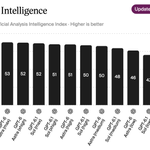
Hot take: very soon most people will stop caring about tokens.
1. Same intelligence gets ~47% cheaper every quarter
2. You don’t care how many CPU cycles an app uses. You won’t care how many tokens it uses either.
What matters is what you do with the intelligence.

Not only, but remarkable how cheap AI is becoming in the first place!!! Love a good deal :)

No talks about how cheap open source AI models are anymore.
@OpenAI has entirely crushed that conversation with Luna.

This is an incredible read. AI getting cheaper = you can build more. And more. And more.

