
L/S mgr, banks specialist. ExSBCWarburg/UBS. Securities industry since March1987. BSc(Syd, Biology) Skier. Cyclist. General advice only for wholesale investors.
Sydney, Australia
Joined December 2009
- Tweets14K
- Following488
- Followers657
- Likes98





James Falkiner retweeted

3/5
"In the past," he continues, "when foreign experts warned China about China’s “Japanization”, I always opposed them, right? I always said China is not going to become the Japan of the 1990s.
But today, when someone says that China is going to become another Japan, I am not that confident anymore to oppose them, and many economists in China think the same as I think."
James Falkiner retweeted
1/5
Yao Yang, former dean of Peking University’s National School of Development, and one of the most prominent economists in China, has traditionally been fairy optimistic (at least in public) about China's economic prospects and someone who always firmly rejected the Japanization thesis.
That makes his recent interview all the more interesting as an indication of the seeming change this year in the way prominent economists (and perhaps policymakers) are seeing the economy.
sinification.org/p/conversat…

James Falkiner retweeted

A lot of ink has been spilled on GPU financing lately. I spent over a decade trading ABS on Wall St, and structured over $2B+ of debt financings as an operator (including at @tryramp). Figured I'd try to make sense of this market, so I went back to a framework I knew well: aircraft ABS and aircraft engine ABS.
My take: a GPU neocloud runs on airline economics, and the debt behind it looks a lot like aircraft engine ABS.
The parallels:
• Perishable inventory. An empty seat after the door closes is gone forever. So is an idle hour on an energized H100 rack.
• 85%+ of cost is fixed (servers, 10-year rack leases, 10-14% debt service). One more hour of compute costs pennies of power.
• Utilization is everything. Airlines break even around 80% load factor, a levered GPU cluster around 65-75%. The returns live in those last 25 percentage points.
• NVIDIA is Boeing and Airbus rolled into one. Powered shells and grid interconnects are the new airport slots.
• Wall St copied the aircraft financing playbook: take-or-pay contract plus servers in a bankruptcy-remote SPV, 70-80% LTV.
Part 1 of my blog post goes into a lot more detail:
alexyangsong.com/blog/alumin…

James Falkiner retweeted

S&P 1500 Software revenue per employee has gone parabolic.
If you are looking for evidence that AI is starting to impact the real economy, this is exhibit A.

James Falkiner retweeted

We (Jonathan Elkobi, me) are happy that @chinaquarter has accepted our new piece “The End of Fiscal Autonomy. ” Yes, it’s provocatively titled but this is an important data point for analyzing China’s economy. A large literature suggests that local autonomy, including fiscal “federalism” has been a key ingredient to growth and local reform initiatives. If local governments literally have little to no autonomy, their incentives and ability to use local initiatives to generate growth also declines. Below, I summarize our findings with link of pre-pub version at the end.
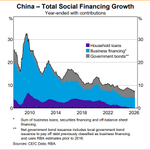
Quick primer: Chinese budgeting is broken into 1. ordinary budget to finance public services, civil service salaries and 2. Extra budgetary fund (EBF) used to finance land acquisition/sale, infrastructure projects and other discretionary spend. The source of the problem is here—ordinary revenue at the local level has grown very modestly over a 6-year period (21%), while EBF revenue (land income) has not grown at all due to the property crackdown. Central transfers made up the bulk of the growth in non-debt sources of income for local governments. (1/N)

James Falkiner retweeted
Important question. I’d argue that the constraint ultimately is debt capacity limits. If productivity rises faster than wages in a capital-rich economy, demand can only keep up with supply to the extent that fiscal and household debt rises to fill the gap.
James Falkiner retweeted

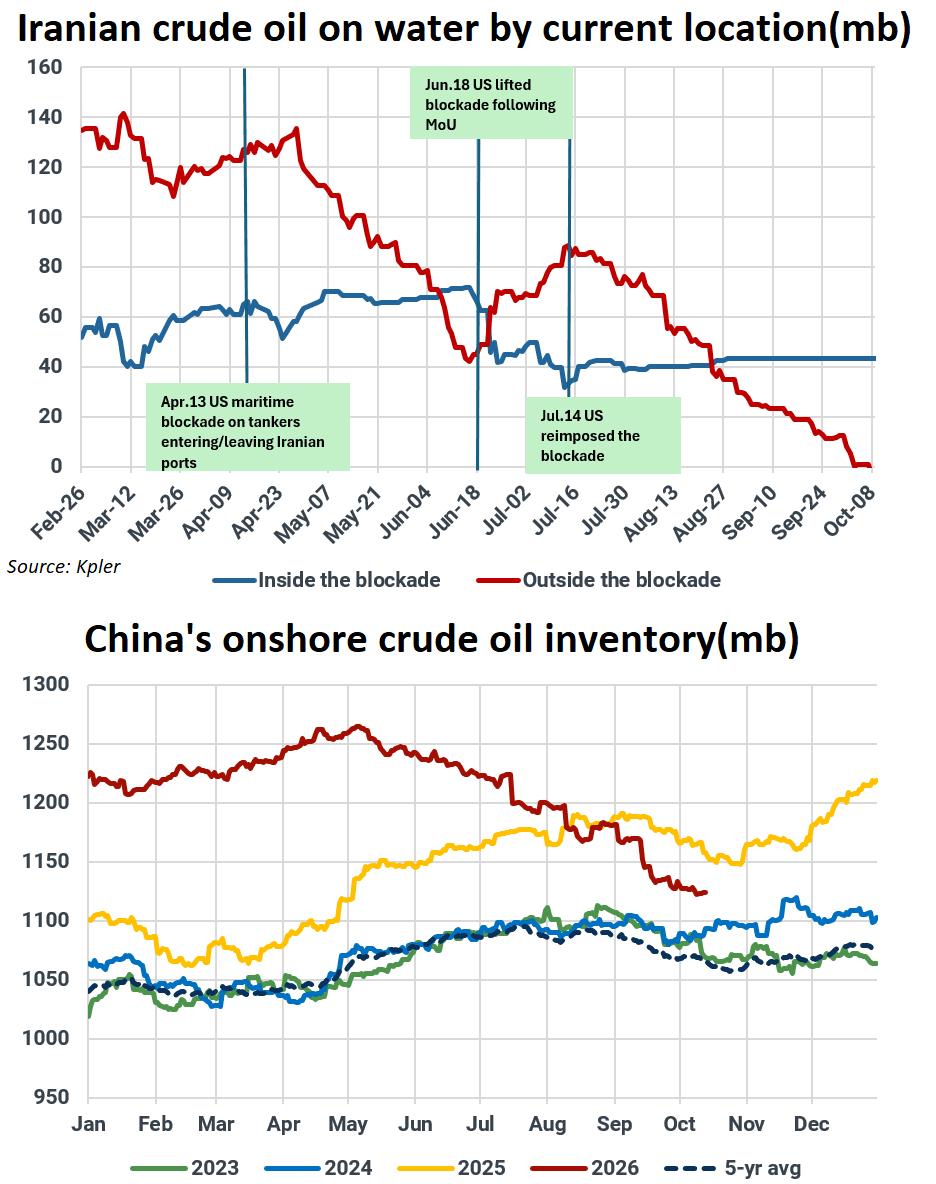
Also fwiw, there’s no phantom stash of Iranian crude that magically teleports into China the second sanctions get waived.
Every single floating barrel parked outside the blockade at places like EOPL has already been fully hoovered up by China anyway.
#oott #Iran


Before you get drunk on the headlines, let me walk you through the actual mechanics.
Under General License HH, shipping entity Roxette Maritime Shipping and Trading S.A. and seven associated vessels got slapped onto the SDN list today.
Concurrently, General License GG authorizes all transactions ordinarily incident and necessary to the wind-down of transactions involving 'Karnakis and Karnakis' or any entity owned 50% or more, directly or indirectly, by them ("Karnakis and Karnakis Entities").
The newly designated, sanctioned hulls under Roxette Maritime are: ANEMOS (IMO: 9205952), GLORIS (IMO: 9449510), PRIDE (IMO: 9487407), DESTINY (IMO: 9385491), FLAMINGO 1 (IMO: 9474199), HARMONY (IMO: 9449522), and PRINCE (IMO: 9548316).
Through this GL HH, the following narrow carve-outs are authorized:
1) Offloading at destination is permitted strictly for non-Iranian cargoes that were already loaded aboard these hulls prior to October 21.
2) Essential humanitarian provisions necessary to maintain the health, safety, and lives of the crew on board remain permitted.
3) Emergency marine repairs and environmental containment/salvage operations arising in transit are cleared.
4) The hard sunset on all safe-harbor activities is November 20, 2026. Any discharge or operational activity past this cutoff will be treated as outright illicit, triggering secondary sanctions risk.
5) This is strictly a damage control exit window. Fixing new charters or lifting fresh stems with designated entities is categorically prohibited.
6) Entering into new commercial agreements involving property or interests in property of blocked persons remains banned. No transactions prohibited under ITSR—including dealings with Iran, the Government of Iran, or Iranian-origin goods/services—are authorized.
7) Any payments owed to blocked persons must be routed directly into blocked accounts under ITSR compliance.
The cargo loaded on the ship may not be the property of Roxette Maritime, but legitimate non-Iranian cargo belonging to general global trading companies or third-country buyers.
If OFAC dropped an absolute blackout on all vessel ops without a wind-down clause, innocent charterers would be left stranded with hundreds of millions of dollars of physical product rotting in the middle of the ocean with zero legal recourse.
This is textbook collateral damage control and maritime risk prevention. But of course, the broader peanut gallery is entirely too fucking lazy to read beyond the raw headline.
Watching tourists claim Washington is "sending a surrender signal to Tehran" or crying "TACO" is so laughably brain-dead it physically hurts.
Literally takes 1 minute to pull the actual OFAC annex and read the fine print.
ofac.treasury.gov/media/9372…
ofac.treasury.gov/media/9372…
#oott #iran


James Falkiner retweeted

Just finished listening to Jensen Huang with Brad Gerstner on the BG2 podcast
Probably one of the best things you can spend 90 minutes of your time listening to this weekend. Highly recommend.
Some of my takeaways from the conversation
1. The demand for compute will continue to be exponential. He once again cited inference as the biggest reason. Reasoning takes a lot more compute than simply spitting out answers from stored memory of knowledge
2. As more compute is used, the work and answer quality will also be better. This will lead to higher demand for that compute, leading to the exponential cycle that Jensen is referencing
3. The harness and tool usage have been the two biggest unlocks in AI over the last year. AI used to simply be a brain of knowledge. Now it has a skeleton around it that allows it to be useful. It is learning how to use existing tools to do better work without having to recreate tools from scratch each time.
4. The cost of intelligence will fall fairly quickly in the coming years. This will be driven by a combination of more compute coming online and better efficiency of models. No different than Moore's Law. Jensen still believes that the consumption of the intelligence (volume) will more than make up for the decline in pricing
5. The original GPT-1 cost $20M to train. If you train GPT-1 today, that number would be closer to $100. That is how fast the cost of intelligence is coming down.
6. The offset to this has been usage of the models and human ambition to build even better models. Despite cost coming down, usage of models has gone up 1M (x) times since GPT-1.
7. Jensen disagrees that work hours are going to come down. The more you learn, the more you want to do. Human ambitions have always existed to achieve and earn more. The bottleneck was the opportunity to do it.
8. Robotics is entering its ChatGPT moment. Similar to what Elon did with cars, every physical aspect of the world will soon be digitized with software and compute. Every massive corporation will have to reinvent itself as a technology company with AI
9. Safety is a core component of accelerating AI technology. When you think of a car, you don't just think of the engine. The airbags and braking systems are components of this car. Similarly, regulation and safety are core components of AI
10. NVIDIA's share of capex with the Neocloud customers is roughly 80%. With the cloud service providers, it is closer to 40%. Both of these numbers are growing every single year.
11. Even without AI, the semiconductor industry was already on its path to becoming the largest industry in the world. AI is the "X factor" that has accelerated that.
12. Moore's law is over. Before you could wait a year for your transistor cost to become cheaper. Today, if you wait a year, you will pay 2x as much
13. Analyst consensus estimates have been revised nearly 200% higher for future revenue and free cash flows vs. this time last year. Despite that, the stock is only +20%
14. Analysts questioned the need for general-purpose chips vs. custom chips. The reason that Jensen remains focused on general purpose is because it is fungible. Fungible = lower risk, which matters a lot when you are putting hundreds of billions of dollars to work
15. Global compute infrastructure spend was roughly $1T/yr. That old world was the retrieval way of doing computation. Jensen sees this number closer to $10T/yr in the near term, with roughly half of that spent on intelligence capex
James Falkiner retweeted

The RBA has been assuming the NAIRU is 4.6%, but its models say closer to 5%. Who knows what the real number is, but this explains why the staff/Board are open to the "need" for a higher unemployment rate to tame inflation.

James Falkiner retweeted

Jeremy Irons is an actor I fully embraced in 2025 - I found myself constantly watching his films. For my money, his performance in Margin Call is the best work of his career. In a film filled with stars, Irons shines the brightest. He is always, always interesting. A true artist.
James Falkiner retweeted

U.S. officials now see a Chinese invasion of Taiwan before 2028 as unlikely, Reuters reports, even though Xi Jinping has ordered the PLA to be capable of seizing the island by force by 2027. Officials point to readiness delays tied in part to Xi's anti-corruption purge, and to Beijing's interest in waiting out Taiwan's 2028 election.
U.S. officials also believe Beijing has drawn lessons from Ukraine and Iran: any attack would have to be fast and avoid turning into a prolonged war.
James Falkiner retweeted

Stunning stat: "Anthropic’s investors are expecting the company to reach a valuation of $2tn when it goes public in the coming weeks. Add in SpaceX, which began trading at $2tn after its IPO in June, and OpenAI, which is considering raising money privately at $1.2tn ahead of a public listing next year, and these companies alone could be worth well north of $5tn. Now compare that with the entire history of IPOs from 1980 to 2025. The 3,365 tech companies that went public in that period were worth a combined $4.1tn when they started trading."
While I've written much about AI's transformative potential across sectors, I've always been dubious about how much value hyperscalers can seize enabling that transformation. As I dissect in my recent report on "The AI Trade" (sageroadresearch.com/collect…), it's not about user acquisition. OpenAI claims to have over one billion active users across its services and two million businesses using its AI models. Anthropic has claimed to have more than 300,000 business customers. The question is not whether they can bring users to their services, but rather how much average revenue they can generate per customer relative to the price of building and maintaining their models. The cost of compute is inflating at the same time competition is depressing token pricing power. That's a precarious dynamic when so much hinges on the success of two companies.
To again quote the report:
"It’s hard to overstate how much hinges on these IPOs. As mentioned in the Executive Summary, OpenAI and Anthropic will account for 13% of AWS revenue and 27% of Google Cloud revenue this year. As for Microsoft, OpenAI alone accounts for roughly 70% of its AI-specific revenue ($24.1 billion out of an estimated $34 billion total for the fiscal year ending in June 2026). OpenAI has committed to tens of billions of spending on chips from the likes of Nvidia and Broadcom. Deepening circularity concerns, tech giant earnings growth has been increasingly driven by paper gains in the private-market valuations of Anthropic and OpenAI. In Q2, Amazon, Alphabet, Nvidia, Meta, and Microsoft reported $160 billion in cumulative “other income”, trouncing the $69 billion in “other income” reported in Q1. To quote the FT: “These one-off valuation boosts, derived in large part from enthusiasm around AI, risk distorting the financial picture at a time when investors are closely scrutinizing tech earnings.” If either Anthropic or OpenAI stumble in their IPOs, it’ll hit tech giants on multiple balance-sheet fronts and likely ripple through the US and global economy. A pin-prick popping of the AI bubble may not be our base case, but if a pin is out there, it’s likely the revenue versus spending trajectories of Anthropic and OpenAI."
FT link: ft.com/content/8c4143c7-f846…

James Falkiner retweeted

7/ Apollo thinks hyperscalers/chipmakers have about $1 TRILLION of public IG capacity left, and that private markets will need to fund another $1-3tn off balance sheet...
Bear in mind, this is coming from one of the biggest private credit managers, so that conclusion isn't a surprise.

James Falkiner retweeted

📈 BCA’s #ChartoftheWeek!
China shock 2.0 is a direct industrial challenge for Europe. Chief European Strategist Jeremie Peloso notes:
🏭 China is moving into higher value-added goods, where it increasingly competes with Europe
📊 Export similarity has risen to ~55% from 46% a decade ago
🇪🇺 Europe is responding with tariffs, local content rules, and tighter FDI screening
Within European equities, favor picks-and-shovels providers over protected manufacturers with poor industry economics.

James Falkiner retweeted

· AI is the Biggest CAPEX Boom in US history.
· Crowing out other investment
· Financing the big risk
· AI creating a powerful employment boom – but concentrated
· Genuine Wealth Effect
· AI is becoming inflationary
· Ultimate Test is productivity vs capital spending => required return of ~$3.7T of annual AI revenue by 2032

James Falkiner retweeted

Getting back to normal in Hormuz
Oil exports through Hormuz reached a seven-day average of 13.2 million bpd on Wednesday, compared with around 17 million bpd before the Iran war disrupted traffic, according Kpler data.
Saudi Arabia is exporting 6 million barrels per day of crude oil in September, which is the same as the 2025 monthly average.
James Falkiner retweeted

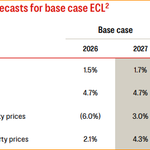
The updated FOMC Summary of Economic Projections:
– Slightly stronger growth
– Slightly lower unemployment rate
– Slightly higher inflation
– Higher policy rate path



James Falkiner retweeted

I argued on CNBC this morning that:
1. The data have been consistent with not hiking rates. Core CPI came in at the lowest level since March 2021, and core PCE is about to be revised and brought closer in line with the less error-prone CPI levels. We are getting the evidence we need that the spring was consistent with a one-off energy shock, as core PCE moving averages slope down and come in line with a forecast to be back at target in the period after monetary policy lags, i.e. in about a year. We know from Trichet that hiking into an oil shock doesn't lead to the best outcomes.
2. If you held in June and July and become more hawkish as the inflation data come down, it speaks to an incoherent reaction function. The market needs to believe there is an economic framework underlying monetary policy decisions and they are not being made randomly. Typically, a central bank becomes more dovish as inflation data and forecasts come down, not more hawkish. If the Fed hikes, when the dust settles, I think this will speak to a larger credibility problem as the reaction function will appear closer to randomness than to a mapping from inflation data to policy outcomes. This would entail the need to specify why hiking was consistent with declining inflation data in an economically coherent framework, which to date has not been done.
3. The oft-repeated argument that the Fed needs to hike "to control the long end" is problematic. The premise is invalid: with term premia and inflation expectations well behaved, the move higher in long yields has been a result of improved growth expectations, i.e. a good increase in yields rather than a bad increase in yields, and not one that needs to be fought (other than in the sense of smoothing volatility as Treasury is doing through buyback liquidity). Moreover, even if one views "controlling the long end" as a valid goal for monetary policy, hiking in this environment will be counterproductive as a) an increase in short-term funding costs is only going to be passed through and raise long yields given the shifting buyer base for Treasurys; b) history doesn't really show that long yields come down with Fed hikes; and c) the incoherence of the reaction function will, when the dust settles and after initial reactions, lead to higher and not lower risk premia.
4. What, then, is the argument for hiking? Atmospherics. Market pricing and not wanting to cause additional volatility given market pricing. With well-anchored inflation expectations and the inflation data on the right path, credibility isn't really at risk here.
The argument "inflation has been high for x months" is backward-looking. Given monetary policy lags, policy has to be set for Q4 of 2027 and Q1 of 2028. Setting policy based on what happened in 2023 or 2024 or even 2026 is the type of thing Milton Friedman's "fool in the shower" would do.

"I don't think they should raise rates."
Former Fed Governor @SteveMiran sets the stage for this week's FOMC decision:
cnbc.com/video/2026/09/15/fe…
