

Doctoral Researcher @UniTurku @InFLAMES_Health | Immunometabolism | Erasmus MSc in Vaccinology Alumnus | Clinical Pharmacist (Opinions are my own)
Turku, Finland
Joined January 2011
- Tweets15.1K
- Following1.4K
- Followers1.1K
- Likes12.2K


Hatem Abou-Guendia retweeted

IFN-γ coordinates macrophage-mediated inflammatory resolution and matrix remodeling in heart regeneration dlvr.it/TWJVvv

Hatem Abou-Guendia retweeted

A cell must be infected by significantly more than one viral genome simultaneously for the virus to overcome the cell's innate immune defenses and successfully replicate @CellCellPress @AltanBonnet @NIH @g_altanbonnet
cell.com/cell/fulltext/S0092…

Hatem Abou-Guendia retweeted

تشي جيفارا مع الفلاحين في الزنكلون بالزقازيق سنة 1965
#عيدالفلاح
#9september

Hatem Abou-Guendia retweeted

A holy grail for our lab has been tracking myeloid cells in human tumors in the same way that we track T and B cells with TCR/BCR.
@vincentzliu and @CalebLareau solved it!
We developed Mitotrek using scATAC-seq + mitochondrial DNA to do exactly this. Using Mitotrek, we find that new myeloid cells clones constantly infiltrate the tumor via circulating monocytes — and that their macrophage or dendritic cell fate is epigenetically programmed before tumor entry.
@10xGenomics @parkerici @CancerResearch @TheMarkFdn
cell.com/cancer-cell/fulltex…

Hatem Abou-Guendia retweeted

Cardiolipin preserves Treg metabolic fitness and immune homeostasis in the gut dlvr.it/TSbQY9

Hatem Abou-Guendia retweeted

Hyvä tapaaminen Egyptin pääministeri Mustafa Madbulin kanssa.
Suomi arvostaa rakentavia suhteita Egyptiin.

Hatem Abou-Guendia retweeted

Researchers took a DNA repair gene (cGAS) from the longest-living rodent (the naked mole rat) and put it in mice
This boosted DNA repair, lowered inflammation, reduced senescence, and slowed aging (less frailty and fewer grey hairs!)

Hatem Abou-Guendia retweeted

BREAKING NEWS
The 2025 #NobelPrize in Physiology or Medicine has been awarded to Mary E. Brunkow, Fred Ramsdell and Shimon Sakaguchi “for their discoveries concerning peripheral immune tolerance.”

Hatem Abou-Guendia retweeted

This 1998 paper is, without question, one of the most beautiful in the history of biology.
It answers two questions:
First, how does a potassium channel let in K+ ions while excluding Na+ ions? And second, how does it funnel 100 million of those ions through each second?
These questions are interesting not only because potassium channels are so deeply involved in our brain's electrical signals, but also because K+ and Na+ both carry a positive charge and have similar sizes! A potassium ion has a Pauling radius (a measure of how far its electron cloud extends from the nucleus) of 1.33 Angstroms, compared to 0.95 for the sodium ion. So a potassium ion is slightly larger, but both ions carry exactly the same charge! And yet, despite these similarities, the potassium channel is “at least 10,000 times more permeant” to K+ than Na+.
How did evolution sculpt such an exquisitely-tuned machine?
To find out, scientists crystallized potassium channel proteins and solved its structure using X-ray crystallography. From this structure, a few things became immediately clear: First, the potassium channel’s interior measures 12 Angstroms long. And second, the channel's interior is lined with oxygens.
Normally, in a cell, ions are surrounded by water molecules. They must shed these waters to pass through the pore, but that's energetically expensive to do! The oxygens inside the channel are positioned at PERFECT locations to make this totally feasible; the K+ ions shed their waters and grab onto the oxygens instead.
The structure also revealed why Na+ cannot pass through. Because it is slightly smaller, Na+ ions cannot form contacts with all the oxygen atoms at once. The geometry is slightly off, giving potassium a decisive advantage.
Now onto the second question. Namely, how does this channel allow 100 million K+ ions to pass each second? That is very quick, considering these ions get "held" by their contacts with oxygen, presumably slowing them down a great deal.
Again, the scientists turned to structure. They again crystallized the potassium channel protein. But this time, they soaked those crystals in a liquid containing rubidium (Rb⁺) and cesium (Cs⁺). These ions behave like potassium but scatter X-rays more strongly, because they are heavier. Thus, they show up more brightly on the X-ray diffraction data.
When the scientists compared electron density maps with and without Rb⁺ or Cs⁺, they could literally see peaks where the ions bound inside the channel.
From this structure, they discovered that TWO K+ ions sit inside of the channel at once, separated by precisely 7.5 Angstroms. This distance is close enough that the ions "feel" each other’s electric repulsion (like charges repel!), but not so close that they destabilize the protein.
This repulsion is used by the channel as a feature, rather than bug! When a third K⁺ ion comes in from the top, the electrostatic “push” kicks the ions forward through the filter. In other words, instead of ions having to crawl through the pore one at a time, the channel uses their mutual repulsion to keep the flow moving; 100 million ions per second.
Beautiful paper. A classic in using 3D structures to reveal biophysical mechanisms.


Hatem Abou-Guendia retweeted

We received 2 CIHR grants to support prenatal nanomedicine projects. 2 PhD positions are available: send cover, CV, 3 referees' contacts to [email protected]
Prior experience: stem/placental biology, organ-on-chip, nanomedicine or lipid/polymer chemistry.
Share widely!
Hatem Abou-Guendia retweeted
Preprint: CMV reshapes lymphoid immunity in aging: a single-cell atlas with predictive modeling
biorxiv.org/content/10.1101/…

Hatem Abou-Guendia retweeted

This is wild!
Engineering E. coli bacteria to turn plastic waste into paracetamol (Tylenol)
@NatureChemistry
nature.com/articles/s41557-0…
nature.com/articles/s41557-0…

Hatem Abou-Guendia retweeted
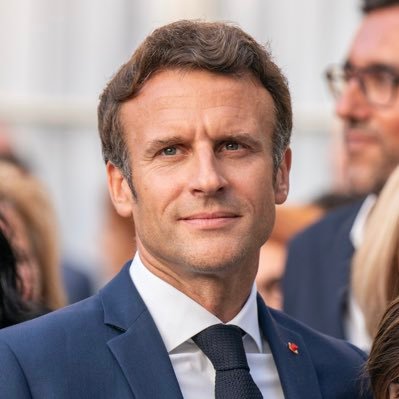
Merci au Président Abdel Fattah al-Sissi et au peuple égyptien pour leur accueil chaleureux. Cette ferveur, ces drapeaux, cette énergie digne de Khân al-Khalili : un hommage vibrant à l’amitié qui unit l’Égypte et la France !
Hatem Abou-Guendia retweeted

Happy to share our article published in @Nature, detailing the mechanisms of liver regeneration and how macrophages, metabolically reprogrammed by glutamate, orchestrate hepatocyte proliferation. nature.com/articles/s41586-0…
Hatem Abou-Guendia retweeted
Vitamin C directly modifies lysine residues through vitcylation, regulating STAT1 signaling and enhancing anti-tumor immune responses by preventing STAT1 dephosphorylation @CellCellPress
cell.com/cell/fulltext/S0092…

Hatem Abou-Guendia retweeted

5,562 proteins were found to have tissue-specific enrichment across 32 human tissues.
◼️ The majority of them (3,088) are enriched at the protein but not RNA level.
🧠 The brain hosts the largest number of proteins that are only enriched at the protein level but not RNA level.

Hatem Abou-Guendia retweeted

Dual impacts of serine/glycine-free diet in enhancing antitumor immunity and promoting evasion via PD-L1 lactylation
@CellPressNews @Cell_Metabolism #diet #immunotherapy #MedEd #MedX #immunity
Open Access
cell.com/cell-metabolism/ful…

Hatem Abou-Guendia retweeted

الفترة ده كان فيه معرض للفنان المصري محمود سعيد (1897-1964) في قصر عائشة فهمي في الزمالك.
هحاول هنا أخدكم معايا في الرحلة ده !
أتمنى اني لا أطيل عليكم ولكن الفن اللي شفته أجمل وأحق اني أشاركه معاكم.
هشارك أعمال الفنان المهمة وبعض اللوحات المعروضة في المعرض.
(1)
Hatem Abou-Guendia retweeted

Ready to start your PhD journey? ImmuDocs Doctoral Education Pilot is seeking 12 Doctoral Researcher interested in immunology, immunology-based drug development, and/or diagnostics. Read more: bit.ly/4eAdeNR
#OpenPositions #immunology
@iuis_online @y_efis @FinnSocImm

ALT mainoskuva

