

An MD/PhD who trains machines to help doctors and scientists prevent unhealthy pregnancies.
Taipei City, Taiwan
Joined August 2009
- Tweets11.9K
- Following190
- Followers471
- Likes45




Pinned Tweet
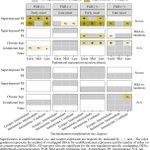
Our flagship work is finally out! We developed a pipeline to include inter-predictor relationships in a predicting an outcome, allow ante-hoc explainability in deep learning by our algorithm, Deep-Insight Visible Neural Network (DI-VNN).
pubmed.ncbi.nlm.nih.gov/3689…
🧵
1/

Herdiantri Sufriyana 和瑞 retweeted
Most students in the quantitative sciences are forced to start their education with statistics, which is a grave mistake, with deep harmful consequences on the way students view science and reality. The next generation should start with causation, to get a scientific view of reality and, only then, take stat-101, for students who want to decorate their papers with p-values and regression analysis. Not sure the imperial forces of statistics would welcome this commonsensical transformation. @soboleffspaces @f2harrell @DagobertIX

Herdiantri Sufriyana 和瑞 retweeted

Very well put. And a lack of causal identifiabilitynis one of the factors limiting how high intelligence can go.

One of the biggest misconceptions people have about intelligence is seeing it as some kind of unbounded scalar stat, like height. "Future AI will have 10,000 IQ", that sort of thing. Intelligence is a conversion ratio, with an optimality bound. Increasing intelligence is not so much like "making the tower taller", it's more like "making the ball rounder". At some point it's already pretty damn spherical and any improvement is marginal.
Now of course smart humans aren't quite at the optimal bound yet on an individual level, and machines will have many advantages besides intelligence -- mostly the removal of biological bottlenecks: greater processing speed, unlimited working memory, unlimited memory with perfect recall... but these are mostly things humans can also access through externalized cognitive tools.
Herdiantri Sufriyana 和瑞 retweeted

Just published @ScienceMagazine
Impressively broad range of life science research getting done autonomously with agentic AI to accelerate discovery
science.org/doi/10.1126/scie…

Herdiantri Sufriyana 和瑞 retweeted

New Anthropic research: A global workspace in language models.
Of everything happening in your brain right now, only a tiny fraction is consciously accessible—thoughts you can describe, hold in mind, and reason with.
We found a strikingly similar divide inside Claude.
Herdiantri Sufriyana 和瑞 retweeted
This is great!

Herdiantri Sufriyana 和瑞 retweeted
100% this


Herdiantri Sufriyana 和瑞 retweeted
New Anthropic research: Emotion concepts and their function in a large language model.
All LLMs sometimes act like they have emotions. But why? We found internal representations of emotion concepts that can drive Claude’s behavior, sometimes in surprising ways.
Herdiantri Sufriyana 和瑞 retweeted
In my latest column, I explain some of my reasons for being deeply skeptical about AI models that claim to understand DNA, genes, and genomes: stevensalzberg.substack.com/…
Herdiantri Sufriyana 和瑞 retweeted
This Gershman and Ullman paper is just so cool in showing that humans really can't not view correlation without assuming causality. Summary of my quixotic life in neuroscience: gershmanlab.com/pubs/Gershma…
Herdiantri Sufriyana 和瑞 retweeted

Our overview of and guidance for performance measures to evaluate medical AI is finally out!
- Stop bashing AUROC
- Calibration + clinical utility are key
- Plot risk distributions
- Classification measures are improper
thelancet.com/journals/landi…

Herdiantri Sufriyana 和瑞 retweeted

1/ Can causal models and causal inference engines emerge through next-token prediction? @yudapearl and others (@matej_zecevic) have argued no. We present behavioral and mechanistic evidence that this is possible. #neurips2025 #NeurIPS
Herdiantri Sufriyana 和瑞 retweeted

Relying heavily on AI doesn’t only stifle critical thinking. It constrains creativity too.
New evidence: People generate more original ideas when they consult AI sometimes, rather than extensively or rarely.
Independent thought is a foundation of ingenuity.


Herdiantri Sufriyana 和瑞 retweeted

I quite like the new DeepSeek-OCR paper. It's a good OCR model (maybe a bit worse than dots), and yes data collection etc., but anyway it doesn't matter.
The more interesting part for me (esp as a computer vision at heart who is temporarily masquerading as a natural language person) is whether pixels are better inputs to LLMs than text. Whether text tokens are wasteful and just terrible, at the input.
Maybe it makes more sense that all inputs to LLMs should only ever be images. Even if you happen to have pure text input, maybe you'd prefer to render it and then feed that in:
- more information compression (see paper) => shorter context windows, more efficiency
- significantly more general information stream => not just text, but e.g. bold text, colored text, arbitrary images.
- input can now be processed with bidirectional attention easily and as default, not autoregressive attention - a lot more powerful.
- delete the tokenizer (at the input)!! I already ranted about how much I dislike the tokenizer. Tokenizers are ugly, separate, not end-to-end stage. It "imports" all the ugliness of Unicode, byte encodings, it inherits a lot of historical baggage, security/jailbreak risk (e.g. continuation bytes). It makes two characters that look identical to the eye look as two completely different tokens internally in the network. A smiling emoji looks like a weird token, not an... actual smiling face, pixels and all, and all the transfer learning that brings along. The tokenizer must go.
OCR is just one of many useful vision -> text tasks. And text -> text tasks can be made to be vision ->text tasks. Not vice versa.
So many the User message is images, but the decoder (the Assistant response) remains text. It's a lot less obvious how to output pixels realistically... or if you'd want to.
Now I have to also fight the urge to side quest an image-input-only version of nanochat...

🚀 DeepSeek-OCR — the new frontier of OCR from @deepseek_ai , exploring optical context compression for LLMs, is running blazingly fast on vLLM ⚡ (~2500 tokens/s on A100-40G) — powered by vllm==0.8.5 for day-0 model support.
🧠 Compresses visual contexts up to 20× while keeping 97% OCR accuracy at <10×.
📄 Outperforms GOT-OCR2.0 & MinerU2.0 on OmniDocBench using fewer vision tokens.
🤝 The vLLM team is working with DeepSeek to bring official DeepSeek-OCR support into the next vLLM release — making multimodal inference even faster and easier to scale.
🔗 github.com/deepseek-ai/DeepS…
#vLLM #DeepSeek #OCR #LLM #VisionAI #DeepLearning


Herdiantri Sufriyana 和瑞 retweeted

🚨 DeepSeek just did something wild.
They built an OCR system that compresses long text into vision tokens literally turning paragraphs into pixels.
Their model, DeepSeek-OCR, achieves 97% decoding precision at 10× compression and still manages 60% accuracy even at 20×. That means one image can represent entire documents using a fraction of the tokens an LLM would need.
Even crazier? It beats GOT-OCR2.0 and MinerU2.0 while using up to 60× fewer tokens and can process 200K+ pages/day on a single A100.
This could solve one of AI’s biggest problems: long-context inefficiency.
Instead of paying more for longer sequences, models might soon see text instead of reading it.
The future of context compression might not be textual at all.
It might be optical 👁️
github. com/deepseek-ai/DeepSeek-OCR


Herdiantri Sufriyana 和瑞 retweeted

And!
Not only did causal theory @yudapearl lay the foundation for the “how” in mediation, fairness, and counterfactual analysis.
It also gave us the “how” of Causal AI, opening the era of computable individual causal effects!
In the process, it threw the regression Kunststücke @f2harrell et al. “overboard from the ship of history.”
arxiv.org/pdf/1709.02023
causalai.net/r80.pdf
causalai.net/r87.pdf
causalai.net/r90.pdf
causalai.net/r93.pdf
@eliasbareinboim @murat_kocaoglu_

Herdiantri Sufriyana 和瑞 retweeted

A lot of problems with AI discourse are because "being good at AI" (called Theory of Mind in this paper) is a skill that seems to be independent of "being great at your job"
So you have amazing experts who gain from AI, and others who do not, and they don't understand each other


Herdiantri Sufriyana 和瑞 retweeted

What creates sustained economic growth? This year’s laureates used different methods to answer this question. Through his research in economic history, Joel Mokyr – awarded the 2025 prize in economic sciences – has demonstrated that a continual flow of useful knowledge is necessary.
This useful knowledge has two parts: the first is what Mokyr refers to as propositional knowledge, a systematic description of regularities in the natural world that demonstrate why something works; the second is prescriptive knowledge, such as practical instructions, drawings or recipes that describe what is necessary for something to work.
Mokyr used historical sources as one means to uncover the causes of sustained growth becoming the new normal. He demonstrated that if innovations are to succeed one another in a self-generating process, we not only need to know that something works, but we also need to have scientific explanations for why. The latter was often lacking prior to the industrial revolution, which made it difficult to build upon new discoveries and inventions. He also emphasised the importance of society being open to new ideas and allowing change.
#NobelPrize

Herdiantri Sufriyana 和瑞 retweeted
In the past 2 years, we are seeing sparks of enlightenment shining from even strongest citadels of "experimental design" literature.
In 2017, the editors of the Journal of the American Medical Association (JAMA) wrote that when
evaluating a submission, they would “verify whether the study is a randomized clinical trial or a report of a controlled laboratory experiment. If it isn’t, and is a report of an observational study,
… then all cause-and-effect language must be replaced.” In their June 2024 issue, the editors announced that they would now accept papers that draw conclusions about causes and effects even from observational studies, when justified by appropriate causal models.
“So with excitement and trepidation,” they wrote, “we will now consider how best to balance
methodologic advances … with the principles in our long-standing and often discussed reporting
policy that generally limits use of causal language to well-done randomized clinical trials.” [quoted from the Preface to the 2nd Edition of #Bookofwhy (forthcoming)] @f2harrell @soboleffspaces @eliasbareinboim

Herdiantri Sufriyana 和瑞 retweeted
The proteins in our blood as fingerprints for 59 diseases and health @ScienceMagazine
science.org/doi/10.1126/scie…
