


Byron retweeted

Out of all the announcements at @Google I/O today, this is the one closest to my heart - our foundational research on Co-Scientist was published in @Nature and we announced its broad availability via @GeminiApp for Science.
When you are suffering from a disease, time is everything. As our collaborator and @StanfordMed Professor Dr. Gary Peltz reminds us, there are thousands of diseases out there with zero treatments. There is simply so much left to solve.
Our goal with Co-Scientist has been to give scientists superpowers and help them get to these answers faster - compressing the scientific process from months and years down to hours and days.
Much like Galileo's telescope helped us look into the stars, Co-Scientist is designed to help us make sense of the vast complexity of biological and scientific data. It is among the first examples of a truly general-purpose multi-agent system for scientific discovery.
The core research question behind it was: How can an AI system engage in the rigorous, structured thinking that’s the hallmark of science and scientists?
To tackle this, Co-Scientist builds on the principles of self-play and self-improvement underpinning @GoogleDeepMind breakthroughs like AlphaGo, generalizing them to scientific reasoning through self-debates.
Since our preprint last year, we have further improved its capabilities and have been validating it in collaborations with scientists across over 100 institutions globally, spanning both academia and industry.
And we are thrilled to see the emergence of a new form of AI-human scientist collaboration that's already leading to important new insights, discoveries and peer reviewed publications - from understanding antimicrobial resistance (published in @CellCellPress) to decoding plant immunity, to identifying new treatments for liver fibrosis (Advanced Science), cancer, neurodegenerative diseases like ALS and the grand challenge of aging.
I have always believed AI's greatest promise is accelerating scientific discovery and advancing human health.
My genuine hope for the future is that AI tools like Co-Scientist help democratize science, giving anyone, anywhere the means to pursue their child-like curiosity and change the world.
This work was done with stellar team mates spanning @GoogleDeepMind @GoogleResearch, @googlecloud and @GoogleLabs especially Juro Gottweis (@Mysiak ), who is the heart and soul of this effort.
Special thanks also to all our wonderful collaborators: Gary Peltz, @CostaT_Lab, @jrpenades, @_e_d_v_ , @iambyronic, @OpsBug, @jgooten, @omarabudayyeh Ritu Raman, Ryan Flynn, Filippo Menolascina, Velia Siciliano, Clare Bryant, Matt Onsum, Katherine Labbé and more.
Nature paper link - lnkd.in/e8qBEJFv
Google DeepMind blog - lnkd.in/etYeahMy
Gemini for Science - labs.google/science.
Byron retweeted
Accelerating scientific discoveries and helping cure diseases might be the most profound purpose of AI.
Thrilled to introduce our @GoogleAI @GoogleDeepMind @googlecloud AI co-scientist system, which I believe is an important milestone towards this.
Blog - research.google/blog/acceler…
Paper - storage.googleapis.com/cosci…

Byron retweeted

My PhD work is live on bioRxiv today! :) biorxiv.org/content/10.1101/…

Byron retweeted

When two became three: Shaping the nucleolus with Treacle dlvr.it/SvNTDz

Byron retweeted

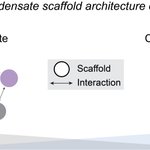
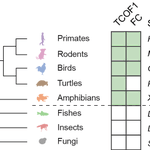
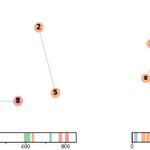
@iambyronic and I are super excited that our paper came out in @CellReports last week! We wondered how condensates that rely on many interacting components could possibly emerge during evolution. Seems tough for all of the interactions to just appear cell.com/cell-reports/fullte… (1/n)

Byron retweeted

Study explains how part of the nucleolus evolved: A single protein can self-assemble to build the scaffold for a biomolecular condensate that makes up a key nucleolar compartment. mitsha.re/1sxV50PAnA7

ALT A rendering of a blue-tinted cell highlights the nucleolus, represented as a purple cut-away sphere with a pink fibrillar center inside.
Byron retweeted

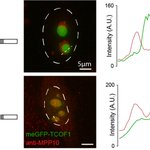
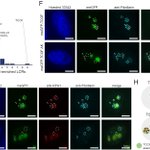
A new study from the lab identified the scaffold of the nucleolar fibrillar center and provided a compelling model for how condensates might evolve. This is the work of @nimajaberi_ and @iambyronic Cell Reports cell.com/cell-reports/fullte…
If you give a man a banana, he will have a nice snack. But if you teach a man to plant a banana, he will have no bananas.
1
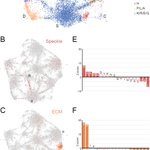
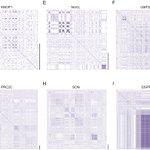
@nimajaberi_ and I are a little late, but we're thrilled that our paper is out in @elife! In this work we try to understand if the general features of proteins containing low-complexity regions (LCRs) can explain their many dispersed functions. 1/n doi.org/10.7554/eLife.77058

Link to part 2 of the thread:
nitter.cf/nimajaberi_/status/157…

Byron retweeted
Our lab manuscript on LCRs has been published @eLife A unified view of low complexity regions (LCRs) across species doi.org/10.7554/eLife.77058. Kudos to @nimajaberi_ and @iambyronic for such amazing work! @MITBiology
Byron retweeted
Check out our lab's newest preprint. A holistic approach to understanding the LCR sequence space within and between species. This is the works of two incredibly talented graduate students @nimajaberi_ & @iambyronic. @MITBiology biorxiv.org/content/10.1101/…
Byron retweeted

"As scientists, we know that writing is hard. Keep in mind that writing in a second language is even harder." #SciMagWorkingLife. fcld.ly/r1jadef
They just write "bad" on an egg and throw it on the ground. Now it's spoiled. #fakebreakingbadspoilers
2
Once I caught my roommate filling up his air mattress using my vacuum. It blew me away. #myroommateisweird
1