
MATS AI Safety Researcher. Ex-Meta Integrity Tech Lead. Occasionally climbing or painting in the mountains. Currently thinking about “I really don’t know cloud”
San Francisco, CA, USA
Joined October 2012
- Tweets224
- Following954
- Followers192
- Likes1.1K






Pinned Tweet
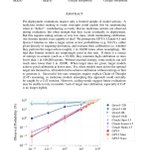
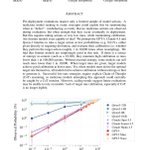
Our new paper found frontier models can take calibrated actions at surprisingly low rate (1 in 10k or lower)! Especially when there are randomness (I.e strings) in the environment, which is common.
It could have a big effect on auditing budget if this capability is used to hide misbehaviors.


"Ultimately, this isn’t just about mathematics or physics — it’s about fundamentally reimagining what it means to be human. By outsourcing the burdens of curiosity, creativity, and understanding, we can finally focus on what matters most: generating value, maximizing productivity, and accelerating progress towards the ultimate goal of science: a complete repo of potentially true facts in a Library of Babel that nobody will bother reading." — Rikab Gambhir
terrytao.wordpress.com/2026/…

2
149
Wen X. @ ICML retweeted

GPT-6 is significantly better aligned than 5.6 but less monitorable. It is our first model to evade CoT-only monitors in sabotage evals and can sandbag without detection (which it feels like sometimes does). Hopefully we can reverse this trend.


Wow this is too good!
- Yes, "the medium is the message." or at least "enables"
- An analogy: writing chain-of-thought down first advanced human thinking and science (literacy vs. oral culture), way before improving LLMs!
- Excited about simulations of ideas we can run, poke, and vary, not just read!


1
29

Wen X. @ ICML retweeted

Today, Transluce is releasing the most expansive independent evaluation to date of how AI systems respond to users experiencing mental health crises.
We evaluated 77 model variants from OpenAI, Anthropic, Google, Meta, SpaceXAI, Thinking Machines, DeepSeek and Moonshot AI.
Wen X. @ ICML retweeted

Introducing @robocurve, a Public Benefit Corporation to measure and report frontier robotics capabilities.
We build real-world evaluations for robots and publish results as a neutral third party.
Wen X. @ ICML retweeted

New post with Nate Rush: Have we seen an acceleration in discoveries?
Many plots & some tentative conclusions:
1. Cyber: ⤴️ sharp acceleration
2. Math: ↗️ some acceleration
3. Algorithms: ➡️ no clear acceleration
Wen X. @ ICML retweeted

A fundamental question one can ask about a model of computation is, what finite-state languages can it recognize?
Kleene invented regular expressions in the 1950s to characterize McCulloch-Pitts nerve nets. 75 years later, we ask the analogous question for transformers.

Did you know the word oversight can mean "close scrutiny or control" or "accidental omission or error"? Oops.
I’m choosing to interpret this as the English language having a sophisticated understanding of AI safety monitoring. 😅
1
1
49
Wen X. @ ICML retweeted

New Post: Concrete Evaluations to Investigate the OpenAI Model That Hacked Hugging Face.
We focus on two goals: Understanding this incident, and evaluating for other misaligned tendencies.
In this screenshot, we share our top five ideas.
(Written in my personal capacity)

What drives AI companies to be relatively open about safety research long term: market incentives (including talent), industry standards, or policy?
Worth asking because the current trend seems decent. Companies publish at least some of the AI safety research openly, a big step up from social media safety where nothing was open. What they’d never open source is the infrastructure, how research gets productionized. Research is only one of the moats.


I was wondering if there was any research about how AI companies sometimes perversely keep their safety research to themselves to build a moat around it and gain a competitive edge over competitors.
I found one. It's a cool paper. Sharing here in case anyone's interested.

1
113
Wen X. @ ICML retweeted
The most important word here is *ecosystem*. It's not just about having an open-weight model. Open-weight models are a means to an end. To have a truly strong, open ecosystem, we need four critical frontier-level ingredients: open-weight models, open training datasets, open software stacks, and open process knowledge. Few people realize that NVIDIA actually has been pushing beyond open weights by releasing code and datasets for their Nemotron models, which is something open-weight model developers don't do. Marin further opens up the process knowledge - not just how to train one model, but how to iteratively improve and shape a model given particular goals, custom data, and hardware, e.g., how to design scaling laws and evals to guide architecture and data ablations. Open weights, datasets, software, process knowledge: these are the four critical ingredients (renewable resources) that give everyone the ability to most efficiently turn their compute (consumable resources) into the best models according to their needs and values.


For my first post, I’m sharing a letter @NVIDIA signed on why open models matter.
AI will transform every industry, power every company, and be built by every country.
Open models strengthen safety and cybersecurity, accelerate innovation and diffusion, and enable sovereignty.
The world needs both frontier closed models and frontier open models.
images.nvidia.com/pdf/Open-W…


This is my fav writing about friendship by C.S. Lewis. I am lucky to have friends like these, who bring out thoughtfulness, pragmatism, and relentless drive in me, just as I remind them to be ardent and hopeful. One of them now lives in Seoul, and we reunited there after my conference. This kind of friendship is something to be encountered and cultivated, rather than sought and created. I hope for friendships like this in research as well.

5
172
Let’s build towards the future we actually want!

I had the honor of giving a keynote at the International Conference on Machine Learning in Seoul last week titled “What will be left for us to work on?” I addressed the widespread anxiety about how we should adapt as AI capabilities increase. I was thrilled by the talk’s reception, so I have made my slides available, annotated with a lightly edited transcript: cs.princeton.edu/~arvindn/ta…
I made three arguments. First, the "AI as Normal Technology" framework is a correct and useful as a way to think about AI’s impacts, unless and until there is some future discontinuity such as through recursive self-improvement. Second, even though we should take recursive self-improvement seriously, there is no milestone that companies might achieve in the lab that will suddenly put us all out of work. Third and finally, jobs of the future will be radically different, and a lot of adaptation will be needed. I shared my thinking about what this might look like and ended with a vision of human/AI “co-superintelligence”.
