

Solo GP @RockYardVC // @MIT @LSEnews // Believer in second chances
Austin, TX
Joined May 2009
- Tweets395
- Following1.6K
- Followers2.3K
- Likes19K


Daniel Dart retweeted

Easy fix. At the end of the call, say this
“I’ve met with hundreds of founders. At the end of the first convo I know if I want to lean in or out. If I’m leaning out I usually say I need to bring it to my team and that they should send me materials. You just said that. I interpret that as you are a no. Is the the correct assumption?”
Then move on. Fundraising is a sorting mechanism for belief. Not conversion.
Daniel Dart retweeted

SurrealDB Agent Memory is live.
Every fact keeps its source, history, and permissions.
BEAM: 77.2% headline. 57.1% strict (fully correct only).
Same strict count on every vendor with public per-question files.
Judges named. 700 answers published.
surrealdb.com/agent-memory/b…

Daniel Dart retweeted
A benchmark that only we can run is not a benchmark.
Our commitment to open source:
- Show the code
- Run the numbers
- Say what we did not measure
The storage engines are Apache 2.0, and every number comes with the command that produced it.
surrealdb.com/blog/our-commi…


In-memory or persistent? Yes.
Our new in-memory storage engine: 28.3x faster than RocksDB and 17.5x faster than LMDB for reads, both in memory. Lock-free. Embedded, in the browser or on a server.
Run it yourself.
Stop choosing.
sdb.li/4zqT3Mt

Daniel Dart retweeted
Launch week starts on Monday. It is the biggest thing we have shipped as a company.
I spend most days with customers and partners, and the pattern is always the same. Teams are forced to compromise on things they should never have to compromise on.
Next week we answer that head on.
12-15 October.
surrealdb.com/stop-choosing
See you next week.

Speed or durability?
In-memory or persistent?
Simplicity or scale?
Memory or accuracy?
Transactions or speed?
SQL or SurrealQL?
Yes.
Stop choosing.
sdb.li/4eicEGr
12-16 October. See you next week.

Daniel Dart retweeted

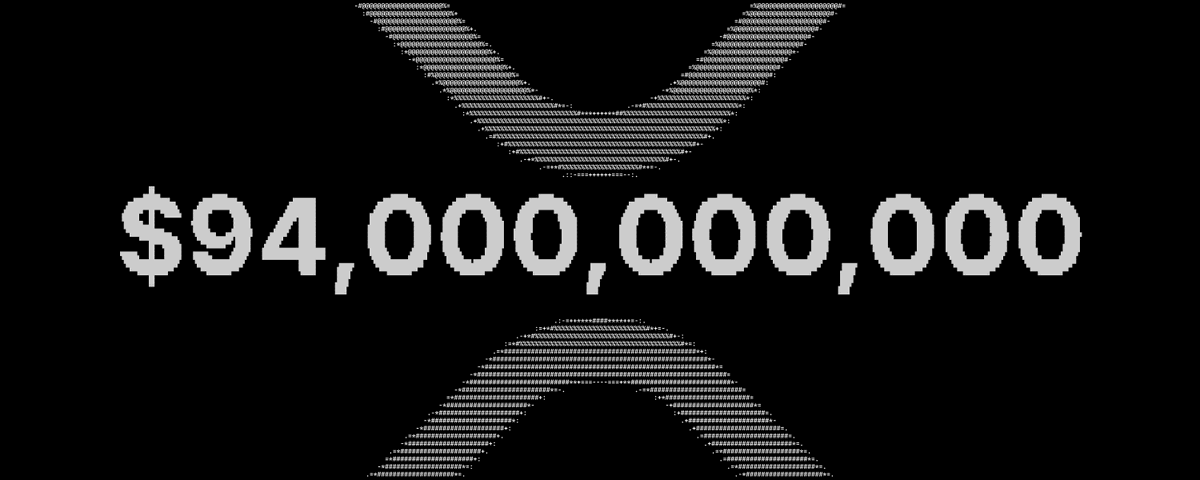
Our AI found a bug that let anyone mint infinite XRP, with $94B at risk. It had been hiding in one of the most audited codebases in crypto for nearly a decade, and earned us the maximum $250K bounty.
Here's how it went unnoticed, and how we found it.
Daniel Dart retweeted

Misleading graphic that basically seeks to undermine smaller fund managers (who, according to data, are the best returning subset of venture funds)
> a 5x $50M fund produces $200M in profits, a 1.5x $3B produces $1.5B in profit (i.e. despite drastically worse IRR, the $3B fund returns 7.5x more in absolute profits than the $50M fund, which would be the entire metric the graphic takes into account). This graphic basically biases to the input (committed capital) to make assumptions about the output (return profile). In other words, the bigger your AUM “the better” your firm is / the less you need to perform to score well on this graph (according to this data)
> In Q1 2026 ~70% of committed capital went to 5 firms (which is much less than 1% of all venture firms in existence). By this own graphs logic, unless those firms also return >70% of all profits, they’re underperforming vs their smaller peers
> this graph tries to present the commentary as if every firm started with the same input (AUM) and only 1% produced majority of the returns. This is obviously misleading

Venture exposure and venture returns are hardly the same sport:
- The top 1% of VC investors account for 57% of the industry's net profits
- The top 5% take 90%, and the other 95% split what's left
Full piece from a16z's @jkhamehl on the power law that runs through the funds: a16z.news/p/catching-the-ven…

Daniel Dart retweeted

Update: invites replenished. 1000+ more
app.instinct.co/invite?t=t7q…


Inspired by the generosity of @noahrshinn today, I have 100+ invites to Instinct to share. It’s been a real boon to our quality of life.
app.instinct.co/invite?t=t7q…
Daniel Dart retweeted

At the end of the batch, founders often ask about big looming decisions: should they be in-person or remote? stay in SF or live somewhere else? etc
The answer is: what would you want your competitors to do? Then do the opposite.
Daniel Dart retweeted

Marcus Aurelius wrote this over 1800 years ago:
“Do not disturb yourself by imagining your whole life at once.”
The truest thing here is how he explains that so much is dictated my LPs who have dogmatic approaches to how funds should construct, even if historic data says otherwise. The market is dynamic, so must we be.

Daniel Dart retweeted
I just sat down with one of the great investing legends of our time and he said something amazing:
“I think you should be intensely selfish about two things:
1. The people you spend your time with.
2. What you spend your time on.”
Something wonderfully purifying about this.


Daniel Dart retweeted

Bay Area VCs will say they want to invest in American Dynamism, yet somehow refuse to invest in 48/50 States
Daniel Dart retweeted

Excited to share my conversation with @itsdanieldart on Future Titans, authenticity, and systems thinking. Here are the key takeaways and from the conversation:
Authenticity is a real competitive advantage, not just a personality trait. Daniel’s view is that in venture, authenticity builds trust, trust compounds over time, and that becomes a durable edge with founders, LPs, and peers. He draws a hard line between honest feedback and performative bluntness, arguing that the best investors pair candor with empathy.
The best networks are discovered, not manufactured. One of the strongest ideas in the episode is Daniel’s belief that you should spend time finding believers rather than trying to convince skeptics. His “no name tags, no pitch tags” approach at Future Titans reflects a broader philosophy: the highest-quality relationships usually come from shared values and trust, not forced transactionality.
Good investing starts with good systems. Daniel comes back repeatedly to being input-focused rather than outcome-obsessed. Whether he’s talking about building a conference, supporting founders, or constructing a fund, his core idea is that strong systems, repeated over time, create the conditions for strong outcomes.
Founder support is not “value-add theater”; it is trust-building. His post-investment cadence with founders reflects a bigger belief that company-building is lonely and that investors earn the right to matter by being consistently useful, reliable, and emotionally steady. The insight is that being hands-on is less about control and more about becoming a trusted source of truth.
Tier 1 ambition is really about relevance, not branding. Daniel is very open about wanting to build @RockYardVC into a top-tier firm, but he frames that ambition operationally: can he become someone who is consistently in the conversation for the best deals in his areas of focus? The takeaway is that elite status should be earned through repeated market relevance, not borrowed prestige.
Venture works best when you invest for upside, not survival. A memorable throughline is Daniel’s rejection of playing defense just to preserve optics. He argues that venture is an upside-capture business, and that emerging managers can get trapped by trying too hard to avoid failure instead of underwriting for asymmetric returns.
In frontier markets, proximity beats false certainty. On AI and quantum, Daniel’s stance is not “I can predict the future perfectly,” but rather “I want to get close to the smartest builders and learn from them.” The deeper point is that an investor’s edge often comes less from pretending to know and more from developing informed conviction through proximity to exceptional people.
Long-term thinking expands what’s possible. Daniel repeatedly frames decisions on a 5-, 10-, and 15-year basis, arguing that a longer horizon raises your tolerance for short-term imperfection and makes room for ambitious bets, deeper relationships, and better firm-building decisions.
Tactical questions often reveal more than abstract advice. His favorite question to ask experienced investors — what they would want him to do in the first 90 days if they were backing Rock Yard — captures the episode’s broader mindset: learning should translate into concrete actions, not vague inspiration.
Please enjoy!

🚨 New episode alert!🚨
@EthanChoi7, Partner at @khoslaventures, has one of the most unlikely paths to Sand Hill Road you'll ever hear.
His father was abandoned at a train station in post-war Korea at six. He eventually made it to Sydney, where Ethan grew up, served a church mission, and bought a one-way ticket to the US with no network. He rose to Partner at Accel, and now Khosla.
We get into:
- Why robotics is having its GPT-3 moment right now
- The flip from 80% metrics to 90% founder
- How faith shaped the way he invests
- The real answer to building tier-one relationships
Links to listen below. Enjoy!


