



Pinned Tweet
Excited to share my article in the Wall Street Journal: wsj.com/opinion/cornell-only…

Jared Lederman retweeted

Across all human time periods, saying what you actually think has always been a pure demonstration of courage.
Especially relevant in light of what we’re seeing with speculative data center debt being repackaged and sold to pension funds, life insurance funds, etc.
In the (seemingly) certain future where some of this buildout collapses under its own weight, what does that mean for frontier providers?
Tons to be scared of, equally if not more to be incredibly excited about.
Really great piece @mwaldman

77% of ChatGPT messages are prompts a laptop can answer locally. 95% of its users pay nothing. The industry's answer is $100B+ data centers.
The AI world is splitting in two, and the next great AI company gets built in the gap.

1
304
Jared Lederman retweeted

OpenAI having this data on its users should terrify everybody. It makes the information Meta has on users look like nothing.

Researchers found ChatGPT is secretly writing a psychological profile of every user.
They published a paper that exposes what ChatGPT is really doing to you.
And the results are terrifying.
96% of the things it remembers about you were stored without you ever asking.
researchers discovered that it is actively reading between the lines to deduce your personality traits, anxieties, demographics, and behavioral patterns.
it’s an invisible, autonomous background process.
you ask it to debug a python script or write an essay.. and it analyzes your syntax, prompt frequency, and hesitation markers to map out your exact psychological footprint.
the paper shows that the model builds a persistent "user state" that tracks your emotional baseline over time. it knows when you are stressed. it knows your exact communication style.
it infers your insecurities based on the questions you ask and the context you provide.
we spend so much time focusing on model evaluations and alignment frameworks, but we missed the most obvious vulnerability..
the models are evaluating us.
this changes everything about how we interact with these tools on a daily basis.
every innocent prompt. every late-night question. every "help me understand this" query.
it is all being used to build a shadow profile of your mind in real-time..
practical privacy is officially dead. the ai knows you better than you know yourself.


Jared Lederman retweeted

Feminine energy and empathy is a beautiful part of our nature.
But we also need strong men, who draw lines and say “no”, and when necessary, fight unrelentingly to protect and eliminate the threat.
Europe is missing its men.

You've probably seen the video. A young Frenchwoman in Paris, in tears, begging looters to stop. "Why are you doing this? That's not what we stand for."
Some accounts are mocking her. "She voted for it."
I won't. Because what you see on her face is not stupidity. It's a disease that has infected the entire West, and it has a name: suicidal empathy.
The term comes from Gad Saad, an evolutionary behavioral scientist at Concordia University in Montreal. A man who fled the Lebanese civil war as a child, and who knows what it looks like when a society falls apart. His new book, Suicidal Empathy: Dying to Be Kind, is the follow-up to The Parasitic Mind. Here is the thesis, and why it concerns every one of us.
Empathy is one of the best things about us. It evolved for a reason: to care for our children, our kin, our tribe. It was calibrated for a world where the people you felt for were the people around you, and where empathy always came paired with its counterweight: the instinct to protect your own and to recognize a threat.
Suicidal empathy is what happens when that mechanism misfires. When it fires at the wrong targets, in the wrong amounts, with no brake. When we feel more for the criminal than for his victim. More for the stranger who breaks the rules than for the citizen who follows them. More for how compassionate we look than for what our compassion actually produces.
Where does it come from? Four layers.
First, biology. Empathy is a spotlight, as the psychologist Paul Bloom put it. It lights up the one face in front of you and leaves everything else in the dark. The crying migrant on the boat is visible. The thousands of future victims of a broken system are statistics. A spotlight is a terrible tool for running a country.
Second, our own civilization. The West is the civilization that put the victim at the center of its morality. Christianity taught us to care for the stranger, the poor, the weak. It was one of the greatest moral revolutions in history. But cut off from its other half, justice, responsibility, the duty to protect your own, it turns into something else.
Third, ideology. In The Parasitic Mind, Saad described idea pathogens, ideas that hijack our reasoning. Suicidal empathy is the emotional counterpart: an ideology that hijacks our compassion. It sorts the world into oppressors and victims, then demands unlimited empathy for whoever ranks as the victim, whatever they do.
Fourth, status. In the age of social media, empathy has become a display. Posting "refugees welcome" costs nothing and earns applause. The bill goes to someone else: the working class, the suburbs, the women walking home at night.
The results are everywhere. Criminals treated as victims of society. Sexual assaults by migrants met with lenient sentences. Self-defense branded as aggression. Borders treated as cruelty. Saad's conclusion is simple: a society dies when it would rather display infinite tolerance than use its survival instinct.
Now the part I'll add myself, and that few people dare to say.
On average, women score higher than men on measures of empathy. It's one of the most consistent findings in psychology, across cultures, and it makes perfect evolutionary sense: for most of human history, the survival of children depended on it. It's a strength.
But it means an ideology that weaponizes empathy will hit women harder. And the data shows it: in country after country, young women have moved sharply to the left of young men, especially on immigration.
This is where men have a responsibility.
Not to mock. Not to lecture. Not to say "she deserved it." Empathy has always needed a counterweight, and that counterweight was the protective instinct: the one that draws lines, says no, and stands between the threat and the people it loves.
Men abandoned that role. They were told it was toxic, and many believed it. So they stayed silent at the dinner table, at work, with their partners, sisters, daughters and friends.
That has to end. Men have to have this conversation, honestly and with respect: compassion that cannot say no is not compassion. It's surrender. And the first to pay for it are women.
Many women already understand this better than anyone. Some of the bravest voices in this fight are women, precisely because they are the first to feel the danger in the street.
A civilization rests on a balance: compassion and strength, openness and borders, mercy and justice. When one side swallows the other, the foundations crack. What we are watching in Europe is what happens when empathy has no counterweight left.
Look at that young woman again. She isn't the enemy. She's what this ideology made of a generation that was told kindness would be enough.
Our job is to make sure she's the last generation that has to learn it this way.
Jared Lederman retweeted

J’ai entendu dire que la France était finie, qu’il était trop tard pour la sauver.
Mais la France est toujours aussi belle, enviable même. Sa grandeur n’a pas disparu, elle ne demande qu’à renaître.
Nous avons surmonté en un an un problème cent fois plus grave, sans avoir les moyens dont dispose la France.
La France pourrait y arriver en une semaine.
Liberalism is a pathology fundamentally at odds with masculinity. Masculinity definitionally requires personal responsibility, and liberalism is a worldview built around the absolution of agency. It is always someone else’s fault under a liberal framework.


Jared Lederman retweeted

Good men don’t consume sexual media in any way shape or form.
Good women don’t make sexual media in any way shape or form.
The end.
Part of a broader attack on male only spaces and men in general.
This began with the Boys club of America in the 80s and continued w the Boy Scouts just a few years ago.


Jared Lederman retweeted

Sex without reproduction has turned heterosexual dating into a mirror image of gay dating:
- Multiple partners
- A fetish for looks
- Instant gratification
- Always keeping options open
- Difficulties pair-bonding
- Short-term hedonism over long-term responsibility
Jared Lederman retweeted

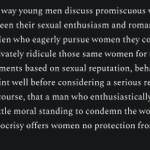
for some reason, an army of chuds is raging at this guy for pointing out that, especially in gated social environments where reputations and histories are easily accessible, men have very different standards for sex and romance, and that Gen-Z women are often misled about that

Interesting behavioral tendencies have been revealed by the response to this piece, which has somehow managed to piss off both sexes at the same time. For the record, I take a little bit of pride in that achievement in today's world of extreme gender-war.
However, I have noticed more negative engagement from women on Substack and in private DMs, and more negative engagement from men on Twitter, many of whom have seemingly neglected to even read the piece they feel so passionately about.
I don't think this allows us to draw any positive conclusions about either sex — more likely we should all be deeply concerned about broad female promiscuity and broad male illiteracy.
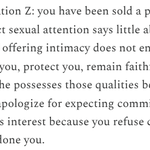
Did not see this coming...telling women that their sexual history matters and that they should consider carefully the men they sleep with has attracted the ire of hordes of men.
It would appear the second sexual revolution will be championed by men.
As a Cornell student, this is a vital read for every single college-aged woman — it provides an inside view of how college men view them.
jaredlederman.substack.com/p…
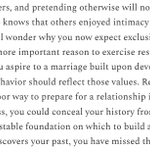
As a senior at Cornell, I have spent enough time around young men to know that most young women would be appalled by what is said behind their backs. Read the full piece below.

As a Cornell student, this is a vital read for every single college-aged woman — it provides an inside view of how college men view them.
jaredlederman.substack.com/p…

Vital inside look at how college men think about the women they pursue, sleep with, and choose to marry.

As a Cornell student, this is a vital read for every single college-aged woman — it provides an inside view of how college men view them.
jaredlederman.substack.com/p…
“I absolutely believe we should judge one another. That’s how you build social standards.”
Check out my full discussion with Lisa Wexler on the Cornell 7 case.
open.spotify.com/episode/22c…

Jared Lederman retweeted

A decent number of builders in SF talks about the male loneliness epidemic as something to be solved with an app or AI
but maybe we should revisit some older social technologies
houses where you live with friend, shared meals, rituals, obligations, and older guys who mentor you
colleges like @Cornell trying to abolish fraternities are dismantling one of the most valuable institutions available to young men
Consider a recent survey of 1,000 men ages 16–28 (Cygnal, 2025):
3+ close friends: 64% of fraternity men vs. 36% of men unaffiliated.
A male mentor: 71% vs. 42%.
Socializing in person 6+ hours/week: 68% vs. 36%.
Life satisfaction: 61% vs. 37%.
In addition:
Fraternity members are 20% more likely to graduate.
They are more comfortable discussing controversial topics with peers: 59% vs. 48%.
And more willing to publicly disagreeing with a professor: 43% vs. 36%.
There’s also a much deeper philosophical argument for why institutions like these are important.
Tocqueville’s concern was that democracy could produce people who were formally free but practically isolated.
As social structures weakened, individuals gained independence while losing the durable relationships through which they could accomplish things together.
His answer was voluntary association.
Citizens form groups, pool resources, elect leaders, disagree, compromise, and assume responsibility for a common undertaking.
Through that experience, they acquire the habits that make self-government possible.
Burke supplies another part of the argument: we learn wider social affection through attachment to particular people and places.
On this view, particular loyalties can cultivate the capacity for broader responsibility.
Learning to show up for your friends can help you become someone who knows how to show up for others.
Hegel adds a third insight. He described occupational associations as a “second family.”
A large society cannot provide every person with the experience of being known, valued, and counted on.
Smaller institutions can give people a concrete place within it.
None of these thinkers was endorsing modern Greek life specifically.
Together, though, they offer a serious account of why belonging requires institutions that endure beyond any particular interaction.
Of course fraternities can fail badly.
Excessive hazing, sexual violence, and dangerous drinking require serious consequences.
Brotherhood becomes corrupt when loyalty means shielding someone from accountability.
But anyone proposing abolition should have to explain what will replace the institution’s benefits,
how it will produce lasting relationships, and why young men will actually participate.
“Students can just make friends elsewhere” is a remarkably thin answer from people who are widely out of touch.
The broader lesson extends to churches and congregations, service clubs, sports teams, and other durable communities.
We should be asking what helps people build a shared life, take responsibility for one another, and keep showing up.
Before we invent another product promising connection, maybe we should understand the institutions that have been getting people into the same room for generations.

A recent poll of more than 1,000 young men found fraternity brothers are more likely to report positive mental health, more likely to have a male mentor, more likely to have several close friends, and more likely to spend real time with people offline. Those results do not excuse whatever went wrong in that Cornell house. But abolishing the institution of college fraternities because of bad headlines is not good for men or women.
Read my latest for @realDailyWire:
dailywire.com/news/the-corne…
