

Investing in Web3 and AI @decasonic ⏩ | alum @umich 〽️ | NFA
Chicago, IL
Joined September 2025
- Tweets298
- Following330
- Followers130
- Likes999








Interesting move from Apple. Making it this easy to run large models locally across multiple Macs could open up a lot more use cases for private, on-device AI. No cloud dependency, no gated setup.
Privacy is going to matter more as consumer AI becomes increasingly personal and has access to more of our data.

Apple is working on a new app called Harbor
Harbor turns your Mac into a private AI inference server. Run open-weight models locally on Apple silicon—your data never leaves your hardware, and nothing reaches the cloud. Connect multiple Mac computers over Thunderbolt 5 to pool unified memory, enabling large models and higher concurrency that a single computer can handle alone.
Set up in minutes, not hours Harbor automatically detects your devices over Thunderbolt 5 to form a cluster. Plug in, start, and you’re running—no manual configuration, no command line, no infrastructure expertise required.
Download and run models directly Browse, download, and load open-weight models from within the app. Harbor handles model management so you can focus on the work, not the setup.
Cluster for scale Connect two or more Thunderbolt 5-capable Mac computers and Harbor pools their unified memory into a single inference resource. Run models that exceed any single computer’s capacity, or serve more concurrent requests across your cluster.
Harbor is currently in a private preview under the Claris brand.


1
2
43
AI founders, investors, and builders - join us this Thursday
Looking forward to bringing the community together for a great evening of conversations and connections.

Building together in the age of AI starts with bringing the right people into the room.
This Thursday, we're hosting our 6th Annual Frensgiving in Chicago alongside @startdancingai and Ferris & Co.
An evening of ideas, conversations, and connections with the community shaping what's next in AI.
See you on November 12.
luma.com/2b1wjs4c
For nearly two decades, mobile distribution has been about getting users to open your app.
Apple opening Siri AI to developers could change that.
Instead of navigating apps, users express intent and AI executes across them.
For startups, this creates a new distribution channel, but also shifts control over discovery and the customer relationship toward the operating system.
The App Store made apps discoverable. Siri AI could make their capabilities accessible without users ever opening them.

Big news for our developers! We are shipping a developer preview that dramatically expands the capabilities of all apps to integrate into Siri. So excited to see what you folks do with this.
developer.apple.com/news/?id…

1
1
83
Interesting way to think about Stripe's long-term strategy. Today, Link balance still relies on visa to complete a purchase. But if Stripe can move consumers toward bank-funded balances and merchants toward direct stablecoin acceptance, Visa and Mastercard could lose the transaction entirely.
At Stripe's scale, that's a much bigger opportunity than simply making payments cheaper.

Last week Stripe launched Link Balance for agents. There's been many takes explaining its details, but I think most are missing the forest for the trees.
In this article I explain Stripe's real goal: taking over Visa and MC as the World's payment network.

1
71
Credit and fund flows were flashing this before stocks sold off. Meta, Oracle and SpaceX CDS all hit records by Oct 22, more than a week before the Oct 30 tech selloff. IG and HY spreads widened last week while CCC tightened, and $18.5B came out of US equities over two weeks after speculative Nasdaq longs hit a record $55B into earnings.
Gridlock on top of a $740B capex year would mean AI gets more hearings and a higher cost of capital at the same time.
For crypto, it means CLARITY stays stuck while agency rulemaking keeps moving, which favors stablecoin and tokenization rails over tokens that need a market-structure law.
The Senate is the swing variable for both.

What's happening now in the stock market is more than just a "correction in tech stocks."
Sure, AI CapEx concerns are legitimate and investors will always care about profitability.
But, there's more beneath the surface here.
The reality is that the market is pricing-in a major shift in the political landscape of the US.
Over the last 12 months, market expectations for a Democrat "sweep" of the US Midterm elections have tripled.
Over the last 45 days alone, these expectations are up +30 percentage points.
As it stands, markets themselves now see a near-80% chance of a Democrat "sweep" of the US Midterm elections.
President Trump has already vowed to become "Mr. Veto" if this in fact does happen.
This is post is not political, it's objective. A change in the political landscape always comes with uncertainty; markets hate uncertainty.
Objectively, the market is in the process of pricing-in two years of political gridlock.
Could this change? Of course. But markets price-in the most probable outcome, and the odds now overwhelmingly favor the aforementioned scenario.
Tomorrow sets the stage for the next two years.
2
108
So one compromised DevOps laptop was potentially enough to facilitate a $6.3B exploit at one of the world's largest exchanges, without a single private key being leaked?
Either we're missing a massive part of the story, or a single engineer had access to systems capable of moving billions in customer funds.
How is this even possible?

Binance's initial investigation suggests that the security incident may involve a compromised DevOps engineer’s laptop, which allowed an attacker to gain access to a service container and submit unauthorized withdrawal transactions. We have found no evidence of any wallet private key leak. We will share a detailed technical post-mortem once the investigation is complete and the facts are fully verified.
The estimated total impact sits at around $6.3B. We have worked with blockchain partners to freeze affected assets, with ~$3 billion frozen on-chain so far.
Binance will cover all losses from the SAFU fund and the company’s funds. User funds are safe. We will also publish an updated Proof of Reserves once the remediation is complete.
As an immediate precaution, Binance has:
- temporarily suspended deposits and withdrawals while security checks are completed;
- revoked the affected address authorisation;
- engaged law enforcement and blockchain intelligence partners to trace and recover funds.
Our teams are working around the clock to resolve this issue safely and thoroughly. We are working closely with our law enforcement partners to confirm the identity of these criminals and bring them to justice.
Please rely only on official Binance channels for updates. Please feel free to contact Binance Customer Support if you have any further questions.
binance.com/en/support/annou…

The bigger opportunity isn't just bringing stocks onchain. 24/7 leveraged exposure across equities, fx, and commodities, with continuous price discovery, capital efficiency, and the ability to go long or short.
$650B in volume proved the demand. ICE now wants to bring that market structure onshore through Hyperliquid.

trade[XYZ] and ICE, owner of the New York Stock Exchange, are joining forces to bring 24/7 perpetual futures on Hyperliquid to the United States.
In just over a year, our markets on Hyperliquid have surpassed $650 billion in volume. They provide continuous price discovery for stocks, indices, and commodities, and have become trusted reference points for retail and institutions alike when traditional markets are closed. Much of the world trades them. Until now, Americans could only watch.
We intend to change that. Subject to CFTC approval, trade[XYZ] and ICE plan to establish a new, dedicated U.S. market, with novel exchange and clearing infrastructure built on Hyperliquid. Planned contracts span equities, indices, commodities, FX, and crypto, with access through participating brokers and platforms. We’ll share more on products, eligibility, and timing as approvals progress.
ICE brings more than 25 years of experience operating regulated markets, clearing, and managing risk. trade[XYZ] brings the product development, market design, and technology behind the most liquid and robust markets on Hyperliquid.
Innovation and the protections of U.S. regulation shouldn’t be a trade-off. Together, we plan to prove it.
ICE is making a strategic investment in trade[XYZ] and joins us in building towards the future of Hyperliquid. A small group of market luminaries is joining as well, beginning with Stan Druckenmiller. For more than four decades, few investors have anticipated the great turns in markets as often as Stan. We’re proud to have him with us for the next one.
We’re building the U.S. market in parallel with our existing HIP-3 markets, which we’ll continue to expand and innovate on. We expect both to flourish. They each have a long road map ahead, from new asset classes to new ways to trade them.
To the Hyperliquid community, whether you were here before us or came because of us, thank you. You took a chance on new markets and you made them matter. You’ll forever be a part of this story.
Anything. Anytime. On ICE[XYZ].
2
63
The suspected Binance hack is another reminder of how much security infrastructure needs to evolve as financial systems become increasingly autonomous.
If billions can move through compromised credentials today, imagine the attack surface when thousands of AI agents are independently managing wallets, executing trades, and moving capital.
Agentic security isn't just about protecting models from prompt injection. It's about enforcing permissions, monitoring behavior in real time, and stopping unauthorized transactions before capital leaves the system.
Identity, authorization, and execution controls are becoming core financial infrastructure.
Anthropic's IPO is occurring at an interesting point in the AI capital cycle, especially given what's happening across the broader market.
$16.3B in H1 revenue, up 14x YoY, with Q3 reportedly reaching $16.8B alone. Over ~12k customers spending $100K+ annually, including ~250 at $10M+.
But the current financing environment looks very different from even a few months ago.
Rumors of $2T from only a few weeks ago have been dropped (now at $1.5T). Taking the q3 run rate of ~67$B annually, that's still roughly 22x revenue, or nearly 30x at the upper end of previous expectations. For reference nvidia is around 17-20x and spcx is aroun 60x+
Meanwhile:
OpenAI is reportedly raising at a $1.25T valuation, down from the $1.4T previously discussed.
Meta just announced plans to raise up to $95B in equity to fund its AI expansion, after reporting negative $2.1B in Q3 FCF
Nvidia, AMD and Broadcom have expressed interest in purchasing up to $5B of Meta's offering. We're increasingly seeing suppliers help finance the customers buying their infrastructure.
CoreWeave's five-year CDS recently exceeded 1,100bps, while its 2031 bonds traded at yields as high as 16%. Debt markets are pricing a very different risk profile for the companies building the underlying capacity.
Anthropic itself has committed over $600B to compute infrastructure, much of it through companies like Amazon and Google, which are simultaneously investors, infrastructure providers, distribution partners and competitors.
That's an important fact when thinking about where the economics of AI ultimately sit.
Anthropic's enterprise adoption is impressive, at the same time, its own compute commitments extend well beyond the current revenue base.
The IPO will have significant implications beyond Anthropic. A strong listing could naturally support private-market marks for OpenAI and its eventual ipo and other frontier model companies while providing a new benchmark for late-stage AI valuations.
But that doesn't necessarily translate to stronger valuations for neoclouds, GPU financing businesses or the broader infrastructure ecosystem. Public equity investors may be willing to underwrite Anthropic's revenue trajectory while credit investors continue demanding double-digit yields from the infrastructure providers supporting that growth.
More assets are obviously moving on-chain. It’s where the value is starting to accrue.
Tokenization is bringing financial activity onchain, but at the same time economics are moving up the stack. Apps are now accounting for 88% of onchain revenue vs. 41% 2 years ago
“Everything is coming onchain” is directionally right, but it is not enough on its own. You still have to figure out who actually captures the economics as activity grows: the issuer, the exchange, the liquidity layer, the app, or the underlying rails.
Value can greatly accrue to companies that horizontally sit across those boundaries. Products that own distribution or a core workflow, while also capturing a chunk of the underlying economics, should be much harder to displace than a pure infra or pure apps.


3
118


Meta explicitly positioning Muse around personal + professional agents is a signal of where Consumer AI is moving towards
AI is moving deeper into the three places people spend their lives: personal, professional, and play.
Better models expand what’s possible a cheaper costs. The model layer keeps improving. The opportunity is increasingly in what gets built on top of it.

Meta has released Muse Wonder and Muse Wonder Full, achieving Artificial Analysis Intelligence Index v4.3 scores of 52 and 56 at max reasoning effort - each a material gain over Muse Spark 1.3 (max) at 48, with a release gap of only 6 weeks
Muse Wonder is available for users on Meta’s first-party API, while Muse Wonder Full is currently only available for Muse Code users. Meta notes that each model is designed for personal and professional agent use
Congratulations to @AIatMeta, @finkd, and @alexandr_wang on the release!
Key Takeaways:
➤ Both models exhibit a material jump in overall Intelligence Index score. Muse Wonder Full (max) improves on Muse Spark 1.3 (max) across all ten Intelligence Index evaluations, gaining 8 points to 56. The largest gains were seen in agentic evaluations: Terminal-Bench 4.0 (+24 points, 33% to 57%), GDPval-AA v2.1 (+176 Elo, 1681 to 1857), and AA-Briefcase (+148 Elo, 1581 to 1729). Muse Wonder (max) gains 4 Intelligence Index points and lands at 52, with notable improvements vs. Muse Spark 1.3 (max) in Terminal-Bench 4.0 (33% to 52%) and AutomationBench-AA (58% to 68%)
➤ Muse Wonder Full (max) places in the top three on six of the ten Intelligence Index evaluations, and is particularly strong in agentic knowledge work and scientific reasoning. In agentic knowledge work, it narrowly leads on GDP.pdf (33%), ranks #2 on GDPval-AA v2.1 (1857 Elo), and #3 on both AA-Briefcase (1729 Elo) and AutomationBench-AA (71%). In scientific reasoning, it tops the CritPt leaderboard at 33% and ranks #3 on SciCode with 63%. This builds on the relative strengths of Muse Spark 1.3 (max), which also showed particular ability in these two domains
➤ Both models use fewer output tokens than Muse Spark 1.3 (max). Muse Wonder (max) and Muse Wonder Full (max) each use around 54k output tokens per Intelligence Index task, down ~10% from Muse Spark 1.3 (max, 60k). This usage is lower than similarly intelligent models Gemini 4 Argon (high, 62k) and Claude Fable 5.1 (max w/ fallback, 78k), but higher than GPT-6.1 Sol (max, 38k) and GPT-6 Astra (max, 27k). Muse Wonder Full (max) uses 16% fewer input tokens per Intelligence Index task than Muse Wonder (max) (6.44M vs 7.69M), meaning it is both more intelligent and more token-efficient
➤ Cost per Task for Muse Wonder (max) lands higher than most similarly intelligent models. Despite efficient output token use, premium API pricing ($4 per million input tokens, $20 per million output tokens) and high input token use (7.69M per task) push Muse Wonder (max)’s cost to $4.52 per Intelligence Index task. This is lower than Claude Fable 5.1 (max w/ fallback, $7.63), Claude Opus 5.5 (max w/ fallback, $5.98), and Claude Sonnet 5.5 (max w/ fallback, $5.46), but higher than GPT-6 Astra (max, $3.26), Gemini 4 Argon (high, $1.99), GPT-6.1 Sol (max, $0.72), and its predecessor Muse Spark 1.3 (max, $1.60). Per-token pricing is not currently available for Muse Wonder Full, so no Cost per Task figure can be estimated at this stage
➤ Both models gain significantly in Coding Agent performance. Muse Wonder Full achieves 68 on the Artificial Analysis Coding Agents Index at max effort in Muse Code, alongside Claude Code with Sonnet 5.5 (max, 68) and Opus 5.5 (max, 66). Muse Wonder (max) scores 63. These represent material gains over Muse Code with Muse Spark 1.3 (max), which scores 54
Other details for the two new models:
➤ Context windows: 1M tokens each, unchanged from Muse Spark 1.3
➤ Pricing: for Muse Wonder, $4 input / $0.20 cached input / $20 output per 1M tokens. Pricing per token is not yet announced for Muse Wonder Full
➤ Input modalities: text, image, video, and audio
➤ Output modalities: text
➤ Availability: Muse Wonder is available on Meta's first-party API and Muse Code at launch, while Muse Wonder Full is only available to Muse Code users

2
76
Great meeting founders at Third Coast Foundry. Love seeing Midwest innovation represented out on the West Coast.
Hopefully @UMich makes the wall soon

4
99
Taking a brief AI break tonight to spend some time in Web3.
Interesting to see leading Web3 companies spending so much time discussing AI. The overlap is increasingly where things get interesting: agentic payments, commerce, trading, and RWAs. Crypto rails start to make a lot more sense when an agent becomes the user.

5
71
Spent today at a16z Speedrun Demo Day in SF.
What stood out most was the range of what people are building.
Saw teams working across agent infrastructure, GTM, enterprise workflows, robotics, industrial systems, defense, finance, creator tools, and new consumer experiences.
A lot of the companies were also much further along than you’d expect at this stage: real customers, strong early revenue, and products already being used in production.
Another theme: AI is moving from generating output to actually taking action. More products are owning workflows end to end, interacting with software, making decisions, or operating in the physical world.
And underneath that, there’s a growing stack around reliability, evaluation, orchestration, security, and data that becomes more important as agents do more.
Great day meeting a lot of impressive founders and seeing where the next wave of companies is forming.


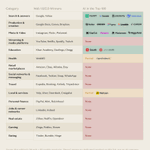
Consumer AI is still concentrated in search, productivity and creation. The whitespace is across the rest of life.
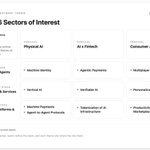
Our Q4 view is that consumer AI spans the personal, professional and play (3 Ps)... products for mainstream people that help them do old things better, unlock new behaviors, and create experiences with the people around them.
That means better ways to manage money, health, work, travel and everyday admin. It also means entirely new behaviors: making games or music with friends, real-time translation, family experiences, multiplayer worlds and new forms of entertainment.
The products that grow rapidly will save people meaningful time or money, or open up something they simply could not do before AI.
More on our thesis: nitter.cf/justpat/status/2107167…



3
54
Consumer AI is becoming a real category of spend
Only 2% of US households pay for AI today, but average spend is already to ~$31/month (higher willingness to pay vs traditional consumer products streaming, music, etc.. in the $10-20 range), and paid subscriptions are up ~5x since 2025, with retention improving across cohorts.
As products get more specialized across work, finance, health, creativity and entertainment, consumers will carry multiple AI subscriptions rather than just one we already see this with sectors such as streaming.
Habit, context and distribution will determine who earns recurring spend share. Penetration is still early, but spend and retention are already moving in the right direction.
