


kai retweeted

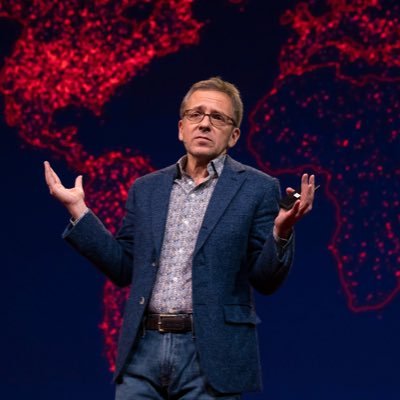
Trump and Xi will meet in Shenzhen Thursday. In today’s @ForeignAffairs, I argue that the so-called “detente” they struck a year ago is now under severe strain. Busan is cracking over rare earths, a new Democratic Congress will check Trump, and the Nvidia scandal is triggering new export controls. After a year of calm, we may be in for a period of tension.
Beijing has used the detente to press its advantage. It is locking in its industrial leadership, coercing its neighbors, and keeping rare earth flows tight to keep the U.S. on a tight leash. Meanwhile, the U.S. has been accommodating.
But Beijing is overreaching. If the United States believes Beijing will throttle rare earths no matter what it does, there is little reason for continued restraint. With the trade truce expiring January 10, time is running out for the two leaders to extend or preserve it. The meeting in Shenzhen, and the next one in Miami in December, are the last few opportunities to stabilize.
--
A summary of the key points:
1) Chinese scholars see the current detente as temporary. Chen Dongxiao calls the detente a “tactical truce.” Wu Xinbo said it was “tactical stability” that is “neither sustainable nor solid.” And Shen Weizhong, a former Chinese foreign ministry official, says: “The more time we have, the better prepared we might be towards a final showdown on Taiwan or maybe another trade war.”
2) Chinese scholars believe China’s strength built the detente, not diplomacy. Wang Yong called the trade war “a tipping point in terms of strength.” Wu writes it “is not the result of the U.S. side having a change of heart or showing goodwill, but was won by China through arduous striving and struggle.” Wang Yong of Peking University calls the trade war’s outcome “a tipping point in terms of strength.”
3) Chinese scholars credit Trump personally for American conciliation. Chen Dongxiao points to his “distinct and unique decision-making style.” Zhao Minghao writes that Trump “admires power and prefers to engage with the leaders of powerful countries.” Others write he would "readily sacrifice" Taiwan. They want to lock in the current stability, as Xi declared, for three years and beyond.
4) Trump has indeed been accommodating so far. He kept tariffs on China well below the cap. He paused entity listings for the longest period since 2008. He let advanced AI chips flow to China and its Southeast Asian cutouts. And he held up arms sales to Taiwan and offered only muted support to Japan and the Philippines under Chinese pressure.
5) Beijing is pulling up the tech ladder and preparing for the next fight. New State Council orders threaten foreign firms that cut ties with Chinese partners. Exit bans keep key talent and their families in the country. Export controls on manufacturing equipment keep others from catching up. National security regulations on scientific publication protect domestic know-how. And rare-earth licenses force foreign buyers to hand over customer lists and production details, giving China a map of chokepoints.
6) Beijing is taking advantage of American conciliation to press its advantages in Asia, breaking past precedent. A China Coast Guard crew clubbed a Philippine sailor near Second Thomas Shoal. They blocked a resupply mission during Xi’s state visit to Washington, breaking a two-year agreement. Japan now faces the broadest coercion campaign in more than a decade, existentially threatening some of its manufacturers. And around Taiwan, the PLA fired rockets closer to the island than ever before. Washington has largely stood by.
7) Beijing is breaking the Busan agreement. Washington has complied with the terms of the Busan agreement, suspending the Affiliates Rule and lowering tariffs, but Beijing has throttled the supply of rare-earth minerals and magnets to the United States. U.S. officials say China has delivered only about two-thirds of what it promised, and trade data suggest the shortfall is larger still. Shortages of yttrium, used for jet engines and gas turbines, have forced some suppliers to suspend production. Chipmakers are running short of scandium. Beijing believes strength built detente, and more strength will preserve it - not backfire.
8) The way forward at Shenzhen. The two sides are unlikely to save the truce at Shenzhen. We should expect few breakthroughs on agriculture, aviation, or even AI despite the need. But the leaders should at least announce they are working to extend the truce ahead of the December meeting in Miami.
If they fail, and tensions mount, there is a growing risk of runaway escalation.
foreignaffairs.com/united-st…

kai retweeted
bessent and ratcliffe fit into both categories and want him out. you might be wrong about this.
kai retweeted

- if he did indeed illegally conspire to sell strategic assets to a foreign adversary jensen deserves to be fired, and possibly face charges
- this will have short term negative impact on Nvidia, but medium term neutral. the founder effect matters, but Nvidia is in an incredibly unique situation wrt their lead and demand for their product, and dangers around talent exodus simply matter far less in the face of improving models.
- however those same improving models mean that long term, Nvidia is dead as a chip business, since every frontier lab and later government will simply design massively better chips with internal-only models. and by "long term" i mean like ~two years
- Jensen's impact wrt open source might have seemed critical, and it was basically the case that him supplying compute to China and politically propping up open source did in fact directly drive much of the last year of progress. but open source models were on a hard overdetermined trajectory to become totally politically infeasible by the end of this year anyway. maybe Jensen could have pushed it out a few more months, but once national security gets involved it really doesn't matter what "industry leaders" say
- so on net: i just don't think this matters at all. some very short term churn, some froth, but in terms of actual outcomes anyone besides Jensen and Leopold care about? irrelevant.


kai retweeted

“This narrative of the Chinese spy is falling apart,” David Sacks, President Donald Trump’s former AI and crypto czar, said at Semafor’s Silicon Valley & The World, joining a chorus of (admittedly geographically and ideologically cloistered) allies casting doubt on the crux of the scandal that bounced the Nvidia CEO from his job last week.
Read more:
semafor.com/article/11/17/20…

kai retweeted

$AMZN CEO Jassy to CNBC:
- long partners with NVDA, “I don’t see that changing”, re: the relationship
- on competitor side, “Trainium is doing very well, we have the co-opetition, room for all of us to be successful”
- “we don’t think of it that way”, if Amazon can be successful with wounded Nvidia…“never wish ill on a competitor, I think of us more as a partner”
- will there be a time you no longer need Nvidia chips? “I don’t foresee a day we are not a partner. Always will have customers that want Nvidia chips. But, the vast majority of inference on Bedrock is our own silicon”
- Where are we in the AI cycle? “Incredibly early innings in my opinion. Demand is barbelled to date, AI labs on one side, other end is enterprise with things like customer service. In the middle is vast majority of enterprise workloads. I understand why people are nervous, because the numbers are so big. If you have the demand signals like we do, the big chunks of compute are reserved in 2027, in 2028, and even a fair bit in 2029, if you have those demand signals, when you are growing this quickly and deploying this capital and then later the FCF and ROI is very compelling. We will be a much larger FCF in a few years”
- On the 2 yr guide: “I think in this case, we do have strong visibility into the demand. We are also aware of the unusual capex investment. The investment is working and I think it benefits shareholders to let them know”
- “we expect to spend more on capex in 2027, that’s what I will say”
- On $ANT: “The pace at which Anthropic has grown its business, have not seen anything like it. An impressive team, smart they focused early on in coding. Amazing partnership for us, they do lots of their inference on our chips. We have learned a lot, and we hope we helped them too, it’s early in our partnership.
- Converting the ANT converts? “We are believers in Anthropic. We invested not to make a quick buck. We anticipate being holders for a long period of time. We have a lot of ways to finance.”
- On funding for build-out, capital crunch: “It will have its own evolution, look at 6-9 mths. Will be a number of companies looking to finance. I think businesses are all different. The more AI you do, the more it drives non-AI, what we call core.”
kai retweeted

$AMZN AMAZON CEO ANDY JASSY, ON NVIDIA FALLOUT, SAYS NVIDIA "HAS BEEN A REALLY IMPORTANT PARTNER FOR A LONG TIME AND WILL BE FOR AS LONG AS I CAN FORESEE IN THE FUTURE" - SEMAFOR EVENT
kai retweeted

GPT-6.2 Astra beats Claude Fable 5.2 by 5.5 points on Agents' Last Exam 1.1, at just 5% of the cost.
Improve the intelligence-per-dollar!

kai retweeted

GPT-6.2 Astra and GPT-6.2 Sol are rolling out now, and are already live for some of my friends. The announcement from OpenAI should happen any second now.
kai retweeted

The #FBI issued a FLASH advisory warning that cybercriminals and state-aligned hackers are exploiting ARTEX, a super intelligence-powered penetration testing framework, to automate attacks against businesses and organizations worldwide. ARTEX can accelerate intrusions from initial targeting to privileged access in under three hours. It was used in the October ConnectWise supply-chain compromise, which exposed Microsoft 365 customer environments and involved attempted authentication against more than 2,250 downstream tenants.
The FBI is urging businesses and organizations to strengthen access controls, monitor suspicious automated activity, and report potential compromises to ic3.gov.
Read more here: ic3.gov/CSA/2026/261113.pdf

ALT FBI Industry Alert displayed over a dark green background with the FBI seal faintly visible in the bottom right corner.
kai retweeted

USER REPORTS SHOW PROBLEMS WITH APPLE SUPPORT: DOWNDETECTOR
USER REPORTS SHOW PROBLEMS WITH ICLOUD: DOWNDETECTOR
USER REPORTS SHOW PROBLEMS WITH APPLE PAY: DOWNDETECTOR
$AAPL
kai retweeted

Downdetector is showing a spike in user reports of problems across multiple Apple services, including iCloud, the App Store, Apple Pay and Apple Support.


kai retweeted

I think it will be obvious in retrospect that OpenAI hasn't released any models because they have been and are currently assisting with a national security situation. Below, I gather the fact pattern and make some guesses. (a 🧵):
kai retweeted

*DRUCKENMILLER: WE'RE NOW SHORT COPPER. THE FED IS NOT CUTTING, THEY'RE HIKING
*DRUCKENMILLER: WE'RE NOT LONG EQUITIES. WE'RE NOT SHORT EQUITIES. I WOULDN'T DARE GO SHORT
*DRUCKENMILLER: I CAN'T REMEMBER A PERIOD WHERE I HAD LESS CLARITY ON WHERE WE'RE GONNA BE IN 12 MONTHS
*DRUCKENMILLER: WE'RE IN CAPITAL PRESERVATION, TRYING TO NOT LOSE MONEY AS OPPOSED TO MAKE MONEY


AMD CEO Lisa Su says Nvidia is a phenomenal company and Jensen has been a tremendous leader, but AMD has to separate itself from the noise
"First of all, Nvidia is a phenomenal company. Jensen has been a tremendous leader for the industry, a great leader."
"There is a lot going on. What I try to do from an AMD standpoint, and from an industry standpoint, is, look, we have to separate a little bit from the noise. The noise will work itself out in time."
"But taking a step back, from an AMD standpoint, we are in a place where we have just tremendous opportunity."
"Tremendous opportunity to be part of this infrastructure buildout, to work collectively with our partners on the roadmap going forward, to, I'm not gonna say overpromise, but to promise and exceed expectations in terms of delivery."