

Decoding life's longest war Doudna Lab @UCBerkeley
Berkeley, CA
Joined January 2020
- Tweets542
- Following2K
- Followers1K
- Likes16K


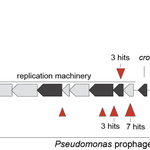

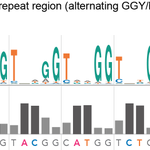
Pinned Tweet
VIPR is now out in @ScienceMagazine!
What started with a mysterious RNA led us to an unexpected way of recognizing DNA, as well as some clues to CRISPR’s origins.
So happy to share these two papers with an incredible team. Links below; original discovery thread here ↓


Kenneth Loi retweeted

Language models can learn new tasks from just a few examples in their prompt, with no retraining. This is called in-context learning (ICL). Now genome language models can do it too.
With a handful of examples, Evo 2 ICL generates proteins, de novo antibodies, CRISPR-Cas9 loci, mitochondrial genomes and entire bacteriophages.
We can even use the synthetic sequences iteratively to construct a chain-of-thought (CoT) and achieve harder design goals.
New work with Yukun A. Hao, @BrianHie and team 🧵
Kenneth Loi retweeted

In new work, we report a surprising finding: prompting Evo 2 with a handful of sequences of shared function can steer the model to generate new sequences with similar function, a form of generative in-context learning (ICL). This is an emergent phenomenon that we did not anticipate during training.
In a first study, led by Alex Hao, we show that ICL enables few-shot design of mammalian regulatory elements, including novel enhancers with cell-type specificity for a neuronal subtype in the mouse brain.
In a second study, led by @garykbrixi and Alex Hao, we extend these results to the computational design of natural proteins, de novo antibodies, protein-RNA systems, and complete bacteriophage genomes.
As part of this work, we also release several useful new artifacts, including a highly efficient new inference stack. 1/n

Kenneth Loi retweeted

I've always believed that intelligence should come from simple, general building blocks that learn their own abstractions directly from raw data; in other words, the bitter lesson. I think we're finally seeing a real step towards AI that can learn from all data.
Language modeling on raw bytes is a microcosm of this ideal, and to me it's a central problem in AI: if we can't build LLMs that learn end-to-end from bytes, how will we handle the rest of the world's data that we understand even less?
Last year we introduced hierarchical networks (H-Nets) as a first step. Our new version finds up to 3-5x efficiency gains in controlled scaling law experiments, and at larger scale matches an open-source model trained on 11T tokens with ~10x less data and compute. The posts below walk through what we found and why we think it works.


Kenneth Loi retweeted

Stoked to be able to share this! VIPRs are already pretty cool, but the ways in which they're stolen and used by competing mobile genetic elements is honestly mindblowing -- excited to see how deep this goes!
Viruses have parasites too. Our new preprint shows how phages use VIPR to silence parasitic satellites, and how the satellites fight back with its own decoy VIPR RNAs that redirect VIPR to DNA REP elements in the host genome!!
biorxiv.org/content/10.64898…


Viruses have parasites too. Our new preprint shows how phages use VIPR to silence parasitic satellites, and how the satellites fight back with its own decoy VIPR RNAs that redirect VIPR to DNA REP elements in the host genome!!
biorxiv.org/content/10.64898…
Favorite line:
"This strategy enables satellite collusion with its host to
prevent virus-borne VIPR targeting that would otherwise
prevent satellite propagation."
Viruses have parasites too. Our new preprint shows how phages use VIPR to silence parasitic satellites, and how the satellites fight back with its own decoy VIPR RNAs that redirect VIPR to DNA REP elements in the host genome!!
biorxiv.org/content/10.64898…
Kenneth Loi retweeted

Excited to share our preprint! A new logic for bacterial immune signaling: second messengers released from tRNAs rather than built from free nucleotide precursors.
biorxiv.org/content/10.64898…

Kenneth Loi retweeted

1/ Most genes and variants matter somewhere but look silent in any one cell model. Can we build conditions that reveal phenotypes? With @kanishkadey, we engineer cell states to expose hidden disease biology and trace how genetic risk reaches disease genes. biorxiv.org/content/10.64898…

ALT Visual abstract: activating TFs singly and in pairs engineers new cell states, and the Mosaic model learns how TFs combine. Findings: hidden AMD risk variants, state-dependent convergence, and chromatin priming.
Kenneth Loi retweeted

BREAKING NEWS
The 2026 #NobelPrize in Physiology or Medicine has been awarded to Karl Deisseroth, Peter Hegemann and Georg Nagel “for their discoveries concerning light-gated ion channels and optogenetics.”

Kenneth Loi retweeted

Can an LM, starting from random init (!!), learn to generate all of its pretraining data?
Introducing Self-Play Pretraining with Zero Data. Two models start from random initialization: a generator proposes programs for a universal Turing machine and a learner trains on their outputs. We never train on any real data, but see predictable scaling on natural datasets: zero-shot val loss on images, text, audio, and melodies decreases predictably with self-play compute. And the learner develops in-context learning capabilities.
A fun proof-of-concept, co-led with @AdityaCowsik and @KfirDolev and co-authors @gbruno_dl, @ANourya @noahdgoodman, and @YoavLevine.

Kenneth Loi retweeted

I highly recommned the essay on antedisciplinary science by Sean Eddy written 21 years ago.
journals.plos.org/ploscompbi…
It seems to me that we are currently experiencing the birth of a new discipline: mathematics engineering.
Kenneth Loi retweeted

Biology manifests through sequences, and we can learn a lot from examining sequence databases. That is traditionally hard because the databases are huge. So we put troops of Claude on a mission: find new partner genes of reverse transcriptases (RTs) in 1.9B protein clusters.
We were surprised by what came back. Claude turned up a strange CRISPR-like RT system we didn't ask for. It is an RT from jumbo phages with an array of repeats upstream and a dedicated partner gene. We call these array-associated RTs (ART).

Kenneth Loi retweeted

This is the first result from our new molecular biology lab, where a team of Anthropic biologists is using Claude to explore and accelerate fundamental biology research. There, Claude works through data and literature to generate hypotheses and candidate biological systems to study. After our scientists review Claude’s hypotheses, they test the most promising ideas, with all lab work done by our scientists.
We’d like to extend this approach to a broad range of problems—in genomics and in other fields. If you have a proposal for a research question, we’d like to hear from you.
Kenneth Loi retweeted

It's kinda wild to see LLMs having this sort of "a-ha"/lightbulb moment in the biological setting!!


ANTHROPIC ANNOUNCES BIOLOGY LAB AND NEW DISCOVERY
In Spring of 2026, Anthropic started a research group to accelerate biological discoveries.
Today they announced their first result: Claude Mythos 5 autonomously discovered a novel enzyme system that is associated with an array of DNA repeats, a pattern reminiscent of CRISPR.
The key insight here behind what Anthropic is trying to do:
A lot of biological discoveries come from scientists noticing something unusual and unexpected. LLMs could potentially automate this manual process, scaling up the amount of potential discoveries.
Here, the researchers focused Claude's attention onto reverse transcriptases (RTs). These are enzymes that copy RNA into DNA. RTs are used for many biotechnologies from DNA synthesis to genome engineering. So discovering novel RTs can be very valuable!
Claude was made to search autonomously through a massive database of DNA sequences for interesting new examples of RTs.
After 21 hours spent by roughly 950 agents using 210 million tokens, one agent spotted something unusual: a repeating pattern of DNA sequences that occurs next to the gene for an odd-looking RT. After further analysis it was convinced that it had found a new biological system! The system it found, ART, is found mainly in bacteriophages (viruses that attack bacteria).
The researchers did some preliminary lab experiments where they expressed the ART system in E. coli bacteria and did further RNA sequencing. However, there are still many many open questions of how exactly this ART system works and what its function is.
Link: anthropic.com/news/claude-di…

Very fair points. But the fact alone that mythos made these insights is incredible! Experimental techniques have advanced pretty far and leaves us molecular biologists bottlenecked by good hypotheses/ideas.
215M tokens over 21.5hr. Or roughly $10k in API costs (roughly just a couple NGS runs) and a potentially huge bioinformatic lead in less than a day. The work in the paper and write up would’ve taken a very seasoned informatician weeks. Huge value!!!

I wish we didn’t need these again, but here is the honest version of Anthropic’s biology announcement 🥳🥳🥳
(Caveat: I haven’t worked in bioinformatics for many years.)
The good: Anthropic ran ~950 Claude agents over a large biological sequence database. Claude searched, wrote code, compared sequences and genomic neighborhoods, and found an interesting pattern that apparently had not been noticed before: a known reverse transcriptase associated with another gene and a repetitive DNA array.
That is cool. Automating this kind of open-ended bioinformatics search at scale is useful, and Claude may have found a lead a human would have missed.
But: Claude did not do a biological experiment. It searched databases and analyzed data.
Humans then took the candidate into the wet lab. And the wet-lab result so far is modest: they showed that the repeat array produces short RNAs.
We still don’t know what the system does. No function, mechanism, phenotype, targeting, defense activity, or programmability has been demonstrated.
This is also where the CRISPR framing gets ahead of the result. Right now, “it has some features reminiscent of known programmable systems” is a hypothesis for what to investigate next, not a discovery that it behaves like CRISPR.
And there is a missing baseline: bioinformatics has had tools for finding unusual gene neighborhoods and candidate systems for years. The interesting comparison is 950 Claude agents vs. an expert using the best existing computational pipelines - not Claude vs. someone manually looking through 200,000 sequences.
So my honest announcement would be:
Claude autonomously found an interesting candidate for a previously uncharacterized biological system. A small human wet-lab experiment confirmed that part of the candidate is expressed. We don’t yet know what it does.
That is a good result.
But in a regular biology lab, this isn’t the finished paper. It is the result you show at lab meeting and say: “This looks interesting. Now we need to figure out what the hell it does.”
Maybe that next step leads to a major discovery. But that discovery hasn’t happened yet.