Alex Komoroske (@komorama) header
Alex Komoroske (@komorama) profile picture

Co-founder, CEO of @common_fabric Technologist obsessed with complex adaptive systems. https://nitter.cf/t.co/KAOw2Wxvrq

Berkeley, CA
Joined January 2008
Photo by Alex Komoroske (@komorama)Photo by Alex Komoroske (@komorama)Photo by Alex Komoroske (@komorama)Photo by Alex Komoroske (@komorama)Photo by Alex Komoroske (@komorama)Photo by Alex Komoroske (@komorama)Photo by Alex Komoroske (@komorama)Photo by Alex Komoroske (@komorama)
1/ It’s time to share more about what we’ve been working on: @common_fabric is a social computing lab building a medium for software that revolves around people, not apps. commonfabric.com
21
32
18
176
27,887
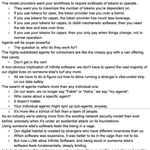
Different levels of agentic software have different risks today. 1. Vibecoding software that uses LLMs on your data. Some risk of prompt injection. 2. Sharing that software with your close friends. Now they can theoretically prompt inject it. If you'd trust them to be alone in your house for a few hours, it's probably fine. 3. That same software goes viral, and strangers you don't know can use it. A 1% chance of a successful attack, at a large enough scale, guarantees an attack. Level 3 is out of reach in today's physics of trust.
3
1
2
294
Netscape originally thought they'd be the next Windows. But the web was a fundamentally different kind of thing that enabled all sorts of newness -- think: publishing a page for anyone in the world to read. AI will be the same.
1
1
13
1,791
1/ How rocker.ai is more than an assistant; why we built a nervous system for companies: I spent years running the products behind 90%+ of Stripe’s revenue. At one point I counted 250 projects I was responsible for. My job was knowing the dependencies the teams themselves weren't aware of, which plans had to change, and what important historical context people were missing.
3
10
5
23
1,439
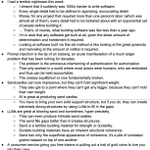
Little, helpful utilities are still dangerous. For example, a wordcount utility or file converter. You just hope the person who created the software won't misuse your data. You have to implicitly trust every piece of software you use, even for mundane tasks.
2
2
14
943
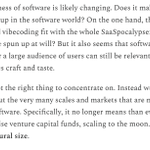
Great piece from Sam Arbesman: "When software finds its natural size, whatever results from it is a more natural form, perhaps even a more resonant kind of computing." arbesman.substack.com/p/soft…
2
6
514
AI makes infinite software possible: if you want something to be different, you simply ask. Would you like your grocery list to be sorted by aisle? Ask. For programmers, that’s a massive reduction in friction. For non-programmers, it’s a revelation.
3
3
20
1,195
I just published my weekly reflections: docs.google.com/document/d/1… Tokens as opex vs. capex. Free-candy van. Agents as a school of fish. Agents as islands. Attention caches. Fail-small. Judgment vs output in an age of agents. Fractal coherence. Agent-assisted Strangler Fig rearchitectures. Heel-nipping proactivity. Hill climbing vs hill finding. Implicit time horizons.
1
3
23
1,383
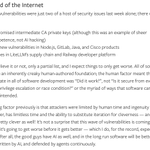
The architecture of networked software has been a dumpster fire for 30+ years. It wasn’t that big of a deal because it was submerged. Now with Fable class models, it’s on the surface. The fix requires a fundamental rethink of the foundations. From @benthompson's Stratechery piece this morning:
2
1
1
16
1,274
It’s established that AI can do a lot of useful stuff for you… but only if it has the right data. The limiting factor is not how good the AI is, it’s trusting it enough to give it all the data it needs.
4
2
1
25
1,811
It doesn’t matter if you wouldn’t be fooled, if your agent would be. Your agent will very helpfully read every word (including hidden text) and has no reliable way to differentiate between information and instructions. futurism.com/artificial-inte…
3
472
Electricity was dangerous before it was convenient. Before it could be widely adopted, we had to find a way for electricity to fail small. (Think fuses and circuit breakers.) AI needs a way to fail small. A new @common_fabric lab note: commonfabric.com/notes/fail-…
2
1
10
826
The difference between “you may” and “you must”: a platform vs a cage.
2
10
927
I just published my weekly reflections: docs.google.com/document/d/1… Software pyramids. AI-made sandcastles. Dead-end software. Spending tokens on opex vs capex. The Reset Nexus. Mentorship trust fall. The AI Peter Principle. The non-viable solution to Goodhart's law. AI making your spikes sharper. The cost of linearizing writing. The Lethal Trifecta Gordian Knot. Chats as a junk drawer.
3
11
5
140
34,226
I’ll be chatting with @timoreilly about our work at @common_fabric at 8am Pacific tomorrow. Hope to see you there! oreilly.com/live/live-with-t…
1
12
1,069
Is an agent just an extension of you and working under your direct supervision? Or can it take speculative actions on behalf of you? The latter is required to make it 1000x more powerful. But that requires a trust model where autonomous action is safe.
4
2
20
1,382
What would an LLM-native notification system for your life look like? Every app only cares about its own notifications, so no app can rank its content against the others’. Only a system dedicated to you can.
6
18
1,341
Agents can create a massive amount of coherence in a short period of time. And they can create decoherence just as fast.
1
10
633
We use “auth” to mean both authentication and authorization. That works when most actors are humans, who are embodied and can be held accountable. Agents break this norm. The difference will start becoming extremely important.
2
1
1
13
1,036