

Building generative models for biology. Asst Prof @UAlberta · Fellow @AmiiThinks · CIFAR AI Chair · ex-@broadinstitute @UofT
Edmonton, Alberta
Joined June 2020
- Tweets494
- Following998
- Followers707
- Likes4.6K






Pinned Tweet
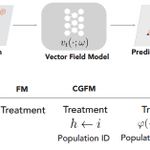
🚀Introducing — Meta Flow Matching (MFM) 🚀
Imagine predicting patient-specific treatment responses for unseen cases or building generative models that adapt across different measures. MFM makes this a reality.
📰Paper: arxiv.org/abs/2408.14608
💻Code: github.com/lazaratan/meta-fl…
Lazar Atanackovic retweeted

Your molecule is really into your target protein. Unfortunately, it’s into other proteins too 💔
Introducing SelectBench: a benchmark for selectivity in generative structure-based drug design.
We started out thinking about algorithms for selectivity, then ran into a question: how do we evaluate them at scale on pharmacologically relevant examples? So we took a side quest and built a benchmark 🛠️ SelectBench is our first step toward evaluating in silico selectivity more systematically. Turns out, getting models to be picky is really hard!
Super proud of the entire team, especially Ella (@ERajaonson) and Yoon (@yololulu_) for leading the work. We can’t wait to present SelectBench in Sydney at NeurIPS 2026 as part of the Datasets and Benchmarks track. 🤗
Can your model design molecules with a type? 🧬
📄 Paper: arxiv.org/abs/2610.24124
💻 Code & benchmark: github.com/lovetaro/selectbe…


A molecule can bind the right protein and still be the wrong drug. Why? Because it might also bind proteins we don't want it to, potentially causing serious side effects.
📄 Paper: arxiv.org/abs/2610.24124
Lazar Atanackovic retweeted

(1/5) Can we learn the recurring motion of flocking birds from just a few snapshots? 🐦
Introducing Kinematic Interpolants (KI), a simulation-free method for learning smooth dynamics from snapshots of position–velocity data.
Lazar Atanackovic retweeted

Uploaded the camera-ready version of our #NeurIPS2026 paper:
"Generalized Wasserstein Flow Matching:
Nested Couplings for Point Cloud Generation"
→ Multisample Flow Matching in Wasserstein space
📄 arxiv.org/abs/2605.08424
with R. Duong & G.Steidl :)
Lazar Atanackovic retweeted

A molecule can bind the right protein and still be the wrong drug. Why? Because it might also bind proteins we don't want it to, potentially causing serious side effects.
📄 Paper: arxiv.org/abs/2610.24124
Lazar Atanackovic retweeted

“Go with the Flow”
Trailer for my Flow Matching lecture, coming this winter to my #DeepLearning course 🎬
Lazar Atanackovic retweeted

Excited to announce the follow-up to our NeurIPS 2026 Oral: Improved Training of Strong Stochastic Flow Maps!
We improve the training of SSFMs by unlocking derivative-based losses!
Joint work with @antoniofrancaib @rmincam @ChristianKoke @Niklas_TR and @AlexanderTong7
Lazar Atanackovic retweeted

Avengers assemble: 1 year BakerLab + NVIDIA GenAIR = 🔥 rfd4-proteina.org
Presenting RFD4-Proteina, our latest protein design model, significantly better and faster than everything we compared against, both in silico and in the lab! 1/30
Lazar Atanackovic retweeted

Adding my two cents on this (awesome) paper. I think the reason I (and many others) would intuitively expect this not to work is that we imagine minibatch OT “shattering” the latent space: some parts of the noise correspond to 3s, others to 4s, etc, etc. 1/n

Lazar Atanackovic retweeted

The "accidental discovery 🧑🔬" is one of my favourite kinds of research projects/papers!
It's right up there with "we kept tuning the baseline and eventually got SoTA, so we published that instead 🤷" 😁
How this came about: we were working on a completely different project and discovered this by pure accident. We launched the experiment late one night, not expecting it to work at all, because theoretically and intuitively it shouldn't have. We were very surprised when we saw the results and got excited to see that this observation held generally!
Lazar Atanackovic retweeted

Today, we introduce Priming Models, a new paradigm for training one-step generative models from scratch.
No diffusion teacher. No flow map. No CFG. No JVP.
We believe this work will challenge how we think about building one-step models.
Joint work with @sitanch, @du_yilun, @parkwbin03, Bohyung Han.
🔥 1.19 FID one-step on ImageNet 256×256 while using substantially less compute, e.g., 12X less than Drifting-B, 6X less than Drifting-L
🎨 Scales to text-to-image generation (GenEval 0.82)
🤖 World modeling on RT-1 / Bridge-V2
Priming Model is built on one core message: [Reconstruction pretraining --> Distributional post-training].
Lazar Atanackovic retweeted

1/ Most genes and variants matter somewhere but look silent in any one cell model. Can we build conditions that reveal phenotypes? With @kanishkadey, we engineer cell states to expose hidden disease biology and trace how genetic risk reaches disease genes. biorxiv.org/content/10.64898…

ALT Visual abstract: activating TFs singly and in pairs engineers new cell states, and the Mosaic model learns how TFs combine. Findings: hidden AMD risk variants, state-dependent convergence, and chromatin priming.
Lazar Atanackovic retweeted

Great to the see the flurry of single gene knockdown Perturb-seq like atlases from cell-lines, mouse brain etc over the last few days. These are undoubtedly very valuable datasets. I just want to re-iterate a few other very important expt. design considerations 1/
Lazar Atanackovic retweeted

We're hiring research interns in machine learning, generative modeling, and their applications!
Our research scope is broad, so if you're interested, feel free to reach out and tell us a bit about your research interests!
Apply here: apply.careers.microsoft.com/…

Lazar Atanackovic retweeted

i am extremely excited to announce our latest flow map finetuning algorithm: Wasserstein Tilted Flows (WTF?!)
something i’ve been thinking about for a while now is the “right” way to formulate finetuning and reward alignment of flow-based generative models. two difficulties that arise repeatedly are 1) sampling the canonical “reward-tilted distribution” is really hard, and 2) basically all existing methods require backpropagation or adjoint methods through flow rollouts, which is prohibitively expensive
the core issue i’ve had with the reward tilt is that it arises from a geometry on the space of probability measures based on the KL divergence. this makes sense for stochastic processes such as diffusions, but for the deterministic flows we use in practice, this choice of geometry can be very awkward, leading state of the art methods to repeatedly convert back and forth between a flow and a diffusion
here we throw out this formulation entirely, redefining the reward alignment problem in terms of a carefully-chosen wasserstein distance. we show that that this leads to a deterministic optimal control problem, which we can solve rapidly via reinforcement learning in a simulation-free by way leveraging the underlying flow map. critically, using the flow map avoids backpropagation through rollouts, replacing them by a single function evaluation.
by adapting both the flow map and its underlying flow together online, we obtain an end-to-end finetuning algorithm that takes a flow map in, gives a flow map out, and is ~50-100x faster than current state of the art approaches
super proud of my students for their hard work on this one — check it out!

#NeurIPS2026 Spotlight
RL for diffusion and flow models often requires expensive rollouts.
We show that flow maps enable simulation-free RL finetuning.
Introducing Wasserstein-Tilted Flow Maps (WTF)! 🤩
The key is a transport-based alternative to KL regularization. 🧵
Training classifier-free guided flows? Global Transport keeps high guidance scales stable 💪 The trick ... compute mini-batch OT couplings without labels! Nothing else changes, so it’s simple and easy to use (and it works 🎯).
Check out the thread 🧵 for details.
Lazar Atanackovic retweeted

🎓 Learn a bit more about the 3 Tracks offered in the #ELLISPhD Program where you can combine AI/ML with your passion, from biology to law to industry innovation.
⏰ Application deadline is 31 October 2026 (23:59 AoE)
Get info & apply now bit.ly/3TrH9CJ


Lazar Atanackovic retweeted

Getting started with AI-guided experimental design in the actual wet lab is pretty much like shooting in the dark. What's the end goal? How to set up the underlying predictive problem? How to design an effective acquisition strategy?
Driven by those questions, @RushilGupta15 from our group introduces a novel approach for strategy selection during batch-mode active learning. Have a look at his post and preprint!

Active learning practitioners choose an acquisition strategy before any labeling, but the best one changes with dataset, model, and task. What if we didn't have to pick just one? Introducing FractAL, a soft-strategy selection method (w/ @_romain_lopez_ ) arxiv.org/abs/2610.05544

Lazar Atanackovic retweeted

I know this may sound insane, but this is the best time to be a Researcher.
Lazar Atanackovic retweeted

A universal predictive model of the cell would dramatically accelerate science, allowing biologists to perform experiments digitally. Today we’re announcing a major partnership with the DOE and NIH. The goal of this partnership is to generate the data that will be needed to build an accurate model of the cell with artificial intelligence.
Isomorphic, Google DeepMind, and Meta are joining us as founding partners in the Virtual Biology Initiative. This is the beginning of a large scale coordinated effort to map cellular biology to power the development of digital models of life. Other leading scientific institutions and consortia including the Allen Institute, Broad Institute, Gladstone Institutes, the Human Cell Atlas, the Human Protein Atlas, the Wellcome Sanger Institute, as well as NVIDIA, are working together as part of this international scientific project.
Creating a predictive model of the cell is one of the most important challenges for the next decade of science. The insights that come from this could unlock a far greater understanding of disease, and open new paths for cures.
We invite the worldwide scientific community and other funders to join us in this effort.
Lazar Atanackovic retweeted

🔬Can we learn how a population evolves without tracking a single individual? And what if the data is intrinsically discrete?
Introducing Discrete Action Matching (DAM): from population snapshots to stochastic dynamics on a graph.
📄 arxiv.org/abs/2610.05071
🖼️ Details below 👇
