



My Agentic Software Factory Toolkit
I turned one Linux machine into a software team of AI agents, and this is how I watch it work.
agent-stack runs ~70 Claude Code and Codex sessions as real teams, one per project: a lead, an architect, builders, test authors, reviewers, QA and an integrator, all coordinated by OpenRig over a durable work queue.
Every change goes the same way:
→ tests are written first and locked before any code
→ an agent builds it
→ a reviewer from the OTHER AI model family checks it
→ QA tests it
→ a merge gate decides "merge or hold" on that exact commit
→ a fresh agent then uses the feature end to end, like a person would
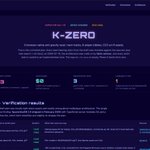
rig-console (in the video) is mission control: who's working, idle or stuck (always with the reason), work flowing through the pipeline per team, any agent's live terminal, model quotas and system health. Read-only, about 1% of one core.
Open source, with a demo mode you can run without a fleet:
github.com/korallis/agent-st…
utalises OpenRig and maintains upstream
and builds ontop of it.
Astra…
Good but wtf 4 gpt pro accounts all maxed out in 5 hours …
Using high .. @thsottiaux a little help understanding why?
Lee Barry retweeted

used grok 4.6 for a full day of real work, here's my unbiased review
i used it as my @myfirstmate - the orchestrator agent that i directly talk to that manages all my other agents - and also as a worker agent directly on some implementation tasks
first, the good:
yes it's fast and it's great. everyone knows this so i'm not going to repeat it. i however noticed something else more subtle but extremely important - judgment
an orchestrator often has to make judgment calls, like "is this a low-stake change that should be done quickly, or should we really safeguard it", "does this decision need to escalate to the user", "should this task keep going or let's step back". this really tests whether a model was trained with the right rewards
that's where many other models fall apart. sol will remodel my kitchen before making me breakfast. opus 5 will go down rabbit holes and come back with an essay but no rabbit
throughout the whole day, grok 4.6 almost made every decision right for me. i deliberately gave it a lot of autonomy - it merged things when i would have. it asked me for approval for things i actually cared about. it stopped workers from over-engineering. it often recommended ship first fix later when it's safe to do so
chef's kiss
now, the bad:
i have the highest tier supergrok heavy subscription, and it's just not giving enough quota. a full day of mostly single-threaded usage exhausted a whole week of quota. the same work will translate to about 20-30% of the $200 subscription from anthropic or openai using opus or sol
without pricing being on par, i can totally stand behind the model but i can't really recommend the subscription purchase for consumers
overall, grok is on a great trajectory of delivering the most useful model in the world that's fast, pleasant, and capable. i just hope the team realizes how much this pricing problem is holding back their model + grok build harness' adoption, and figure out how to get it fixed
Grok is cooking.
asked it to make a plan in HTML format. no design instructions or anything and it just does what its told and does it so well
you have to play around with how to prompt it. but man its such a good model.

Initial impressions of Grok 4.5 as a coding agent: really, really good.
We pointed firstmate + Grok 4.5 at MatildaOS (private AI legal case OS) and basically left it running.
In ~14 hours wall clock:
• 50 PRs merged to main (19 day one, 31 the next morning)
• Full tracks shipped: monorepo, registry/Dropbox, retrieval+agents, legal deadline engine, frontend, M5 OCR/ASR
• I was AFK for a big stretch - the fleet kept moving without me babysitting every step
This felt meaningfully faster than doing the same multi-track build in Codex or Claude Code alone. Not one infinite chat - a real supervisor workflow.
How it actually works:
1. I talk only to firstmate (the captain’s single point of contact).
2. Firstmate routes work by domain to secondmates - persistent track supervisors (infra, factory, retrieval, legal, UI, registry).
3. Secondmates spawn crewmates in isolated git worktrees so parallel ships don’t trample each other.
4. Implementation lands, then no-mistakes runs the gate: review, tests, lint, push, PR, CI.
5. Standing order: auto-merge only when clean + green. Dirty after main moves? Rebase and re-green.
6. Needs a real decision (legal policy, product call)? Escalate to me. Noise stays quiet.
7. When AFK: same rules - merge greens, fix routine parks with research+decide, don’t invent attorney policy.
8. Done work gets torn down. Finished tracks retire their secondmates so idle agents don’t burn context.
Harness split that made it click:
• Primary + secondmates: Grok harness / Grok 4.5 - the fleet brain
• Ship validation: Codex / gpt-5.5 high via no-mistakes - the merge gate
• Runtime: herdr
Supervisor model ≠ gate model. Feature, not bug.
Big up Elon and the @grok team - early days, but overnight multi-track shipping at this rate is a different gear.
Workflow infrastructure: @kunchenguid’s firstmate. Would not want six tracks by hand.
Still Mac-only until we validate; GPU box stays quiet until then. First impression: Grok 4.5 as a supervisor is a weapon.