

learning about agents x ml x bio @generate_biomed | prev @ginkgo @brownuniversity
Boston, MA
Joined July 2020
- Tweets419
- Following493
- Followers2.4K
- Likes2.6K




Liam Bai retweeted

The "Age of Miracles" era:
I took a look inside Anthropic's latest progress in the life sciences, including working with a ton of biopharma partners and a new acquisition disclosure
All coming before what is likely the business world's largest IPO:
endpoints.news/anthropic-pit…

Great analysis from @owl_posting as always.
Expanding a bit on our work @generate_biomed particularly on the literature, novelty, and creativity 🧵


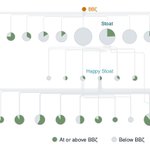
Second, I see our designs as really quite unconventional, straying far from consensus.
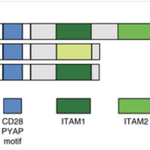
For example, a new hybrid ITAM + TRAF motif.
nitter.cf/liambai21/status/21152…


Although it's hard to disentangle the human vs. agent contribution in this process, I believe that a human expert could have never come up with some of these designs alone.
Overall, I see the role of agents here as enabling something that wasn't possible before, rather than speeding up an existing process.
Liam Bai retweeted

This was a surprise and updated my thinking. Would have expected this level of performance improvement to have come from a fine-tuned protein model and lots of training data specific to the task, not off-the-shelf frontier LLM.
Great work @generate_biomed and @AnthropicAI !
Liam Bai retweeted

Love reading about these projects that would have taken entire PhDs to do previously. We're going to see a lot more elegant, self-contained solutions like this in the coming months...
What will drug discovery look like when intelligence is abundant?
Our team at @generate_biomed began with this question, and we’re excited to share some results!
We took on in vivo CAR-T and designed a scaffold 70% smaller than ones in the clinic, with 3x the potency 🧵
Liam Bai retweeted

We have barely scratched the surface of ICD design.
Shout out to @liambai21 for leading this work.
What will drug discovery look like when intelligence is abundant?
Our team at @generate_biomed began with this question, and we’re excited to share some results!
We took on in vivo CAR-T and designed a scaffold 70% smaller than ones in the clinic, with 3x the potency 🧵
Liam Bai retweeted

Incredibly cool to see. This + the one-man biotech acquisition by Anthropic are lead indicators of the future
AI will spawn a thousand flowers in biology. “Why not me?”
What will drug discovery look like when intelligence is abundant?
Our team at @generate_biomed began with this question, and we’re excited to share some results!
We took on in vivo CAR-T and designed a scaffold 70% smaller than ones in the clinic, with 3x the potency 🧵
Liam Bai retweeted

A smaller CAR T-cell receptor could make room for a more capable therapy.
In our collaboration with @AnthropicAI, six of our scientists used @claudeai alongside our own models, computational tools, and wet lab data to refactor a CAR T-cell receptor for solid tumors.
The redesigned signaling component was about 70% shorter than a standard design, making room for new functions and improving cancer-cell killing in laboratory tests. Watch how our scientists turned years of work into months, at a fraction of the cost, expanding what we can engineer for patients.
@AnthropicAI's case study → anthropic.com/research/early…
Our preprint → generatebiomedicines.com/pub…
Our blog → generatebiomedicines.com/blo…
Liam Bai retweeted

I've been hanging out with this rock star team at @generate_biomed for the past few weeks and while this result is worth a deep dive, the way they work is the real game changer. They've allowed AI to remove the friction in the organization. As AI-pilled as I am, it's taken some adapting to transform to the way the future will look, but there is no catering to the 'old' way.
And that's the only way the true impact of AI will be seen, not just in the frontier labs, but also in the AI native biotechs working to bring real cures to patients fater.
Things are going to change quickly and the hardest part is going to be how people and systems adapt to move at speed. And this team is doing it.
Congrats @jasonyi96, @liambai21, @wwang002, @KaggenA!
What will drug discovery look like when intelligence is abundant?
Our team at @generate_biomed began with this question, and we’re excited to share some results!
We took on in vivo CAR-T and designed a scaffold 70% smaller than ones in the clinic, with 3x the potency 🧵
Liam Bai retweeted

Less really is more. Next for us: target selection for early stage solid tumors with @AnthropicAI
What will drug discovery look like when intelligence is abundant?
Our team at @generate_biomed began with this question, and we’re excited to share some results!
We took on in vivo CAR-T and designed a scaffold 70% smaller than ones in the clinic, with 3x the potency 🧵
What will drug discovery look like when intelligence is abundant?
Our team at @generate_biomed began with this question, and we’re excited to share some results!
We took on in vivo CAR-T and designed a scaffold 70% smaller than ones in the clinic, with 3x the potency 🧵
Looking back, reinvention was the constant. Our tools evolved alongside our understanding in a process of creative destruction.
We un-shipped pieces of our software, especially UIs, when we found ourselves using Claude Code to directly interface with the underlying records.
Time and again, we tore apart and rebuilt the agent stack that orchestrates our computational workflows, (more on that soon!).
This spirit of reinvention guides our approach to CAR signaling and the way we do science: constantly rethink from the ground up to be simpler and more effective.
This work was led by @wwang002 and @jasonyi96, with an exceptional team of scientists.
To learn more, check out our blog and preprint!
Blog: generatebiomedicines.com/blo…
Preprint: generatebiomedicines.com/wp-…
