

CTO @ Kirschbaum Development. PHP, Laravel, AI, DevOps, AWS and Software tech in general.
Joined August 2009
- Tweets4.9K
- Following1K
- Followers1.5K
- Likes5K


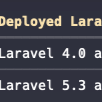


We started helping a client by getting a Lovable app he built ready to production (privacy, security, performance, better primitives and foundation, etc).
First thing we did? Move this TanStack app from Lovable to Github and deploy it into Laravel Cloud.


Luis Dalmolin retweeted

Me buy much Cloudflare. AI security bad. Cloudflare good. Hackers very scary. Cloudflare like warm hug. Protect us from bad men. People no use Cloudflare learn hard way, pay bigly price.
Ultima atualização 5 horas atrás provavelmente significa algo bem ruim

Atualização:
Seguimos trabalhando para restabelecer as operações com segurança e manteremos nossos clientes informados por nossos canais oficiais.
Para contribuir com o monitoramento e o rastreamento de ativos nas redes blockchain, compartilhamos os endereços de destino identificados nas movimentações relacionadas ao incidente.
Endereços identificados:
EVM: 0xe485e7A70b1131216Cb47CA4555c4Bbb2C742478
BTC: 19qGpsHvzh1t6pVi526XNNkh6hW6prDZp
SOL: 3YX6WHncP1Ra4AotE9YLawFt4nPmxyux288FWXkEW97J
XLM:
GDXYRI6IONQA5YTGRLQ603FGJ2BWXPJTTQPUXFPSEXSRKBZLFKMZSOLP
TRON: TEX3HuDRHRa3tnYpy96M4UfSx62VhDyA5L
Esses endereços são divulgados exclusivamente para fins de identificação e rastreamento.
1
1
1,265
Luis Dalmolin retweeted

You're not a real engineer if you don't have a mystery $0.53 AWS bill coming from a rogue service in perpetuity.

Luis Dalmolin retweeted

Comunicado oficial:
Identificamos e contivemos com rapidez um incidente de segurança em um de nossos sistemas nesta madrugada.
Reforçamos que:
• Não houve nenhum prejuízo aos clientes;
• Não houve vazamento de dados.
Como medida preventiva de proteção, depósitos e saques estão temporariamente suspensos. Nossas equipes estão mobilizadas investigando o caso, rastreando os ativos e coordenando as medidas junto às autoridades competentes.
Manteremos atualizações regulares por aqui.


Working on _very_ legacy projects before AI was very time consuming, but I must say, it gets very fun with AI
117
Luis Dalmolin retweeted

The PHP vulnerability wasn't easy to exploit, but please know that it *is* exploitable.
Please make sure you patch if you're running your own servers!
dreamgroup.com/blog/chained-…

Luis Dalmolin retweeted

Vazaram dados de 148 milhões de brasileiros.
podemos dizer que somos um país open source?

🚨 148 Million Brazilian PII Records Exposed
A misconfigured Elasticsearch instance was discovered, potentially exposing over 148 million records containing Brazilian citizens' personally identifiable information (PII).
The exposed data includes:
- CPF (Brazilian taxpayer ID) numbers
- Full names
- Dates of birth
- Residential addresses and postal codes
- Phone numbers
Validation: Sample records were cross-checked against Brazil’s official CPF registry, confirming matching identity details.
The dataset shares similarities with previously reported Brazilian data leaks, including the massive 2021 breach. However, its original source remains unconfirmed. Reported to the hosting provider.
⚠️ Risks: Identity theft, financial fraud, targeted phishing, and social engineering.
#ThreatIntel #CyberSecurity #DataBreach


Luis Dalmolin retweeted

This is by far the highest quality confirmation of in-the-wild php2shell exploitation I've seen so far. Deep technical breakdown of a successful exploitation attempt against an Apache mod_php installation running PHP 8.4.26.
github.com/0x4D31/honeypot-d…
From:
nitter.cf/0x4D31/status/21140524…


‼️ wow, confirmed more from the same IP, plus a new IP with a different payload that might be a different actor… and this is showing up in multiple regions now.
probably better not to burn the honeypots with a full report just yet. if i know you, DM me for the full report. will share a shorter version soon.
> That new alert materially expands the case: I’ll verify the three AP-northeast shell events and the curl connection independently, then compare them with the EU-west sequence.
Let's see what OpenAI daybreak can find. If it doesn't keep flagging my sessions like Opus 5.5, it's a win already

175
Our agent log analyzer reported this, so I guess there are some people trying to actively exploit php2shell

2
9
911


It seems, indeed, the PHP CVEs are not so easy to exploit as X made it seem (unsurprising). You should, of course, rush to patch any servers you have. Laravel Forge just announced there are patches available all the way up from PHP 5.6.
You won't get them in older versions of Ubuntu, though. Which is likely what you are running if you are still running versions below 8.2 of PHP.
However, you can ask your agent to build that version from source, directly from Github. For example, in an old leftover server from a client, we upgraded PHP 7.4 by using the PHP-7.4-CVE-2026-109618-109619 branch in Github. Not sure if PHP is going to actually publish those versions, but the branch itself has the fix.
Also, please don't waste this moment and the timing: Make sure you migrate away and to newer versions. When possible, I'd also recommend going to managed services like Cloud.


I'll be the first to admit I'm mediocre at exploit development, but I am in contact with enough extremely talented exploit developers to say this for certain:
Anyone claiming they were "easily" able to generate a working php2shell exploit with AI is either:
a) a world-class exploit developer with an extreme case of imposter syndrome.
b) currently looking at some very confident-sounding but wrong LLM output.
I'm rather certain it's the latter based on the number of AI-hallucinated exploits I've seen posted on GitHub. Threat actors are also blasting my honeypot network with "php2shell" exploits that not only don't work, but aren't even within 10,000 miles of anything to do with how the exploit actually works.
I've seen the same technique from the attached image in multiple alleged "php2shell exploits", including one on GitHub with over 100 stars. Problem is, it's not php2shell, nor is it even a vulnerability at all. It's a technique known as "session poisoning", which can be leveraged to exploit local file inclusion (LFI) vulnerabilities in PHP apps (not PHP itself).
The only thing it has in common with CVE-2026-109618/CVE-2026-109619 is they both use the "PHP_SESSION_UPLOAD_PROGRESS" feature. And mitigation advice for both issues reference setting "session.upload_progress.enabled" to "Off".
People are shoving loose details of the vulnerability into LLMs, the LLMs are keying in on the "PHP_SESSION_UPLOAD_PROGRESS" string, then generating session poisoning code that has nothing to do with the actual CVE. And because the people doing this have absolutely no idea what they're doing, they're confident enough to post their "proof of concept exploit" to GitHub and share it on social media.
So if you see people talking about "session poisoning + LFI" it's likely their LLM hallucinated an exploit based on a 2018 blog by Orange Tsai talking about a local file inclusion attack vector.
What's even worse is that "security researchers" are then using LLMs to triage these exploitation attempts, falling victim to the same hallucinations, then confirming there is ongoing mass-exploitation (there currently isn't).
The actual real exploit is very difficult to exploit, and so far I've not seen anyone successfully get it working on more than a handful of PHP version with highly-specific configurations.
LLMs are useful tools in the hands of skilled professionals, but for others, they're often just a Dunning-Kruger accelerator.

4
9
1,681