
Professor Universitat de Barcelona, Facultat de Psicologia
Joined December 2011
- Tweets1.6K
- Following627
- Followers334
- Likes1.2K
Manel Viader retweeted

Las investigaciones genéticas de Davide Piffer son realmente interesantes siempre. En este artículo se hace una pregunta sencilla pero profunda: cuando miramos el ADN de personas que vivieron hace miles de años, vemos que las puntuaciones genéticas asociadas al “logro educativo” (es decir, variantes genéticas que en la sociedad moderna se relacionan con mejor rendimiento escolar, capacidad de aprendizaje y, en general, lo que llamamos capital humano o habilidades cognitivas) van subiendo con el paso del tiempo. ¿Eso ocurre solo porque pasa el tiempo -por migraciones, cambios demográficos o selección natural aleatoria-, o también refleja que esas mismas variantes genéticas se volvieron más comunes precisamente en las poblaciones que estaban construyendo sociedades más complejas?
Para responder, Piffer utiliza una base de datos enorme y recién actualizada de ADN antiguo (más de 12.000 individuos), y aplica controles estadísticos sofisticados y otras cosas complicadas pero lo interesante es que, en la prehistoria, el tiempo y el nivel de civilización no avanzaban al mismo paso sino que en una misma época cronológica podían coexistir un grupo que aún vivía como cazadores-recolectores y otro que ya tenía ciudades y escritura. Esto le permite comparar las puntuaciones genéticas de sociedades que están en momentos diferentes de progreso y complejidad social.
Y su respuesta es clara: las puntuaciones genéticas de logro educativo no suben solo por el paso del tiempo. Incluso cuando se controla por la fecha absoluta, las poblaciones que vivían en etapas más avanzadas de organización social (Neolítico tardío, Edad del Cobre, Bronce o Hierro) tienden a tener puntuaciones genéticas más altas que las que estaban en etapas más simples, aunque vivieran en el mismo momento histórico. Es decir, el efecto parece bastante específico de las capacidades cognitivas que hoy premiamos en la escuela y el trabajo.
En conclusión, Piffer argumenta que el aumento de esas puntuaciones genéticas en el ADN antiguo no es solo “un reloj que avanza” sino que hay algo más: esas variantes parecen haberse vuelto más frecuentes en paralelo con el surgimiento de formas de vida social más complejas y exigentes intelectualmente.
Eso no demuestra, por supuesto, que la civilización “causara” el cambio genético ni que los genes “causaran” la civilización (podría ser migración, reemplazo de poblaciones o selección por razones que aún no entendemos del todo). Lo que sí hace es descartar la explicación más simple y perezosa de que todo se reduzca a una tendencia temporal automática. El patrón sugiere que, de alguna manera, el desarrollo de sociedades más sofisticadas y las características genéticas que facilitan el éxito en ellas están conectados a lo largo de la historia humana.
davidepiffer.com/p/does-anci…


Manel Viader retweeted

Escribir a mano protege el cerebro, según un estudio de la Universidad de Indiana
Mover el lápiz genera una mayor conectividad neuronal, a diferencia del teclado
La clave no es rechazar la tecnología, sino usarla de forma equilibrada para potenciar nuestra mente

Manel Viader retweeted

Neural networks were conceptually invented in 1943 by neurophysiologist Warren McCulloch and logician Walter Pitts. They proposed a simple mathematical model of a biological neuron that could take binary inputs and "fire" if the sum exceeded a threshold. They proved that networks of these artificial neurons could compute any logical function, laying the theoretical groundwork for all of modern AI.


Manel Viader retweeted

Michael Collins, the astronaut who took this photo in 1969, is the only human, alive or dead, not captured in the frame of this picture.

Manel Viader retweeted
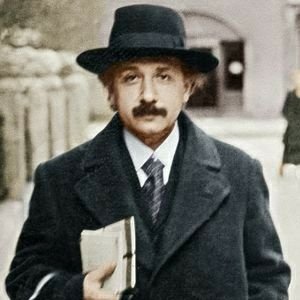
A. Einstein on physics and psychology ✍️
Body and soul are not two different things, but only two different ways of perceiving the same thing. Similarly, physics and psychology are only different attempts to link our experiences together by way of systematic thought.

Manel Viader retweeted

Our brain has an incredible ability to find order in chaos, a skill honed through evolution to manage uncertainty. nautil.us/your-brain-is-like…
Manel Viader retweeted

NEW 🧵: Is human intelligence starting to decline?
Recent results from major international tests show that the average person’s capacity to process information, use reasoning and solve novel problems has been falling since around the mid 2010s.
What should we make of this?

Manel Viader retweeted
Vamos hacia una nueva formación continua: ni grados ni postgrados: microcredenciales
Las universidades preparan su oferta propia de cursos profesionalizadores de corta duración, homologables en la UE y que respondan a necesidades concretas de las empresas
diaridetarragona.com/economi…

Manel Viader retweeted

#ExposureTherapy is among the most effective treatments for anxiety disorders, yet it remains underutilized. A new paper in Clinical Psych Science highlights virtual reality exposure therapy as an effective option and explores how it may work. psychologicalscience.org/new…
Manel Viader retweeted

Una juez certifica que la terapia Gestalt "no tiene base científica", ni títulos "oficiales" en España elmundo.es/espana/2025/02/20…
#sectas #gestalt #StopPseudociencias #coNprueba
Otro caso más donde las tornas estaban invertidas en cuanto a acusación y acusados.

Manel Viader retweeted

Hola, @hospitalclinic i @UniBarcelona Us respondré quan m’envieu l’enquesta en català, i serà per dir-vos que he al·lucinat de la quantitat de personal INCAPAÇ de parlar en català que treballa a la Maternitat. Vergonyós no poder ser mare en català ni a l’hospital de la UB.

Manel Viader retweeted

Shakespeare vs Wittgenstein: the fight for meaning | William Day | @IAI_TV iai.tv/articles/shakespeare-… #Shakespeare #Wittgenstein #meaning
Manel Viader retweeted

"Els responsables sanitaris, tant públics com privats, s’haurien de formar i implicar amb les qüestions tècniques per a què la Intel·ligencia Artificial en salut assoleixi el màxim potencial”
Per @etorrente a l'Observatori #Lagestióimporta
👉 tuit.cat/5nlt8

Manel Viader retweeted
Neuropsychologist Simon McCarthy-Jones walks us through the history of criminalizing “thought crimes,” the physical boundaries of thinking, and how architecture and urban planning are essential for truly free thought. bit.ly/4ghhxha

Manel Viader retweeted
“I discovered that if one looks a little closer at this beautiful world, there are always red ants underneath,” David Lynch once said.
Psychologist Steven J. Heine says the late filmmaker's work can reveal some of the inner workings of our mind. nautil.us/david-lynch-opens-…
Investigadors de la UB detecten una nova afectació de l’esquizofrènia monplaneta.cat/ciencia/inves…

5
Manel Viader retweeted

P.S. Click the link below when you read this to sign-up to my newsletter Faster Than Normal.
It's read by 70,000 people including Fortune 500 execs, founders, operators, creatives, and investors from Silicon Valley to Wall Street.
fasterthannormal.co/subscrib…
Manel Viader retweeted

Keep your eye on the donut and not on the hole.
In memory of David Lynch, we will continue to explore the otherworldly and the unknown. We will focus not on the loss, but on what we gained from the years we shared this planet with you. We will see you in our dreams.

ALT Using the Event Horizon Telescope, scientists obtained this image of the black hole at the center of galaxy M87, outlined by emission from hot gas swirling around it under the influence of strong gravity near its event horizon. The hot gas is shaped like a doughnut and is glowing a warm yellow color with reddish tint at its edges. The darkness of space is black in the background. Credit: Event Horizon Telescope collaboration et al.