

library junkie, former public library director, just off the bleeding edge
Baton Rouge LA
Joined May 2008
- Tweets9.7K
- Following544
- Followers560
- Likes17.5K









Tweeting — Michael G retweeted

"Empathy first, advice later. When someone shares a problem, the instinct is to fix it. But what they usually need first is to feel heard.” @DrCarolineLeaf

Tweeting — Michael G retweeted

En el centro de Berlín, en Bebelplatz, hay una ventana en el suelo. Si caminás distraído casi no la ves. Si te agachás, se te hiela la sangre.
Abajo hay una biblioteca vacía. Paredes blancas, estanterías vacías, ni un solo libro. Tiene espacio exacto para veinte mil libros.
El diez de mayo de mil novecientos treinta y tres, en esa misma plaza, frente a la Universidad Humboldt, se quemaron más de veinte mil libros. No fue un acto improvisado. Fue la Acción contra el espíritu no alemán, organizada por la Unión de Estudiantes Nacionalsocialistas. Marcharon con antorchas, con bandas de las SA y las SS tocando, y en el centro una pira gigante.
Y quiénes los quemaron. No fueron analfabetos. No fueron una turba sin nombre. Fueron profesores y estudiantes universitarios. La élite intelectual de Alemania. Gente que había jurado dedicar su vida al saber. Esa noche tiraron al fuego a Freud, a Karl Marx, a Stefan Zweig, a Rosa Luxemburg, a Heinrich Mann, a Erich Maria Remarque.
Hay un detalle que me parte. Erich Kästner, el autor de Fabian, estaba ahí, escondido entre la multitud, viendo cómo quemaban su propio libro. Años después contó que nadie lo reconoció. Que estuvo ahí, en silencio, viendo cómo su obra ardía.
El memorial que hoy está ahí abajo lo hizo el artista israelí Micha Ullman y se inauguró en mil novecientos noventa y cinco. Se llama Biblioteca, o La Biblioteca Vacía. No puso libros. Puso el vacío. Porque lo que quemaron no se puede reponer.
Al lado hay una placa con una frase de Heinrich Heine, escrita en mil ochocientos veintiuno, más de cien años antes: Donde queman libros, al final queman personas.
Por eso cuando lo leo no pienso solo en mil novecientos treinta y tres. Pienso en esto. La barbarie no empezó con soldados. Empezó con profesores y alumnos que decidieron que había ideas que no merecían existir. Y cuando la academia calla, cuando la cultura mira para otro lado, el vacío se hace lugar.
Agachate. Mirá la biblioteca vacía. No es un monumento al pasado. Es una advertencia para hoy.

Tweeting — Michael G retweeted
Oh, look. Unintended Consequences has come to call.

A new anti-DEI law championed by Florida Gov. Ron DeSantis that goes into effect next year has resulted in the cancellation of a St. Patrick’s Day parade. nbcnews.com/news/us-news/st-…

Tweeting — Michael G retweeted
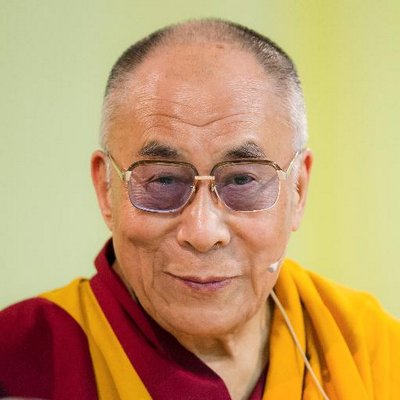
A Life Without Regret - How can we come to the end of life with no regret? His Holiness the Dalai Lama explains that whatever our faith or beliefs, a meaningful life spent helping others is the answer. Seen this way, death is simply like changing old clothes, nothing dark or frightening. Video originally recorded on April 2, 2018.
Tweeting — Michael G retweeted
It’s in our interest to take care of others. Self-centredness is opposed to basic human nature. In our own interest as human beings we need to pay attention to our inner values. Sometimes people think compassion is only of help to others, while we get no benefit. This is a mistake. When you concern yourself with others, you naturally develop a sense of self-confidence. To help others takes courage and inner strength.
Tweeting — Michael G retweeted

In Fahrenheit 451, the chief book-burner, Captain Beatty, describes how reading became obsolete because the public demanded increasingly fast-paced entertainments, and those entertainments slowly corroded their ability to think. “Books cut shorter. Condensations. Digests, tabloids. Everything boils down to the gag, the snap ending. Classics cut to fit fifteen-minute radio shows, then cut again to fill a two-minute book column … Many were those whose sole knowledge of Hamlet was a one-page digest in a book that claimed, ‘Now at last you can read all the classics.’ … School is shortened, discipline relaxed, philosophies, histories, languages dropped, English and spelling gradually neglected, finally almost completely ignored. Life is immediate, the job counts, pleasure lies all about after work. Why learn anything save pressing buttons, pulling switches?”
In this passage Ray Bradbury foretells the intellectual hollowing out of the working class, the advent of AI-generated “summaries” of classic novels, the attention-frying culture of short-form video, the relaxation of educational standards into non-existence. All of this in a book published in 1953.


Tweeting — Michael G retweeted

I’ve never had a Muslim tell me what I can and can’t do. But Christians have been telling me what I can and can’t do my entire fucking life.
Tweeting — Michael G retweeted

He left the most powerful office in the world humiliated.
Two decades later, a President flew 1,000 miles just to prove he'd been right all along.
January 20, 1953. Harry Truman walked out of the White House at 68 years old with one of the lowest approval ratings in American history.
The newspapers had declared his presidency a failure.
Washington breathed a sigh of relief.
He returned to Independence, Missouri. To Bess. To their modest house on Delaware Street.
To a life without Secret Service, without staff, without the trappings of power.
Just an Army veteran with a pension and his dignity.
That spring, he did something no former president had ever done: he bought a Chrysler and drove himself—with only Bess beside him—across America.
No motorcade. No security.
Just two people stopping at gas stations, eating at diners, waving at stunned strangers who couldn't believe their eyes.
He answered his own telephone. He wrote thousands of letters by hand.
He walked the streets of his hometown every single morning, moving so fast that reporters struggled to keep up.
And while he lived quietly, history was working in his favor.
He had desegregated the Armed Forces when it could have ended his career.
He had stood against Soviet expansion at the exact moment the free world needed him to.
He had championed the Marshall Plan that rebuilt a shattered Europe.
And in 1945—twenty years before it would become reality—he stood before Congress and demanded something radical: national health insurance for every American.
They called it socialism.
They called him reckless.
They killed the bill without mercy.
He never apologized. He never retreated.
He simply waited.
Then came July 30, 1965.
President Lyndon Johnson could have signed Medicare into law in the Rose Garden.
Instead, he boarded Air Force One and flew to Independence, Missouri—to a small library in an old man's hometown.
When Johnson rose to speak, he turned to the 81-year-old man sitting beside him.
The man the world had written off.
The man who had been mocked, dismissed, forgotten.
And he said:
"The people of the United States love and voted for Harry Truman, not because he gave them hell—but because he gave them hope."
Then he signed the bill that would change millions of lives.
And handed Harry Truman the very first Medicare card ever issued in the United States of America.
Bess received the second.
The man who had left Washington in silence.
The man who had spent two decades being unpopular, then ignored, then undeniably right—sat in his own library, in his own town, and held proof that his vision had finally come to pass.
He died in 1972. Today, historians rank him among the greatest American presidents.
He didn't change his principles to earn that honor. He didn't soften his record or chase approval.
He remained exactly who he was—and trusted that the work would speak for itself, even when the world had stopped listening.
History doesn't move at the speed we need.
But it moves.
And sometimes—if you're principled enough, patient enough, and brave enough to be unpopular—it circles back and vindicates you.
Even if it takes twenty years, a thousand-mile flight, and a small card pressed into an old man's weathered hands.
Some people aren't ahead of their time.
They're just ahead of the recognition they deserve.
Why do you think stories like this disappear from history?

ALT Image source: Instagram
Tweeting — Michael G retweeted

Interesting how it's always "vote according to Biblical values!" until it comes to the verses about welcoming immigrants, helping the poor, feeding the hungry, bringing healthcare to the sick, forgiving debts, caring for our planet, laying down our swords or loving our neighbors.
Tweeting — Michael G retweeted
My favorite story in the Bible is where a disabled man asked Jesus to heal him, and Jesus asked to see his insurance card first. But the man was uninsured, so Jesus told him to get fucked and get a job.


Tweeting — Michael G retweeted
When we look back in fifty years and ask ourselves how democracy gave way to tyranny, a huge part of it will be that everyone voluntarily abandoned reading, and it turns out you can’t have a modern, developed, free state without a highly literate population.

Tweeting — Michael G retweeted
The True Meaning of Non-Violence - His Holiness the Dalai Lama explains that what makes an action violent or non-violent is not the action itself but the motivation behind it. Even harsh words can be non-violent when they come from genuine concern. True non-violence begins with compassion. Video originally recorded on June 25, 2016.
Tweeting — Michael G retweeted
Notice how it's somehow the government's job to legislate a few Bible verses on human sexuality over our entire country, but it's suddenly "not the government's job" when it comes to the +2,500 Bible verses calling for a generous use of wealth that prioritizes the poor.

Tweeting — Michael G retweeted

Someone from Texas will look you dead in the eye and say ‘No Sharia Law’ and then walk out of their house and into a state that bans gambling, abortions, marijuana, liquor stores on Sunday, porn, LGTBQ rights, and so much more.
These stupid morons have been living under Sharia Law for 30 years already.😂🤦♂️🤡
Tweeting — Michael G retweeted

I have yet to see a Muslim politician trying to force their religion on the rest of America.
Know what I have seen? Christian politicians repeatedly pushing their religious beliefs into our laws, our schools, and our personal lives.
Tweeting — Michael G retweeted
Warm Heartedness Is the Key - His Holiness the Dalai Lama explains that with a warm heart, everything looks more positive, while a self-centered mind sees only negativity and fear. Our intelligence needs a warm heart; without one, it can become dangerous. Video originally recorded on November 11, 2019.